



(+)-Camphor (Standard)
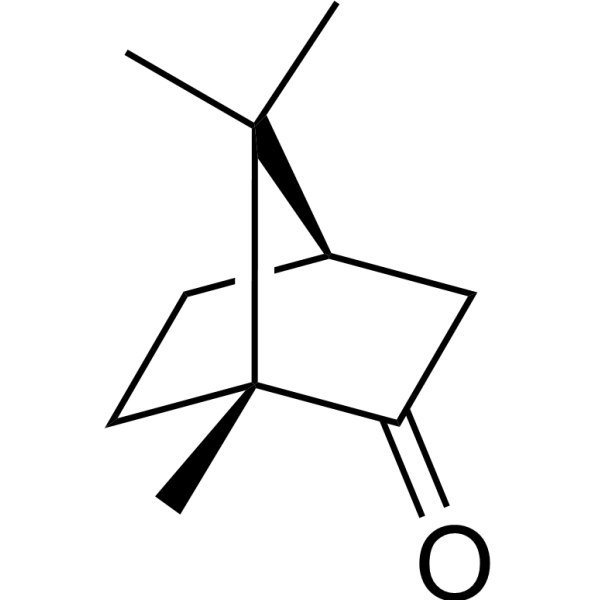
(+)-Camphor (Standard) is the analytical standard of (+)-Camphor. This product is intended for research and analytical applications. (+)-Camphor (D-(+)-Camphor; (1R)-(+)-Camphor) is an isomer of Camphor. Camphor is an agonist of monoterpenoid transient receptor potential (TRP) channels (such as TRPV1, TRPV3, TRPM8) and an inhibitor of TRPA1 channels. Camphor's derivatives have multiple biological activities, including antibacterial, antiviral, antioxidant, analgesic and anticancer. Camphor can selectively activate cold-sensitive TRP channels and inhibit TRPA1-mediated nociceptive signals. Camphor stimulates the cold-sensing nerve endings in the skin and regulates the activity of ion channels to exert analgesic, anti-inflammatory and anti-itching effects. It also has anti-proliferative and anti-mutagenic activities on tumor cells, which may be related to inhibiting ribosome function or inducing cell apoptosis. Camphor can be absorbed through the skin and (+)-Camphor can be used in the study of muscle and joint pain and inflammation.
Nos produits utilisent uniquement pour la recherche. Nous ne vendons pas aux patients.
- Pureté: 95%
- CAS No.: 464-49-3
- Formule: C10H16O
- Masse moléculaire:152.23
-
Stockage:
Please store the product under the recommended conditions in the Certificate of Analysis.


To place orders, for customer services and technical support, please contact: MedChemExpress USA
Tel: 609-228-6898 E-mail: [email protected] [email protected]


-
 Product Information
-
Chemical Information
- Pureté et documentation
-
 Help & FAQs


-
HY-B1173
(+)-Camphor -
HY-75161
(-)-Menthol -
HY-N6968
α-Humulene -
HY-N0131
Stigmasterol -

HY-75161R
(-)-Menthol (Standard) -
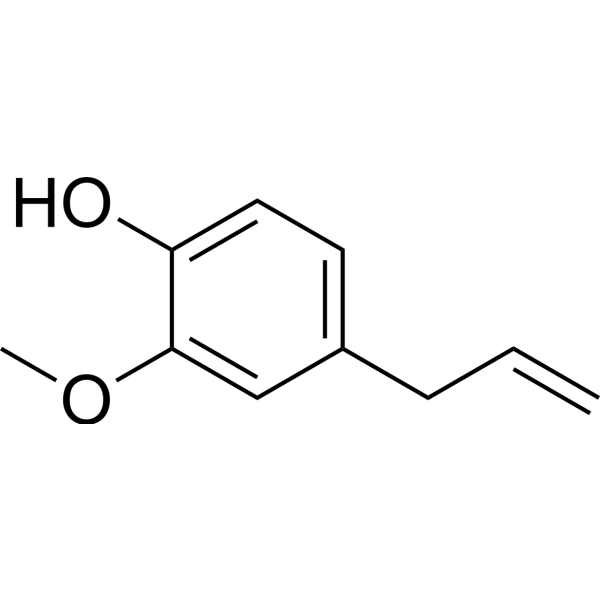
HY-N0337
Eugenol,98% (stabilized with TBC) -
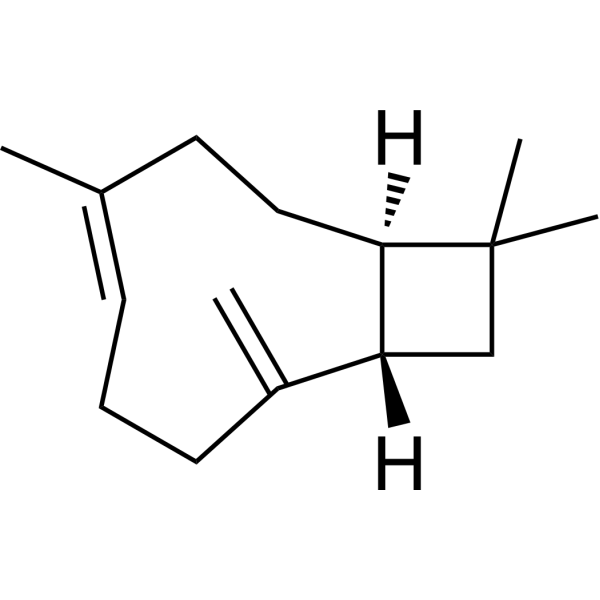
HY-N1415
β-Caryophyllene -
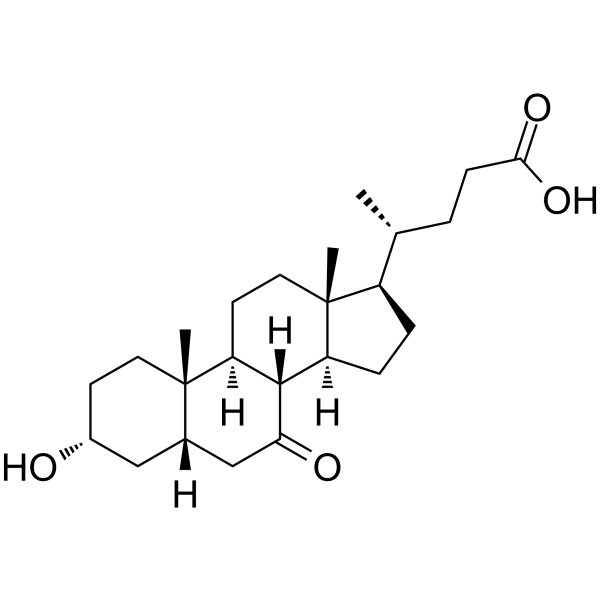
HY-W018512
7-Ketolithocholic acid -
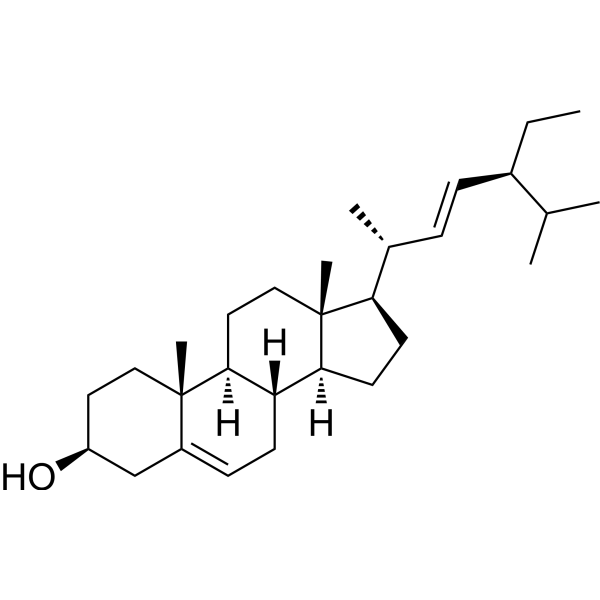
HY-N0131R
Stigmasterol (Standard) -
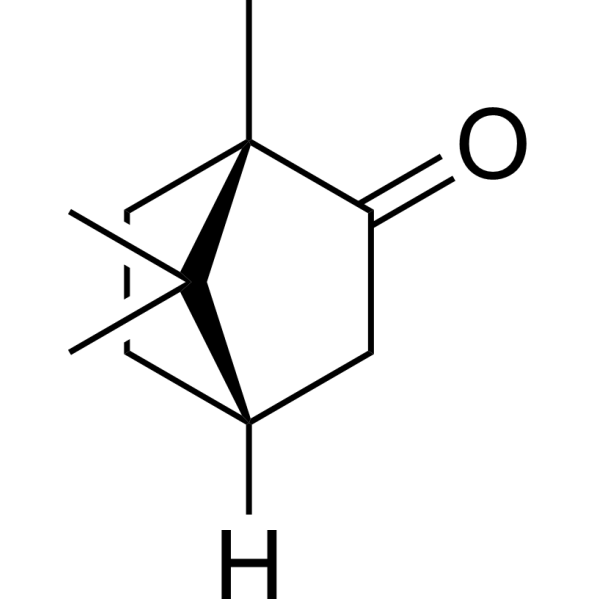
HY-W015579
(-)-Camphor -
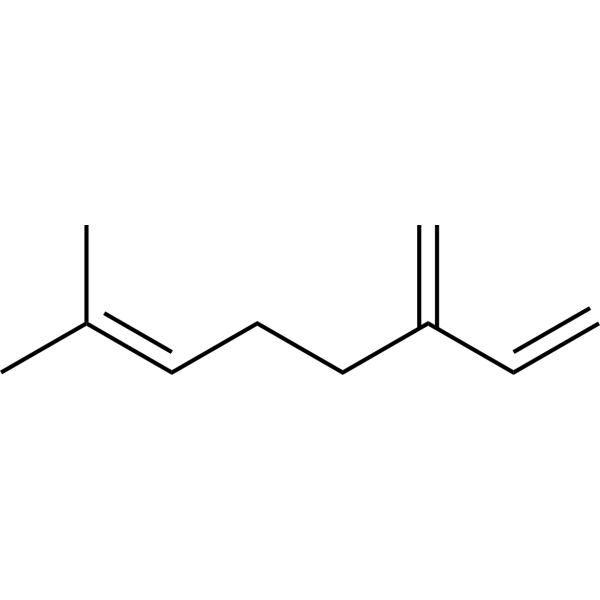
HY-N0803
Myrcene,75% (stabilized with BHT)


Product Information
Information
Application
The compound is the grade of analytical standard, which is the reference standard supplied assay. It is commonly used in qualitative, quantitative and methodological research experiments in HPLC, GC and MS.


Chemical Information
-
CAS No. 464-49-3
-
Masse moléculaire 152.23
-
Formule C10H16O
-
SMILES
CC1(C)[C@@]2(C)CC[C@@H]1CC2=O
-
Synonyms
D-(+)-Camphor (Standard); (1R)-(+)-Camphor (Standard)
-
Structure Classification
-
Initial Source
-
Livraison
Room temperature in continental US; may vary elsewhere.
-
Stockage
Please store the product under the recommended conditions in the Certificate of Analysis.


Pureté et documentation
Références

Calculators
Concentration (start) × Volume (start) = Concentration (final) × Volume (final)


(+)-Camphor (Standard) Related Classifications
HY-B1173R Related Classifications
 Powered by Bioz