



Tempo (Standard)

Based on 1 Customer Validation
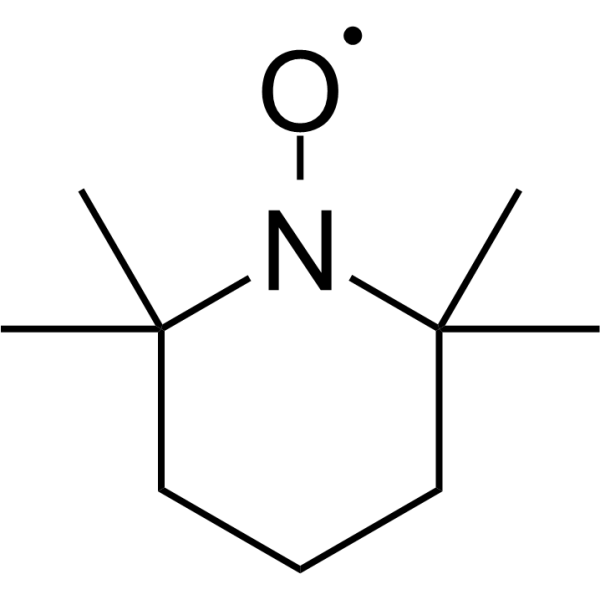
Tempo (Standard) is the analytical standard of Tempo. This product is intended for research and analytical applications. Tempo is a nitric oxide radical and a selective scavenger of ROS in mitochondria. Tempo is also an organocatalyst that disproportionates superoxide and oxidizes primary alcohols to aldehydes in a catalytic cycle. Tempo has mutagenic and antioxidant effects and can induceDNA strand breaks. Tempo also exerts cytotoxic and mutagenic properties in mouse lymphoma cells[4].
Nos produits utilisent uniquement pour la recherche. Nous ne vendons pas aux patients.
- Pureté : 99.34%
- CAS No.: 2564-83-2
- Formule: C9H18NO
- Masse moléculaire:156.25
-
Stockage:
Please store the product under the recommended conditions in the Certificate of Analysis.


To place orders, for customer services and technical support, please contact: MedChemExpress USA
Tel: 609-228-6898 E-mail: [email protected] [email protected]


-
 Product Information
-
Chemical Information
- Pureté et documentation
-
 Help & FAQs


-
HY-W001187
TempoNitroxide Radical -
HY-100561
TempolSOD Mimetic Agent -
HY-W011500
TCEP hydrochlorideNon-Thiol Reducing Agent -
HY-15917
DL-DithiothreitolReducing Agent -
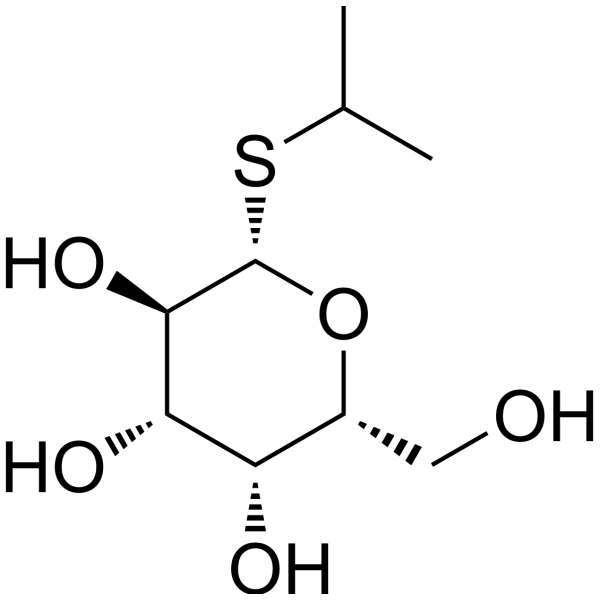
HY-15921
IPTGAllolactose Mimic -
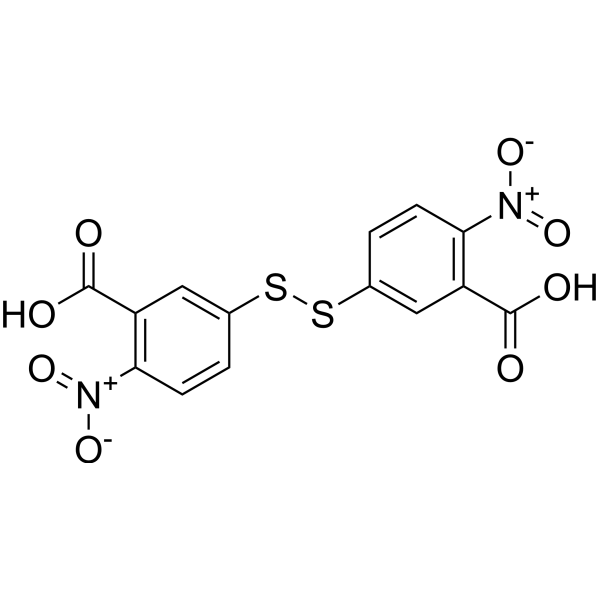
HY-15915
DTNBThiol Reactant -
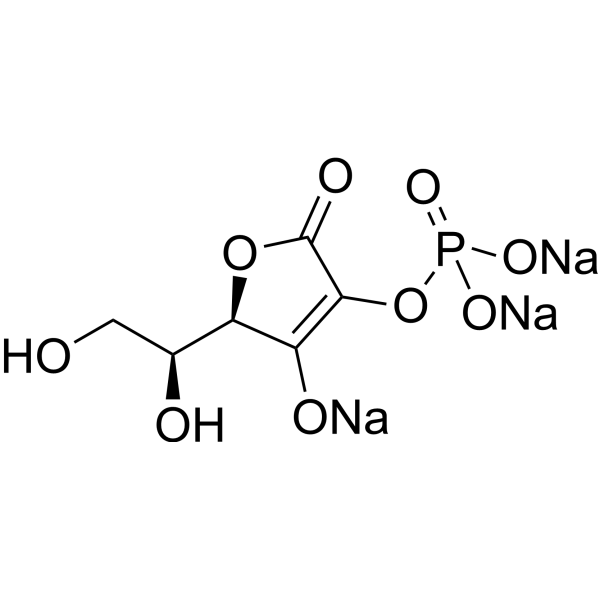
HY-107837
L-Ascorbic acid 2-phosphate trisodiumOsteogenic Differentiation Inducer -
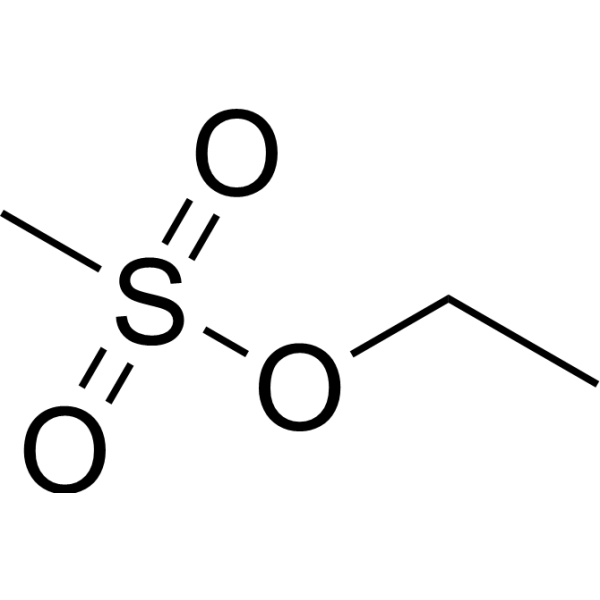
HY-W015854
Ethyl methanesulfonateBiochemical Reagent -
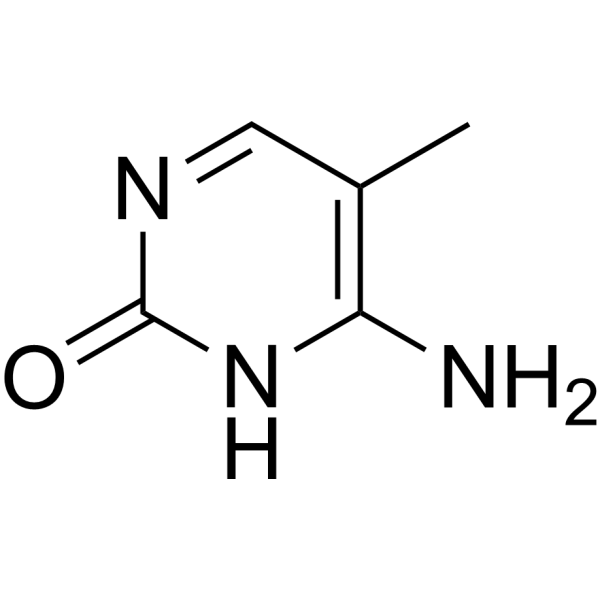
HY-W008091
5-MethylcytosineDNA Modification -
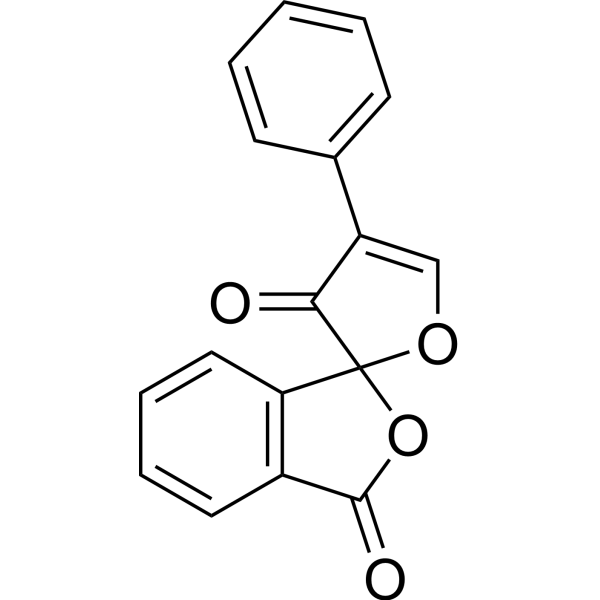
HY-D0715
FluorescamineFluorescent Dye -
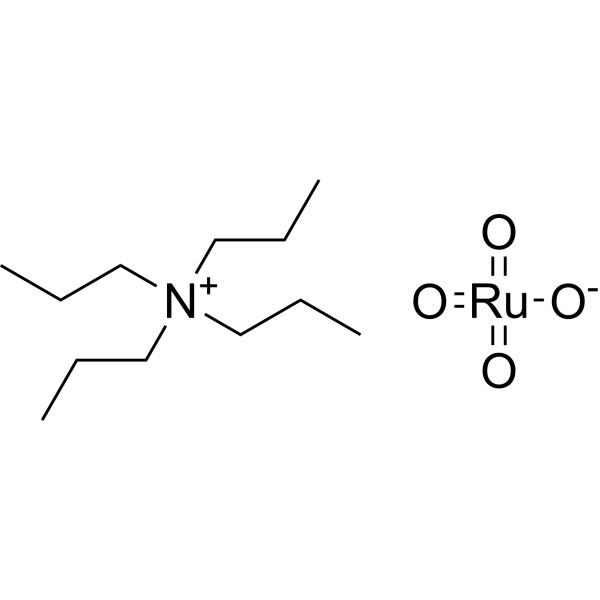
HY-W007801
Tetrapropylammonium perruthenateBiochemical Assay Reagent -

HY-W008091R
5-Methylcytosine (Standard)Standard Of 5-Methylcytosine


Product Information
Information
Application
The compound is the grade of analytical standard, which is the reference standard supplied assay. It is commonly used in qualitative, quantitative and methodological research experiments in HPLC, GC and MS.


Chemical Information
-
CAS No. 2564-83-2
-
Appearance Solid
-
Masse moléculaire 156.25
-
Formule C9H18NO
-
Color Orange to red
-
SMILES
[O]N1C(C)(C)CCCC1(C)C
-
Livraison
Room temperature in continental US; may vary elsewhere.
-
Stockage
Please store the product under the recommended conditions in the Certificate of Analysis.


Pureté et documentation
Références
[1]. Chen X, et al. Isocitrate dehydrogenase 2 contributes to radiation resistance of oesophageal squamous cell carcinoma via regulating mitochondrial function and ROS/pAKT signalling. Br J Cancer. 2020 May 5. [Content Brief]
[2]. Guo X, et al. Comparative Genotoxicity of TEMPO and 3 of Its Derivatives in Mouse Lymphoma Cells. Toxicol Sci. 2018 May 1;163(1):214-225. [Content Brief]
[3]. Kaur G, et al. Eugenol precludes cutaneous chemical carcinogenesis in mouse by preventing oxidative stress and inflammation and by inducing apoptosis. Mol Carcinog. 2010 Mar;49(3):290-301. [Content Brief]

Calculators
Concentration (start) × Volume (start) = Concentration (final) × Volume (final)


Tempo (Standard) Related Classifications
HY-W001187R Related Classifications
 Powered by Bioz