



Peptide YY (PYY), human

Based on 1 Customer Validation
Peptide YY (PYY) is a gut hormone that regulates appetite and inhibits pancreatic secretion. Peptide YY (PYY) can mediate its effects through the Neuropeptide Y receptors.
Nur für Forschungszwecke. Wir verkaufen nicht an Patienten.
- Reinheit : 99.17%
- CAS. Nr.: 118997-30-1
- Formel: C194H295N55O57
- Molecular Weight:4309.75
-
Speicherung:
Sealed storage, away from moisture and light, under nitrogen.
Powder -80°C, 2 years , -20°C, 1 year* In solvent : -80°C, 6 months; -20°C, 1 month (sealed storage, away from moisture and light, under nitrogen)


To place orders, for customer services and technical support, please contact: MedChemExpress USA
Tel: 609-228-6898 E-mail: [email protected] [email protected]


-
 Biologische Aktivität
-
Chemical Information
-
Lösungsmittel & Löslichkeit
- Protokoll
- Reinheit & Dokumentation
- Verweise
-
 Help & FAQs


-
HY-P10000
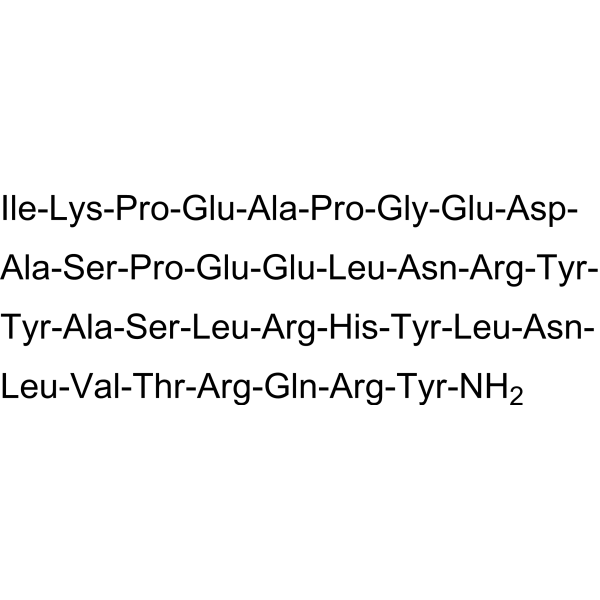
Peptide YY (PYY) (3-36), HumanNPY Y2 Receptor Agonist -

HY-P1480
Neuropeptide Y (13-36), amide, humanNeuropeptide Y2 Receptor Agonist -

HY-P0198
Neuropeptide Y (human,rat,mouse)Active Compound -
HY-101986
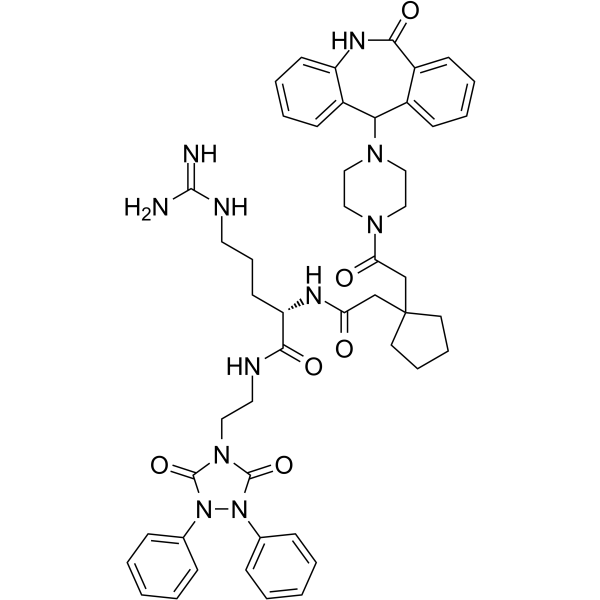
BIIE-0246NPY2R Antagonist -
HY-P1601
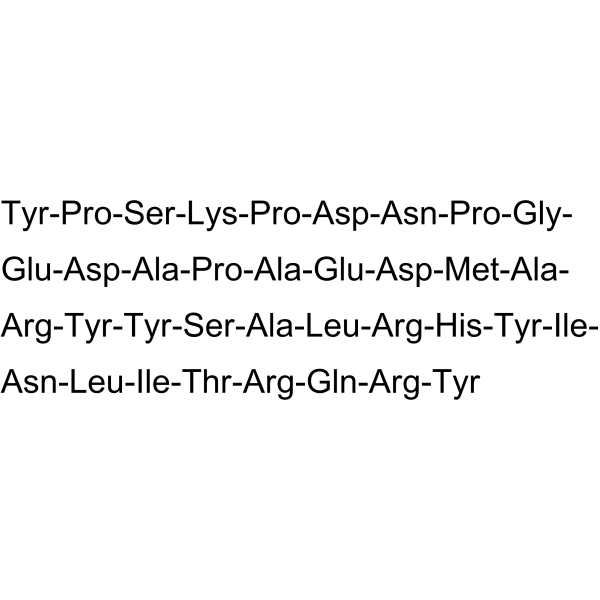
Neuropeptide Y(29-64)Peptide -
HY-107725
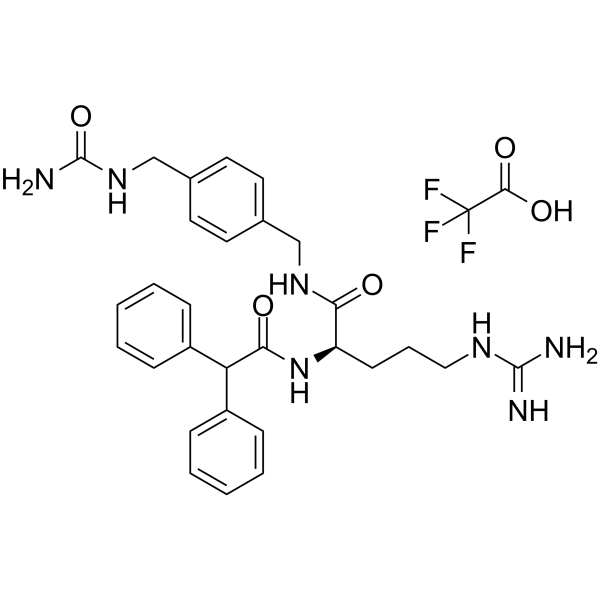
BIBO3304NPY Y1 Receptor Antagonist -
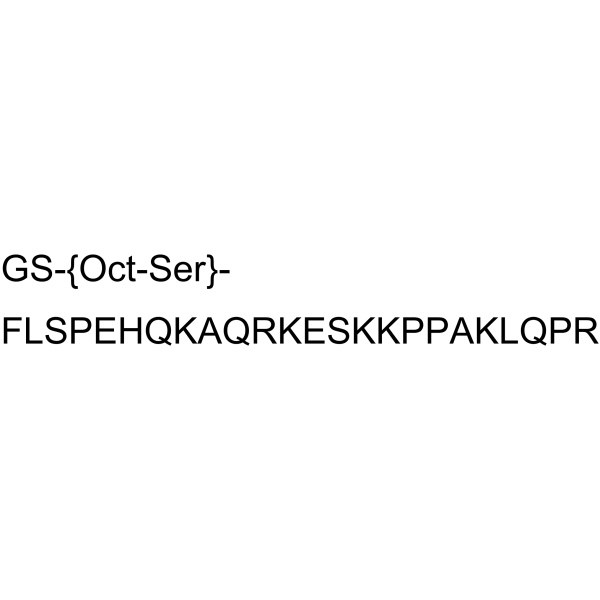
HY-P1366
des-Gln14-GhrelinGHSR Ligand -
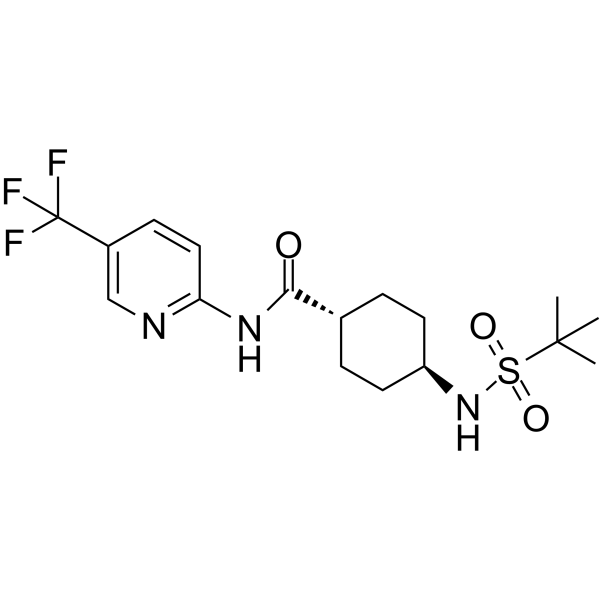
HY-14423
VelneperitNeuropeptide Y Receptor Antagonist -
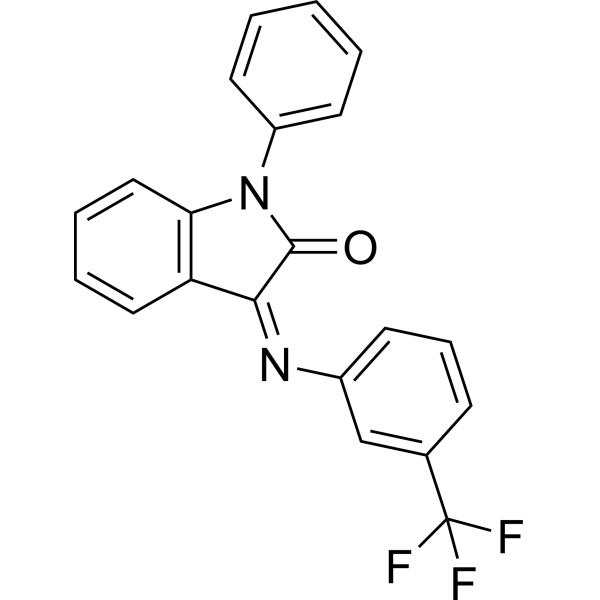
HY-100717
HT-2157Gal3 Antagonist -
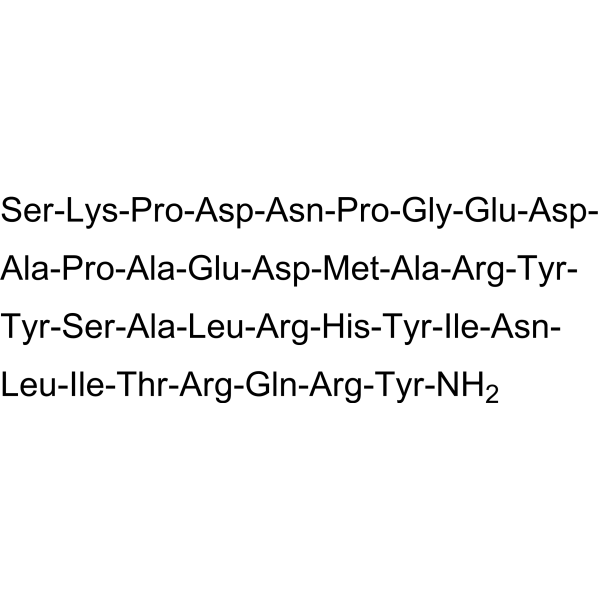
HY-P2543
Neuropeptide Y (3-36) (human, rat)Neuropeptide -
HY-107726
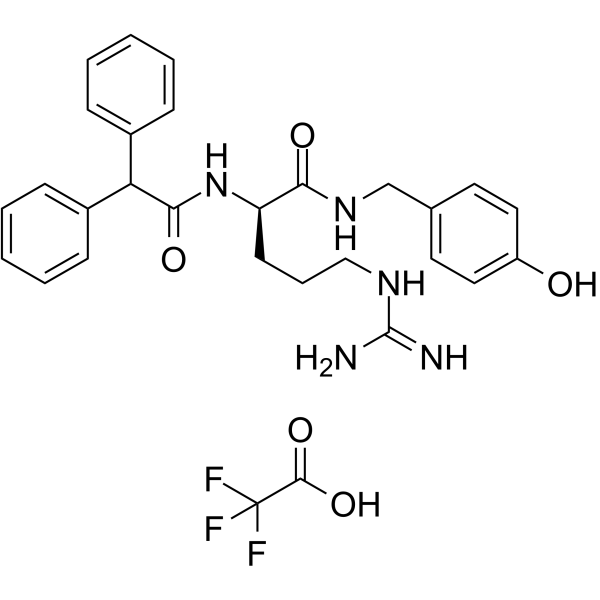
BIBP3226 TFANPY Y1/NPFF Receptor Antagonist -
HY-107723
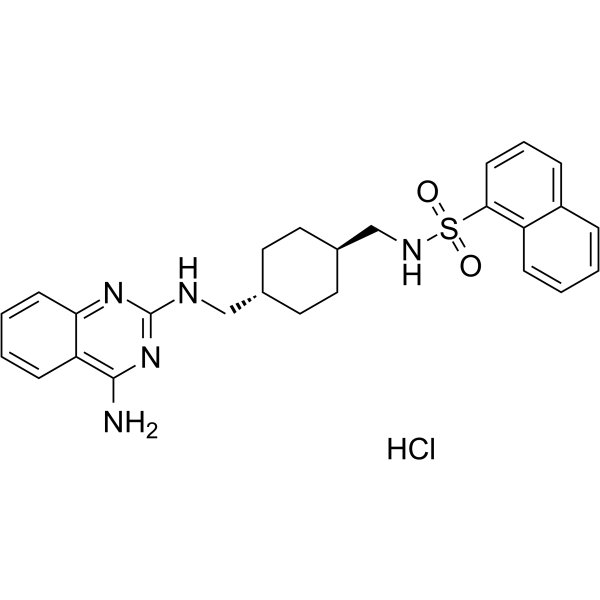
CGP71683 hydrochlorideNeuropeptide Receptor Antagonist
Alle Neuropeptide Y Receptor Isoform-spezifische Produkte anzeigen
More

Biologische Aktivität
Beschreibung
IC50 & Target
Neuropeptide Y receptor[1]
In Vitro
The gut hormone peptide YY ( PYY) belongs to the pancreatic polypeptide (PP) family along with PP and neuropeptide Y (NPY). These peptides mediate their effects through the NPY receptors of which there are several subtypes (Y1, Y2, Y4, and Y5)[1]. Pancreatic polypeptide YY (Peptide YY), a small peptide consisting of 36 amino acids, is originally isolated from porcine intestine and is secreted from the neuroendocrine cells (L cells) in the mucosa of the gastrointestinal tract, but it has been localized to other locations associated with the digestive system[2].
MedChemExpress (MCE) has not independently confirmed the accuracy of these methods. They are for reference only. Further protocols information, click here.
In Vivo
MedChemExpress (MCE) has not independently confirmed the accuracy of these methods. They are for reference only.


Chemical Information
-
CAS. Nr. 118997-30-1
-
Appearance Solid
-
Molecular Weight 4309.75
-
Formel C194H295N55O57
-
Color White to off-white
-
Sequence
Tyr-Pro-Ile-Lys-Pro-Glu-Ala-Pro-Gly-Glu-Asp-Ala-Ser-Pro-Glu-Glu-Leu-Asn-Arg-Tyr-Tyr-Ala-Ser-Leu-Arg-His-Tyr-Leu-Asn-Leu-Val-Thr-Arg-Gln-Arg-Tyr-NH2
-
Sequence Shortening
YPIKPEAPGEDASPEELNRYYASLRHYLNLVTRQRY-NH2
-
Versand
Room temperature in continental US; may vary elsewhere.
-
Speicherung
Sealed storage, away from moisture and light, under nitrogen
Powder -80°C 2 years -20°C 1 year * In solvent : -80°C, 6 months; -20°C, 1 month (sealed storage, away from moisture and light, under nitrogen)


Lösungsmittel & Löslichkeit
In Vitro:
H2O : 100 mg/mL (23.20 mM; Need ultrasonic)
Please refer to the solubility information to select the appropriate solvent. Once prepared, please aliquot and store the solution to prevent product inactivation from repeated freeze-thaw cycles.
Storage method and period of stock solution: -80°C, 6 months; -20°C, 1 month (sealed storage, away from moisture and light, under nitrogen). When stored at -80°C, please use it within 6 months. When stored at -20°C, please use it within 1 month.
* Note: If you choose water as the stock solution, please dilute it to the working solution, then filter and sterilize it with a 0.22 μm filter before use.
Please refer to the solubility information to select the appropriate solvent. Once prepared, please aliquot and store the solution to prevent product inactivation from repeated freeze-thaw cycles.
Storage method and period of stock solution: -80°C, 6 months; -20°C, 1 month (sealed storage, away from moisture and light, under nitrogen). When stored at -80°C, please use it within 6 months. When stored at -20°C, please use it within 1 month.
* Note: If you choose water as the stock solution, please dilute it to the working solution, then filter and sterilize it with a 0.22 μm filter before use.
Konzentration (Stammlösung) × Volumen (Stammlösung) = Konzentration (Ziellösung) × Volumen (Ziellösung)

Protokoll
-
Research Protocol for Endocrine Diseases
Endocrine diseases often arise from disrupted hormone production, hormone signaling, or target-tissue responsiveness; for diabetes-focused endocrine disease models, insulin signaling regulates glucose uptake, hepatic glucose output, lipid metabolism, and β-cell compensation. Type 2 diabetes develops through interacting defects in insulin resistance, β-cell dysfunction, adipose inflammation, hepatic glucose overproduction, altered incretin signaling, and ectopic lipid metabolism. A major unresolved question is whether endocrine dysfunction is driven primarily by target-tissue insulin resistance, intrinsic β-cell failure, immune/inflammatory stress, or combined multi-organ failure that differs by disease stage.


Reinheit & Dokumentation
-
Data Sheet (285 KB)
-
SDS (252 KB)
- English - EN (252 KB)
- Français - FR (252 KB)
- Deutsch - DE (252 KB)
- Norwegian - NO (252 KB)
- Español - ES (252 KB)
- Swedish - SV (252 KB)
- Italian - IT (252 KB)
- Korean - KR (252 KB)
- Portuguese - PT (252 KB)
-
Handling Instructions (2659 KB)
Verweise
[1]. Peptide YY, et al. The gut hormone peptide YY regulates appetite. Ann N Y Acad Sci. 2003 Jun;994:162-8. [Content Brief]
[2]. Tatemoto K, et al. Isolation and characterization of peptide YY (PYY ), a candidate gut hormone that inhibits pancreatic exocrine secretion. Proc Natl Acad Sci U S A. 1982 Apr;79(8):2514-8. [Content Brief]
[3]. Smith RM, et al. Role of Peptide YY in blood vessel function and atherosclerosis in a rabbit model. Clin Exp Pharmacol Physiol. 2015 Jun;42(6):648-52. [Content Brief]


Complete Stock Solution Preparation Table
Please refer to the solubility information to select the appropriate solvent. Once prepared, please aliquot and store the solution to prevent product inactivation from repeated freeze-thaw cycles.
Storage method and period of stock solution: -80°C, 6 months; -20°C, 1 month (sealed storage, away from moisture and light, under nitrogen). When stored at -80°C, please use it within 6 months. When stored at -20°C, please use it within 1 month.
| Optional Solvent | Concentration Solvent Mass | 1 mg | 5 mg | 10 mg | 25 mg |
|---|---|---|---|---|---|
| H2O | 1 mM | 0.2320 mL | 1.1602 mL | 2.3203 mL | 5.8008 mL |
| 5 mM | 0.0464 mL | 0.2320 mL | 0.4641 mL | 1.1602 mL | |
| 10 mM | 0.0232 mL | 0.1160 mL | 0.2320 mL | 0.5801 mL | |
| 15 mM | 0.0155 mL | 0.0773 mL | 0.1547 mL | 0.3867 mL | |
| 20 mM | 0.0116 mL | 0.0580 mL | 0.1160 mL | 0.2900 mL |
* Note: If you choose water as the stock solution, please dilute it to the working solution, then filter and sterilize it with a 0.22 μm filter before use.


Peptide YY (PYY), human Related Classifications
HY-P1514 Related Classifications
 Powered by Bioz