



MCP-1/CCL2 Protein, Rat (HEK293, C-His)
Based on 1 publication(s) in Google Scholar
MCP-1/CCL2 Protein, Rat (HEK293, His) is a small cytokine that belongs to the CC chemokine family.
- Species: Rat
- Source: HEK293
-
Storage:Stored at -20°C for 2 years from date of receipt. After reconstitution, it is stable at 4°C for 1 week or -20°C for longer (with carrier protein). It is recommended to freeze aliquots at -20°C or -80°C for extended storage.


To place orders, for customer services and technical support, please contact: MedChemExpress USA
Tel: 609-228-6898 E-mail: [email protected] [email protected]


-
 Biological Activity
-
Technical Parameters
-
Product Properties
- Documentation
- References
- Help & FAQs




Biological Activity
Description
MCP-1/CCL2 Protein, Rat (HEK293, His) is a small cytokine that belongs to the CC chemokine family.
Background
CCL2 is produced by a variety of cell types, either constitutively or after induction by oxidative stress, cytokines, or growth factors. CCL2 is produced by many cell types, including endothelial, fibroblasts, epithelial, smooth muscle, mesangial, astrocytic, monocytic, and microglial cells. CCL2 regulates the migration and infiltration of monocytes, memory T lymphocytes, and natural killer (NK) cells[1]. The chemokine CCL2 and its main chemokine receptor CCR2 have been implicated in the pathogenesis of several different disease processes, including vascular permeability and attraction of immune cells during metastasis, a number of different neurological disorders, autoimmune disease, obesity, and atherosclerosis[2].
In Vivo
CCL2 (s.c., 4 or 8 μg/kg, daily, 5 days) has no effect on food intake, water intake, weight, or spontaneous abortion while increases CCL2/CCR2 and melanin-concentrating hormone (MCH) expression and cell density in progeny lateral hypothalamus in pregnant rats. Also, CCL2 increases ethanol intake and anxiety-like behavior and decreases motor activity in female and male adolescent offspring, and this effect is significantly stronger in females[4].
Verified Bioactivity
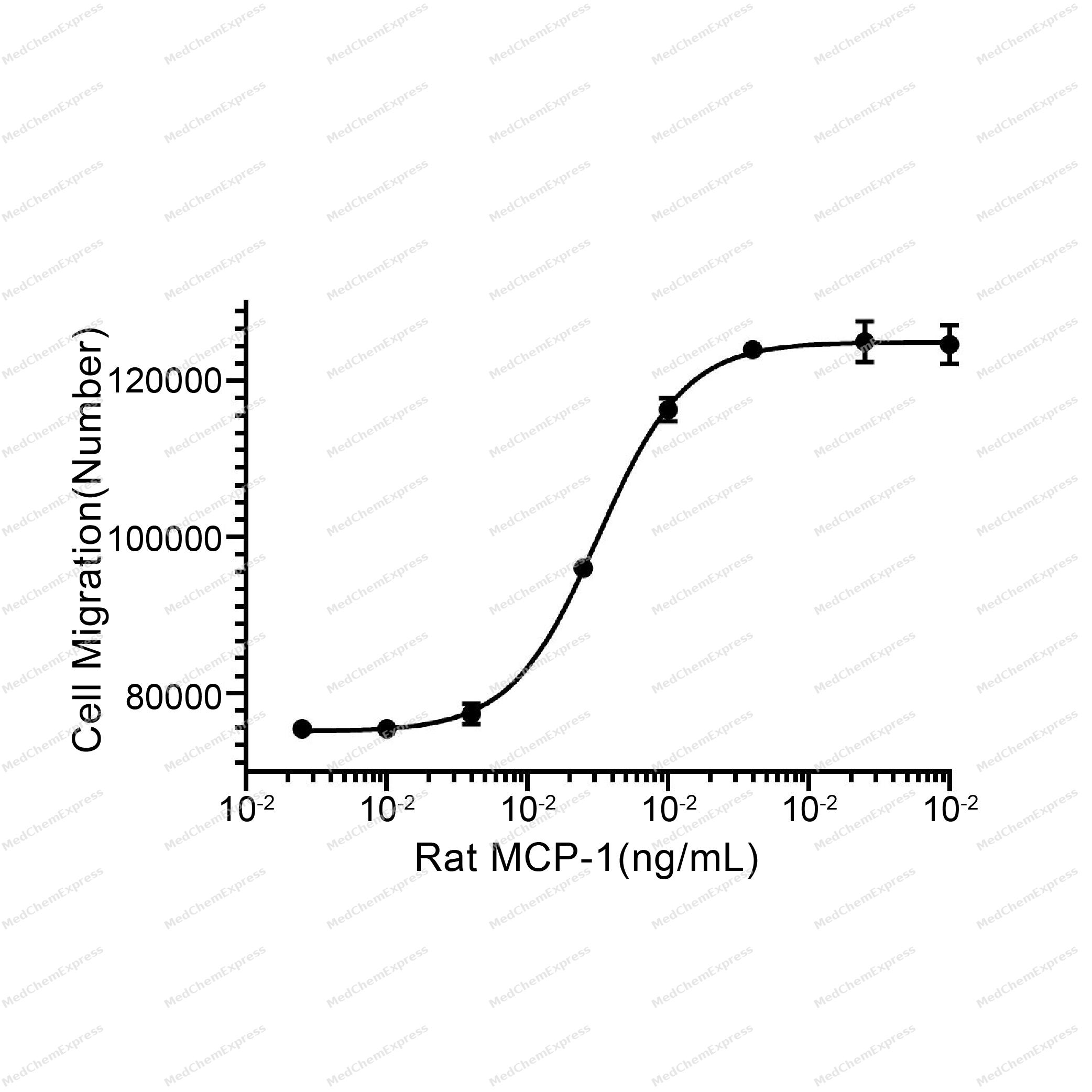
The ED50 is <0.3 μg/mL as measured by CHO-K1/Gα15/rCCR2/THP-1 cells (human Gα15 and rat CCR2 stably expressed in CHO-K1 cells).
MCE Validation Data
-
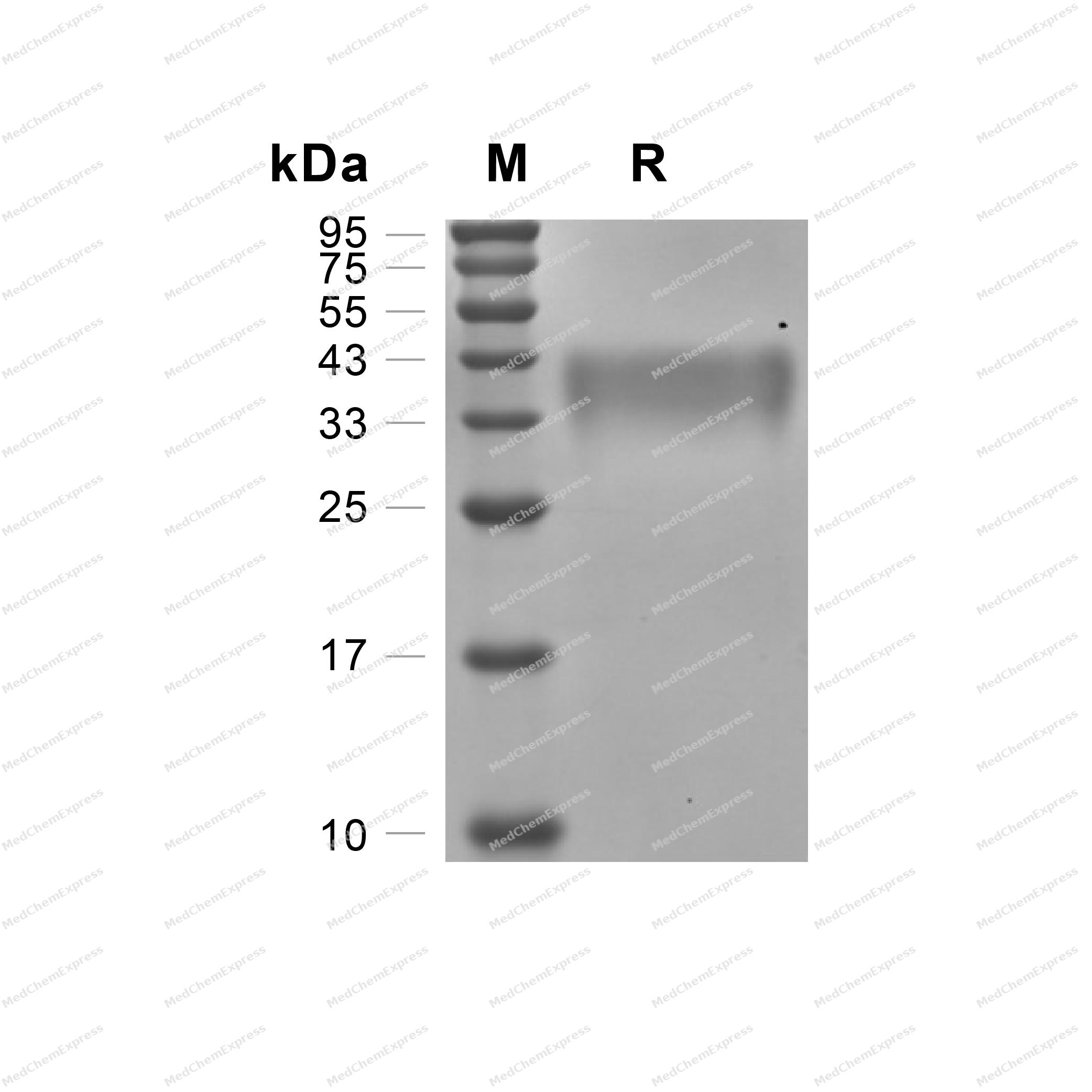
Purity - SDS-PAGE
Purity - SDS-PAGE
-
Bioactivity - Cell-Based Assay
Bioactivity - Cell-Based Assay


Publications (1)
-
Journal Impact Factor
-
Most Recent
-
Oral Dis
2025 Nov 7. PMID: 41204413


Technical Parameters
-
Species Rat
-
Source HEK293
-
Tag C-6*His
-
Accession
P14844 (Q24-N148)
-
Molecular Construction
-
N-term
-
CCL2 (Q24-N148)
Accession # P14844 -
6*His
-
C-term
-
-
Protein Length
Full Length of Mature Protein
-
Synonyms
CCL2; Small Inducible Cytokine Subfamily A (Cys-Cys), Member 2; Prev. SCYA2; Chemokine (C-C Motif) Ligand 2; MCP-1; Monocyte Chemotactic Protein 1; MCP1; Small-Inducible Cytokine A2; MCAF; C-C Motif Chemokine 2; HC11; MGC9434; Monocyte Chemotactic And Act
-
AA Sequence
QPDAVNAPLTCCYSFTGKMIPMSRLENYKRITSSRCPKEAVVFVTKLKREICADPNKEWVQKYIRKLDQNQVRSETTVFYKIASTLRTSAPLNVNLTHKSEANASTLFSTTTSSTSVEVTSMTEN
-
Predicted Molecular Mass
14.9 kDa
-
Molecular Weight
Approximately 27-37 kDa, based on SDS-PAGE under reducing conditions.
-
Glycosylation
Yes
-
Purity
≥ 95%, as determined by reducing SDS-PAGE.


Product Properties
Lyophilized powder.
Lyophilized from a 0.22 μm filtered solution of PBS.
<1 EU/μg, determined by LAL method.
It is not recommended to reconstitute to a concentration less than 100 μg/mL in ddH2O. For long term storage it is recommended to add a carrier protein (0.1% BSA, 5% HSA, 10% FBS or 5% Trehalose).
Stored at -20°C for 2 years from date of receipt. After reconstitution, it is stable at 4°C for 1 week or -20°C for longer (with carrier protein). It is recommended to freeze aliquots at -20°C or -80°C for extended storage.
Room temperature in continental US; may vary elsewhere.


Documentation
-
Data Sheet (263 KB)
-
SDS (252 KB)
- English - EN (252 KB)
- Français - FR (252 KB)
- Deutsch - DE (252 KB)
- Norwegian - NO (252 KB)
- Español - ES (252 KB)
- Swedish - SV (252 KB)
- Italian - IT (252 KB)
- Korean - KR (252 KB)
- Portuguese - PT (252 KB)
-
Handling Instructions (2659 KB)


References
[1]. Qiongyu Hao, et al. CCL2/CCR2 signaling in cancer pathogenesis. Cell Commun Signal. 2020 May 29;18(1):82. [Content Brief]
[2]. Deshmane SL, et al. Monocyte chemoattractant protein-1 (MCP-1): an overview. J Interferon Cytokine Res. 2009 Jun;29(6):313-26. [Content Brief]
[3]. Svetlana M Stamatovic, et al. Monocyte chemoattractant protein-1 regulation of blood-brain barrier permeability. J Cereb Blood Flow Metab. 2005 May;25(5):593-606. [Content Brief]
[4]. O'Connor T, et al. CCL2-CCR2 Signaling in Disease Pathogenesis. Endocr Metab Immune Disord Drug Targets. 2015;15(2):105-18. [Content Brief]
[5]. Rachel N Gomes, et al. Bacterial clearance in septic mice is modulated by MCP-1/CCL2 and nitric oxide. Shock. 2013 Jan;39(1):63-9. [Content Brief]
[6]. Guo-Qing Chang, et al. Hypothalamic CCL2/CCR2 Chemokine System: Role in Sexually Dimorphic Effects of Maternal Ethanol Exposure on Melanin-Concentrating Hormone and Behavior in Adolescent Offspring. J Neurosci. 2018 Oct 17;38(42):9072-9090. [Content Brief]

Calculators
Concentration (start) × Volume (start) = Concentration (final) × Volume (final)


 Powered by Bioz

