



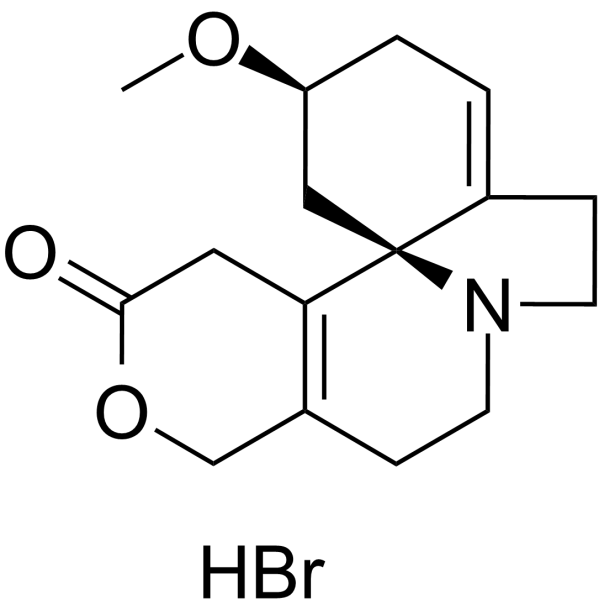
Dihydro-β-erythroidine hydrobromide
Based on 1 publication(s) in Google Scholar
Dihydro-β-erythroidine (DHβE) hydrobromide is a potent, orally active, and competitive antagonist of neuronal nAChRs. Dihydro-β-erythroidine hydrobromide shows selectivity for α4β4 and α4β2 nAChRs, with IC50s of 0.19 and 0.37 μM, respectively. Antidepressant-like activities.
For research use only. We do not sell to patients.
- Purity: 99.96%
- CAS No.: 29734-68-7
- Formula: C16H22BrNO3
- Molecular Weight:356.25
-
Storage:
4°C, sealed storage, away from moisture
* In solvent : -80°C, 6 months; -20°C, 1 month (sealed storage, away from moisture)

To place orders, for customer services and technical support, please contact: MedChemExpress USA
Tel: 609-228-6898 E-mail: [email protected] [email protected]


-
 Biological Activity
-
Chemical Information
-
Solvent & Solubility
- Purity & Documentation
- References
-
 Help & FAQs


-
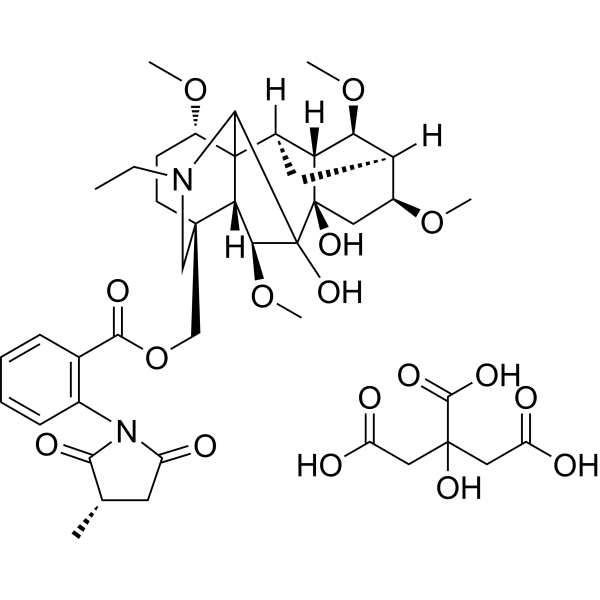
HY-N2332A
Methyllycaconitine citrate -
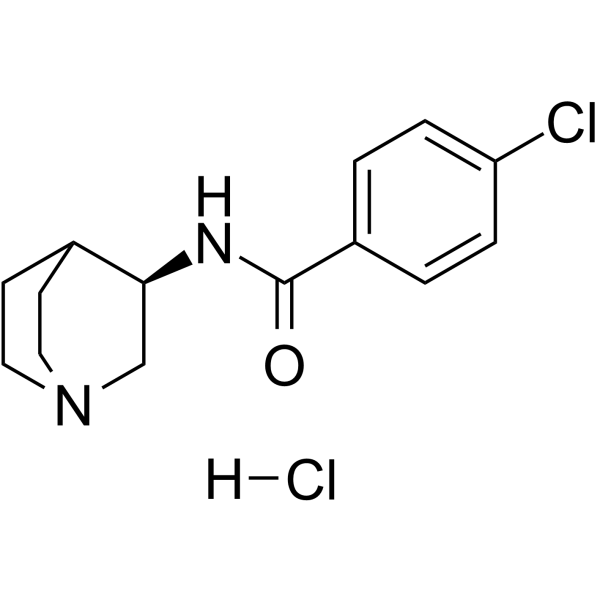
HY-12560A
PNU-282987 -
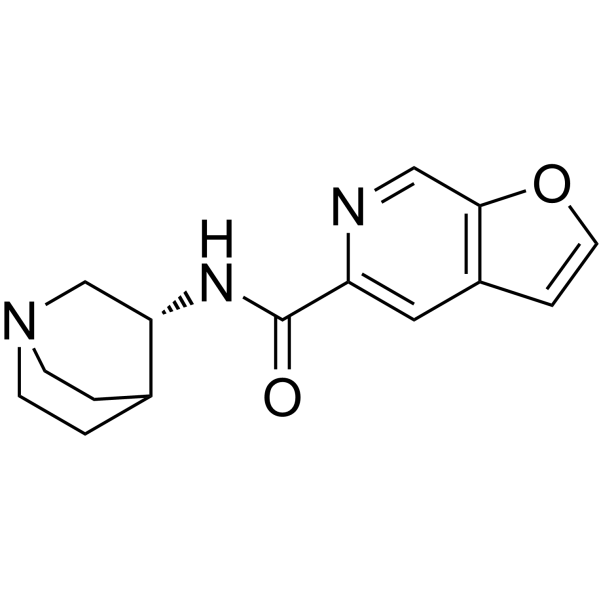
HY-105670
PHA-543613 -
HY-16950
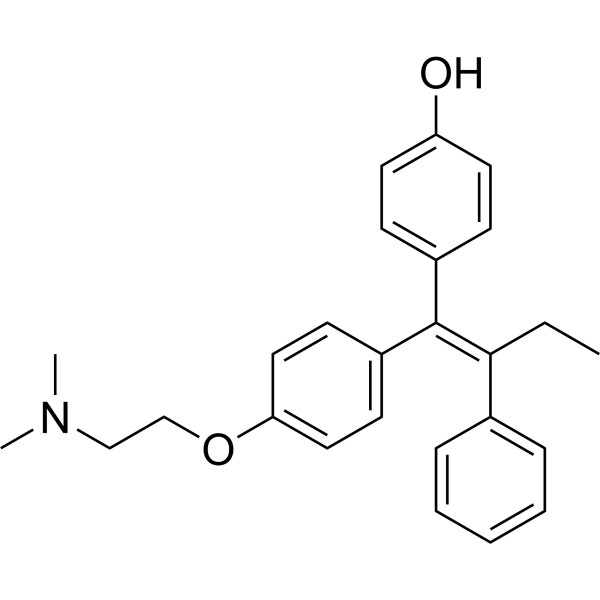
4-Hydroxytamoxifen -
HY-107678
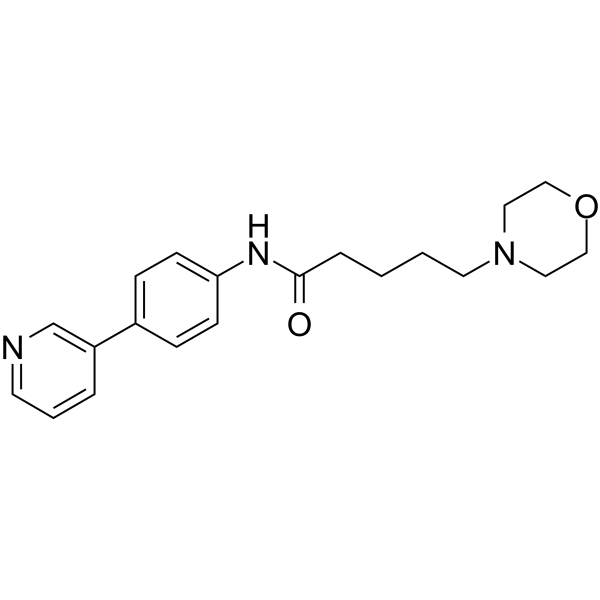
SEN12333 -
HY-135483A
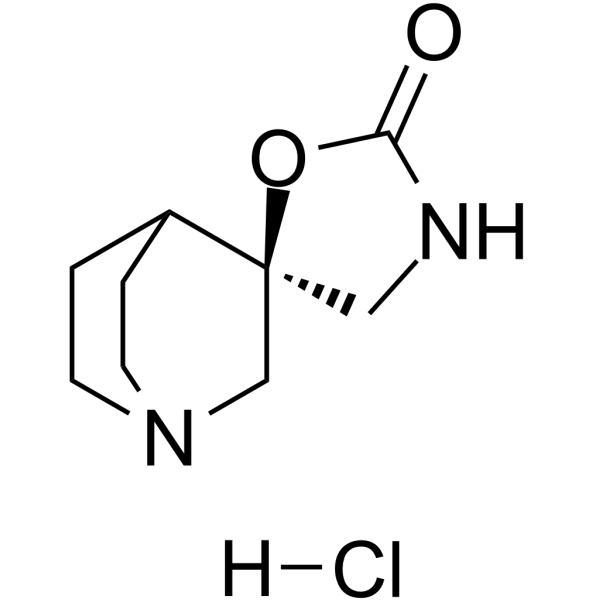
AR-R17779 hydrochloride -
HY-B1178
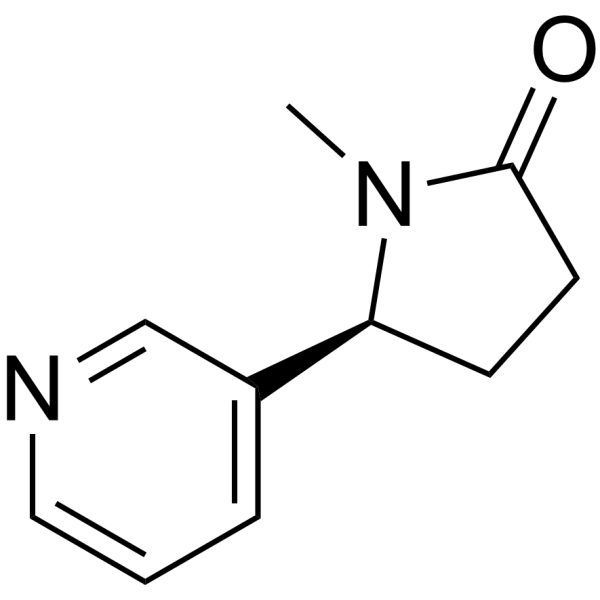
Cotinine -
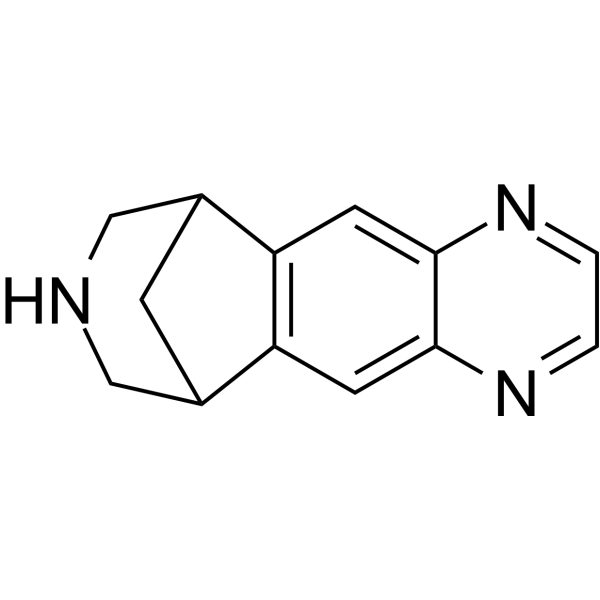
HY-10019
Varenicline -
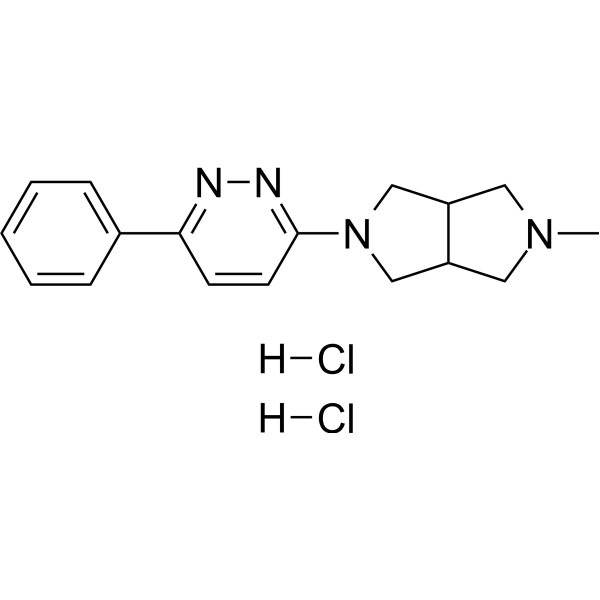
HY-59201A
A-582941 dihydrochloride -
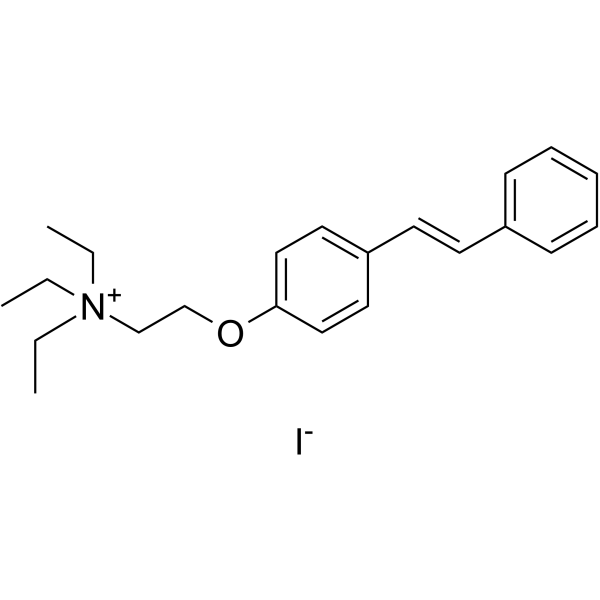
HY-107672
MG624 -
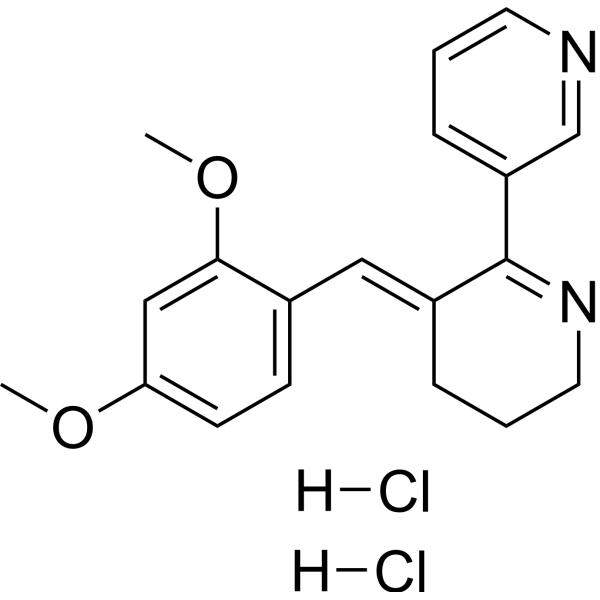
HY-14564A
GTS-21 dihydrochloride -
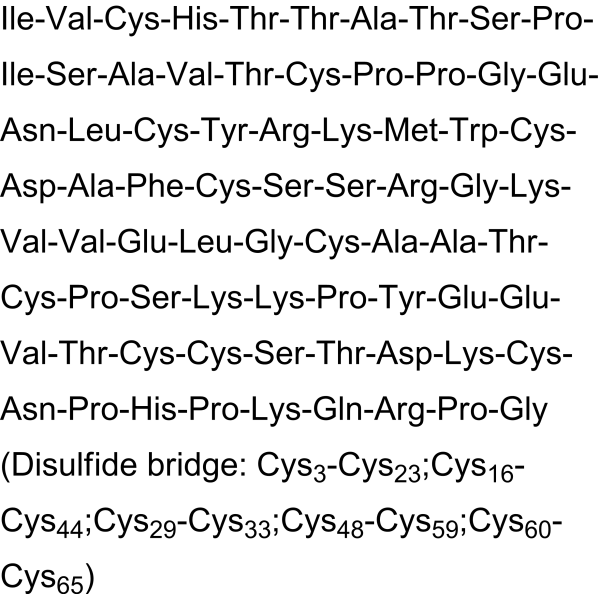
HY-P1264
α-Bungarotoxin
Publications Citing Use of MedChemExpress (MCE) Dihydro-β-erythroidine hydrobromide
More

Biological Activity
Description
Cellular Effect
|
Cell Line

|
Type | Value | Description | References |
|---|---|---|---|---|
| HEK293 | IC50 |
624 nM
Compound: DHbetaE
|
Antagonist activity at rat alpha4beta2 nAChR transfected in HEK293 cells after 10 mins by fluorescence assay in presence of nicotine
Antagonist activity at rat alpha4beta2 nAChR transfected in HEK293 cells after 10 mins by fluorescence assay in presence of nicotine
|
[PMID: 24274400] |
In Vivo
? The co-administration of Dihydro-Beta-Erythroidine hydrobromide (5.0 mg/kg; s.c) with nicotine (0.2 and 0.4 mg/kg; s.c.) prevents the development of conditioned taste aversions (CTAs)[4].
MedChemExpress (MCE) has not independently confirmed the accuracy of these methods. They are for reference only.
-
Animal Model:Male hooded Lister rats[4]
-
Dosage:0.5, 1.6 and 5.0 mg/kg
-
Administration:S.c.
-
Result:A complete blockade of the nicotine effect produced by the training dose of nicotine (0.2 mg/kg).


Chemical Information
-
CAS No. 29734-68-7
-
Appearance Solid
-
Molecular Weight 356.25
-
Formula C16H22BrNO3
-
Color White to off-white
-
SMILES
CO[C@@H]1C[C@]23C(CC4=O)=C(CO4)CCN2CCC3=CC1.Br
-
Synonyms
DHβE hydrobromide
-
Structure Classification
-
Initial Source
-
Shipping
Room temperature in continental US; may vary elsewhere.
-
Storage
4°C, sealed storage, away from moisture
* In solvent : -80°C, 6 months; -20°C, 1 month (sealed storage, away from moisture)


Publications (1)
-
Journal Impact Factor
-
Most Recent
-
Acta Pharmacol Sin
α4 nicotinic receptors on GABAergic neurons mediate a cholinergic analgesic circuit in the substantia nigra pars reticulata. [Abstract]2024 Jun;45(6):1160-1174. PMID: 38438581


Solvent & Solubility
In Vitro:
H2O : ≥ 100 mg/mL (280.70 mM)
DMSO : 50 mg/mL (140.35 mM; Need ultrasonic; Hygroscopic DMSO has a significant impact on the solubility of product, please use newly opened DMSO)
* "≥" means soluble, but saturation unknown.
Please refer to the solubility information to select the appropriate solvent. Once prepared, please aliquot and store the solution to prevent product inactivation from repeated freeze-thaw cycles.
Storage method and period of stock solution: -80°C, 6 months; -20°C, 1 month (sealed storage, away from moisture). When stored at -80°C, please use it within 6 months. When stored at -20°C, please use it within 1 month.
* Note: If you choose water as the stock solution, please dilute it to the working solution, then filter and sterilize it with a 0.22 μm filter before use.
Please refer to the solubility information to select the appropriate solvent. Once prepared, please aliquot and store the solution to prevent product inactivation from repeated freeze-thaw cycles.
Storage method and period of stock solution: -80°C, 6 months; -20°C, 1 month (sealed storage, away from moisture). When stored at -80°C, please use it within 6 months. When stored at -20°C, please use it within 1 month.
* Note: If you choose water as the stock solution, please dilute it to the working solution, then filter and sterilize it with a 0.22 μm filter before use.
Concentration (start) × Volume (start) = Concentration (final) × Volume (final)


Purity & Documentation
-
Data Sheet (280 KB)
-
SDS (252 KB)
- English - EN (252 KB)
- Français - FR (252 KB)
- Deutsch - DE (252 KB)
- Norwegian - NO (252 KB)
- Español - ES (252 KB)
- Swedish - SV (252 KB)
- Italian - IT (252 KB)
- Korean - KR (252 KB)
- Portuguese - PT (252 KB)
-
Handling Instructions (2659 KB)
References
[1]. Harvey SC, et al. Multiple determinants of dihydro-beta-erythroidine sensitivity on rat neuronal nicotinic receptor alpha subunits. J Neurochem. 1996 Nov;67(5):1953-9. [Content Brief]
[2]. Tabbara RI, et al. Nicotine enhances responding for conditioned reinforcement via α4β2 nicotinic acetylcholine receptors in the ventral tegmental area, but not the nucleus accumbens or the prefrontal cortex. Neuropharmacology. 2019 Apr;148:68-76. [Content Brief]
[3]. Clementson S, et al. Enantioselective Total Synthesis of (+)-Dihydro-β-erythroidine. J Am Chem Soc. 2019 Jun 5;141(22):8783-8786. [Content Brief]


Complete Stock Solution Preparation Table
Please refer to the solubility information to select the appropriate solvent. Once prepared, please aliquot and store the solution to prevent product inactivation from repeated freeze-thaw cycles.
Storage method and period of stock solution: -80°C, 6 months; -20°C, 1 month (sealed storage, away from moisture). When stored at -80°C, please use it within 6 months. When stored at -20°C, please use it within 1 month.
| Optional Solvent | Concentration Solvent Mass | 1 mg | 5 mg | 10 mg | 25 mg |
|---|---|---|---|---|---|
| DMSO / H2O | 1 mM | 2.8070 mL | 14.0351 mL | 28.0702 mL | 70.1754 mL |
| 5 mM | 0.5614 mL | 2.8070 mL | 5.6140 mL | 14.0351 mL | |
| 10 mM | 0.2807 mL | 1.4035 mL | 2.8070 mL | 7.0175 mL | |
| 15 mM | 0.1871 mL | 0.9357 mL | 1.8713 mL | 4.6784 mL | |
| 20 mM | 0.1404 mL | 0.7018 mL | 1.4035 mL | 3.5088 mL | |
| 25 mM | 0.1123 mL | 0.5614 mL | 1.1228 mL | 2.8070 mL | |
| 30 mM | 0.0936 mL | 0.4678 mL | 0.9357 mL | 2.3392 mL | |
| 40 mM | 0.0702 mL | 0.3509 mL | 0.7018 mL | 1.7544 mL | |
| 50 mM | 0.0561 mL | 0.2807 mL | 0.5614 mL | 1.4035 mL | |
| 60 mM | 0.0468 mL | 0.2339 mL | 0.4678 mL | 1.1696 mL | |
| 80 mM | 0.0351 mL | 0.1754 mL | 0.3509 mL | 0.8772 mL | |
| 100 mM | 0.0281 mL | 0.1404 mL | 0.2807 mL | 0.7018 mL |
* Note: If you choose water as the stock solution, please dilute it to the working solution, then filter and sterilize it with a 0.22 μm filter before use.


Dihydro-β-erythroidine hydrobromide Related Classifications
HY-107670 Related Classifications
 Powered by Bioz