



Mivavotinib
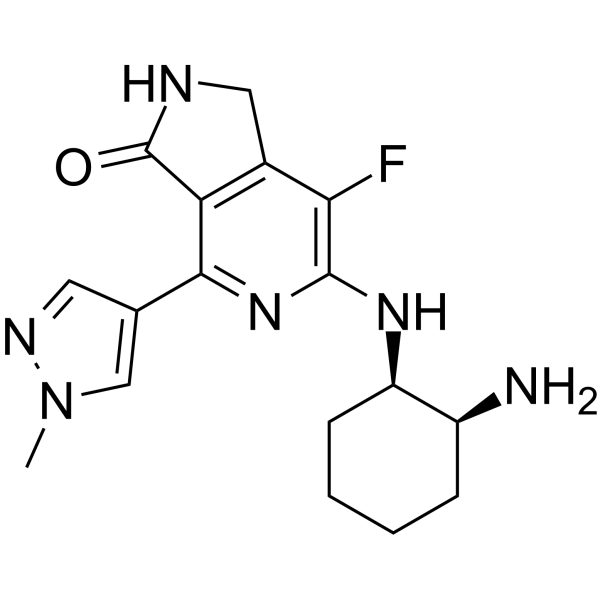
TAK-659 is a highly potent, selective, reversible and orally available dual inhibitor of spleen tyrosine kinase (SYK) and fms related tyrosine kinase 3 (FLT3), with an IC50 of 3.2 nM and 4.6 nM for SYK and FLT3, respectively. TAK-659 induces cell death in tumor cells but not in nontumor cells, and with potential for the treatment of chronic lymphocytic leukemia (CLL).
For research use only. We do not sell to patients.
- CAS No.: 1312691-33-0
- Formula: C17H21FN6O
- Molecular Weight:344.39
-
Storage:
Please store the product under the recommended conditions in the Certificate of Analysis.

To place orders, for customer services and technical support, please contact: MedChemExpress USA
Tel: 609-228-6898 E-mail: [email protected] [email protected]


-
 Biological Activity
-
Chemical Information
- Protocols
- Purity & Documentation
- References
-
 Help & FAQs


-
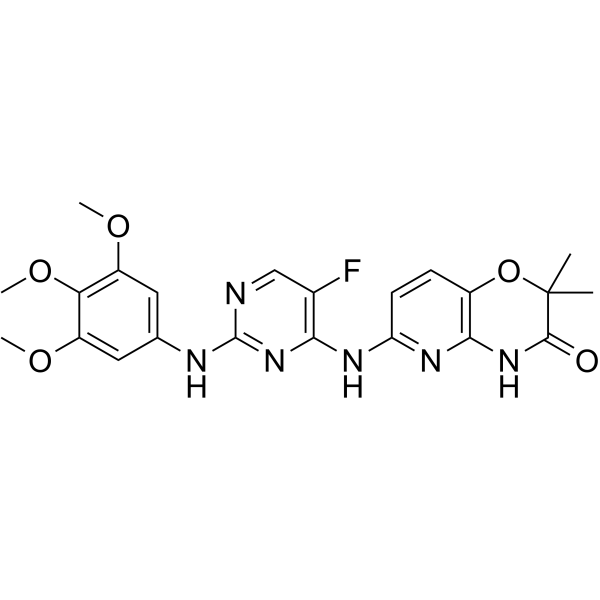
HY-11108
R406 free baseSyk/FLT3 Inhibitor -
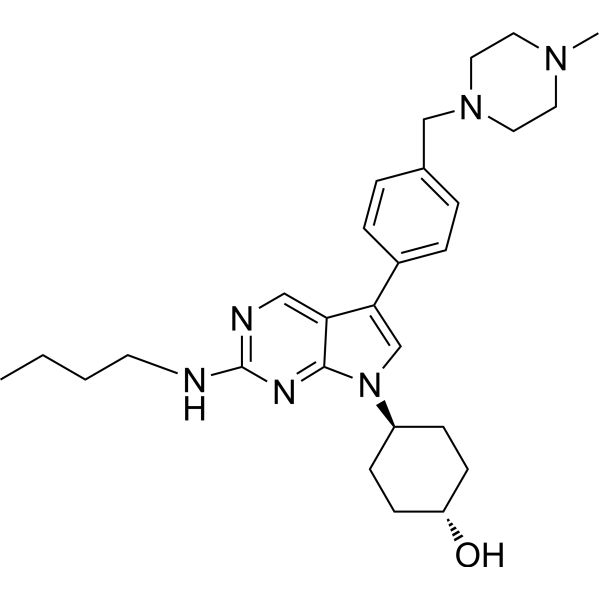
HY-12344
UNC2025MER/FLT3 Inhibitor -
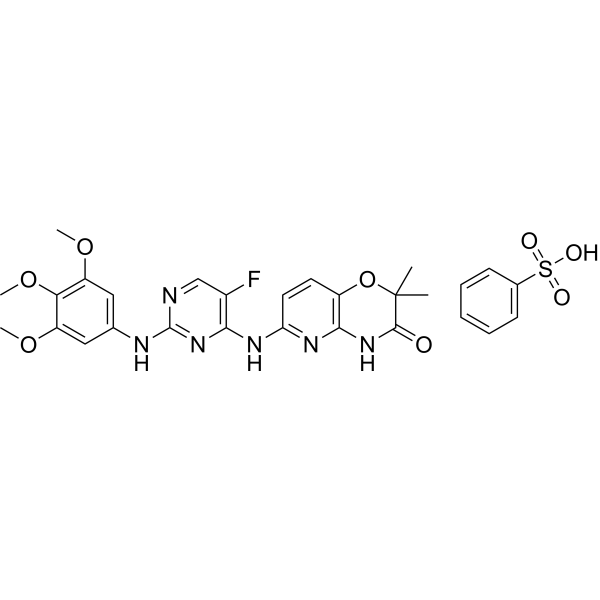
HY-12067
R406Syk/FLT3 Inhibitor -
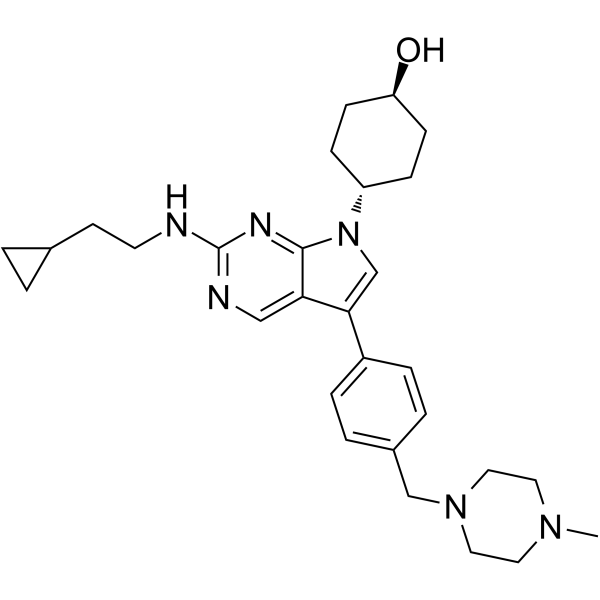
HY-101549
MRX-2843MERTK/FLT3 Inhibitor -
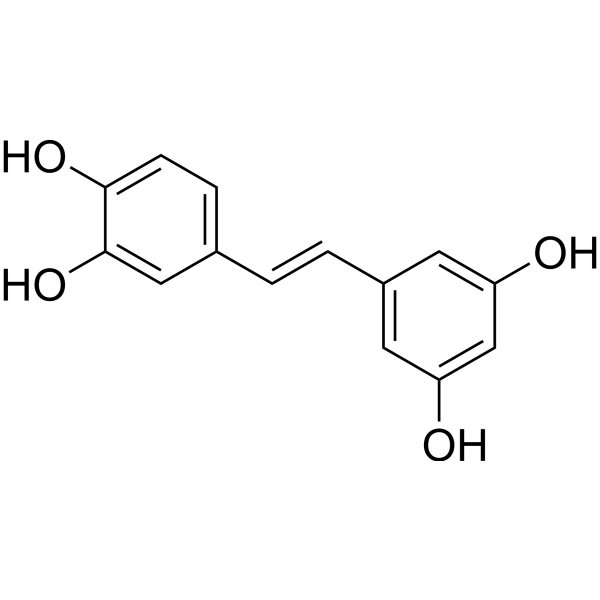
HY-13518
PiceatannolSyk Inhibitor -
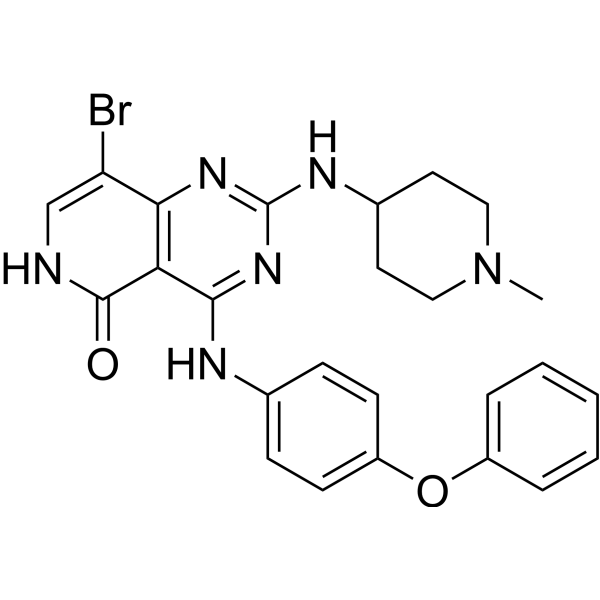
HY-12333
DenfivontinibFLT3 Inhibitor -
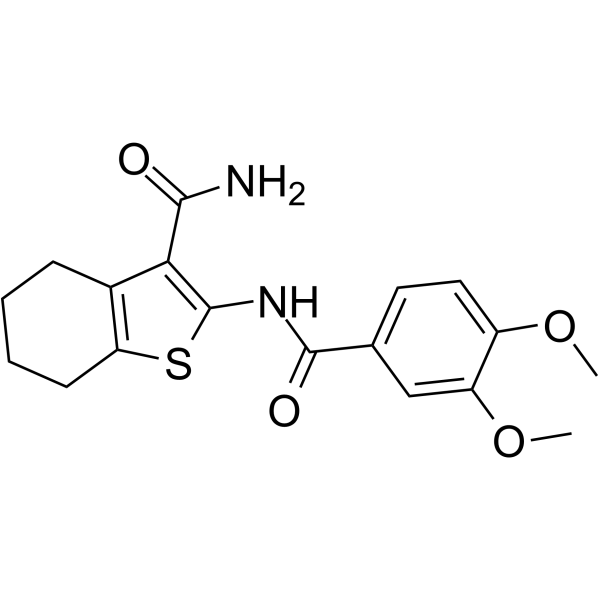
HY-13907
TCS 359FLT3 Inhibitor -
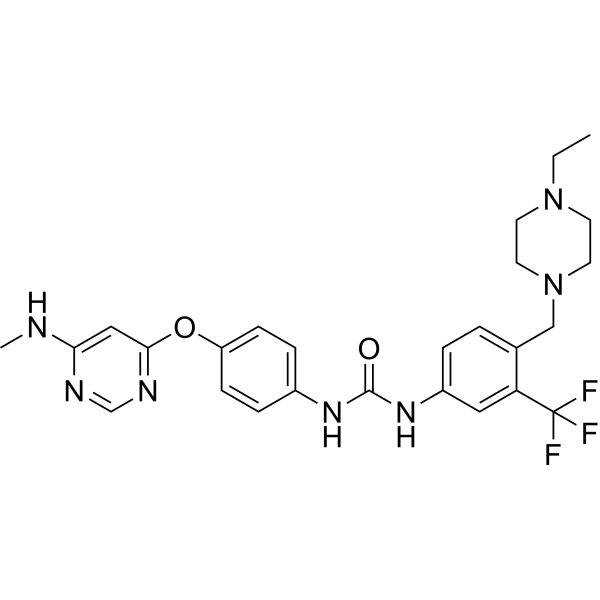
HY-15002
AST 487c-Kit Inhibitor -
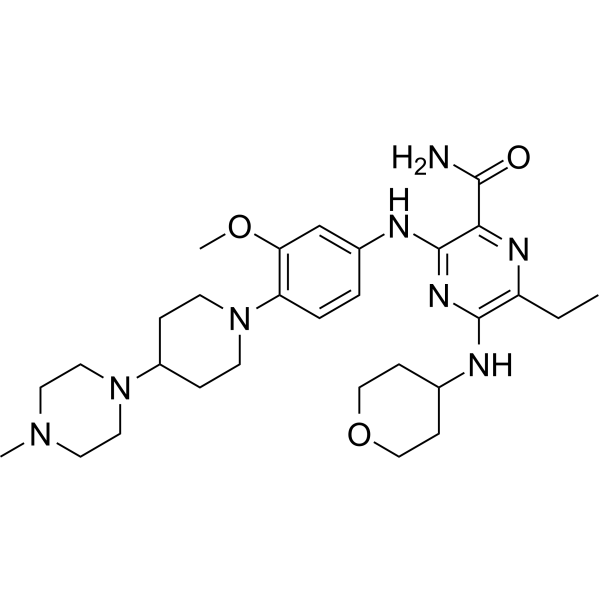
HY-12432
GilteritinibFLT3/AXL Inhibitor -
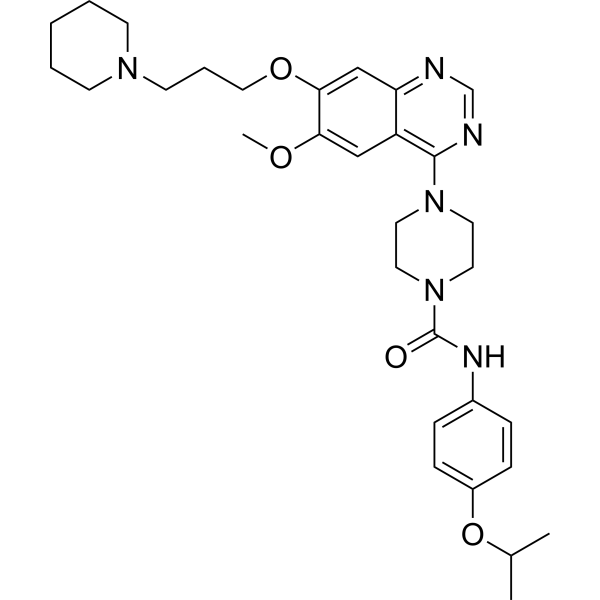
HY-10202
TandutinibFLT3 Inhibitor -
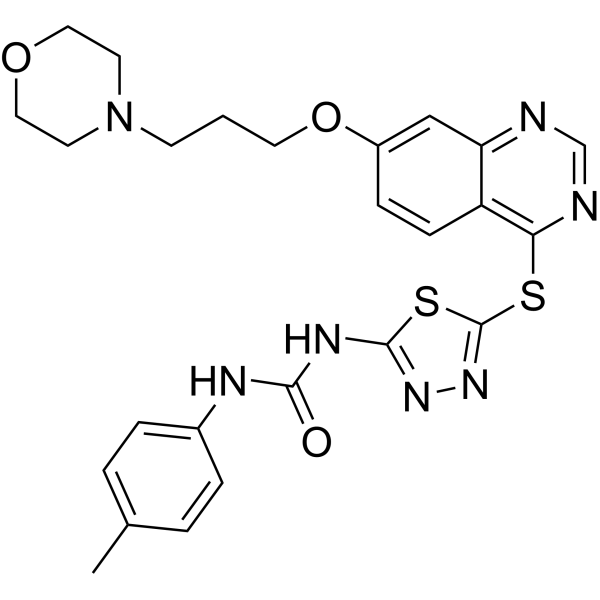
HY-12960
SKLB4771Flt3 Inhibitor -
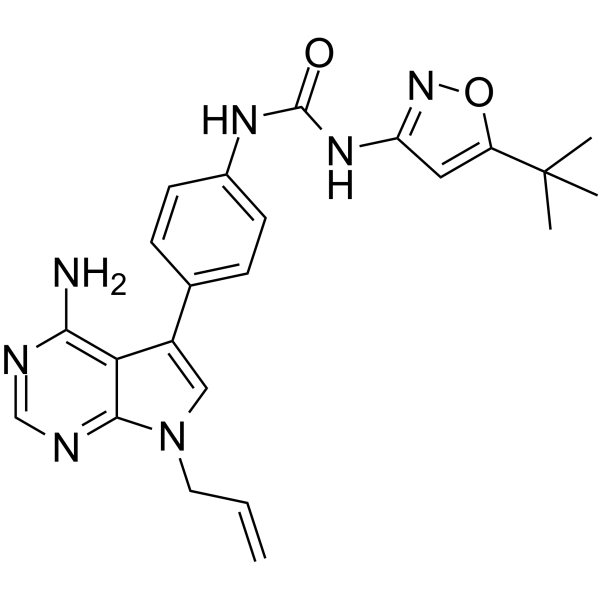
HY-128571
FLT3-IN-4FLT3 Inhibitor


Biological Activity
Description
IC50 & Target
IC50: 3.2 nM (Syk), 4.6 nM (FLT3)[1]
Cellular Effect
|
Cell Line

|
Type | Value | Description | References |
|---|---|---|---|---|
| Hepatocyte | EC50 |
>10 μM
Compound: 3b; TAK-659
|
Cytotoxicity against human hepatocytes assessed as decrease in cell viability after 72 to 96 hrs by MTS assay
Cytotoxicity against human hepatocytes assessed as decrease in cell viability after 72 to 96 hrs by MTS assay
|
[PMID: 27839918] |
| MOLM-13 | EC50 |
0.11 μM
Compound: 3b; TAK-659
|
Cytotoxicity against FLT3-ITD dependent human MOLM13 cells assessed as decrease in cell viability after 72 to 96 hrs by MTS assay
Cytotoxicity against FLT3-ITD dependent human MOLM13 cells assessed as decrease in cell viability after 72 to 96 hrs by MTS assay
|
[PMID: 27839918] |
| MV4-11 | EC50 |
0.018 μM
Compound: 3b; TAK-659
|
Cytotoxicity against FLT3-ITD dependent human MV411 cells assessed as decrease in cell viability after 72 to 96 hrs by MTS assay
Cytotoxicity against FLT3-ITD dependent human MV411 cells assessed as decrease in cell viability after 72 to 96 hrs by MTS assay
|
[PMID: 27839918] |
| Ramos | EC50 |
9.8 nM
Compound: 3b; TAK-659
|
Inhibition of SYK in TgM-stimulated human Ramos cells expressing RA1/GFP-tagged BLNK assessed as reduction in RA1/GFP-tagged BLNK phosphorylation preincubated for 1 hr followed by IgM stimulation for 20 mins by TR-FRET assay
Inhibition of SYK in TgM-stimulated human Ramos cells expressing RA1/GFP-tagged BLNK assessed as reduction in RA1/GFP-tagged BLNK phosphorylation preincubated for 1 hr followed by IgM stimulation for 20 mins by TR-FRET assay
|
[PMID: 27839918] |
| RS4-11 | EC50 |
1.4 μM
Compound: 3b; TAK-659
|
Cytotoxicity against human RS4:11 cells harboring wild type FLT3 assessed as decrease in cell viability after 72 to 96 hrs by MTS assay
Cytotoxicity against human RS4:11 cells harboring wild type FLT3 assessed as decrease in cell viability after 72 to 96 hrs by MTS assay
|
[PMID: 27839918] |
| Sf9 | IC50 |
135 nM
Compound: 3b; TAK-659
|
Inhibition of human N-terminal 6His-tagged VEGFR2 (807 to 1171 residues) expressed in Sf9 insect cells using 5-carboxyfluorescein(FAM)-EEPLYWSFPAKKK-NH2 as substrate after 1 hr in presence of ATP by electrophoretic mobility shift assay
Inhibition of human N-terminal 6His-tagged VEGFR2 (807 to 1171 residues) expressed in Sf9 insect cells using 5-carboxyfluorescein(FAM)-EEPLYWSFPAKKK-NH2 as substrate after 1 hr in presence of ATP by electrophoretic mobility shift assay
|
[PMID: 27839918] |
| Sf9 | IC50 |
3.2 nM
Compound: 3b; TAK-659
|
Inhibition of human C-terminal 6His-tagged SYK (356 to 635 residues) expressed in Sf9 insect cells using 5-carboxyfluorescein(FAM)-EEPLYWSFPAKKK-NH2 as substrate after 1 hr in presence of ATP by electrophoretic mobility shift assay
Inhibition of human C-terminal 6His-tagged SYK (356 to 635 residues) expressed in Sf9 insect cells using 5-carboxyfluorescein(FAM)-EEPLYWSFPAKKK-NH2 as substrate after 1 hr in presence of ATP by electrophoretic mobility shift assay
|
[PMID: 27839918] |
| Sf9 | IC50 |
4.6 nM
Compound: 3b; TAK-659
|
Inhibition of human N-terminal 6His-tagged FLT3 (564 to 993 residues) expressed in Sf9 insect cells using 5-carboxyfluorescein(FAM)-KKKKEEIYFFFG-NH2 as substrate after 1 hr in presence of ATP by electrophoretic mobility shift assay
Inhibition of human N-terminal 6His-tagged FLT3 (564 to 993 residues) expressed in Sf9 insect cells using 5-carboxyfluorescein(FAM)-KKKKEEIYFFFG-NH2 as substrate after 1 hr in presence of ATP by electrophoretic mobility shift assay
|
[PMID: 27839918] |
In Vitro
TAK-659 inhibits cellular proliferation in SYK-dependent DLBCL and FLT3-dependent AML cell lines[1][3].
TAK-659 (5 μM; 1-24 hours) induces Casp3 activation in the LMP2A/MYC cells which was readily apparent at 4 h and reached maximum levels at 8 h of treatment[4].
TAK-659 (0.01-10 μM; 1 hour) stimulates expression of phospho-Syk at Tyr525 and Tyr352 and phospho-ERK1/2 increased in Ramos cells[2].
MedChemExpress (MCE) has not independently confirmed the accuracy of these methods. They are for reference only. Further protocols information, click here.
-
Cell Line:LMP2A/MYC cells
-
Concentration:5 µM
-
Incubation Time:1 hour, 2 hours, 4 hours, 8 hours, 24 hours
-
Result:Induced apoptosis in LMP2A/MYC lymphoma cells.
-
Cell Line:Ramos cells
-
Concentration:0.01 μM,0.1 μM,1 μM,10 μM
-
Incubation Time:1 hour
-
Result:Enhanced expression of phospho-Syk at Tyr525 and Tyr352 and phospho-ERK1/2 in stimulated Ramos cells.
In Vivo
TAK-659 treatment kills tumor cells, but not host cells within the spleen and tumors[4].
TAK-659 treatment abrogates metastasis of tumor cells into bone marrow[4].
MedChemExpress (MCE) has not independently confirmed the accuracy of these methods. They are for reference only.
-
Animal Model:LMP2A/MYC double transgenic mice[4]
-
Dosage:100 mg/kg/day
-
Administration:Oral gavage; for 10 days
-
Result:Inhibited LMP2A-induced tumor cell survival in vivo.


Chemical Information
-
CAS No. 1312691-33-0
-
Molecular Weight 344.39
-
Formula C17H21FN6O
-
SMILES
FC1=C(N[C@@H]2CCCC[C@@H]2N)N=C(C3=CN(C)N=C3)C4=C1CNC4=O
-
Synonyms
TAK-659; CB-659
-
Shipping
Room temperature in continental US; may vary elsewhere.
-
Storage
Please store the product under the recommended conditions in the Certificate of Analysis.

Protocols
-
Cell Cytotoxicity Assay
Cytotoxicity assays are usually based on the assessment of cell membrane damage, which can also be indirectly detected by measuring cell viability. Detection methods include MTT assay, CKK-8 assay, LDH assay and ATP assay, etc.
-
Mammalian live/dead viability and cytotoxicity staining
Live/dead viability and cytotoxicity staining assays are based on the simultaneous detection of intracellular esterase activity in metabolically active (viable) cells and membrane integrity loss in non-viable cells. In commonly used dual-staining approaches, membrane-permeant fluorogenic substrates are converted by intracellular esterases into fluorescent products in live cells, while impermeant DNA-binding dyes selectively enter cells with compromised plasma membranes and label nucleic acids in dead or dying cells, enabling discrimination between viable and non-viable populations by fluorescence microscopy or flow cytometry.
-
Apoptosis Solutions
Apoptosis is a regulated, generally non-lytic cell-death pathway that removes unwanted, damaged, infected, or abnormal cells through coordinated morphological changes, caspase activation, DNA fragmentation, and membrane remodeling. The intrinsic apoptosis pathway is controlled mainly by mitochondrial outer membrane permeabilization, BCL-2 family proteins, cytochrome c release, apoptosome formation, caspase-9 activation, and downstream executioner caspase-3/7 activation. The extrinsic apoptosis pathway is initiated by death receptors such as Fas, TNFR, and TRAIL receptors, which recruit adaptor proteins and activate caspase-8 before engaging executioner caspases or mitochondrial amplification through BID cleavage. Apoptosis is linked to many phenotypes, including cancer cell killing, tissue homeostasis, immune regulation, neurodegeneration, infection response, and treatment-induced cytotoxicity; unresolved questions include how apoptosis interacts with necroptosis, pyroptosis, ferroptos


Purity & Documentation
References
[1]. Lam B, et al. Discovery of TAK-659 an orally available investigational inhibitor of Spleen Tyrosine Kinase (SYK). Bioorg Med Chem Lett. 2016 Dec 15;26(24):5947-5950. [Content Brief]
[2]. Purroy N, et al. Inhibition of BCR signaling using the Syk inhibitor TAK-659 prevents stroma-mediated signaling in chronic lymphocytic leukemia cells. Oncotarget. 2017 Jan 3;8(1):742-756. [Content Brief]
[4]. Cen O, et al. Spleen Tyrosine Kinase Inhibitor TAK-659 Prevents Splenomegaly and Tumor Development in a Murine Model of Epstein-Barr Virus-Associated Lymphoma. mSphere. 2018 Aug 22;3(4). [Content Brief]

Calculators
Concentration (start) × Volume (start) = Concentration (final) × Volume (final)


Mivavotinib Related Classifications
HY-100867 Related Classifications
 Powered by Bioz