



Ex 621-750 nm Red
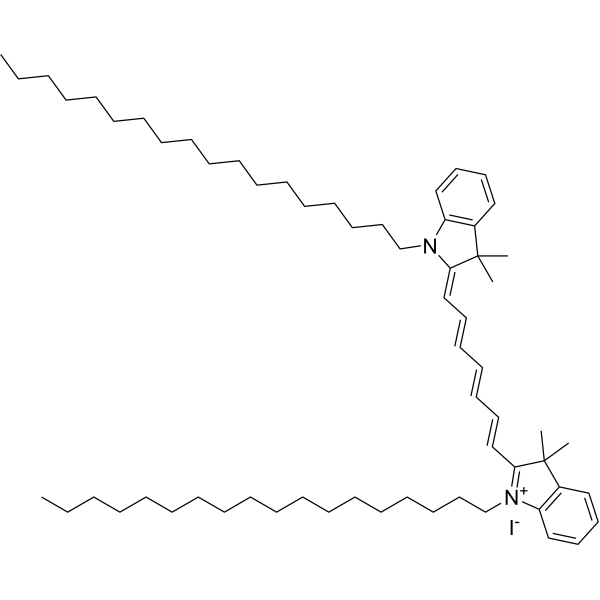
- Formula: C63H101IN2
- Molecular Weight: 1013.39
DiR is a long-chain carbocyanine dye. Carbocyanine dyes are widely used as Di to label cells, organelles, liposomes, viruses and lipoproteins.
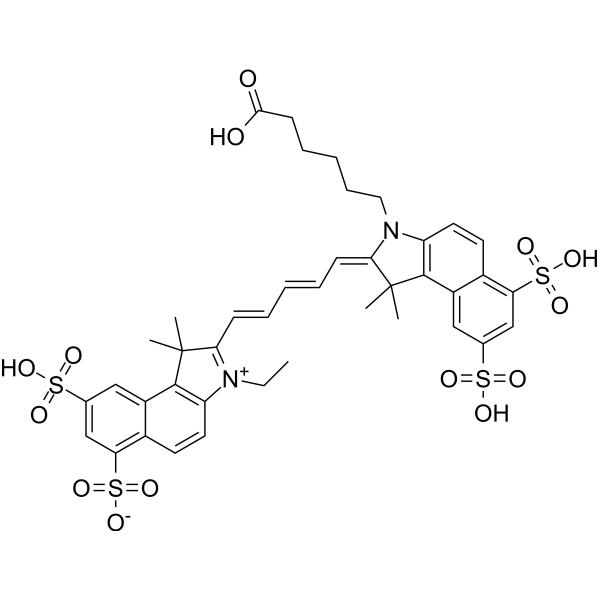
- Formula: C41H44N2O14S4
- Molecular Weight: 917.05
Cy5.5 is a CY dye. CY, short for Cyanine, is a compound consisting of two nitrogen atoms connected by an odd number of methyl units. Cyanine compounds have the characteristics of long wavelength, adjustable absorption and emission, high extinction coefficient, good water solubility and relatively simple synthesis. CY dyes are of en used for the labeling of proteins, antibodies and small molecular compounds. For the labeling of protein antibodies, the combination can be completed through a simple mixing reaction. Below, we introduce the labeling method of protein antibody labeling, which has certain reference significance.
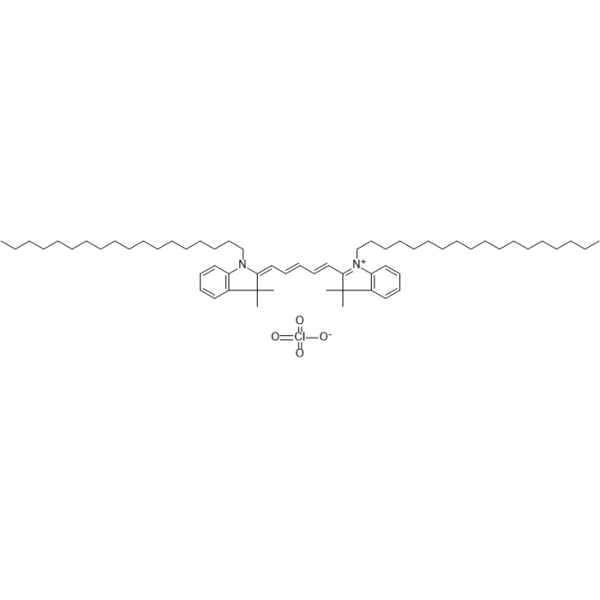
- Formula: C61H99ClN2O4
- Molecular Weight: 959.90
DiD is a long-chain carbocyanine dye. Carbocyanine dyes are widely used as Di to label cells, organelles, liposomes, viruses and lipoproteins (Ex/Em = 633/665 nm).
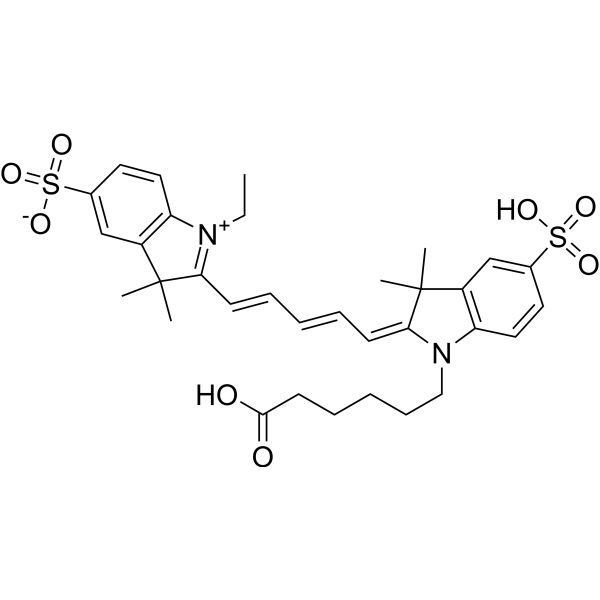
- Formula: C33H40N2O8S2
- Molecular Weight: 656.81
CY5 is a CY dye. CY, short for Cyanine, is a compound consisting of two nitrogen atoms connected by an odd number of methyl units. Cyanine compounds have the characteristics of long wavelength, adjustable absorption and emission, high extinction coefficient, good water solubility and relatively simple synthesis. CY dyes are of en used for the labeling of proteins, antibodies and small molecular compounds. For the labeling of protein antibodies, the combination can be completed through a simple mixing reaction. Below, we introduce the labeling method of protein antibody labeling, which has certain reference significance.
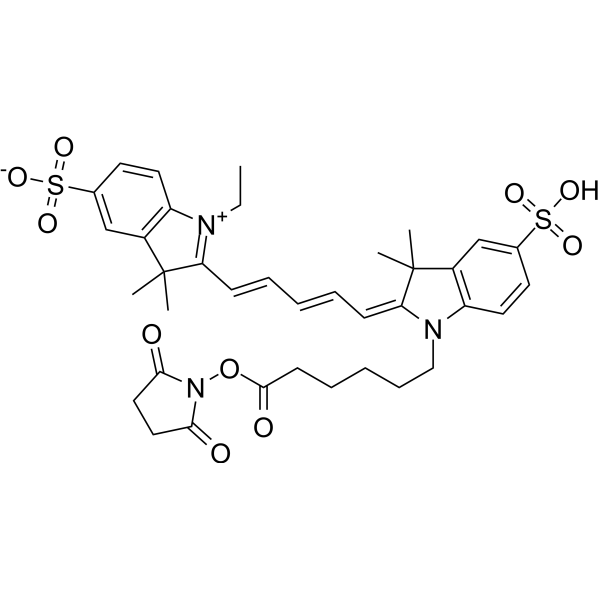
- Formula: C37H43N3O10S2
- Molecular Weight: 753.88
Cy5-SE (Cy5 NHS Ester) is a reactive dye for the labeling of amino-groups in peptides, proteins, and oligonucleotides. This dye requires small amount of organic co-solvent (such as DMF or DMSO) to be used in labeling reaction. This reagent is ideal for very cost-efficient labeling of soluble proteins, as well as all kinds of peptides and oligonucleotides. This reagent also works well in organic solvents for small molecule labeling. Excitation (nm):649, Emission (nm): 670.
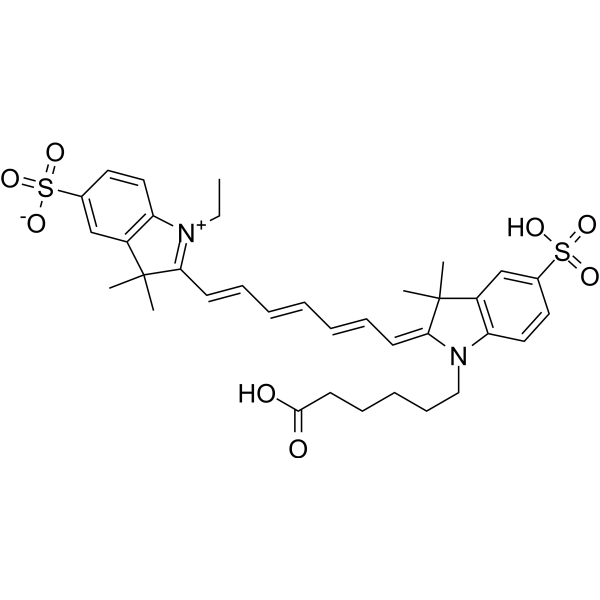
- Formula: C35H42N2O8S2
- Molecular Weight: 682.85
CY7 is a CY dye. CY, short for Cyanine, is a compound consisting of two nitrogen atoms connected by an odd number of methyl units. Cyanine compounds have the characteristics of long wavelength, adjustable absorption and emission, high extinction coefficient, good water solubility and relatively simple synthesis. CY dyes are of en used for the labeling of proteins, antibodies and small molecular compounds. For the labeling of protein antibodies, the combination can be completed through a simple mixing reaction. Below, we introduce the labeling method of protein antibody labeling, which has certain reference significance.
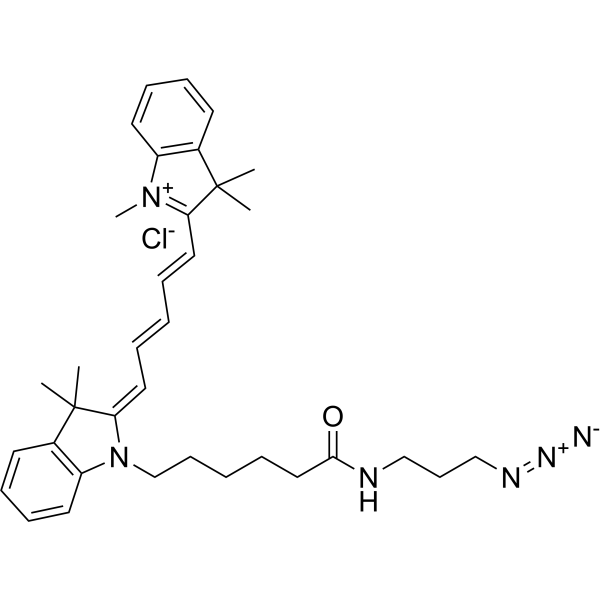
- Formula: C35H45ClN6O
- Molecular Weight: 601.22
Cyanine5 azide chloride is a Fluorescent probe for cell-selective bacterial protein labeling, as well as a fluorescent dye for single-molecule imaging and dynamic tracking of intracellular organelles. Cyanine5 azide chloride can conjugate with the alkynyl side chain of propargylglycine incorporated into bacterial proteins by the engineered methionyl-tRNA synthetase variant PraRS via copper (I)-catalyzed azide-alkyne [3+2] cycloaddition reaction, thereby enabling in-gel fluorescent visualization of labeled proteins. Cyanine5 azide chloride can diffuse across cell membranes and undergo copper-free click reaction with DBCO-functionalized scAVD pre-bound to DBCO-functionalized biotin, forming fluorescent nanoprobes with enhanced brightness, photostability and localization accuracy, and exhibiting discrete photobleaching steps. The excitation wavelength of Cyanine5 azide chloride is Ex = 633 nm.
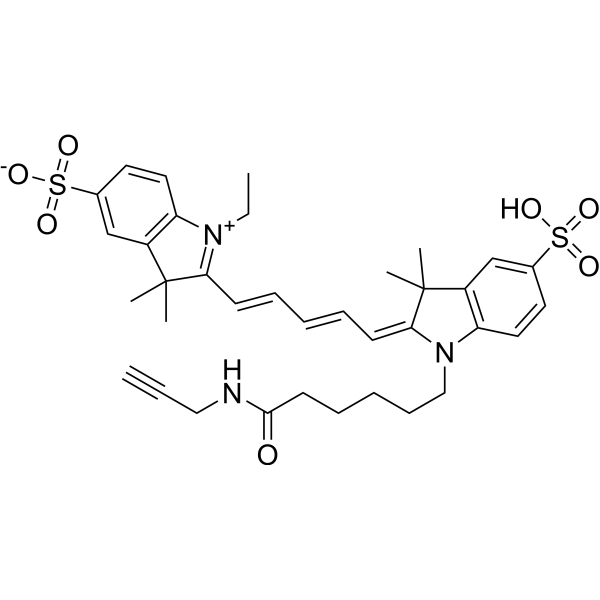
- Formula: C36H43N3O7S2
- Molecular Weight: 693.87
CY5-YNE (Sulfo-Cyanine5-alkyne) is a class of near-infrared fluorescent dye derivatives used in research related to the labeling of proteins, peptides, nucleic acids, and nanomaterials. CY5-YNE is a click chemistry reagent. It contains an Alkyne group and can undergo copper-catalyzed azide-alkyne cycloaddition (CuAAc) with molecules containing Azide groups. CY5-YNE exhibits photostable emission properties in imaging applications, enabling covalent labeling of azide-modified substrates.
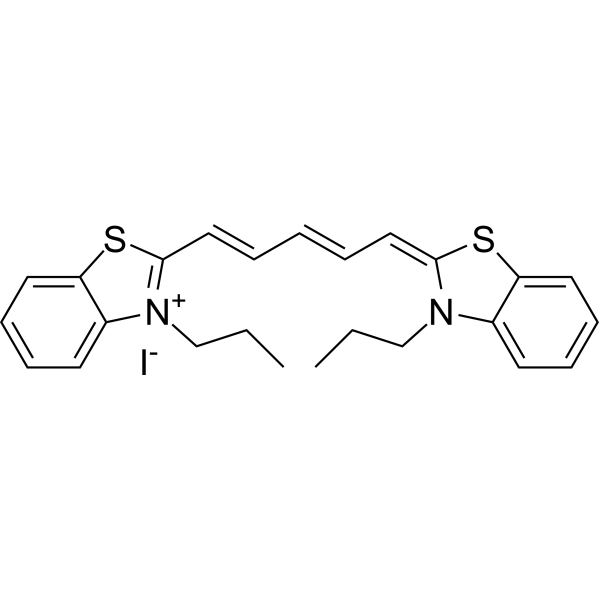
- Formula: C25H27IN2S2
- Molecular Weight: 546.53
DiSC3(5) is a fluorescent probe commonly used as a tracer dye to evaluate mitochondrial membrane potential. The excitation/emission wavelength of DiSC3(5) is up to 622/670 nm. DiSC3(5) can inhibit the respiratory system associated with mitochondrial NAD, and the IC50 value is 8 μM. DiSC3(5) in the presence of Na+/K+-ATPase inhibitor ouabain 2 can induce membrane hyperpolarization of Ehrlich ascites tumor cells.
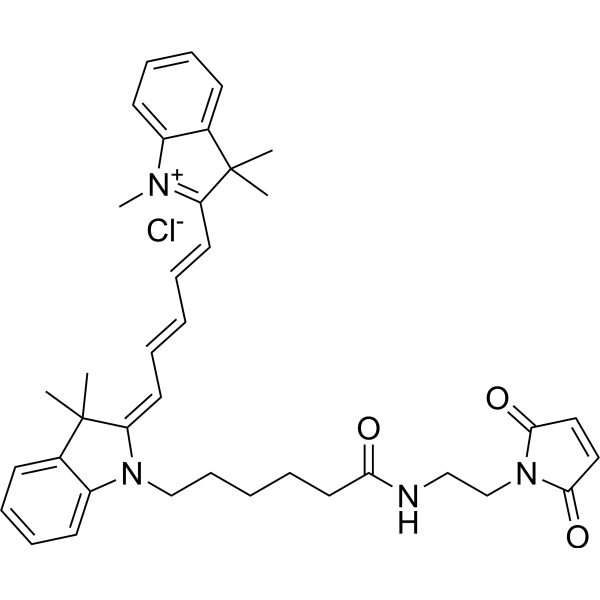
- Formula: C38H45ClN4O3
- Molecular Weight: 641.24
Cy5 maleimide (Cyanine5 maleimide) is a single-reactive dye containing a maleimide group and a CY5 fluorescent group, which can selectively couple with a thiol group. Cy5 maleimide can be used to label antibodies, peptides, or proteins (Ex/Em = 646/664 nm).
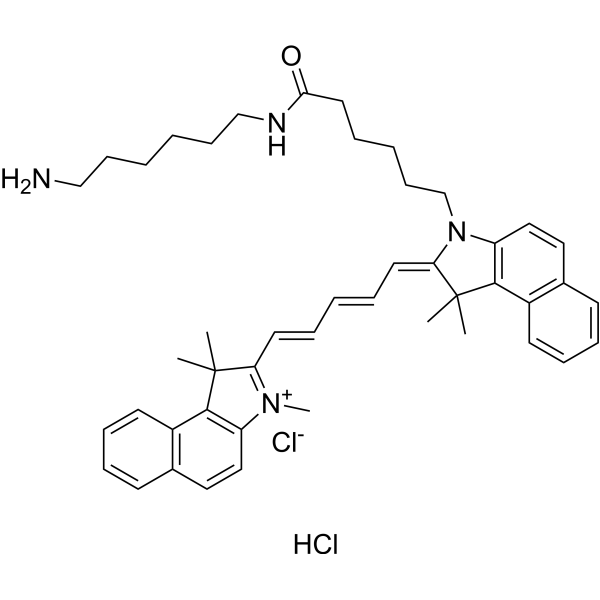
- Formula: C46H58Cl2N4O
- Molecular Weight: 753.88
Cyanine5.5 amine (Cy 5.5 amine), a Cy5.5 Analogue, is a near-infrared (NIR) fluorescent dye (Ex=648 nm, Em=710 nm). Cyanine5.5 amine can be used in the preparation of Cy5.5-labeled nanoparticles, which can be tracked and imaged with low fluorescence background using confocal microscopy.
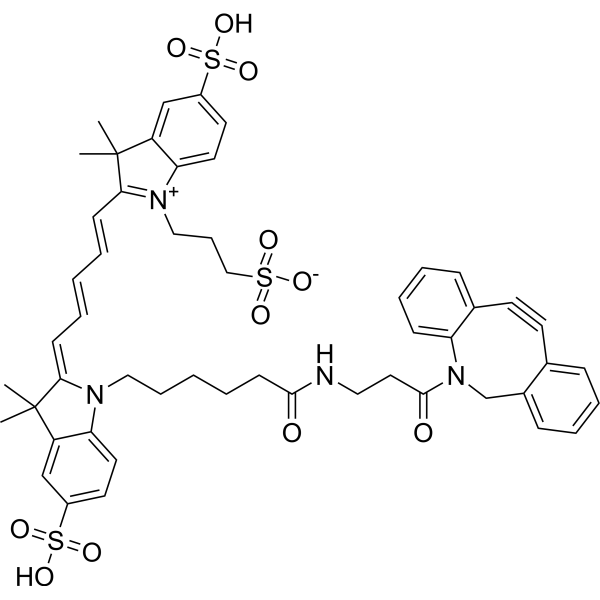
- Formula: C52H56N4O11S3
- Molecular Weight: 1009.22
Cy5-DBCO (DBCO-Sulfo-Cy5) is a near-infrared (NIR)red fluorescent dye with λabsand λem of 646nm and 670 nm, respectively. Cy5-DBCO (DBCO-Sulfo-Cy5) is not suitable for staining intracellular components of permeabilezed cell, it may exhibits a high background. Cy5-DBCO is a click chemistry reagent, it contains a DBCO group that can undergo strain-promoted alkyne-azide cycloaddition (SPAAC) with molecules containing Azide groups.
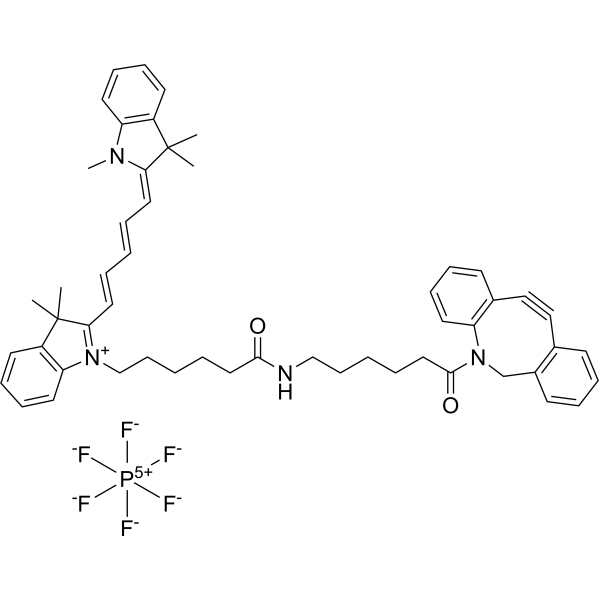
- Formula: C53H59F6N4O2P
- Molecular Weight: 929.03
Cyanine5 DBCO (DBCO-Cy5) hexafluorophosphate is a low-toxicity azide reactive probe (NIR fluorescent dye), for imaging azide-labeled biomolecules via a copper-free "click-through" reaction. Cyanine5 DBCO hexafluorophosphate has no apparent cytotoxicity or animal toxicity and shows no damage to the physiological functions of cells other than the target cells (azide-labeled cells). Cyanine5 DBCO hexafluorophosphate can be used to label and track cells in vitro and in vivo (Ex=635 nm, Em=650-700 nm)
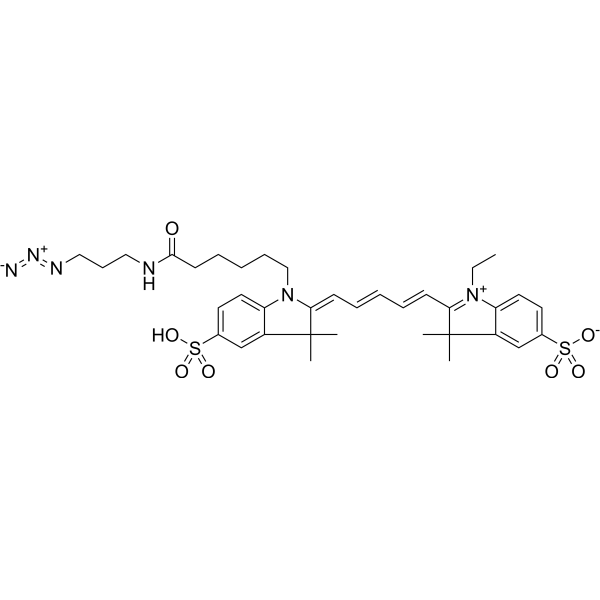
- Formula: C36H46N6O7S2
- Molecular Weight: 738.92
CY5-N3 (Sulfo-Cyanine5-azide) is a Cy5-azide, which is a fluorescent dye (ex/em: 646/662 nm). CY5-N3 is cell membrane permeable and can be used for live cell imaging. CY5-N3 can be used in cell imagine by Click reaction.
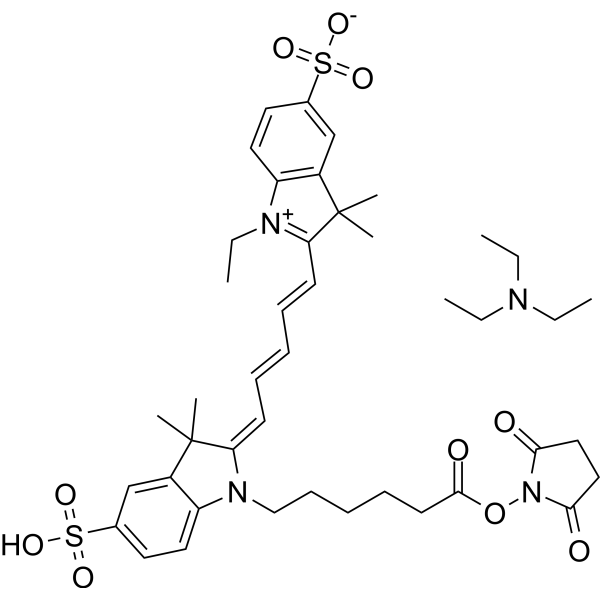
- Formula: C43H58N4O10S2
- Molecular Weight: 855.07
Cy5-SE (Cy5 NHS Ester) triethylamine salt is a reactive dye for the labeling of amino-groups in peptides, proteins, and oligonucleotides. Cy5-SE triethylamine salt is ideal for very cost-efficient labeling of soluble proteins, as well as all kinds of peptides and oligonucleotides Ex=649 nm; Em=670 nm).
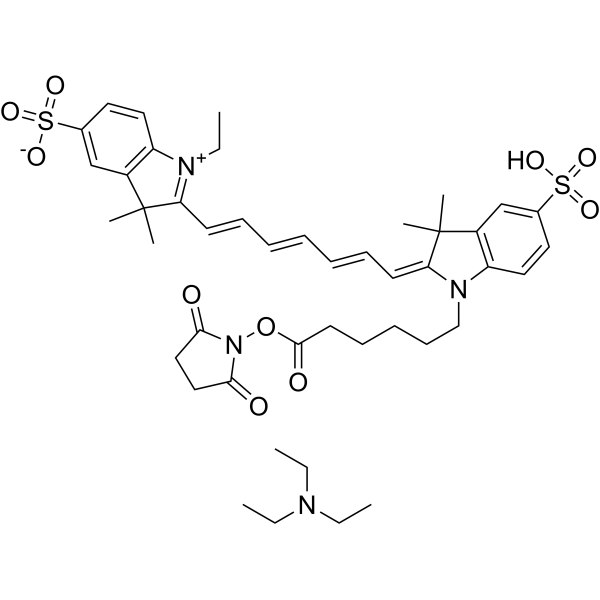
- Formula: C45H60N4O10S2
- Molecular Weight: 881.11
CY7-SE triethylamine is a CY dye. CY, short for Cyanine, is a compound consisting of two nitrogen atoms connected by an odd number of methyl units. Cyanine compounds have the characteristics of long wavelength, adjustable absorption and emission, high extinction coefficient, good water solubility and relatively simple synthesis. CY dyes are of en used for the labeling of proteins, antibodies and small molecular compounds. For the labeling of protein antibodies, the combination can be completed through a simple mixing reaction. Below, we introduce the labeling method of protein antibody labeling, which has certain reference significance.

- Molecular Weight: 698.30
Celltrack Deep Red is a fluorescent dye with a fluorescence signal that can be maintained for at least 72 h and has good stability. Celltrack Deep Red can be used for cell tracing and multi-generation cell movement tracking. Within a cell population, Celltrack Deep Red is only transferred to daughter cells and not to neighboring cells (Ex/Em = 630/650 nm).
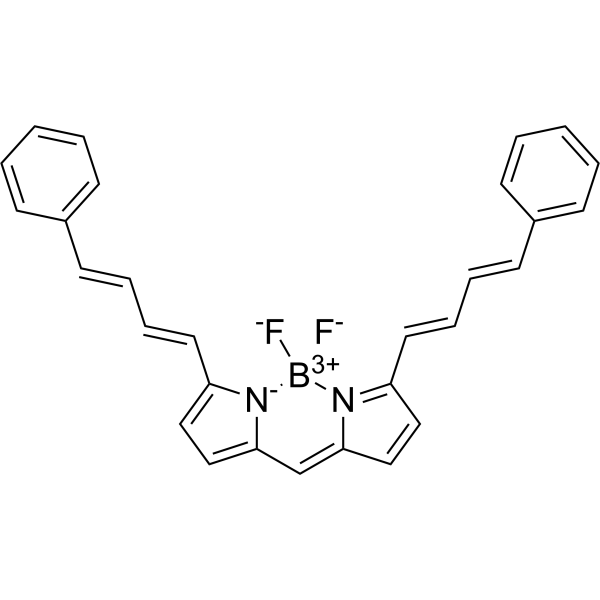
- Formula: C29H23BF2N2
- Molecular Weight: 448.31
BODIPY 665/676 is a lipophilic radical-sensitive fluorescent probe that can be used to study radical-driven llipid peroxidation (Ex/Em=665/676 nm).
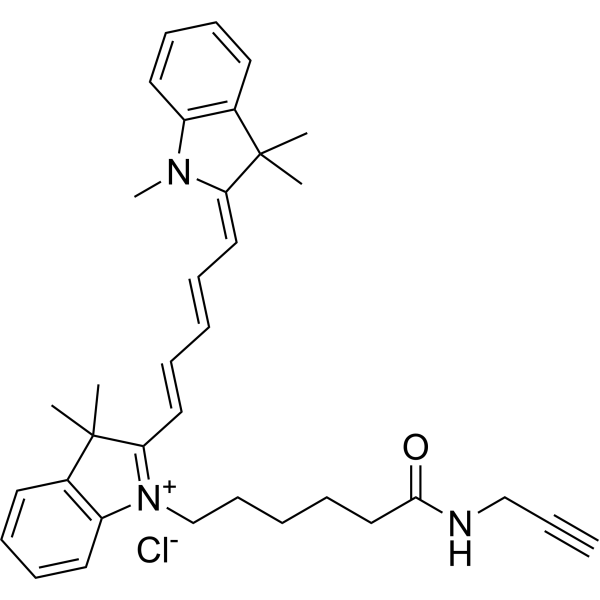
- Formula: C35H42ClN3O
- Molecular Weight: 556.18
Cyanine5 alkyne (Alkyne-Cy5) is a fluorescent dye used to label azide proteins and can be used to analyse post-translational modifications of proteins, glycosylation etc. Cyanine5 alkyne can also be used as a mitochondrial OXPHOS inhibitor to inhibit the growth of cancer stem cells (CSC). Cyanine5 alkyne is a click chemistry reagent, it contains an Alkyne group and can undergo copper-catalyzed azide-alkyne cycloaddition (CuAAc) with molecules containing Azide groups.
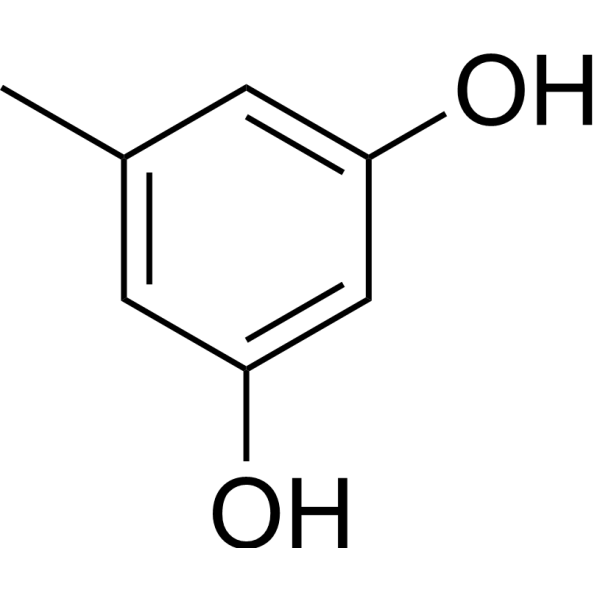
- Formula: C7H8O2
- Molecular Weight: 124.14
Orcinol (3,5-Dihydroxytoluene) is an organic compound used in biological dyeing and proteomics research. Orcinol inhibits melanogenesis in B16F10 cells by upregulating the MAPK/ERK signaling pathway, and suppresses the expression of MITF, tyrosinase (TYR), TRP1, and DCT. Orcinol exhibits certain DPPH radical scavenging activity. In addition, Orcinol can alter nitrogen balance in animals. Orcinol holds promise for research in cancer and metabolic diseases.



