



Azide Reactive Dyes
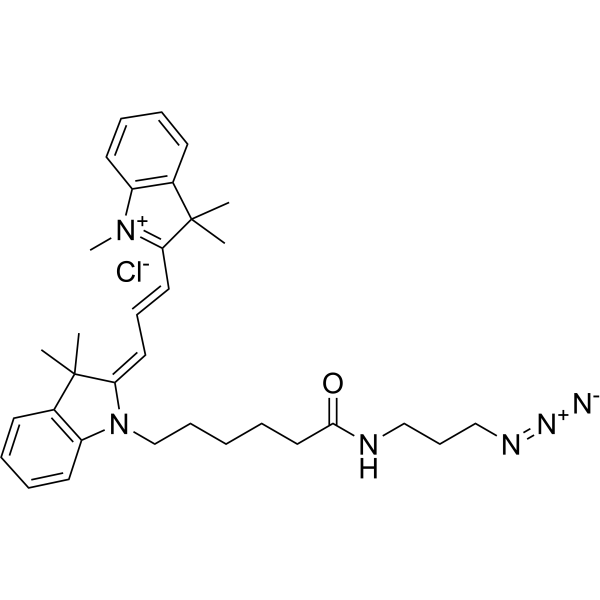
- Formula: C33H43ClN6O
- Molecular Weight: 575.19
Cyanine3 azide chloride, an analog of Cy3 azide, is a potent green fluorescent dye. Cyanine3 azide chloride uses click chemistry coupled with Alkyne-labeled proteins. Cyanine3 azide chloride can be detected by fluorometers, imagers, and microscopes. (λex=684 nm, λem=710 nm)[1]. Cyanine3 azide (chloride) is a click chemistry reagent, it contains an Azide group and can undergo copper-catalyzed azide-alkyne cycloaddition reaction (CuAAc) with molecules containing Alkyne groups. It can also undergo strain-promoted alkyne-azide cycloaddition (SPAAC) reactions with molecules containing DBCO or BCN groups.
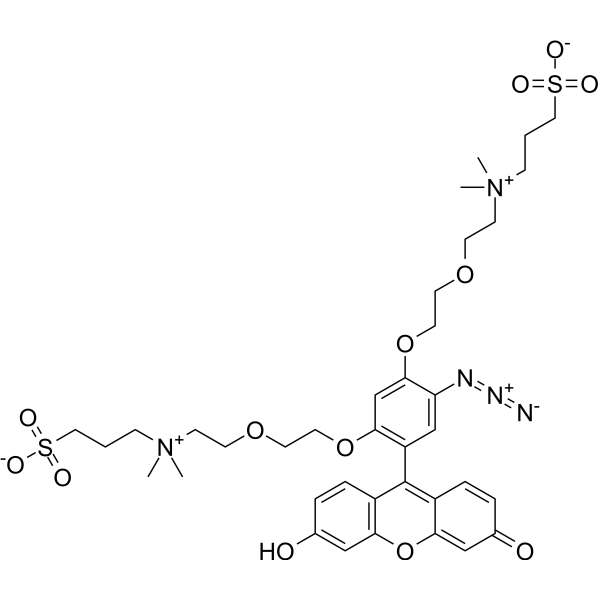
- Formula: C37H49N5O13S2
- Molecular Weight: 835.94
CalFluor 488 Azide is a water-soluble fluorogenic azide probe. CalFluor 488 Azide is activated by Cu-catalyzed or metal-free click reaction. CalFluor 488 Azide is not fluorescent until it is reacted with alkynes. It contains an azide group and can undergo copper-catalyzed azide-alkyne cycloaddition (CuAAc) with molecules containing alkyne groups. It can also undergo ring strain-promoted alkyne-azide cycloaddition (SPAAC) with molecules containing DBCO or BCN groups.
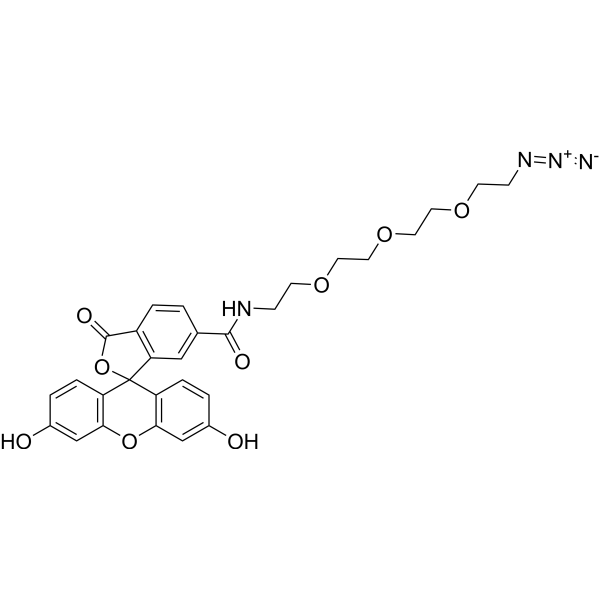
- Formula: C29H28N4O9
- Molecular Weight: 576.55
6-FAM-PEG3-Azide is a fluorescent dye that can be used to label oligonucleotide. 6-FAM-PEG3-Azide is a click chemistry reagent, it contains an Azide group and can undergo copper-catalyzed azide-alkyne cycloaddition reaction (CuAAc) with molecules containing Alkyne groups. It can also undergo strain-promoted alkyne-azide cycloaddition (SPAAC) reactions with molecules containing DBCO or BCN groups.
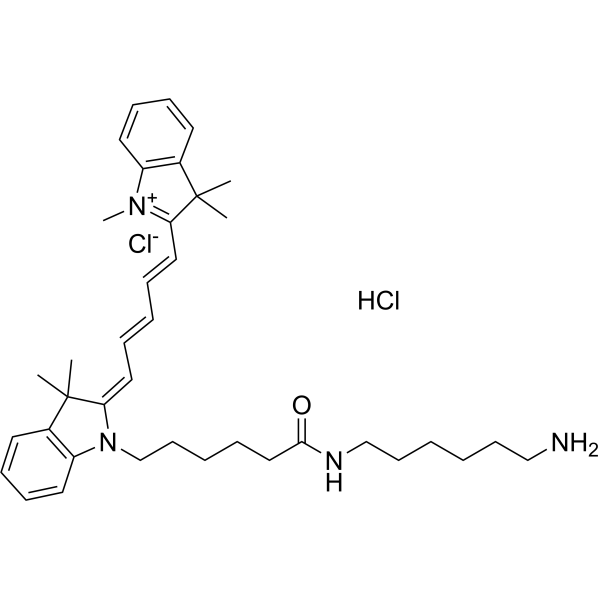
- Formula: C38H54Cl2N4O
- Molecular Weight: 653.77
Cyanine5 amine hydrochloride is a potent fluorescent dye. Cyanine5 amine hydrochloride can be reacted with terminal alkynes via a copper-catalyzed click reaction (CuAAC). (λex=646 nm, λem=662 nm).
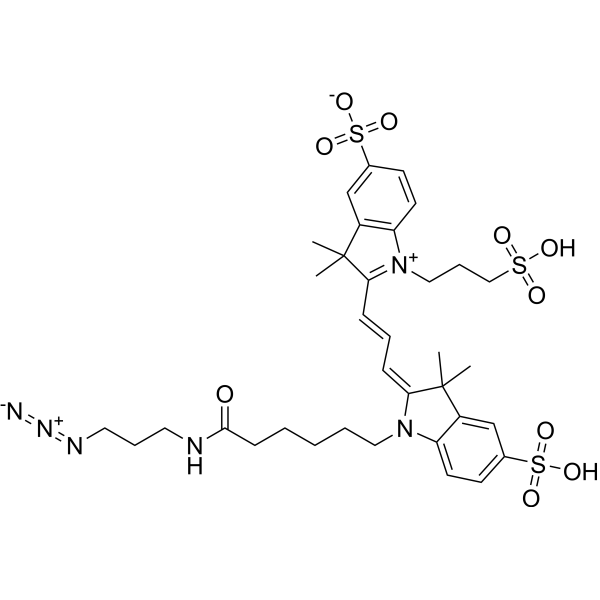
- Formula: C35H46N6O10S3
- Molecular Weight: 806.97
Sulfo-Cy3 Azide is a water-soluble fluorogenic dye containing an azide group, which enables Click Chemistry. Sulfo-Cy3 Azide can be used for the labeling of sensitive molecules such as proteins. It contains an azide group and can undergo copper-catalyzed azide-alkyne cycloaddition (CuAAc) with molecules containing alkyne groups. It can also undergo ring strain-promoted alkyne-azide cycloaddition (SPAAC) with molecules containing DBCO or BCN groups.
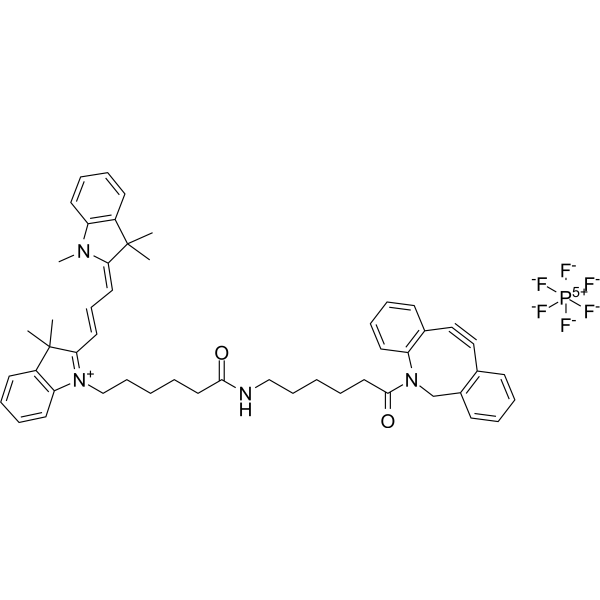
- Formula: C51H57F6N4O2P
- Molecular Weight: 902.99
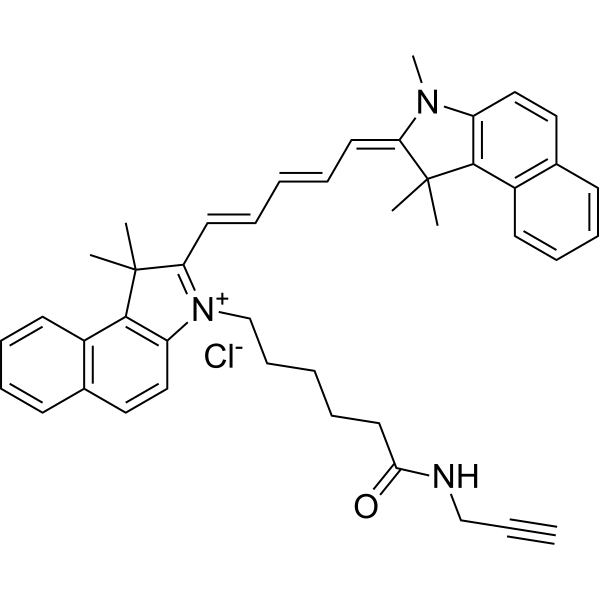
- Formula: C43H46ClN3O
- Molecular Weight: 656.30
Cyanine5.5 alkyne chloride is an alkynyl-modified near-infrared (NIR) fluorescent dye (Ex=678 nm, Em=694 nm). Cyanine5.5 alkyne chloride can react with azides for click chemistry labeling.

- Formula: C32H27N7O3
- Molecular Weight: 557.60
BG-DBCO (SNAP-DBCO) is a key bifunctional reagent that acts as a "bridge" in the ClickRNA-PROTAC system. BG-DBCO possesses a SNAPTag covalent anchoring handle and a copper-free click chemistry handle: one end covalently locks SNAPTag fusion proteins via BG, while the other end captures azide-modified target protein ligands through copper-free click chemistry (SPAAC), thereby assembling the "exogenous E3 fusion protein" and "POI ligand" into a complete PROTAC ternary complex in living cells.
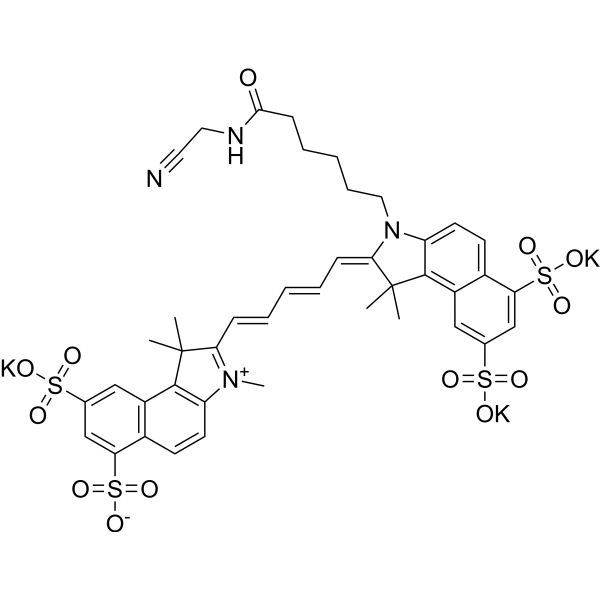
- Formula: C42H41K3N4O13S4
- Molecular Weight: 1055.35
Sulfo-Cyanine5.5 alkyne, a near-infrared (NIR) fluorescent dye, is an alkyne modified Sulfo-Cyanine5.5 (Ex=67 8nm, Em=694 nm). Sulfo-Cyanine5.5 alkyne can react with azides for Click Chemistry labeling.
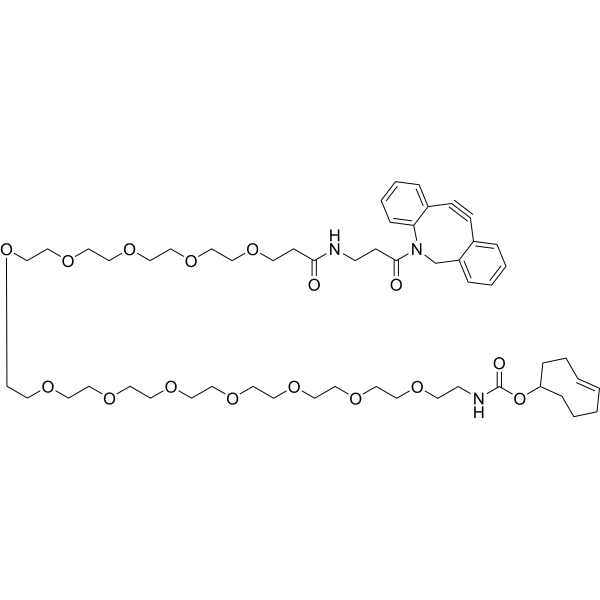
- Formula: C54H81N3O16
- Molecular Weight: 1028.23
DBCO-PEG12-TCO cantains a TCO and a DBCO moiety. TCO group can specifically react with terrahydrazine. DBCO-PEG12-TCO is a click chemistry reagent, it contains a DBCO group that can undergo strain-promoted alkyne-azide cycloaddition (SPAAC) with molecules containing Azide groups. DBCO-PEG12-TCO also contains a TCO group that can undergo an inverse electron demand Diels-Alder reaction (iEDDA) with molecules containing Tetrazine groups.

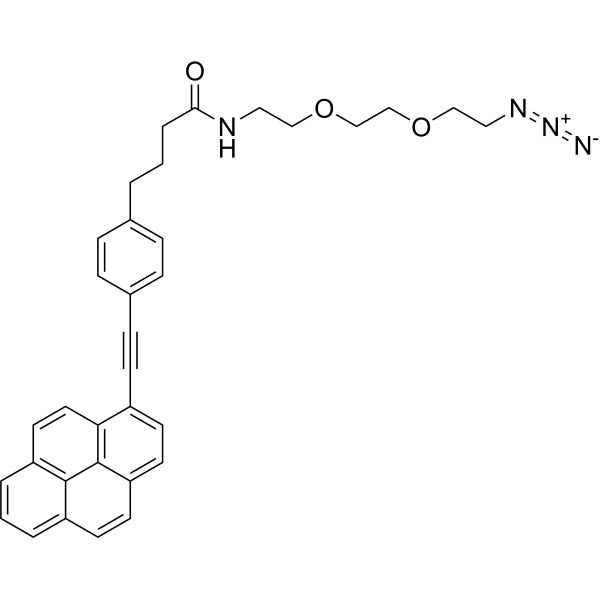
- Formula: C34H32N4O3
- Molecular Weight: 544.64
PEP azide is a multifunctional dye. Dyes are important tools in biological experiments. They can help researchers observe and analyze cell structures, track biomolecules, evaluate cell functions, distinguish cell types, detect biomolecules, study tissue pathology and monitor microorganisms. Their applications range from basic scientific research to clinical A wide range of diagnostics. Dyes are also widely used in traditional fields such as textile dyeing, as well as in emerging fields such as functional textile processing, food pigments and dye-sensitized solar cells.
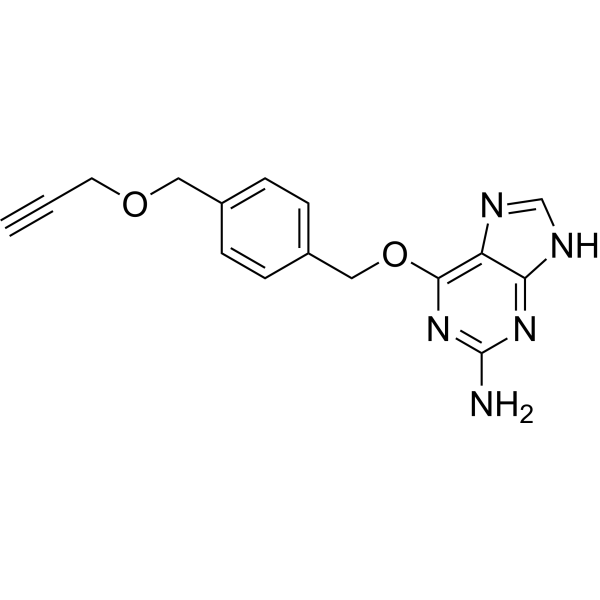
- Formula: C16H15N5O2
- Molecular Weight: 309.32
PYBG acts as a versatile precursor to be facilely conjugated with various fluorescent dyes through ‘Click chemistry’ and Sonogashira coupling reactions. PYBG is a click chemistry reagent, it contains an Alkyne group and can undergo copper-catalyzed azide-alkyne cycloaddition (CuAAc) with molecules containing Azide groups.
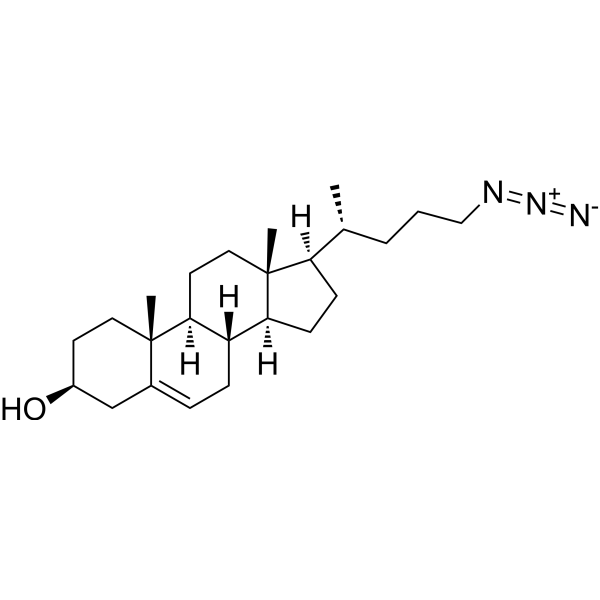
- Formula: C24H39N3O
- Molecular Weight: 385.59
Chol-N3 is a bioorthogonal-based chol probe. Chol-N3 can combine with super-resolution fluorescence microscopy (SRM), providing direct visualization of nanoscale lipid heterogeneity in the cell surface of resting living cells. Chol-N3 is a click chemistry reagent, it contains an Azide group and can undergo copper-catalyzed azide-alkyne cycloaddition reaction (CuAAc) with molecules containing Alkyne groups. It can also undergo strain-promoted alkyne-azide cycloaddition (SPAAC) reactions with molecules containing DBCO or BCN groups.

AF555 Picolyl Azide is a Fluorescent dye that enables site-specific fluorescent labeling via click chemistry. AF555 Picolyl Azide conjugates with the non-canonical amino acid N-propargyl-L-lysine introduced through ochre stop codon suppression via the copper (I)-catalyzed azide-alkyne cycloaddition (CuAAC) reaction, achieving labeling of hyperpolarization-activated cyclic nucleotide-gated HCN channels; its picolyl group accelerates the CuAAC reaction rate, thus completing labeling rapidly at room temperature and minimizing copper-induced cytotoxicity. AF555 Picolyl Azide forms covalent bonds with the alkynyl groups of nucleotide analogs through its azide moiety, labeling viral genomes containing 5-ethynyl-2'-deoxyuridine for visualization via fluorescence microscopy.

AF488 Picolyl Azide is a Fluorescent dye designed for bioorthogonal visualization applications. AF488 Picolyl Azide functions via copper (I)-catalyzed azide-alkyne cycloaddition click chemistry, where its azide group undergoes covalent reaction with alkyne-functionalized molecules to form fluorescent triazole conjugates. AF488 Picolyl Azide enables the visualization of metabolically labeled isoprenoids in bacteria, which localize to the cell membrane and division septum.


- Formula: C22H27N5O5
- Molecular Weight: 441.48
Coumarin 343 azide is a fluorescent dye used for the fluorescent labeling of alkyne-containing biomolecules based on click chemistry. Its detection mechanism relies on the copper (I)-catalyzed azide-alkyne cycloaddition (CuAAC), a type of click reaction: under mild aqueous conditions, the azide group of this dye selectively reacts with the alkyne moiety of propargyl geldanamycin to form a triazole bond that conjugates the fluorescent dye to the target biomolecule; fluorescence is generated upon successful conjugation to the target.

- Formula: C53H57F4N9O13S3
- Molecular Weight: 1200.26
Fluorne rhodamine picolyl azide is a fluorescent dye used for optical microscopy and nanoscopy, which can be applied in fluorescence correlation spectroscopy (FCS), stimulated emission depletion (STED) nanoscopy, biomolecule labeling, and live-cell imaging.

- Formula: C41H50N8O11S3
- Molecular Weight: 927.08
Sulfo-cy3 picolyl azide is a fluorescent dye used for detecting interactions between labeled molecules and proteins based on click chemistry. Sulfo-cy3 picolyl azide undergoes copper (I)-catalyzed azide-alkyne cycloaddition (CuAAC) to covalently bind to alkyne-labeled targets, enabling fluorescent detection via scanning. The excitation/emission wavelengths of Sulfo-cy3 picolyl azide are Ex/Em = 550/560 nm. Sulfo-cy3 picolyl azide can be used for in-gel detection of protein-small molecule interactions, as well as labeling ribosome-associated cellular protein targets.



