



Protein Detection and Analysis


APC Streptavidin is a streptavidin labeled with Allophycocyanin (APC) (HY-D1815) at a concentration of 0.5 mg/mL. Allophycocyanin (APC Dye) is a light-harvesting protein containing a strongly coupled dimer. Streptavidin specifically binds to biotin, forming a reversible non-covalent interaction. R-PE Streptavidin is commonly used in immunofluorescence (IF), enzyme-linked immunosorbent assay (ELISA), flow cytometry, and other experiments (Ex/Em=652/662 nm).

R-PE Streptavidin is a streptavidin labeled with R-Phycoerythrin (R-PE) at a concentration of 0.5 mg/mL. R-Phycoerythrin is an orange-red fluorescent probe. Streptavidin specifically binds to biotin, forming a reversible non-covalent interaction. R-PE Streptavidin is commonly used in experiments such as immunofluorescence (IF), enzyme-linked immunosorbent assay (ELISA), immunohistochemical staining (IFH), and in situ hybridization (Ex/Em=785/813 nm).


- Formula: C22H27BF2N4O3
- Molecular Weight: 444.28
HPsensor 2 is a fluorescent probe used to detect the surface hydrophobicity of proteins. The detection mechanism of HPsensor 2 relies on its amphipathic properties. The 2-methoxyethylamine substituents at positions 3 and 5 of its BODIPY core enhance water solubility, enabling it to interact with solvent-exposed hydrophobic regions on proteins. When it binds to these hydrophobic surfaces, the free rotation of the meso-aryl substituent is restricted, increasing molecular rigidity and reducing non-radiative deactivation, which results in a significant enhancement of fluorescence. HPsensor 2 exhibits weak but detectable fluorescence in aqueous environments, and its fluorescence is highly sensitive to changes in protein surface hydrophobicity (Ex/Em = 528/579 nm).


R-Phycoerythrin (R-PE) (ammonium sulfate precipitate) is found in Heterosiphonia japonica. R-Phycoerythrin (ammonium sulfate precipitate) is an orange-red fluorescent probe with α, β, and γ subunits. R-Phycoerythrin (concentrated solution) can be used in photodynamic therapy (PDT) to induce apoptosis in tumor cells. R-Phycoerythrin (ammonium sulfate precipitate) can be used in fluorescence microscopy, flow cytometry, and immunofluorescence analysis (Ex/Em = 496/578 nm).

R-Phycoerythrin (R-PE) (concentrated solution) is found in Heterosiphonia japonica. R-Phycoerythrin (concentrated solution) is an orange-red fluorescent probe with α, β, and γ subunits. R-Phycoerythrin (concentrated solution) can be used in photodynamic therapy (PDT) to induce apoptosis in tumor cells. R-Phycoerythrin (concentrated solution) can be used in fluorescence microscopy, flow cytometry, and immunofluorescence analysis (Ex/Em = 496/578 nm).


- Formula: C39H35N7O7S
- Molecular Weight: 745.80
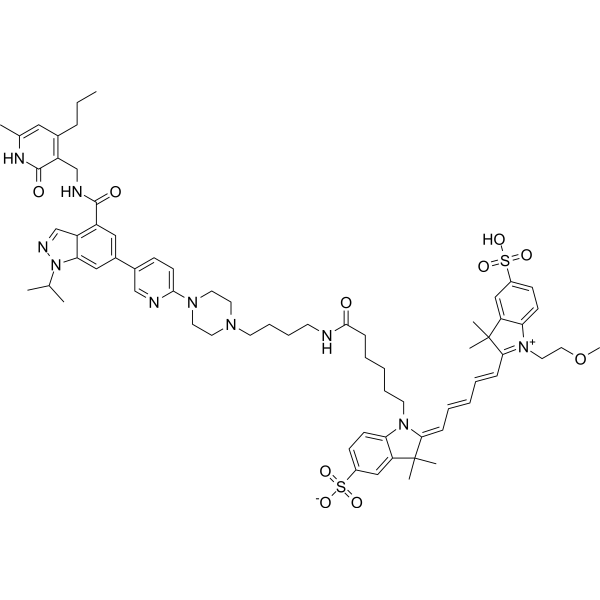
Jun14157 is a fluorescence polarization probe that can specifically bind to the conserved allosteric site of enterovirus 2C proteins (Ex: 485/20; Em: 528/20). Jun14157 has Kd values of 2.3 μM, 1.4 μM, and 1.1 μM for EV-D68 2C, EV-A71 2C, and CVB3 2C, respectively. Jun14157 can be used in research related to enteroviruses.
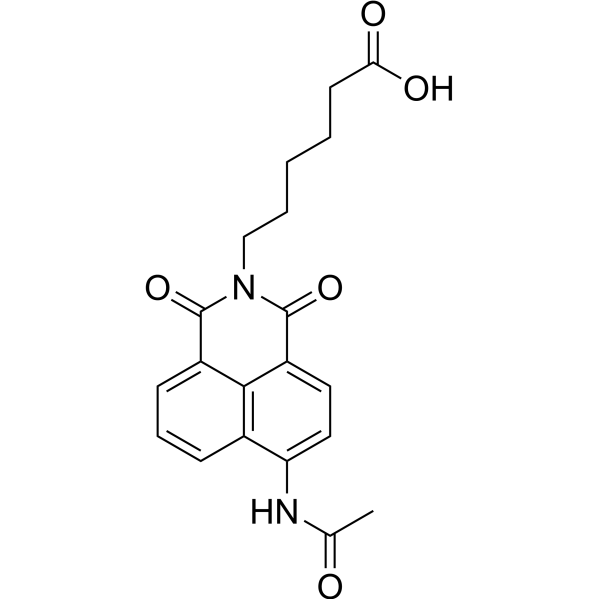
- Formula: C20H20N2O5
- Molecular Weight: 368.38
6-(4-Acetamido-1,8-naphthalamido)hexanoic acid is a multifunctional dye. Dyes are important tools in biological experiments. They can help researchers observe and analyze cell structures, track biomolecules, evaluate cell functions, distinguish cell types, detect biomolecules, study tissue pathology and monitor microorganisms. Their applications range from basic scientific research to clinical A wide range of diagnostics. Dyes are also widely used in traditional fields such as textile dyeing, as well as in emerging fields such as functional textile processing, food pigments and dye-sensitized solar cells.
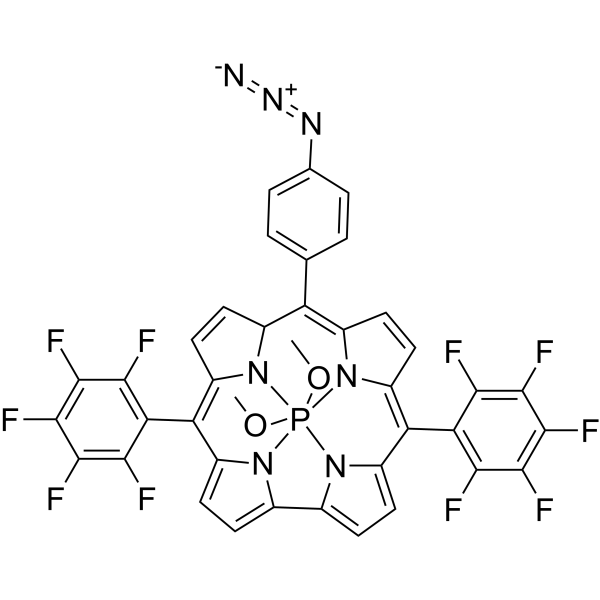
- Formula: C39H19F10N7O2P
- Molecular Weight: 838.57
Antitumor agent-131 (Compound 2-p) is an ER fluorescent probe with an IC50 value of 23 nM for HepG2 tumor cells. Antitumor agent-131 can be used as a photosensitizer for the study of cancer photodynamics.
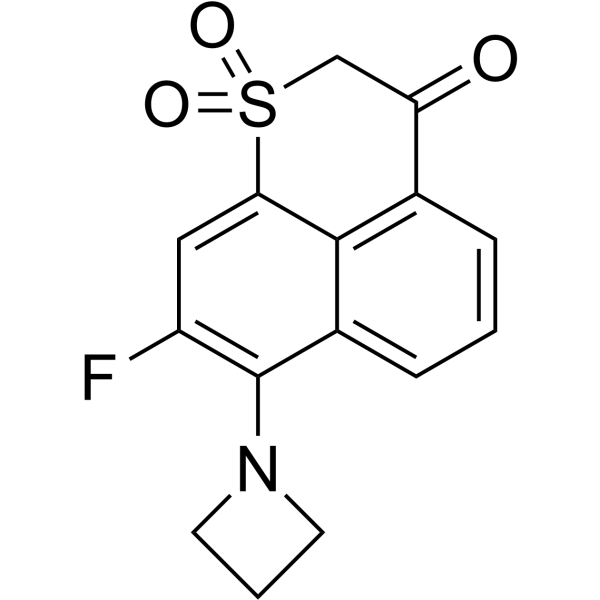
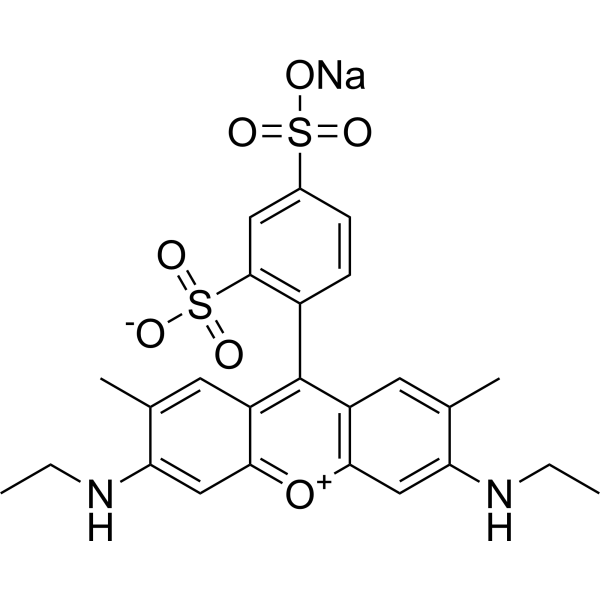
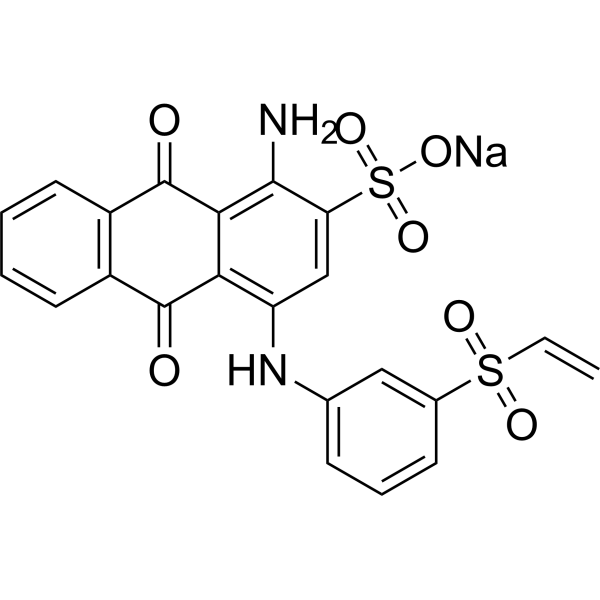
- Formula: C22H15N2NaO7S2
- Molecular Weight: 506.48
Uniblue A sodium is a reactive protein stain that can be used in the covalent pre-gel staining of the protein (Ex=594 nM).
![N-[4-(2-Benzimidazolyl)phenyl]maleimide](https://file.medchemexpress.com/product_pic/hy-w278706.gif "Click to View N-[4-(2-Benzimidazolyl)phenyl]maleimide Product Detail")
- Formula: C17H11N3O2
- Molecular Weight: 289.29
N-[4-(2-Benzimidazolyl)phenyl]maleimide is a potent fluorescent probe with excitation maximum of 315 nm and emission maximum of 360 nm. N-[4-(2-Benzimidazolyl)phenyl]maleimide can be used for fluorometry of thiol compounds.
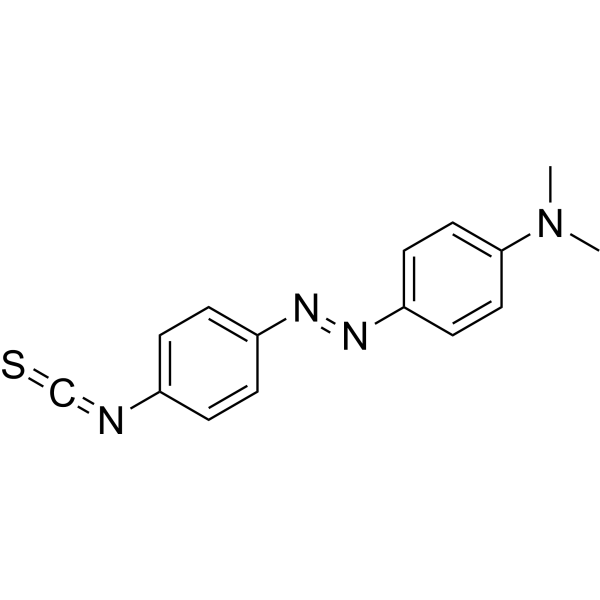
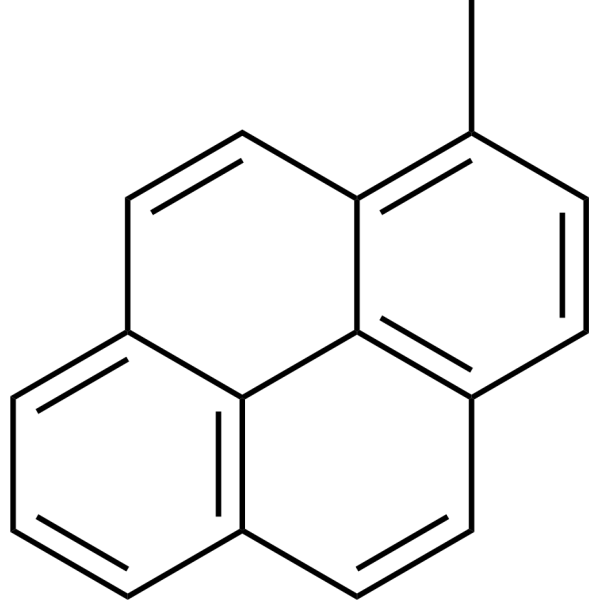
- Formula: C17H12
- Molecular Weight: 216.28



