



GW583340 dihydrochloride
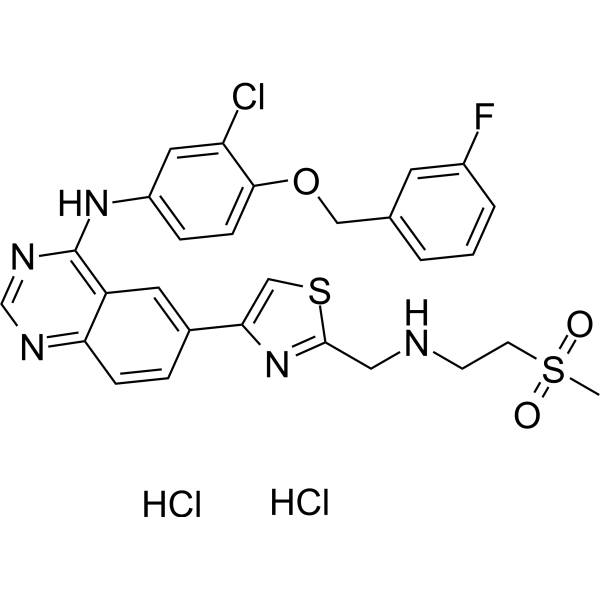
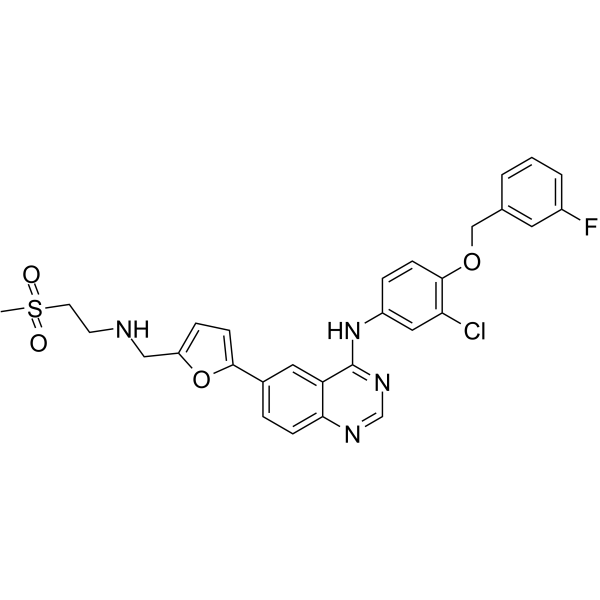
GW 583340 dihydrochloride is an orally active ErbB-2/EGFR tyrosine kinase inhibitor. GW 583340 dihydrochloride exhibits antitumor activity in xenograft models with EGFR overexpression or ErbB-2 overexpression. GW 583340 dihydrochloride is applicable to research related to head and neck cancer, breast cancer, and gastric cancer.
For research use only. We do not sell to patients.
- CAS No.: 1173023-85-2
- Formula: C28H27Cl3FN5O3S2
- Molecular Weight:671.03
-
Storage:
Please store the product under the recommended conditions in the Certificate of Analysis.

To place orders, for customer services and technical support, please contact: MedChemExpress USA
Tel: 609-228-6898 E-mail: [email protected] [email protected]


-
 Biological Activity
-
Chemical Information
- Purity & Documentation
- References
-
 Help & FAQs


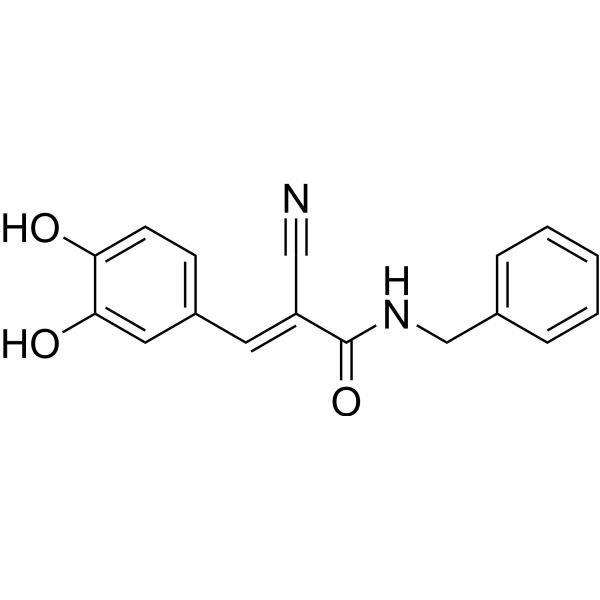
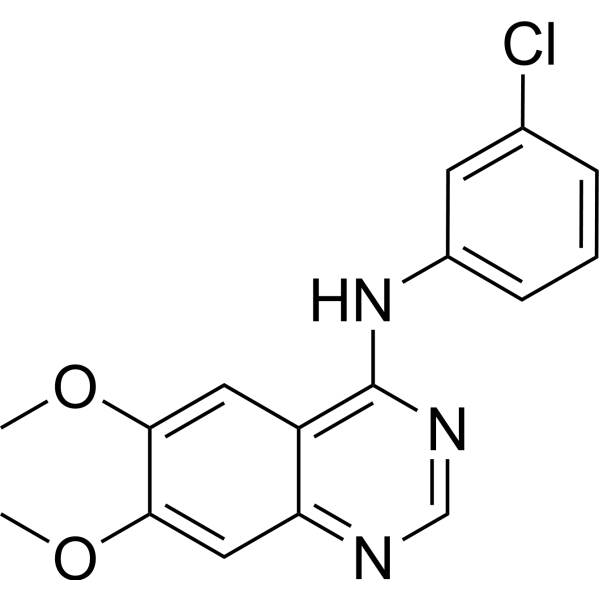
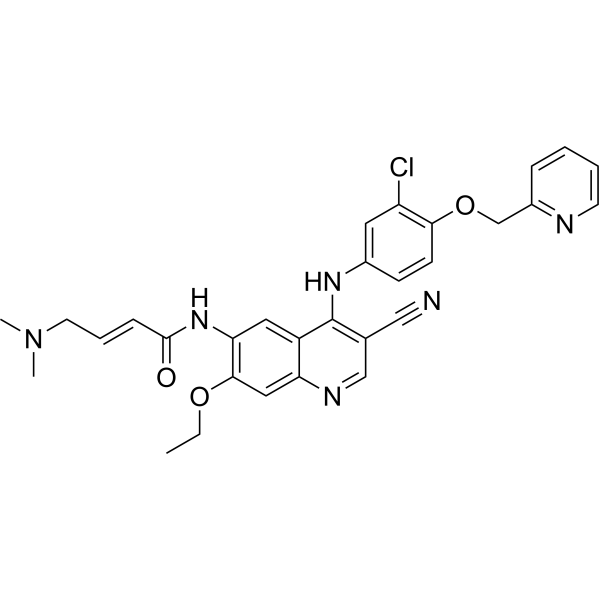

All EGFR Isoforms
More

Biological Activity
Description
In Vitro
GW583340 (compound 6) dihydrochloride potently inhibits purified EGFR and ErbB-2 tyrosine kinase activity in vitro cell-free assays, with an average dual enzyme inhibition IC50 of 0.012 μM[1].
GW583340 dihydrochloride potently and selectively inhibits the proliferation of EGFR-overexpressing HN5, ErbB-2-overexpressing N87, and ErbB-2-overexpressing BT474 human tumor cell lines, with an average tumor cell IC50 of 0.11 μM and a selectivity ratio of >210-fold for tumor cells over normal HFF cells[1].
MedChemExpress (MCE) has not independently confirmed the accuracy of these methods. They are for reference only.
In Vivo
GW583340 (30-100 mg/kg; p.o.; twice daily; 21 days) dihydrochloride produces 83% tumor inhibition in BT474 ErbB-2-overexpressing human breast carcinoma xenografts in female CD-1 mice, with no significant body weight loss observed[1].
MedChemExpress (MCE) has not independently confirmed the accuracy of these methods. They are for reference only.
-
Animal Model:CD-1 (female)[1]
-
Dosage:30; 100 mg/kg
-
Administration:p.o.; twice daily; 21 days
-
Result:Produced 81% tumor inhibition at 100 mg/kg.
Produced a lower level of tumor inhibition relative to the 100 mg/kg dose at 30 mg/kg.\nProduced 83% tumor inhibition at 100 mg/kg.
Produced a lower level of tumor inhibition relative to the 100 mg/kg dose at 30 mg/kg.
Showed no significant body weight loss in treated mice, indicating a good therapeutic index.


Chemical Information
-
CAS No. 1173023-85-2
-
Molecular Weight 671.03
-
Formula C28H27Cl3FN5O3S2
-
SMILES
O=S(CCNCC1=NC(C2=CC3=C(NC4=CC=C(OCC5=CC=CC(F)=C5)C(Cl)=C4)N=CN=C3C=C2)=CS1)(C)=O.Cl.Cl
-
Shipping
Room temperature in continental US; may vary elsewhere.
-
Storage
Please store the product under the recommended conditions in the Certificate of Analysis.


Purity & Documentation
-
Data Sheet (278 KB)
-
SDS (252 KB)
- Français - FR (252 KB)
- Deutsch - DE (252 KB)
- Norwegian - NO (252 KB)
- Español - ES (252 KB)
- Swedish - SV (252 KB)
- Italian - IT (252 KB)
- Korean - KR (252 KB)
- Portuguese - PT (252 KB)
-
Handling Instructions (2659 KB)
References

Calculators
Concentration (start) × Volume (start) = Concentration (final) × Volume (final)


GW583340 dihydrochloride Related Classifications
HY-103439 Related Classifications
 Powered by Bioz