



CI-1020
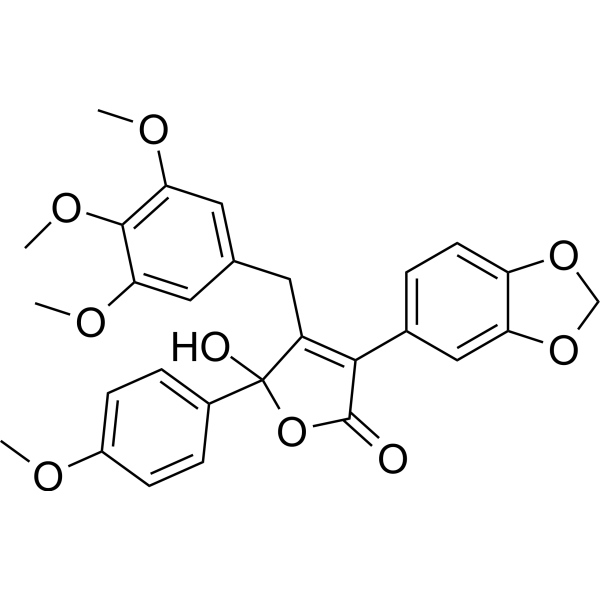
CI-1020 (PD156707) is an orally active and selective antagonist targeting endothelin (ETA) with an IC50 value of 0.3 nM. CI-1020 blocks intimal hyperplasia in human saphenous veins completely in organ culture. CI 1020 inhibits hypoxic pulmonary hypertension and blocks ET-1-induced pressor responses following oral administration.
For research use only. We do not sell to patients.
- CAS No.: 162256-50-0
- Formula: C28H26O9
- Molecular Weight:506.50
-
Storage:
Please store the product under the recommended conditions in the Certificate of Analysis.

To place orders, for customer services and technical support, please contact: MedChemExpress USA
Tel: 609-228-6898 E-mail: [email protected] [email protected]


-
 Biological Activity
-
Chemical Information
- Protocols
- Purity & Documentation
- References
-
 Help & FAQs


-
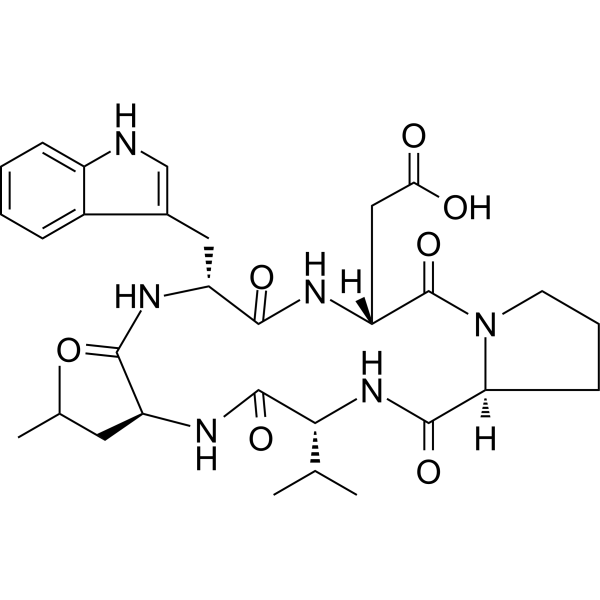
HY-12378
BQ-123ETA Receptor Antagonist -

HY-102092
FR139317ETA Receptor Antagonist -
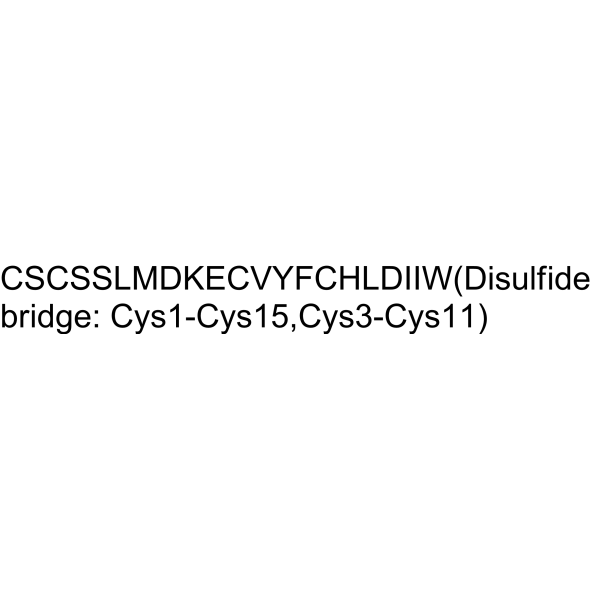
HY-P0202
Endothelin 1 (swine, human)Vasoconstrictor -
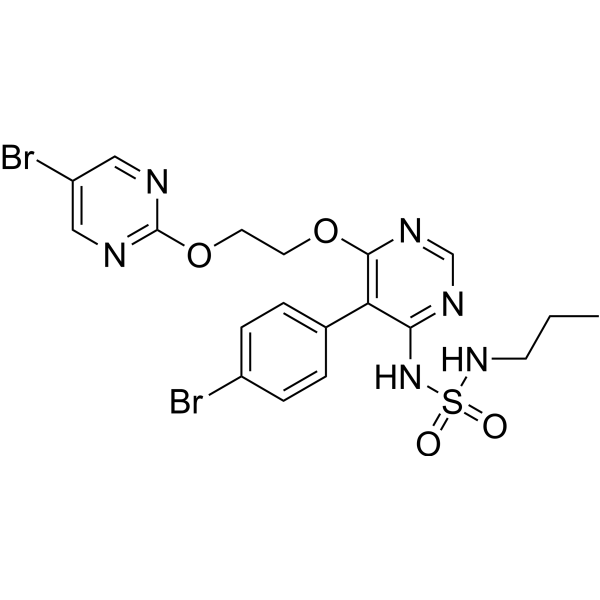
HY-14184
MacitentanETA/ETB Antagonist -
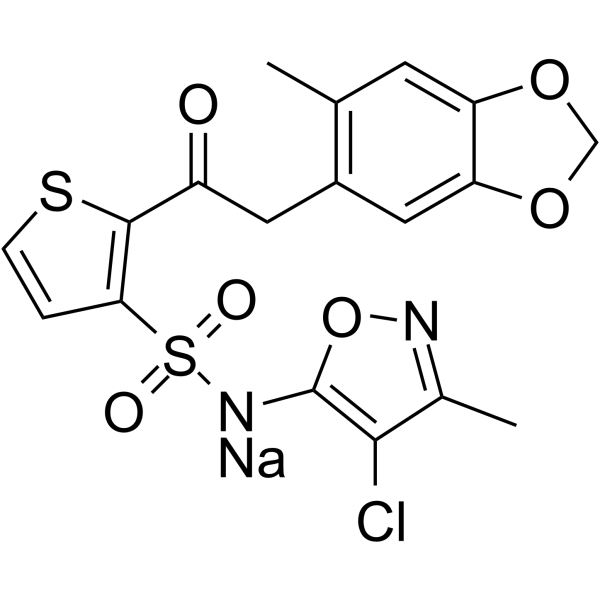
HY-11103
Sitaxsentan sodiumEndothelin A Receptor Antagonist -
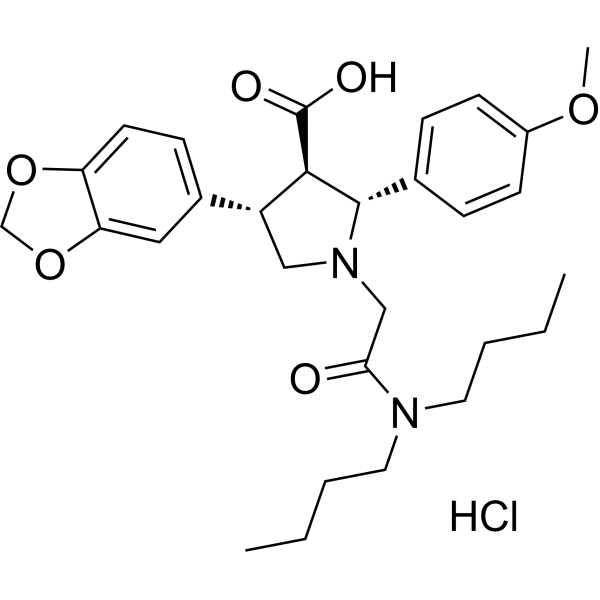
HY-15403A
Atrasentan hydrochlorideETA Receptor Antagonist -
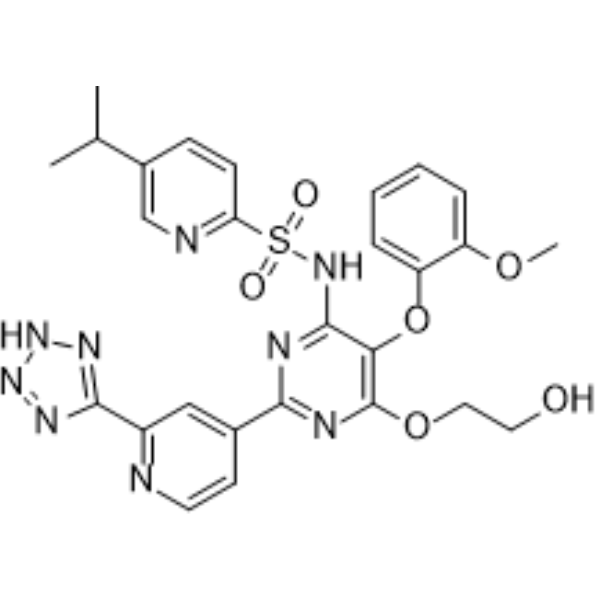
HY-17351
TezosentanET Receptor Antagonist -

HY-16465
IRL-1620ETB Agonist -
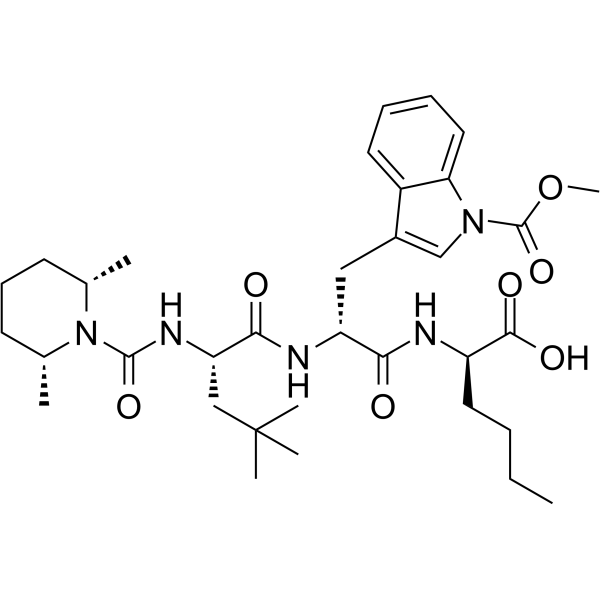
HY-15894A
BQ-788ETB Receptor Antagonist -
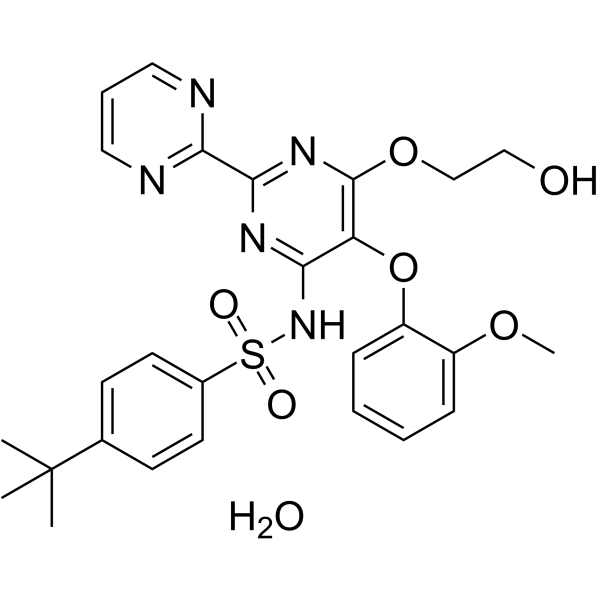
HY-A0013A
Bosentan hydrateET1 Receptor Antagonist -
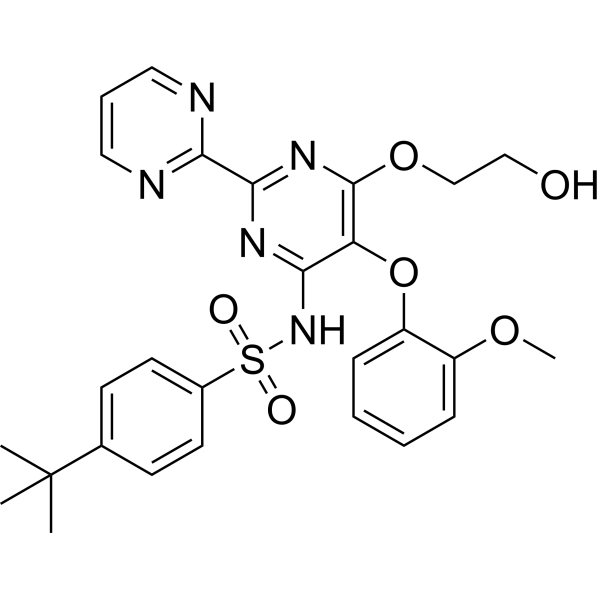
HY-A0013
BosentanET-1 Inhibtior -
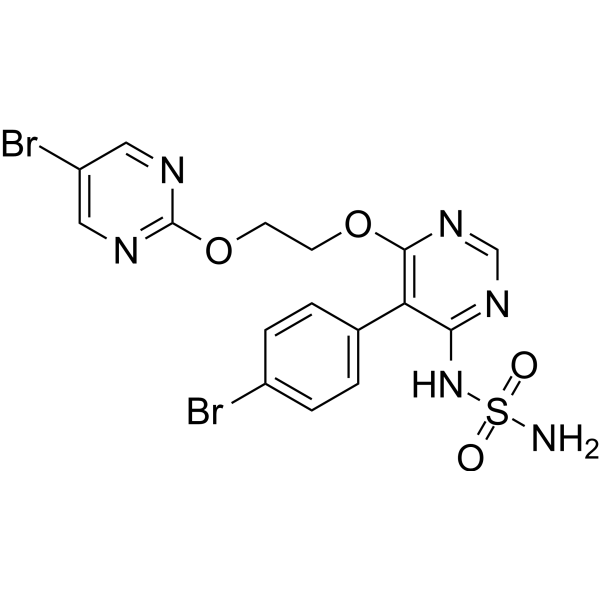
HY-15895
AprocitentanEndothelin Receptor Antagonist


Biological Activity
Description
IC50 & Target
[1]|
ETA 0.3 nM (IC50) |
Cellular Effect
|
Cell Line

|
Type | Value | Description | References |
|---|---|---|---|---|
| CHO-K1 | IC50 |
120 nM
Compound: 1, (PD-156707)
|
Inhibition of Endothelin B receptor mediated (ET-3) release of arachidonic acid from human cloned receptors / CHO-K1 cells
Inhibition of Endothelin B receptor mediated (ET-3) release of arachidonic acid from human cloned receptors / CHO-K1 cells
|
[PMID: 9089328] |
| CHO-K1 | IC50 |
480 nM
Compound: 1, (PD-156707)
|
Binding affinity for human endothelin B receptor expressed in CHO-K1 cells.
Binding affinity for human endothelin B receptor expressed in CHO-K1 cells.
|
10.1016/S0960-894X(97)00002-4 |
| CHO-K1 | IC50 |
780 nM
Compound: 1, (PD-156707)
|
Binding affinity against human cloned Endothelin B receptor expressed in CHO-K1 cells
Binding affinity against human cloned Endothelin B receptor expressed in CHO-K1 cells
|
[PMID: 9089328] |
In Vitro
CI-1020 (1 μM, 28 days) blocks intimal hyperplasia in human saphenous veins completely in organ culture [1].
CI-1020 (1 μM, 14 days) is not toxic to the tissue[1].
MedChemExpress (MCE) has not independently confirmed the accuracy of these methods. They are for reference only. Further protocols information, click here.
In Vivo
CI-1020 (40 mg/kg, p.o.) attenuates established pulmonary hypertension in rats previously exposed to chronic hypoxia[4].
MedChemExpress (MCE) has not independently confirmed the accuracy of these methods. They are for reference only.
-
Animal Model:normal rats [2]
-
Dosage:30 mg/kg
-
Administration:oral administration (p.o.)
-
Result:Inhibited the ET-A and has no significant effect on basal blood pressure in normotensive rats.
-
Animal Model:basal blood pressure in normotensive rats[4]
-
Dosage:40 mg/kg/day
-
Administration:oral administration (p.o.)
-
Result:Reduced the increase in RV/LV+S and the percentage DEL induced by chronic hypoxia.
Lowered the increase in pulmonary resistance in isolated perfused lungs significantly.


Chemical Information
-
CAS No. 162256-50-0
-
Molecular Weight 506.50
-
Formula C28H26O9
-
SMILES
O=C1OC(C2=CC=C(OC)C=C2)(O)C(CC3=CC(OC)=C(OC)C(OC)=C3)=C1C4=CC=C(OCO5)C5=C4
-
Synonyms
PD156707
-
Shipping
Room temperature in continental US; may vary elsewhere.
-
Storage
Please store the product under the recommended conditions in the Certificate of Analysis.

Protocols
-
How to Select the Route of Administration for Mammals
Route-of-administration selection in mammals is a pharmacokinetic, pharmacodynamic, formulation, animal-welfare, and translational decision, not a default technical choice. The selected route should match the study goal: intravenous dosing is most useful when complete systemic exposure and rapid onset are required, oral dosing is most translational for orally intended medicines but is affected by absorption and first-pass metabolism, subcutaneous or intramuscular dosing can provide slower systemic exposure, and intraperitoneal dosing can be useful in rodent proof-of-concept studies but may have limited clinical translation. Published route-comparison studies show that the same compound can produce different exposure, onset, bioavailability, tissue distribution, and tolerability depending on route; therefore, route choice should be supported by pilot pharmacokinetic or pharmacodynamic evidence when the literature is insufficient. Unresolved questions include how to standardize route sel
-
Cell Cytotoxicity Assay
Cytotoxicity assays are usually based on the assessment of cell membrane damage, which can also be indirectly detected by measuring cell viability. Detection methods include MTT assay, CKK-8 assay, LDH assay and ATP assay, etc.
-
Research Protocol for Cardiovascular Diseases
Cardiovascular disease can be modeled as maladaptive cardiac remodeling, where ischemic injury or pressure overload activates inflammatory signaling, fibroblast activation, extracellular-matrix deposition, cardiomyocyte hypertrophy, vascular remodeling, and progressive ventricular dysfunction. The TGF-β/SMAD axis is a central profibrotic pathway after myocardial injury and pressure overload, while innate immune and cytokine pathways regulate leukocyte recruitment, scar formation, and adverse remodeling. Key unresolved questions include which inflammatory signals are reparative versus harmful, when fibrosis is protective versus maladaptive, and whether pathway inhibition improves function without weakening necessary infarct healing or compensatory remodeling.


Purity & Documentation
References
[1]. Maguire JJ, et al. ETA receptor antagonists inhibit intimal smooth muscle cell proliferation in human vessels. Clin Sci (Lond). 2002 Aug;103 Suppl 48:184S-188S. [Content Brief]
[2]. Doherty AM, et al. Discovery and development of an endothelin A receptor-selective antagonist PD 156707. Pharm Biotechnol. 1998;11:81-112. [Content Brief]
[3]. Jones RD, et al. The effect of the endothelin ET(A) receptor antagonist CI-1020 on hypoxic pulmonary vasoconstriction. Eur J Pharmacol. 1999 Jun 25;374(3):367-75. [Content Brief]
[4]. Sheedy W, et al. The effect of the ETA receptor antagonist (CI-1020) in rats with established hypoxic pulmonary hypertension. Pulm Pharmacol Ther. 1998 Apr-Jun;11(2-3):173-6. [Content Brief]

Calculators
Concentration (start) × Volume (start) = Concentration (final) × Volume (final)


CI-1020 Related Classifications
HY-103459 Related Classifications
 Powered by Bioz