



TM6089

Based on 1 Customer Validation
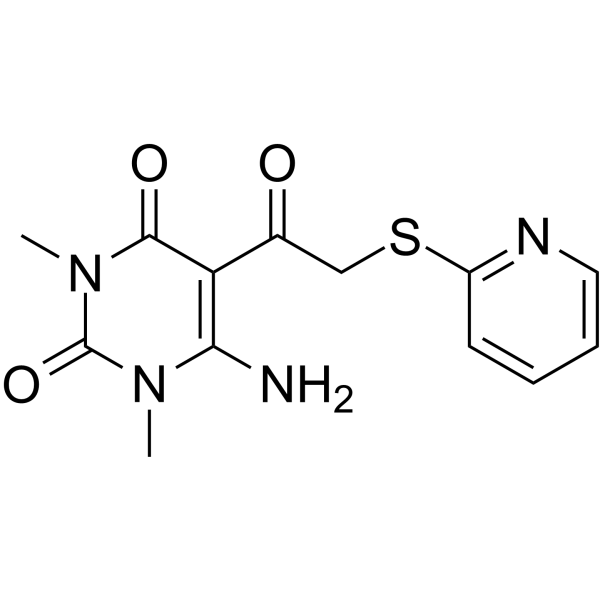
TM6089 is a unique Prolyl Hydroxylase (PHD) inhibitor which stimulates HIF activity without iron chelation and induces angiogenesis and exerts organ protection against ischemia. Local administration of TM6089 enhances angiogenesis, and oral administration stimulates HIF activity in transgenic rats expressing a hypoxia-responsive reporter vector.
For research use only. We do not sell to patients.
- Purity : 99.37%
- CAS No.: 863421-32-3
- Formula: C13H14N4O3S
- Molecular Weight:306.34
-
Storage:Powder -20°C, 3 years , 4°C, 2 years ; In solvent -80°C, 6 months , -20°C, 1 month

To place orders, for customer services and technical support, please contact: MedChemExpress USA
Tel: 609-228-6898 E-mail: [email protected] [email protected]


-
 Biological Activity
-
Chemical Information
-
Solvent & Solubility
- Protocols
- Purity & Documentation
- References
-
 Help & FAQs


-
HY-13426
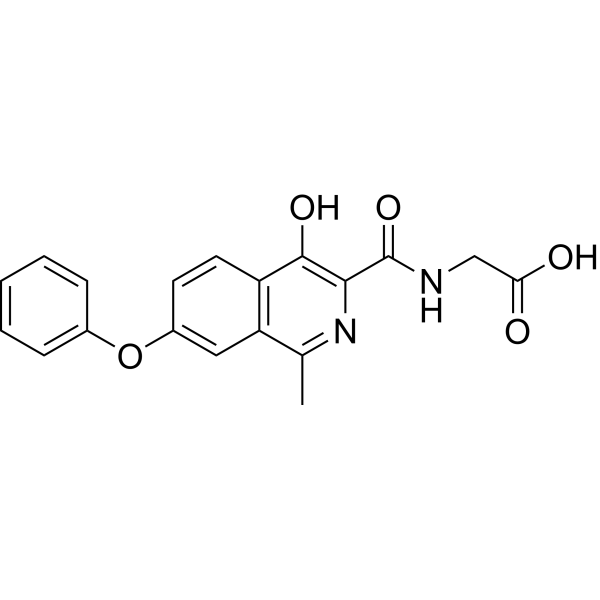
RoxadustatHIF-PH Inhibitor -
HY-101023
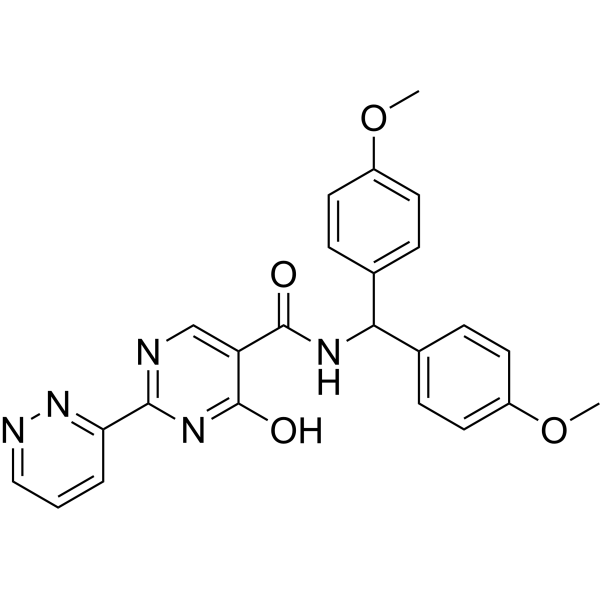
MK-8617HIF PHD1-3 Inhibitor -
HY-12832
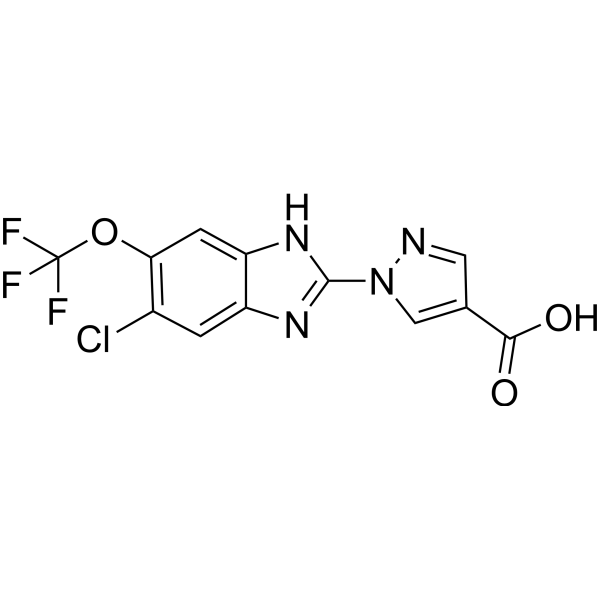
JNJ-42041935PHD Inhibitor -
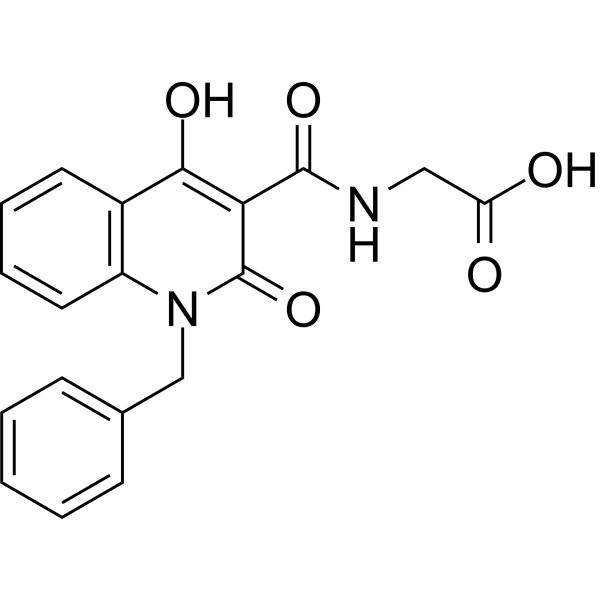
HY-15468
IOX2HIF/HIF Prolyl-Hydroxylase Inhibitor -
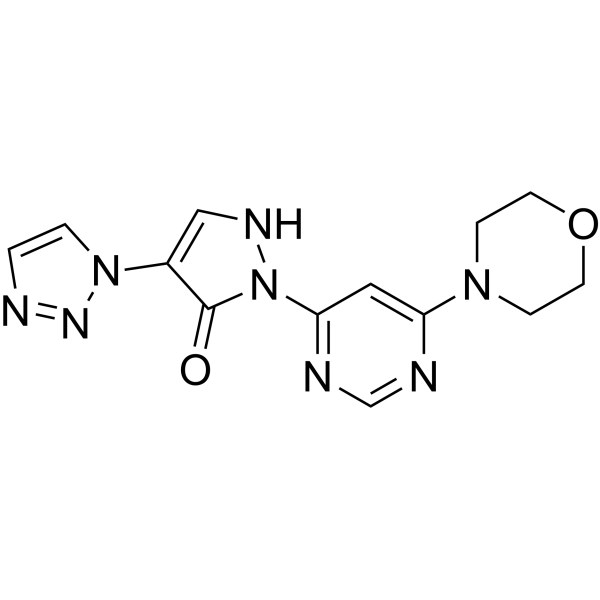
HY-12654
MolidustatHypoxia-Inducible Factor Prolyl Hydroxylase Inhibitor -
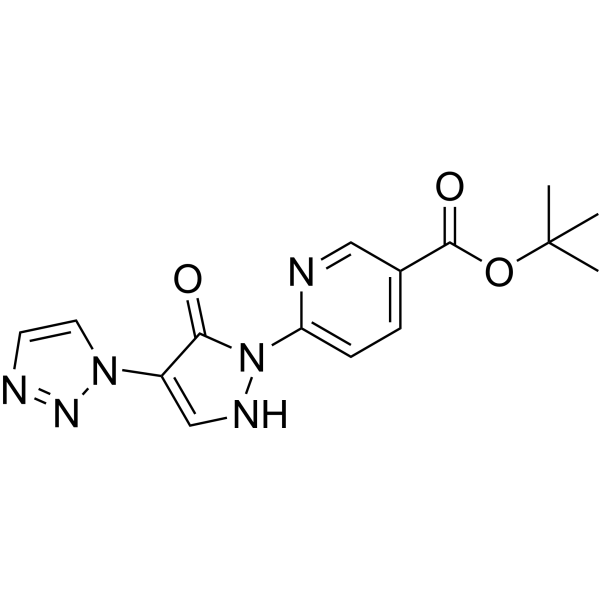
HY-120110
IOX4PHD2 Inhibitor -
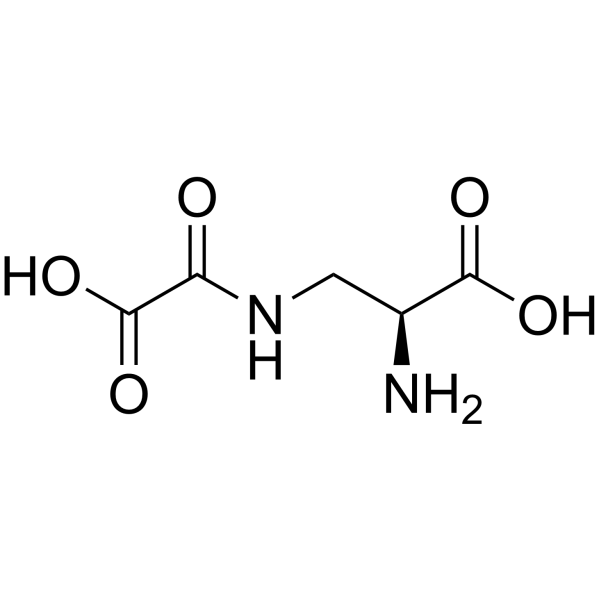
HY-N1477
DencichineHIF/HIF Prolyl-Hydroxylase Inhibitor -
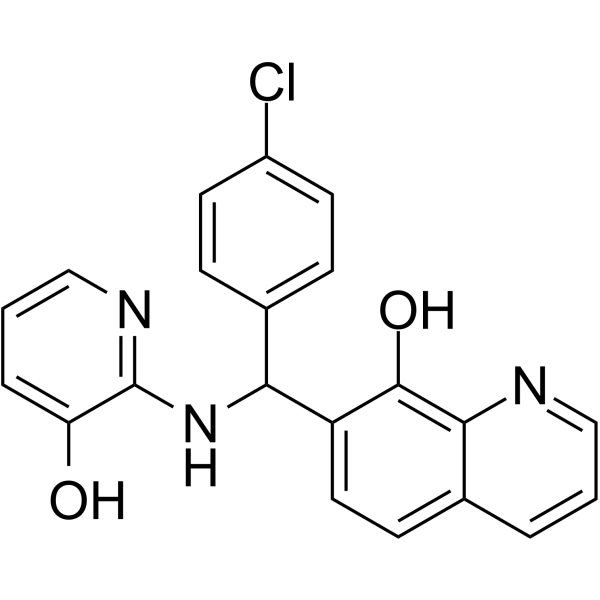
HY-101449
AdaptaquinHIF-PHDs Inhibitor -
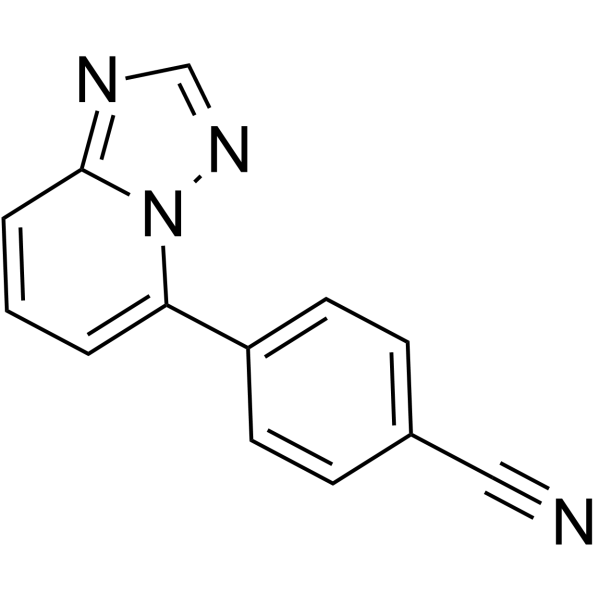
HY-136300
PHD-1-IN-1PHD-1 Inhibitor -
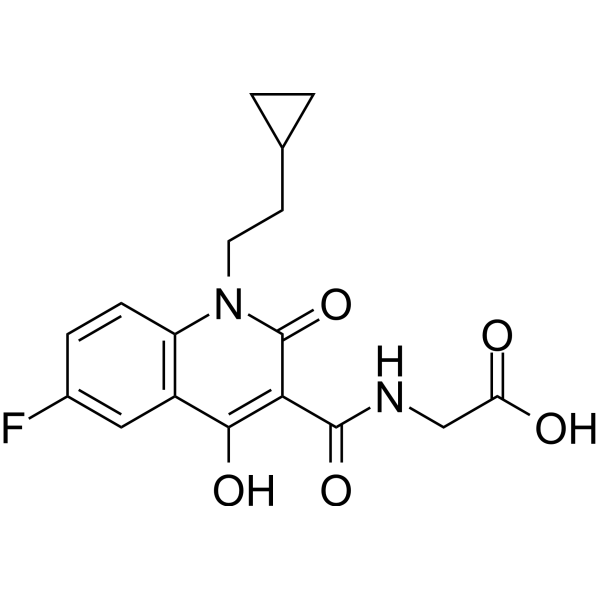
HY-123422
GSK360AHIF-PHD Inhibitor -
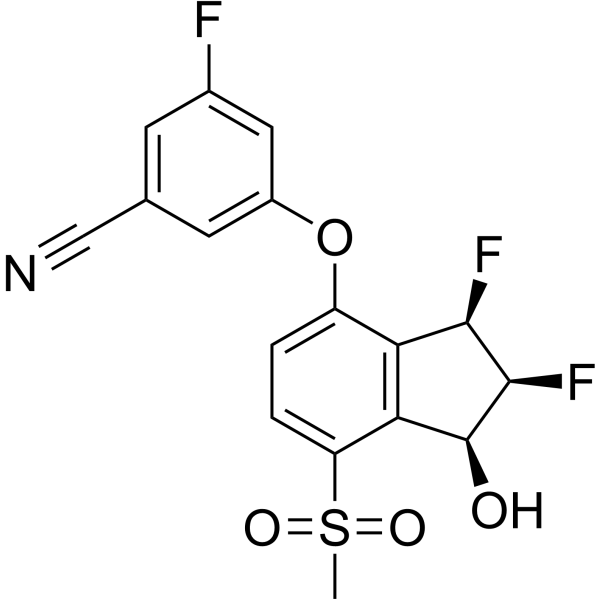
HY-125840
BelzutifanHIF-2α Inhibitor -
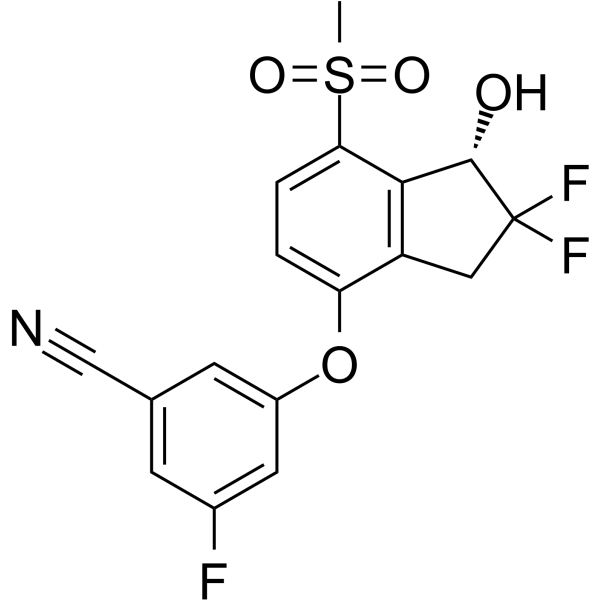
HY-12867
PT-2385HIF-2α Inhibitor


Biological Activity
Description


Chemical Information
-
CAS No. 863421-32-3
-
Appearance Solid
-
Molecular Weight 306.34
-
Formula C13H14N4O3S
-
Color Light yellow to light brown
-
SMILES
O=C1N(C(C(C(CSC2=NC=CC=C2)=O)=C(N1C)N)=O)C
-
Shipping
Room temperature in continental US; may vary elsewhere.
-
Storage
Powder -20°C 3 years 4°C 2 years In solvent -80°C 6 months -20°C 1 month


Solvent & Solubility
In Vitro:
DMSO : 41.67 mg/mL (136.03 mM; ultrasonic and warming and heat to 60°C; Hygroscopic DMSO has a significant impact on the solubility of product, please use newly opened DMSO)
Please refer to the solubility information to select the appropriate solvent. Once prepared, please aliquot and store the solution to prevent product inactivation from repeated freeze-thaw cycles.
Storage method and period of stock solution: -80°C, 6 months; -20°C, 1 month. When stored at -80°C, please use it within 6 months. When stored at -20°C, please use it within 1 month.
Please refer to the solubility information to select the appropriate solvent. Once prepared, please aliquot and store the solution to prevent product inactivation from repeated freeze-thaw cycles.
Storage method and period of stock solution: -80°C, 6 months; -20°C, 1 month. When stored at -80°C, please use it within 6 months. When stored at -20°C, please use it within 1 month.
Concentration (start) × Volume (start) = Concentration (final) × Volume (final)


Purity & Documentation
-
Data Sheet (271 KB)
-
SDS (251 KB)
- English - EN (251 KB)
- Français - FR (251 KB)
- Deutsch - DE (251 KB)
- Norwegian - NO (251 KB)
- Español - ES (251 KB)
- Swedish - SV (251 KB)
- Italian - IT (251 KB)
- Korean - KR (251 KB)
- Portuguese - PT (251 KB)
-
Handling Instructions (2659 KB)
References


Complete Stock Solution Preparation Table
Please refer to the solubility information to select the appropriate solvent. Once prepared, please aliquot and store the solution to prevent product inactivation from repeated freeze-thaw cycles.
Storage method and period of stock solution: -80°C, 6 months; -20°C, 1 month. When stored at -80°C, please use it within 6 months. When stored at -20°C, please use it within 1 month.
| Optional Solvent | Concentration Solvent Mass | 1 mg | 5 mg | 10 mg | 25 mg |
|---|---|---|---|---|---|
| DMSO | 1 mM | 3.2643 mL | 16.3217 mL | 32.6435 mL | 81.6087 mL |
| 5 mM | 0.6529 mL | 3.2643 mL | 6.5287 mL | 16.3217 mL | |
| 10 mM | 0.3264 mL | 1.6322 mL | 3.2643 mL | 8.1609 mL | |
| 15 mM | 0.2176 mL | 1.0881 mL | 2.1762 mL | 5.4406 mL | |
| 20 mM | 0.1632 mL | 0.8161 mL | 1.6322 mL | 4.0804 mL | |
| 25 mM | 0.1306 mL | 0.6529 mL | 1.3057 mL | 3.2643 mL | |
| 30 mM | 0.1088 mL | 0.5441 mL | 1.0881 mL | 2.7203 mL | |
| 40 mM | 0.0816 mL | 0.4080 mL | 0.8161 mL | 2.0402 mL | |
| 50 mM | 0.0653 mL | 0.3264 mL | 0.6529 mL | 1.6322 mL | |
| 60 mM | 0.0544 mL | 0.2720 mL | 0.5441 mL | 1.3601 mL | |
| 80 mM | 0.0408 mL | 0.2040 mL | 0.4080 mL | 1.0201 mL | |
| 100 mM | 0.0326 mL | 0.1632 mL | 0.3264 mL | 0.8161 mL |


TM6089 Related Classifications
HY-118543 Related Classifications
 Powered by Bioz