



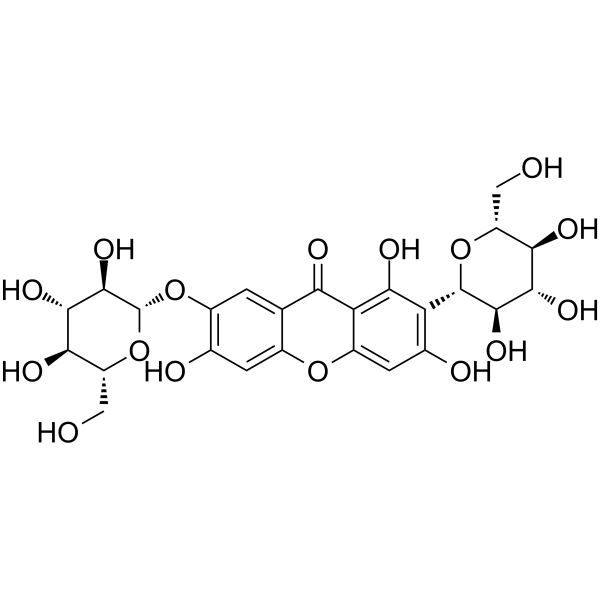
Neomangiferin
Based on 1 publication(s) in Google Scholar
Neomangiferin is an orally active natural flavonoid. Neomangiferin partially ameliorates non-alcoholic fatty liver disease (NAFLD) by regulating the expression of genes related to free fatty acid uptake and lipid oxidation. Neomangiferin exerts anti-colitis effects by inhibiting Th17/Treg cell differentiation. Neomangiferin exerts anti-aging and lifespan-extending effects by targeting upregulation of bas-1, which in turn activates the autophagy, IIS and MAPK pathways. Neomangiferin has the potential to prevent aseptic loosening of prostheses after total joint arthroplasty due to its significant anti-inflammatory and osteoclastogenesis-inhibiting effects.
商品は「研究用試薬」です。人や動物の医療用・臨床診断用・食品用の製品ではありません。
研究用途以外に使用した場合、当社は一切の責任を負いかねます。
- 純度: 99.80%
- CAS 番号: 64809-67-2
- 分子式: C25H28O16
- 分子量:584.48
-
保管条件:
4°C, protect from light
* In solvent : -80°C, 6 months; -20°C, 1 month (protect from light)

To place orders, for customer services and technical support, please contact: MedChemExpress USA
Tel: 609-228-6898 E-mail: [email protected] [email protected]


-
 生物活性
生物活性
-
化学情報
-
溶剤 & 溶解度
- 純度とドキュメンテーション
- 参考文献
-
 Help & FAQs



MedChemExpress(MCE)の使用を引用している文献 Neomangiferin
More

生物活性
Neomangiferin (5, 10, 20 μM; 5 days) suppresses TGFβ/IL-6-induced Th17 cell differentiation in purified splenic CD4+ T cells from C57BL/6J mice, reducing IL-17 and RORγt expression[2].
Neomangiferin (5, 10, 20 μM; 5 days) promotes anti-CD3/anti-CD28-induced Treg cell differentiation in purified splenic T cells from C57BL/6J mice, increasing IL-10 expression[2].
MedChemExpress (MCE) has not independently confirmed the accuracy of these methods. They are for reference only.
Neomangiferin (10-20 mg/kg; p.o.; once daily; for 3 consecutive days) ameliorates TNBS-induced colitis in male C57BL/6J mice by inhibiting proinflammatory cytokine production and restoring the Th17/Treg balance; at the dose of 20 mg/kg, it inhibits myeloperoxidase activity by 73.9% and reduces IL-17 levels by 63.6%[2].
Neomangiferin (20 mg/kg; p.o.; daily; for 3 consecutive weeks) improves spontaneous chronic colitis in male C57BL/6 IL-10 knockout mice by reducing the production of proinflammatory cytokines, inhibiting myeloperoxidase activity by 52.6%, and restoring the Th17/Treg balance[2].
Neomangiferin (2.5-5 mg/kg, i.p., once every other day for 21 consecutive days) dose-dependently inhibits UHMWPE particle-induced inflammatory calvarial osteolysis in mice[3].
MedChemExpress (MCE) has not independently confirmed the accuracy of these methods. They are for reference only.
-
Animal Model:Sprague-Dawley (SD) (male, 7-week-old, 200 g, high-fat diet-induced NAFLD)[1]
-
Dosage:50 mg/kg·day-1 BW; 25 mg/kg·day-1 BW
-
Administration:oral gavage; daily; 13 weeks
-
Result:Significantly decreased body weight compared to HF control group after 3 weeks of treatment; by week 8, reduced body weight to normal control levels with high-dose treatment.
Significantly lowered relative weights of organs (liver, spleen, testicle, brain, heart) and adipose tissues (abdominal, perirenal, subcutaneous, epididymal fat) with high-dose treatment compared to HF control group.
Reduced serum triglyceride (TG), total cholesterol (TC), low-density lipoprotein cholesterol (LDL-C), alanine aminotransferase (ALT), aspartate aminotransferase (AST), AST/ALT ratio, glucose (GLU), and D-3-hydroxybutyric acid (D-3H) levels, and increased serum high-density lipoprotein cholesterol (HDL-C) levels and HDL-C/TC ratio after 13 weeks of treatment compared to HF control group.
Decreased hepatic TG, TC, and malondialdehyde (MDA) levels, and increased hepatic superoxide dismutase (SOD) and glutathione peroxidase (GSH-PX) levels compared to HF control group.
Increased fecal TG and TC levels compared to HF control group.
Reduced liver fat content from 43.6% (HF control) to a statistically significant lower level, decreased body fat content, and restored brown adipose tissue size with high-dose treatment compared to HF control group.
Significantly reduced hepatic fatty droplets, lipid accumulation, and renal lipid droplet accumulation compared to HF control group.
Lowered blood glucose levels at 30, 60, 90, and 120 minutes post-glucose gavage, and reduced glucose area under the curve (AUC) compared to HF control group.
Increased respiratory exchange rate (RER), oxygen consumption (VO2), and carbon dioxide production (VCO2) with high-dose treatment compared to HF control group, correcting diurnal metabolic rhythm defect.
Upregulated hepatic mRNA and protein expression of peroxisome proliferator-activated receptor α (PPARα) and carnitine palmitoyltransferase 1a (CPT1a), and downregulated hepatic mRNA and protein expression of fatty acid transport protein 2 (FATP2) and long-chain-fatty-acid-CoA ligase 1 (ACSL1) after 13 weeks of treatment compared to HF control group.
-
Animal Model:C57BL/6J (male, 6 weeks old, 20-23 g, TNBS-induced colitis)[2]
-
Dosage:10 mg/kg; 20 mg/kg
-
Administration:p.o.; daily; 3 days
-
Result:Inhibited TNBS-induced colon shortening.
Reduced macroscopic colitis scores.
Suppressed myeloperoxidase activity by 73.9% (20 mg/kg dose).
Prevented TNBS-induced reduction in tight junction proteins ZO-1, occludin, and claudin-1.
Inhibited TNBS-induced ERK phosphorylation, NF-κB activation, and expression of inducible nitric oxide synthase and cyclooxygenase-2.
Reduced colon tissue levels of TNF-α by 45.5%, IL-1β by 78.1%, IL-17 by 63.6%, and IL-6 by 85.5%, while increasing IL-10 expression (20 mg/kg dose).
Inhibited TNBS-induced Th17 cell differentiation in colonic lamina propria and increased Treg cell differentiation.
Attenuated TNBS-mediated upregulation of IL-17, IFN-γ, RORγt, and T-bet mRNA, and restored TNBS-suppressed IL-10, IL-5, Foxp3, and GATA3 mRNA expression.
-
Animal Model:C57BL/6 IL-10 knockout (male, 13 weeks old at treatment initiation, 18-21 g, spontaneous chronic colitis)[2]
-
Dosage:20 mg/kg
-
Administration:p.o.; daily; 3 weeks
-
Result:Reduced colonic myeloperoxidase activity by 52.6%.
Improved histopathological severity of colitis.
Increased expression of tight junction proteins ZO-1, occludin, and claudin-1.
Inhibited infiltration of antigen-presenting cells.
Suppressed ERK phosphorylation, NF-κB activation, and expression of inducible nitric oxide synthase and cyclooxygenase-2.
Reduced colon tissue levels of TNF-α by 17.3%, IL-1β by 54.5%, IFN-γ by 27.8%, and IL-17 by 52.8%.
Inhibited Th17 cell differentiation in colonic lamina propria and increased Treg cell differentiation.
Suppressed IL-17 and RORγt mRNA expression.
-
Animal Model:C57BL/6 (8-week-old male, specific pathogen free grade, UHMWPE particles implanted into calvarial subperiosteal space)[3]
-
Dosage:2.5 mg/kg; 5 mg/kg
-
Administration:i.p.; every other day; 21 days
-
Result:Significantly increased bone mineral density (BMD) and bone volume/tissue volume ratio (BV/TV), and decreased the number of bone resorption pits and total skull porosity compared to the vehicle group, with 5 mg/kg group showing greater improvement than 2.5 mg/kg group.
Significantly reduced the number of TRAP-positive osteoclasts and the area of calvarial bone erosion compared to the vehicle group, with 5 mg/kg group showing greater reduction than 2.5 mg/kg group.
Significantly reduced serum levels of TNF-α, IL-1β, RANKL, OSCAR, and CTX-1, and increased serum OPG levels compared to the vehicle group, with 5 mg/kg group showing greater reductions in proinflammatory cytokines and osteoclast markers, and greater increase in OPG, than 2.5 mg/kg group.


化学情報
-
CAS 番号 64809-67-2
-
性状 Solid
-
分子量 584.48
-
分子式 C25H28O16
-
Color White to light yellow
-
SMILES
OC1=C(C2=O)C(OC3=CC(O)=C(O[C@@H]([C@@H]([C@@H](O)[C@@H]4O)O)O[C@@H]4CO)C=C23)=CC(O)=C1[C@@H]([C@@H]([C@@H](O)[C@@H]5O)O)O[C@@H]5CO
-
別名
ネオマンギフェリン
-
Structure Classification
-
Initial Source
-
輸送条件
Room temperature in continental US; may vary elsewhere.
-
保管条件
4°C, protect from light
* In solvent : -80°C, 6 months; -20°C, 1 month (protect from light)


Publications (1)
-
Journal Impact Factor
-
Most Recent


溶剤 & 溶解度
DMSO : 100 mg/mL (171.09 mM; Need ultrasonic; Hygroscopic DMSO has a significant impact on the solubility of product, please use newly opened DMSO)
Please refer to the solubility information to select the appropriate solvent. Once prepared, please aliquot and store the solution to prevent product inactivation from repeated freeze-thaw cycles.
Storage method and period of stock solution: -80°C, 6 months; -20°C, 1 month (protect from light). When stored at -80°C, please use it within 6 months. When stored at -20°C, please use it within 1 month.
Please refer to the solubility information to select the appropriate solvent. Once prepared, please aliquot and store the solution to prevent product inactivation from repeated freeze-thaw cycles.
Storage method and period of stock solution: -80°C, 6 months; -20°C, 1 month (protect from light). When stored at -80°C, please use it within 6 months. When stored at -20°C, please use it within 1 month.
濃度 (開始) × 体積 (開始) = 濃度 (終了) × 体積 (終了)
Select the appropriate dissolution method based on your experimental animal and administration route.
- For the following dissolution methods, please ensure to first prepare a clear stock solution using an In Vitro approach and then sequentially add co-solvents:
- To ensure reliable experimental results, the clarified stock solution can be appropriately stored based on storage conditions. As for the working solution for In Vivo experiments, it is recommended to prepare freshly and use it on the same day.
- The percentages shown for the solvents indicate their volumetric ratio in the final prepared solution. If precipitation or phase separation occurs during preparation, heat and/or sonication can be used to aid dissolution.
Add each solvent one by one: 10% DMSO 40% PEG300 5% Tween-80 45% Saline
Solubility: ≥ 2.5 mg/mL (4.28 mM); Clear solution
This protocol yields a clear solution of ≥ 2.5 mg/mL (saturation unknown).
Taking 1 mL working solution as an example, add 100 μL DMSO stock solution (25.0 mg/mL) to 400 μL PEG300, and mix evenly; then add 50 μL Tween-80 and mix evenly; then add 450 μL Saline to adjust the volume to 1 mL.
Preparation of Saline: Dissolve 0.9 g sodium chloride in ddH₂O and dilute to 100 mL to obtain a clear Saline solution.
Add each solvent one by one: 10% DMSO 90% (20% SBE-β-CD in Saline)
Solubility: ≥ 2.5 mg/mL (4.28 mM); Clear solution
This protocol yields a clear solution of ≥ 2.5 mg/mL (saturation unknown).
Taking 1 mL working solution as an example, add 100 μL DMSO stock solution (25.0 mg/mL) to 900 μL 20% SBE-β-CD in Saline, and mix evenly.
Preparation of 20% SBE-β-CD in Saline (4°C, storage for one week): 2 g SBE-β-CD powder is dissolved in 10 mL Saline, completely dissolve until clear.
Please enter the basic information of animal experiments:
-
-
-
-
Recommended: Prepare an additional quantity of animals to account for potential losses during experiments.
Please enter your animal formula composition:
-
%DMSO +
Recommended: Keep the proportion of DMSO in working solution below 2% if your animal is weak.
-
%+
-
+%Tween-80 + +
-
%Saline +
The co-solvents required include: DMSO, . All of co-solvents are available by MedChemExpress (MCE). , Tween 80. All of co-solvents are available by MedChemExpress (MCE).
Working solution concentration: 0.22 mg/mL
Method for preparing stock solution: mg drug dissolved in μL DMSO. Stock solution concentration: mg/mL. * In solvent : -80°C, 6 months; -20°C, 1 month (protect from light)
1. Take μL DMSO stock solution;
2. Add μL .
μL , mix evenly;
3. Then add μL Tween 80, mix evenly;
4. Then add μL
Please ensure that the stock solution in the first step is dissolved to a clear state, and add co-solvents in sequence. You can use ultrasonic heating (ultrasonic cleaner, recommended frequency 20-40 kHz), vortexing, etc. to assist dissolution.


純度とドキュメンテーション
-
データシート (288 KB)
-
SDS (420 KB)
- English - EN (420 KB)
- Français - FR (420 KB)
- Deutsch - DE (420 KB)
- Norwegian - NO (420 KB)
- Español - ES (420 KB)
- Swedish - SV (420 KB)
- Italian - IT (420 KB)
- Korean - KR (420 KB)
- Portuguese - PT (420 KB)
-
取扱説明書 (2659 KB)
参考文献
[1]. Zhou C, et al. Beneficial effects of neomangiferin on high fat diet-induced nonalcoholic fatty liver disease in rats. Int Immunopharmacol. 2015;25(1):218-228. [Content Brief]
[2]. Lim SM, et al. Neomangiferin modulates the Th17/Treg balance and ameliorates colitis in mice. Phytomedicine. 2016;23(2):131-140. [Content Brief]
[3]. Wang HT, et al. A study on the prevention and treatment of murine calvarial inflammatory osteolysis induced by ultra-high-molecular-weight polyethylene particles with neomangiferin. Exp Ther Med. 2018;16(5):3889-3896. [Content Brief]


Complete Stock Solution Preparation Table
Please refer to the solubility information to select the appropriate solvent. Once prepared, please aliquot and store the solution to prevent product inactivation from repeated freeze-thaw cycles.
Storage method and period of stock solution: -80°C, 6 months; -20°C, 1 month (protect from light). When stored at -80°C, please use it within 6 months. When stored at -20°C, please use it within 1 month.
| Optional Solvent | Concentration Solvent Mass | 1 mg | 5 mg | 10 mg | 25 mg |
|---|---|---|---|---|---|
| DMSO | 1 mM | 1.7109 mL | 8.5546 mL | 17.1092 mL | 42.7731 mL |
| 5 mM | 0.3422 mL | 1.7109 mL | 3.4218 mL | 8.5546 mL | |
| 10 mM | 0.1711 mL | 0.8555 mL | 1.7109 mL | 4.2773 mL | |
| 15 mM | 0.1141 mL | 0.5703 mL | 1.1406 mL | 2.8515 mL | |
| 20 mM | 0.0855 mL | 0.4277 mL | 0.8555 mL | 2.1387 mL | |
| 25 mM | 0.0684 mL | 0.3422 mL | 0.6844 mL | 1.7109 mL | |
| 30 mM | 0.0570 mL | 0.2852 mL | 0.5703 mL | 1.4258 mL | |
| 40 mM | 0.0428 mL | 0.2139 mL | 0.4277 mL | 1.0693 mL | |
| 50 mM | 0.0342 mL | 0.1711 mL | 0.3422 mL | 0.8555 mL | |
| 60 mM | 0.0285 mL | 0.1426 mL | 0.2852 mL | 0.7129 mL | |
| 80 mM | 0.0214 mL | 0.1069 mL | 0.2139 mL | 0.5347 mL | |
| 100 mM | 0.0171 mL | 0.0855 mL | 0.1711 mL | 0.4277 mL |


Neomangiferin 関連分類
HY-N0723 関連分類
 Powered by Bioz