



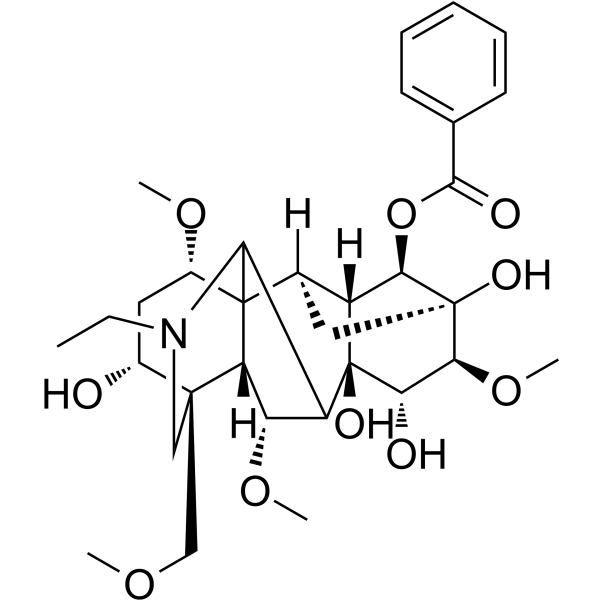
Benzoylaconine
Based on 1 publication(s) in Google Scholar
Benzoylaconine (Benzoylaconitine) is an orally active monoester alkaloid found in the traditional Chinese medicine Aconitum carmichaelii. Benzoylaconine is an ACE2 agonist (EC50: 1.5 μM) with antihypertensive and anti-heart failure effects. Benzoylaconine inhibits TLR-induced MAPK and NF-κB pathways to exert anti-inflammatory effects. Benzoylaconine upregulates the protein levels of P-gp, MRP2, and has anti-tumor effects.
연구목적의 판매만을 진행합니다. 환자를 대상으로 한 판매는 하지 않습니다.
- Purity: 99.92%
- CAS No.: 466-24-0
- 화학식: C32H45NO10
- 분자량:603.70
-
보관:
4°C, sealed storage, away from moisture and light
* In solvent : -80°C, 6 months; -20°C, 1 month (sealed storage, away from moisture and light)


-
 Biological Activity
-
Chemical Information
-
용액&용해도
- 순도&문서
- References
-
 Help & FAQs
-

Immunology/Inflammation Compound Library
HY-L007
-
Kinase Inhibitor Library
HY-L009
-
MAPK Compound Library
HY-L010
-
Membrane Transporter/Ion Channel Compound Library
HY-L011
-
Metabolism/Protease Compound Library
HY-L012
-
NF-κB Signaling Compound Library
HY-L014
-
Stem Cell Signaling Compound Library
HY-L017
-
Natural Product Library
HY-L021
-
Anti-Cancer Compound Library
HY-L025
-
Small Molecule Immuno-Oncology Compound Library
HY-L031
-
Anti-Aging Compound Library
HY-L034
-
Antioxidant Compound Library
HY-L037
-
Differentiation Inducing Compound Library
HY-L038
-
Reprogramming Compound Library
HY-L039
-
Oxygen Sensing Compound Library
HY-L045
-
Anti-Cardiovascular Disease Compound Library
HY-L046
-
Pyroptosis Compound Library
HY-L059
-
Orally Active Compound Library
HY-L061
-
Traditional Chinese Medicine Active Compound Library
HY-L065
-
Neuroprotective Compound Library
HY-L070
-
Alkaloids Library
HY-L071
-
Anti-Breast Cancer Compound Library
HY-L074
-
Anti-Lung Cancer Compound Library
HY-L075
-
Anti-Pancreatic Cancer Compound Library
HY-L077
-
Anti-Blood Cancer Compound Library
HY-L079
-
Anti-Cancer Metabolism Compound Library
HY-L083
-
Neurodegenerative Disease-related Compound Library
HY-L086
-
Anti-Obesity Compound Library
HY-L087
-
Angiogenesis-Related Compound Library
HY-L088
-
Transcription Factor-Targeted Library
HY-L090
-
Anti-Liver Cancer Compound Library
HY-L101
-
Anti-Cancer Natural Product Library
HY-L107
-
Antidepressant Compound Library
HY-L108
-
Anti-inflammatory Traditional Chinese Medicine Active Compound Library
HY-L114
-
Plant-Sourced Natural Product Library
HY-L115
-
Anti-Prostate Cancer Compound Library
HY-L124
-
Anti-Pulmonary Fibrosis Compound Library
HY-L125
-
Cancer Stem Cells Compound Library
HY-L135
-
Heterocyclic Compound Library
HY-L138
-
Pain-Related Compound Library
HY-L139
-
Mitochondrial Protection Compound Library
HY-L144
-
Antihypertensive Compound Library
HY-L145
-
Metabolic Enzyme Compound Library
HY-L146
-
Membrane Protein-targeted Compound Library
HY-L149
-
Membrane Receptor-targeted Compound Library
HY-L150
-
Autoimmune Disease Compound Library
HY-L156
-
Serine/Threonine Kinase Inhibitor Library
HY-L164
-
Anti-Hematopathy Compound Library
HY-L171
-
Anti-Ovarian Cancer Compound Library
HY-L173
-
Multi-Target Compound Library
HY-L176
-
Radioprotector Library
HY-L178
-
Bioactive Compound Library Max
HY-L181
-
MCE Bioactive Compound Library
HY-L001V
-
Natural Product Library Plus
HY-L021P
-
Natural Product and Natural Product-Like Compound Library
HY-L021M
-
Bioactive Compound Library
HY-L001
-
Anti-Gastric Cancer Compound Library
HY-L184
-
Anti-Fibrosis Compound Library
HY-L185
-
Tibetan Medicine Compound Library
HY-L191
-
Heat-Clearing and Detoxification Traditional Chinese Medicine Compound Library
HY-L194
-
Protein Kinase Compound Library
HY-L196
-
Non-Alcoholic Fatty Liver Disease (NAFLD) Compound Library
HY-L199
-
Cell Proliferation Compound Library
HY-L201
-
High-Throughput Bioactive Compound Library
HY-L205
-
High-Throughput Natural Product Library
HY-L206
-
Ancient Chinese Classical Formulas Traditional Chinese Medicine Active Compound Library
HY-L209
-
Anti-Rheumatic Arthritis Compound Library
HY-L210
-
Diarrhea-Related Traditional Chinese Medicine Active Compound Library
HY-L224
-
Pattern Recognition Receptors Library
HY-L237
-
Mongolian Medicine Compound Library
HY-L238
-
Natural Product Diversity Scaffold Library
HY-L245
-
Tonifying Traditional Chinese Medicine Monomer Compound Library
HY-L246
-
Lactylation Compound Library
HY-L249
-
Mass Spectrometry Natural Product Library
HY-L262


Publications Citing Use of MedChemExpress (MCE) Benzoylaconine
More

Biological Activity
|
ACE 0.32 μM (EC50) |
Benzoylaconine (25-100 μM, pretreatment for 1 h, then 36 h) has the effect of reducing angiotensin II-induced cardiomyocyte hypertrophy and fibrosis in cardiomyocytes and cardiac fibroblasts[1].
Benzoylaconine (50 μM, pretreatment for 1 h, then 0.5, 36 h) cannot alleviate myocardial inflammation and injury by targeting ACE2 in ACE2 knockdown cardiomyocytes[1].
Benzoylaconine (1-100 μM, 1 h) exerts anti-inflammatory effects in RAW264.7 macrophages by inhibiting TLR-induced MAPK and NF-κB pathways[2].
Benzoylaconine (1-100 μM, pretreatment for 1 h, then 24 h) significantly reduces the levels of IL-1β, TNF-α, and IL-6 cytokine proinflammatory cytokines in LPS-induced RAW264.7 macrophages[2].
Benzoylaconine (1-100 μM, pretreatment for 1 h, then 24 h) dose-dependently reduces the expression of COX-2 and iNOS in LPS-induced RAW264.7 macrophages[2].
Benzoylaconine (27-75 μM, 2 days) dose-dependently promotes mitochondrial mass and thus mitochondrial biogenesis in HepG2 cells[3].
Benzoylaconine has an agonistic effect on ACE2 activity (EC50: 1.5 μM) and a significant inhibitory effect on ACE (EC50: 0.32 μM)[5].
Benzoylaconine (25-100 μM, 6 days) upregulates the protein levels of P-glycoprotein (P-gp), multidrug resistance-associated protein 2 (MRP2), and breast cancer resistance protein (BCRP) in Caco-2 and LS174T cells[6].
MedChemExpress (MCE) has not independently confirmed the accuracy of these methods. They are for reference only.
-
Cell Line:cardiomyocytes and cardiac fibroblasts
-
Concentration:50 μM
-
Incubation Time:Pretreatment for 1 h and then exposure to Ang Ⅱ (HY-13948) (1 μM) for 36 h
-
Result:Inhibited p38/ERK phosphorylation, reduced Drp1 mitochondrial translocation, and decreased ROS and NF-κB nuclear translocation.
Significantly inhibited the expression of β-MyHC and TGF-β proteins in rat primary cardiomyocytes and COL1A1, TGF-β primary cardiac fibroblasts induced by Ang Ⅱ in a dose-dependent manner.
-
Cell Line:RAW264.7 cells
-
Concentration:1-100 μM
-
Incubation Time:Pretreatment for 1 h and then exposure to LPS (1 μg/mL) for 24 h
-
Result:Inhibited PGE2 and NO release by downregulating COX-2 and iNOS levels.
Decreased p-p38/p38, p-JNK/JNK and p-ERK/ERK by affecting the MAPK pathway.
Significantly dose-dependently attenuated IκBα phosphorylation and degradation in activated macrophages.
| Species | Dose | Route | Tmax | Plasma Concentration | T1/2 |
|---|---|---|---|---|---|
| Rat[7] | 1 mg/kg | p.o. | 0.31 h | 3.99 ng/mL | 9.49 h |
Benzoylaconine (10 mg/kg, i.p., once a day for seven consecutive days) increases the oxygen consumption of mice, induces mitochondrial biogenesis and activated the AMPK-PGC1ɑ pathway in mice, exerting an anti-heart failure effect[3].
Benzoylaconine (20 mg/kg, i.v. or i.g., once a day for five consecutive days) significantly inhibits the swelling of the mouse ear and sole in the mouse ear swelling test (MEST) and the mouse foot swelling test, indicating that it has an anti-inflammatory effect[4].
Benzoylaconine (3-30 mg/kg, p.o., once a day for 14 consecutive days) can reduce heart rate and vasodilation in the SHR mouse model, and exert antihypertensive effects by reversing smooth muscle remodeling[5].
Benzoylaconine (0.6 mg/kg, p.o., once a day for 14 consecutive days) significantly induces the expression and efflux activity of MRP2, BCRP, and P-gp in the jejunum, ileum, and colon of FVB mice in the FVB mouse model[6].
MedChemExpress (MCE) has not independently confirmed the accuracy of these methods. They are for reference only.
-
Animal Model:C57BL/6 mice (male aged 8 weeks) TAC-induced model[1]
-
Dosage:3, 10, 30 mg/kg
-
Administration:p.o., 4 weeks
-
Result:Dose-dependently improved ejection fraction (EF%), fractional shortening (FS%), and decreased end-systolic volume (ESV) in TAC mice.
Reduced myocardial cell cross-sectional area, decreased cardiac collagen deposition, decreased circulating levels of BNP, LDH, and Ang Ⅱ, and increased levels of Ang (1-7).
Completely eliminated the improvement effects on cardiac function, hypertrophy and fibrosis in ACE knockout mice, indicating that it acted through ACE2.
-
Animal Model:Kunming mice (female 20 g)[4]
-
Dosage:20 mg/kg
-
Administration:i.v. (MEST) or i.g. (MPST), once a day for five consecutive days
-
Result:Showed that the swelling inhibition rate in the MEST model reached 50%. In the MPST model, the inhibition rate increased significantly with time, reaching the highest inhibition rate (78.4%) at 6 hours.
-
Animal Model:Spontaneous hypertensive rats (male 280 g)[5]
-
Dosage:3, 10, 30 mg/kg
-
Administration:p.o. once a day for fourteen consecutive days
-
Result:Indicated that it can not only inhibit the activity and protein expression of ACE, but also activate ACE2 activity in a dose-dependent manner.
Increased NO levels in SHR in a dose-dependent manner, reduced serum TNF-α and IL-6 levels, and downregulated COX-2 expression and IKB - α phosphorylation.
Showed targeting ACE/ACE2 to regulate vasodilation and vascular inflammation.
Decreased ACE and Ang Ⅱ levels and significantly increased Ang (1–7) levels, but did not change Ang Ⅰ and ACE2 levels.
-
Animal Model:Friend leukemia virus mice (male 20-22 g)[6]
-
Dosage:0.6 mg/kg
-
Administration:p.o. once a day for fourteen consecutive days
-
Result:Significantly increased the levels of MRP2 and BCRP protein and mRNA in the jejunum, ileum and colon of mice.
Upregulated protein levels in mice and promotes nuclear translocation of Nrf2 in cells.


Chemical Information
-
CAS No. 466-24-0
-
Appearance Solid
-
분자량 603.70
-
화학식 C32H45NO10
-
Color White to light yellow
-
SMILES
CO[C@@H]1C(C(N(CC)C2)C3[C@@H]4OC)([C@@](C[C@@]5(O)[C@@H]6OC(C7=CC=CC=C7)=O)([H])[C@@]6([H])[C@@]3([C@@H](O)[C@@H]5OC)O)[C@@]4([H])[C@@]2(COC)[C@H](O)C1
-
Synonyms
Benzoylaconitine; Isaconitine; Pikraconitin
-
Structure Classification
-
Initial Source
-
선적
Room temperature in continental US; may vary elsewhere.
-
보관
4°C, sealed storage, away from moisture and light
* In solvent : -80°C, 6 months; -20°C, 1 month (sealed storage, away from moisture and light)


Publications (1)
-
Journal Impact Factor
-
Most Recent


용액&용해도
DMSO : 55 mg/mL (91.10 mM; Need ultrasonic; Hygroscopic DMSO has a significant impact on the solubility of product, please use newly opened DMSO)
Please refer to the solubility information to select the appropriate solvent. Once prepared, please aliquot and store the solution to prevent product inactivation from repeated freeze-thaw cycles.
Storage method and period of stock solution: -80°C, 6 months; -20°C, 1 month (sealed storage, away from moisture and light). When stored at -80°C, please use it within 6 months. When stored at -20°C, please use it within 1 month.
Please refer to the solubility information to select the appropriate solvent. Once prepared, please aliquot and store the solution to prevent product inactivation from repeated freeze-thaw cycles.
Storage method and period of stock solution: -80°C, 6 months; -20°C, 1 month (sealed storage, away from moisture and light). When stored at -80°C, please use it within 6 months. When stored at -20°C, please use it within 1 month.
Concentration (start) × Volume (start) = Concentration (final) × Volume (final)
Select the appropriate dissolution method based on your experimental animal and administration route.
- For the following dissolution methods, please ensure to first prepare a clear stock solution using an In Vitro approach and then sequentially add co-solvents:
- To ensure reliable experimental results, the clarified stock solution can be appropriately stored based on storage conditions. As for the working solution for In Vivo experiments, it is recommended to prepare freshly and use it on the same day.
- The percentages shown for the solvents indicate their volumetric ratio in the final prepared solution. If precipitation or phase separation occurs during preparation, heat and/or sonication can be used to aid dissolution.
Add each solvent one by one: 10% DMSO 40% PEG300 5% Tween-80 45% Saline
Solubility: ≥ 0.92 mg/mL (1.52 mM); Clear solution
This protocol yields a clear solution of ≥ 0.92 mg/mL (saturation unknown).
Taking 1 mL working solution as an example, add 100 μL DMSO stock solution (9.2 mg/mL) to 400 μL PEG300, and mix evenly; then add 50 μL Tween-80 and mix evenly; then add 450 μL Saline to adjust the volume to 1 mL.
Preparation of Saline: Dissolve 0.9 g sodium chloride in ddH₂O and dilute to 100 mL to obtain a clear Saline solution.
Add each solvent one by one: 10% DMSO 90% (20% SBE-β-CD in Saline)
Solubility: ≥ 0.92 mg/mL (1.52 mM); Clear solution
This protocol yields a clear solution of ≥ 0.92 mg/mL (saturation unknown).
Taking 1 mL working solution as an example, add 100 μL DMSO stock solution (9.2 mg/mL) to 900 μL 20% SBE-β-CD in Saline, and mix evenly.
Preparation of 20% SBE-β-CD in Saline (4°C, storage for one week): 2 g SBE-β-CD powder is dissolved in 10 mL Saline, completely dissolve until clear.
Please enter the basic information of animal experiments:
-
-
-
-
Recommended: Prepare an additional quantity of animals to account for potential losses during experiments.
Please enter your animal formula composition:
-
%DMSO +
Recommended: Keep the proportion of DMSO in working solution below 2% if your animal is weak.
-
%+
-
+%Tween-80 + +
-
%Saline +
The co-solvents required include: DMSO, . All of co-solvents are available by MedChemExpress (MCE). , Tween 80. All of co-solvents are available by MedChemExpress (MCE).
Working solution concentration: 0.22 mg/mL
Method for preparing stock solution: mg drug dissolved in μL DMSO. Stock solution concentration: mg/mL. * In solvent : -80°C, 6 months; -20°C, 1 month (sealed storage, away from moisture and light)
1. Take μL DMSO stock solution;
2. Add μL .
μL , mix evenly;
3. Then add μL Tween 80, mix evenly;
4. Then add μL
Please ensure that the stock solution in the first step is dissolved to a clear state, and add co-solvents in sequence. You can use ultrasonic heating (ultrasonic cleaner, recommended frequency 20-40 kHz), vortexing, etc. to assist dissolution.


순도&문서
-
Data Sheet (298 KB)
-
SDS (396 KB)
- English - EN (396 KB)
- Français - FR (396 KB)
- Deutsch - DE (396 KB)
- Norwegian - NO (396 KB)
- Español - ES (396 KB)
- Swedish - SV (396 KB)
- Italian - IT (396 KB)
- Portuguese - PT (396 KB)
-
Handling Instructions (2659 KB)
References
[1]. Zhang QQ, et.al. Benzoylaconitine: A promising ACE2-targeted agonist for enhancing cardiac function in heart failure. Free Radic Biol Med. 2024 Mar;214:206-218. [Content Brief]
[2]. Zhou C, et al. Benzoylaconine Modulates LPS-Induced Responses Through Inhibition of Toll-Like Receptor-Mediated NF-κB and MAPK Signaling in RAW264.7 Cells. Inflammation. 2021 Oct;44(5):2018-2032. [Content Brief]
[3]. Deng XH, et al. Benzoylaconine induces mitochondrial biogenesis in mice via activating AMPK signaling cascade. Acta Pharmacol Sin. 2019 May;40(5):658-665. [Content Brief]
[4]. Gai W, et al. Delivery of benzoylaconitine using biodegradable nanoparticles to suppress inflammation via regulating NF-κB signaling. Colloids Surf B Biointerfaces. 2020 Jul;191:110980. [Content Brief]
[5]. Zhang QQ, et al. A Novel Modulator of the Renin-Angiotensin System, Benzoylaconitine, Attenuates Hypertension by Targeting ACE/ACE2 in Enhancing Vasodilation and Alleviating Vascular Inflammation. Front Pharmacol. 2022 Mar 11;13:841435. [Content Brief]
[6]. Wu JJ, et al. Aconitum alkaloids, the major components of Aconitum species, affect expression of multidrug resistance-associated protein 2 and breast cancer resistance protein by activating the Nrf2-mediated signalling pathway. Phytomedicine. 2018 May 15;44:87-97. [Content Brief]
[7]. Zhang H, et al. Biological activities and pharmacokinetics of aconitine, benzoylaconine, and aconine after oral administration in rats. Drug Test Anal. 2016 Aug;8(8):839-46. [Content Brief]


Complete Stock Solution Preparation Table
Please refer to the solubility information to select the appropriate solvent. Once prepared, please aliquot and store the solution to prevent product inactivation from repeated freeze-thaw cycles.
Storage method and period of stock solution: -80°C, 6 months; -20°C, 1 month (sealed storage, away from moisture and light). When stored at -80°C, please use it within 6 months. When stored at -20°C, please use it within 1 month.
| Optional Solvent | Concentration Solvent Mass | 1 mg | 5 mg | 10 mg | 25 mg |
|---|---|---|---|---|---|
| DMSO | 1 mM | 1.6565 mL | 8.2823 mL | 16.5645 mL | 41.4113 mL |
| 5 mM | 0.3313 mL | 1.6565 mL | 3.3129 mL | 8.2823 mL | |
| 10 mM | 0.1656 mL | 0.8282 mL | 1.6565 mL | 4.1411 mL | |
| 15 mM | 0.1104 mL | 0.5522 mL | 1.1043 mL | 2.7608 mL | |
| 20 mM | 0.0828 mL | 0.4141 mL | 0.8282 mL | 2.0706 mL | |
| 25 mM | 0.0663 mL | 0.3313 mL | 0.6626 mL | 1.6565 mL | |
| 30 mM | 0.0552 mL | 0.2761 mL | 0.5522 mL | 1.3804 mL | |
| 40 mM | 0.0414 mL | 0.2071 mL | 0.4141 mL | 1.0353 mL | |
| 50 mM | 0.0331 mL | 0.1656 mL | 0.3313 mL | 0.8282 mL | |
| 60 mM | 0.0276 mL | 0.1380 mL | 0.2761 mL | 0.6902 mL | |
| 80 mM | 0.0207 mL | 0.1035 mL | 0.2071 mL | 0.5176 mL |


 Powered by Bioz