



Phosphatidylserines (PS)
- 1
- 2
- Molecular Weight: 788.10
Phosphatidylserine (Phospholipids) is a well-conserved anti-inflammatory and immunosuppressive signal. Phosphatidylserine is involved in membrane translocation and the activation of protein kinase C, participating in Akt signaling through its interaction with PIP3. The local exposure of Phosphatidylserine can interact with complement and other proteins, promoting microglial phagocytosis during critical periods of synaptic refinement. Phosphatidylserine can promote blood coagulation in the extracellular environment and acts as a "eat me" signal to clear out apoptotic cells. Phosphatidylserine can suppress inflammation in tissues by inducing TGF-β secretion and inhibiting immune responses.
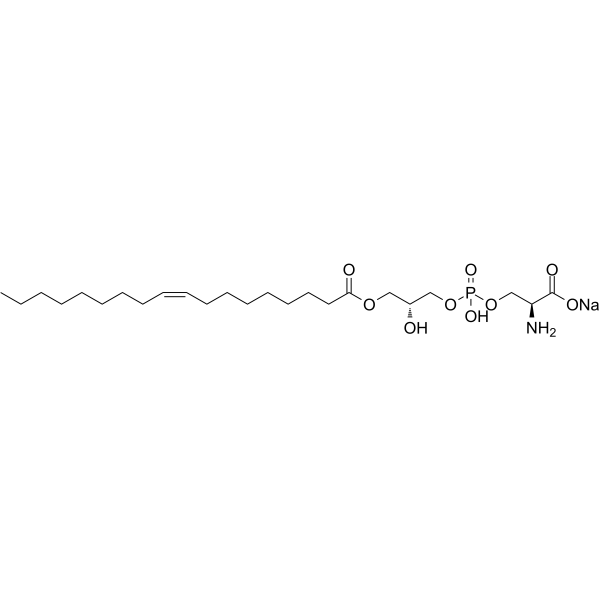
- Formula: C24H45NNaO9P
- Molecular Weight: 545.58
Oleoyl-2-hydroxy-sn-glycero-3-phospho-L-serine sodium (18:1 Lyso-PS) is a modified PS product generated following NADPH oxidase activation and Lyso-PS signal transduction. 1-Oleoyl-2-hydroxy-sn-glycero-3-phospho-L-serine sodium signals through macrophage G2A to enhance the phagocytic uptake of PS-dependent apoptotic (apoptosis) neutrophils and PS-exposed activated neutrophils. 1-Oleoyl-2-hydroxy-sn-glycero-3-phospho-L-serine sodium enhances macrophage phagocytic uptake of apoptotic cells, carboxylate-modified microspheres, and PS-exposed non-apoptotic activated neutrophils. 1-Oleoyl-2-hydroxy-sn-glycero-3-phospho-L-serine sodium serves as an acyl acceptor substrate for the lysophosphatidyltransferase At1g78690p to generate diacylphosphatidylserine. 1-Oleoyl-2-hydroxy-sn-glycero-3-phospho-L-serine sodium reduces the secretion of IL-8 and decreases the proportion of viable colon cancer cells. 1-Oleoyl-2-hydroxy-sn-glycero-3-phospho-L-serine sodium is applicable to studies on peritonitis and inflammatory bowel disease.
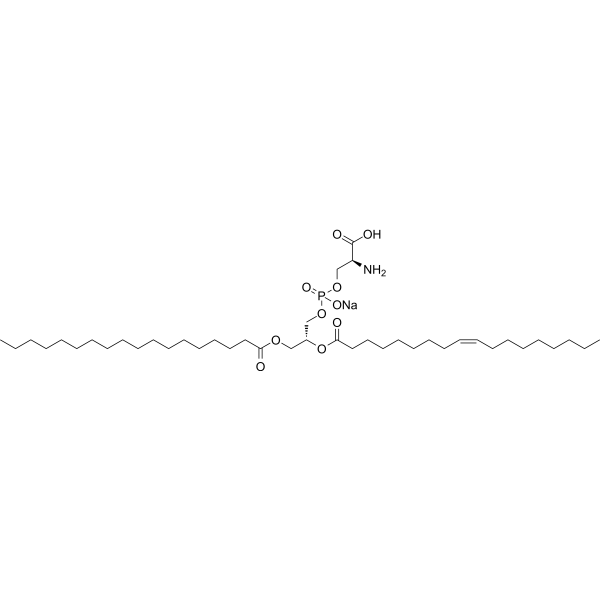
- Formula: C42H79NNaO10P
- Molecular Weight: 812.04
18:0,18:1 PS sodium is the dominant phosphatidylserine subtype in cells, exosomes and HIV particles. It is abundant in the brain and is essential for maintaining membrane structure, lipid raft organization and intracellular trafficking. 18:0,18:1 PS sodium mediates interleaflet membrane coupling through cholesterol-dependent interactions with very long-chain sphingolipids, and can induce the clustering of glycosylphosphatidylinositol-anchored proteins. In addition, clusters formed by the binding of 18:0,18:1 PS sodium to cholesterol not only facilitate the proper distribution of cholesterol in lipid bilayers, but also effectively protect cholesterol from oxidative damage.
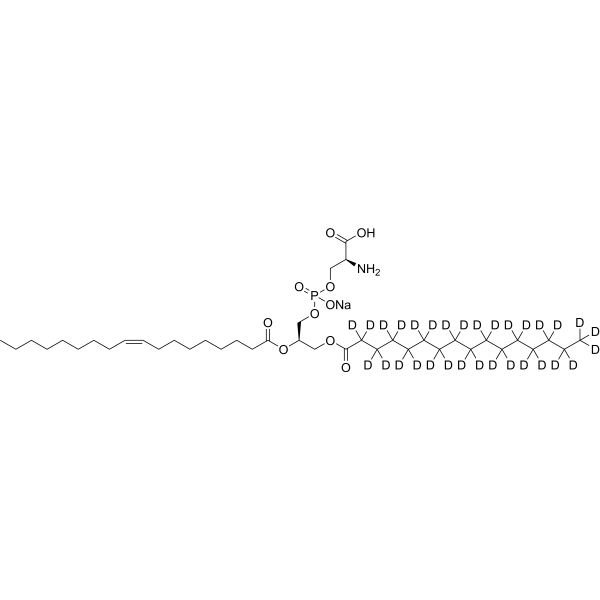
- Formula: C40H44D31NNaO10P
- Molecular Weight: 815.18
16:0-18:1 PS-d31 (sodium) is deuterium labeled 16:0-18:1 PS (sodium).
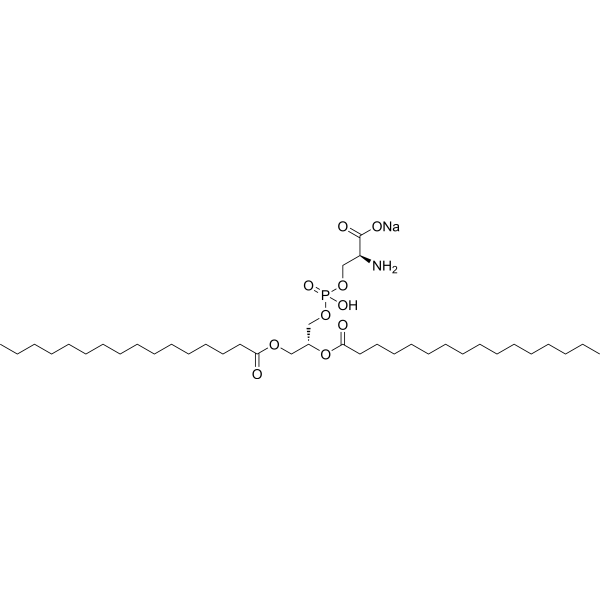
- Formula: C38H72NNa2O10P
- Molecular Weight: 779.93
1,2-Dipalmitoyl-sn-glycero-3-PS sodium is a phosphatidylserine phospholipid. 1,2-Dipalmitoyl-sn-glycero-3-PS sodium is used for the preparation of phospholipid bilayers.
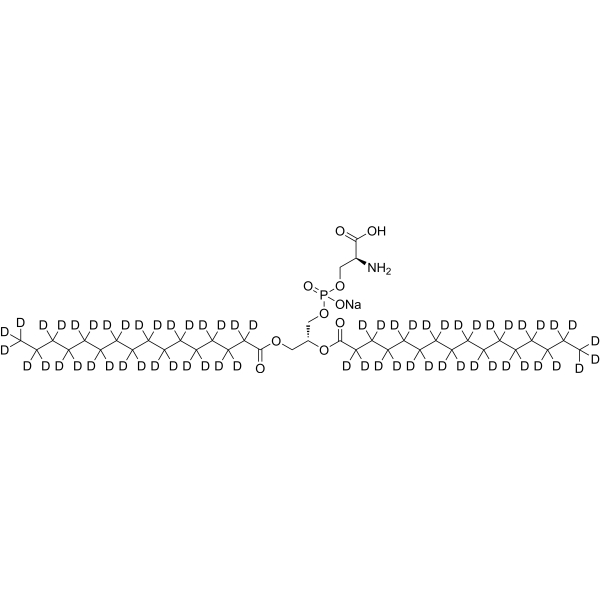
- Formula: C38H11D62NNaO10P
- Molecular Weight: 820.33
1,2-Dipalmitoyl-sn-glycero-3-PS-d62 sodium is deuterium labeled 1,2-Dipalmitoyl-sn-glycero-3-PS sodium (HY-145539). 1,2-Dipalmitoyl-sn-glycero-3-PS sodium is a phosphatidylserine phospholipid. 1,2-Dipalmitoyl-sn-glycero-3-PS sodium is used for the preparation of phospholipid bilayers.

- Formula: C22H42NO9P
- Molecular Weight: 495.54
LysoPS (C16:1) is a lysophosphatidylserine.

- Formula: C42H80NO10P
- Molecular Weight: 790.06
18:0,18:1 PS is the dominant phosphatidylserine subtype in cells, exosomes and HIV particles. It is abundant in the brain and is essential for maintaining membrane structure, lipid raft organization and intracellular trafficking. 18:0,18:1 PS mediates interleaflet membrane coupling through cholesterol-dependent interactions with very long-chain sphingolipids, and can induce the clustering of glycosylphosphatidylinositol-anchored proteins. In addition, clusters formed by the binding of 18:0,18:1 PS to cholesterol not only facilitate the proper distribution of cholesterol in lipid bilayers, but also effectively protect cholesterol from oxidative damage.

L-α-Phosphatidylserine sodium (Soy PS sodium) is a negatively charged phospholipid that acts as an allosteric activator to activate latent plasminogen activator inhibitor-1 (PAI-1). L-α-Phosphatidylserine does not directly alter the catalytic activity of t-PA, but regulates fibrinolytic activity solely by inducing conformational remodeling of PAI-1. L-α-Phosphatidylserine sodium is an antigen targeting phosphatidylserine (PS) and can induce the production of polyclonal antibodies. L-α-Phosphatidylserine is mainly used in studies related to immunology, fibrinolytic system and coagulation homeostasis.

- Formula: C38H72NO10P
- Molecular Weight: 733.95
1-Myristoyl-2-oleoyl-sn-glycero-3-phosphatidylserine is a phosphatidylserine.
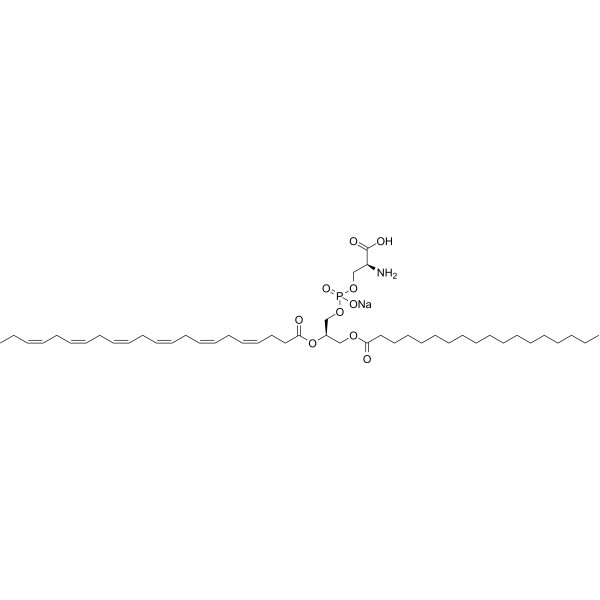
- Formula: C46H77NNaO10P
- Molecular Weight: 858.07
18:0,22:6 PS sodium is a sodium-form phosphatidylserine lipid. 18:0,22:6 PS sodium is found in rat brain and heart tissues, where it accounts for a considerable proportion of the total phosphatidylserine content in these tissues. 18:0,22:6 PS sodium contains 18:0 and 22:6 n-3 fatty acyl chains. 18:0,22:6 PS sodium is also used in research related to liposome preparation.

- Formula: C40H76NO10P
- Molecular Weight: 762.01
2-Oleoyl-1-palmitoyl-sn-glycero-3-phospho-L-serine (16:0-18:1 PS (POPS) free acid) is an anionic phospholipid with oleic acid (18:1) and palmitic acid (16:0) tails containing a carboxylic acid (COOH) and amine (NH2) in their head group. 2-Oleoyl-1-palmitoyl-sn-glycero-3-phospho-L-serine has been used in the preparation of lipid-mixing vesicles, liposomes, and artificial membranes.

- Formula: C24H48NO9P
- Molecular Weight: 525.61
18:0-LPS (Lysophosphatidylserine C18:0) is a lysophosphatidylserine. 18:0-LPS serves as a lipid standard for atherosclerosis research.

- Formula: C40H73NNaO10P
- Molecular Weight: 781.97
16:0-18:2 PS (sodium) is a phosphatidylserine.

- Formula: C39H74NNaO10P
- Molecular Weight: 770.98
15:0-18:1 PS (sodium) is a phosphatidylserine.

- Formula: C34H66NO10P
- Molecular Weight: 679.87
1,2-Dimyristoyl-sn-glycero-3-phosphoserine (DMPS) is an anionic, negatively charged phosphatidylserine phospholipid. 1,2-Dimyristoyl-sn-glycero-3-phosphoserine acts as an internal standard for liquid chromatography/mass spectrometry analyses.

- Formula: C38H74NO10P
- Molecular Weight: 735.97
1,2-Dipalmitoyl-sn-glycero-3-PS is a phosphatidylserine phospholipid. 1,2-Dipalmitoyl-sn-glycero-3-PS is used for the preparation of phospholipid bilayers.

- Formula: C44H78NO10P
- Molecular Weight: 812.06
18:0,20:4 PS (1-Stearoyl-2-arachidonoyl-sn-glycero-3-phospho-L-serine) is a phosphatidylserine component for RNA particle formulations. 18:0,20:4 PS can be used as RNA delivery vehicles.

- Formula: C44H77NNaO10P
- Molecular Weight: 834.05
18:0,20:4 PS (1-Stearoyl-2-arachidonoyl-sn-glycero-3-phospho-L-serine) sodium can be incorporated into RNA particles that act as RNA delivery vehicles for in vivo application, facilitating delivery of RNA to target tissues.

- Formula: C50H73NNaO10P
- Molecular Weight: 902.08
22:6 PS sodium is a phosphatidylserine.
- 1
- 2



