



CD36 Protein, Mouse (HEK293, His)
Based on 1 publication(s) in Google Scholar
CD36 is a multifunctional glycoprotein that binds to proteins such as thrombospondin, fibronectin, collagen, beta-amyloid and oxidized low-density lipoprotein, as well as lipid molecules such as anionic phospholipids and long-chain phospholipids. CD36 regulates angiogenesis, inflammatory responses, fatty acid metabolism, taste, dietary fat processing, and acts as a TLR4:TLR6 heterodimer coreceptor to mediate inflammatory responses, regulate immune responses and bacterial absorption. CD36 Protein, Mouse (HEK293, His) is the recombinant mouse-derived CD36 protein, expressed by HEK293 , with C-His labeled tag.
- Species: Mouse
- Source: HEK293
-
Storage:Stored at -20°C for 2 years from date of receipt. After reconstitution, it is stable at 4°C for 1 week or -20°C for longer (with carrier protein). It is recommended to freeze aliquots at -20°C or -80°C for extended storage.


To place orders, for customer services and technical support, please contact: MedChemExpress USA
Tel: 609-228-6898 E-mail: [email protected] [email protected]


-
 Biological Activity
-
Technical Parameters
-
Product Properties
- Documentation
- Help & FAQs




Biological Activity
Description
CD36 is a multifunctional glycoprotein that binds to proteins such as thrombospondin, fibronectin, collagen, beta-amyloid and oxidized low-density lipoprotein, as well as lipid molecules such as anionic phospholipids and long-chain phospholipids. CD36 regulates angiogenesis, inflammatory responses, fatty acid metabolism, taste, dietary fat processing, and acts as a TLR4:TLR6 heterodimer coreceptor to mediate inflammatory responses, regulate immune responses and bacterial absorption. CD36 Protein, Mouse (HEK293, His) is the recombinant mouse-derived CD36 protein, expressed by HEK293 , with C-His labeled tag.
Background
CD36, a multifunctional glycoprotein, serves as a receptor for a diverse range of ligands, encompassing proteinaceous entities like thrombospondin, fibronectin, collagen, amyloid-beta, and lipidic molecules such as oxidized low-density lipoprotein (oxLDL), anionic phospholipids, long-chain fatty acids, and bacterial diacylated lipopeptides. The engagement of these ligands initiates signal transduction and internalization of receptor-ligand complexes, with responses varying in a ligand-specific manner. CD36's involvement spans angiogenesis, inflammatory responses, fatty acid metabolism, taste perception, and dietary fat processing in the intestine. The glycoprotein binds long-chain fatty acids, facilitating their cellular transport and participating in processes such as muscle lipid utilization, adipose energy storage, and gut fat absorption. Mechanistically, fatty acid binding activates downstream kinase LYN, resulting in CD36 depalmitoylation and caveolar endocytosis. CD36 also plays a pivotal role in oral fat perception, influencing preferences and leading to changes in pancreatobiliary secretions upon the detection of long-chain fatty acids in the tongue. Furthermore, it contributes to the regulation of energy and glucose homeostasis in the ventromedial hypothalamus and acts as a receptor for thrombospondins, mediating antiangiogenic effects. Acting as a coreceptor for TLR4:TLR6 heterodimer, CD36 promotes inflammation in monocytes/macrophages, responding to ligands like oxLDL or amyloid-beta. Additionally, CD36 acts as a selective sensor for microbial diacylated lipopeptides, triggering NF-kappa-B-dependent cytokine production and participating in the response to infections, including M. tuberculosis and Plasmodium falciparum. It also mediates the uptake of certain bacteria, showcasing its role as a versatile and indispensable component in various physiological processes.
Verified Bioactivity
Immobilized Mouse CD36, at 1 μg/mL (100 μL/well) can bind CD36 Antibody. The ED50 for this effect is 39.38 ng/mL.
MCE Validation Data
-
Purity - SDS-PAGE
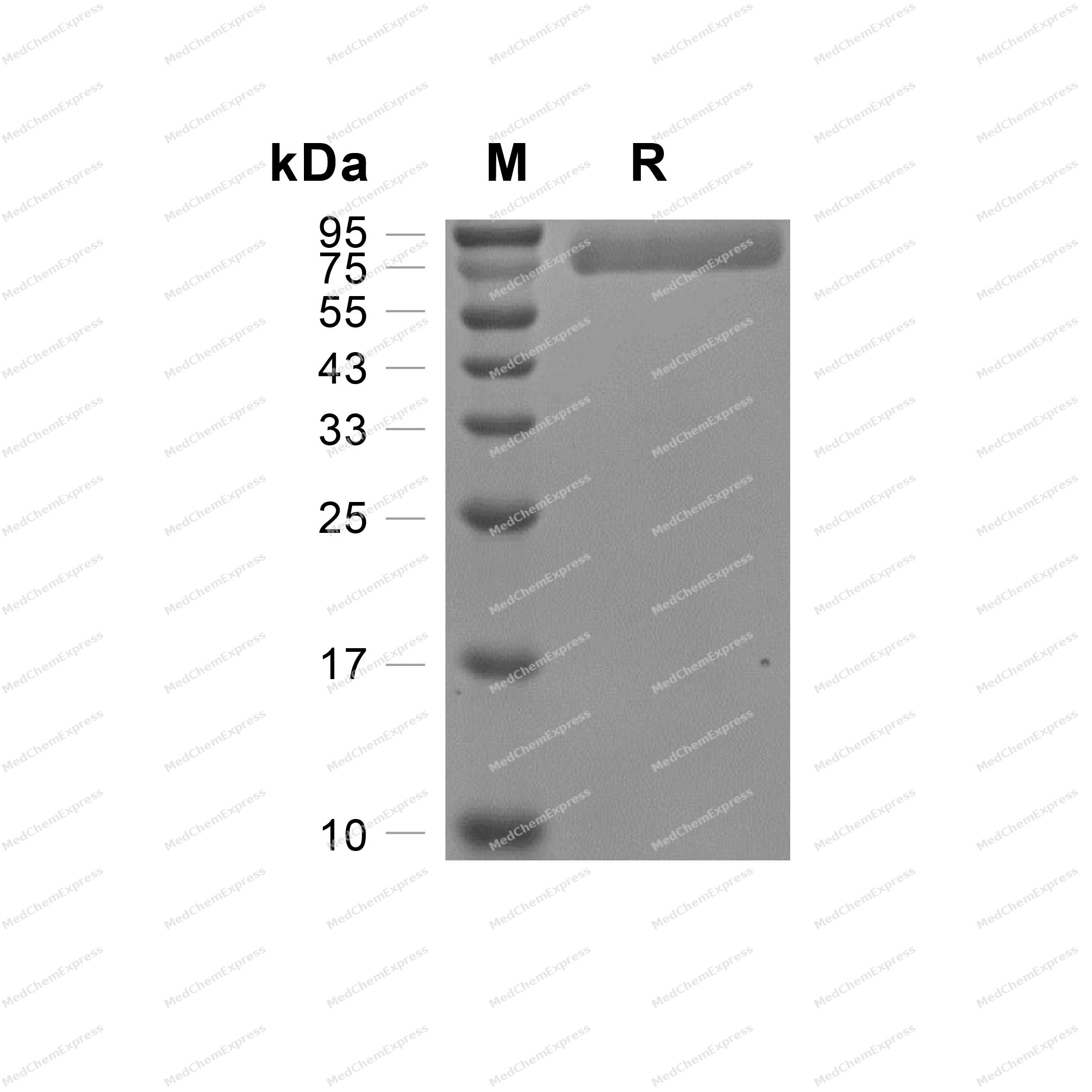
Purity - SDS-PAGE
-
Bioactivity - ELISA
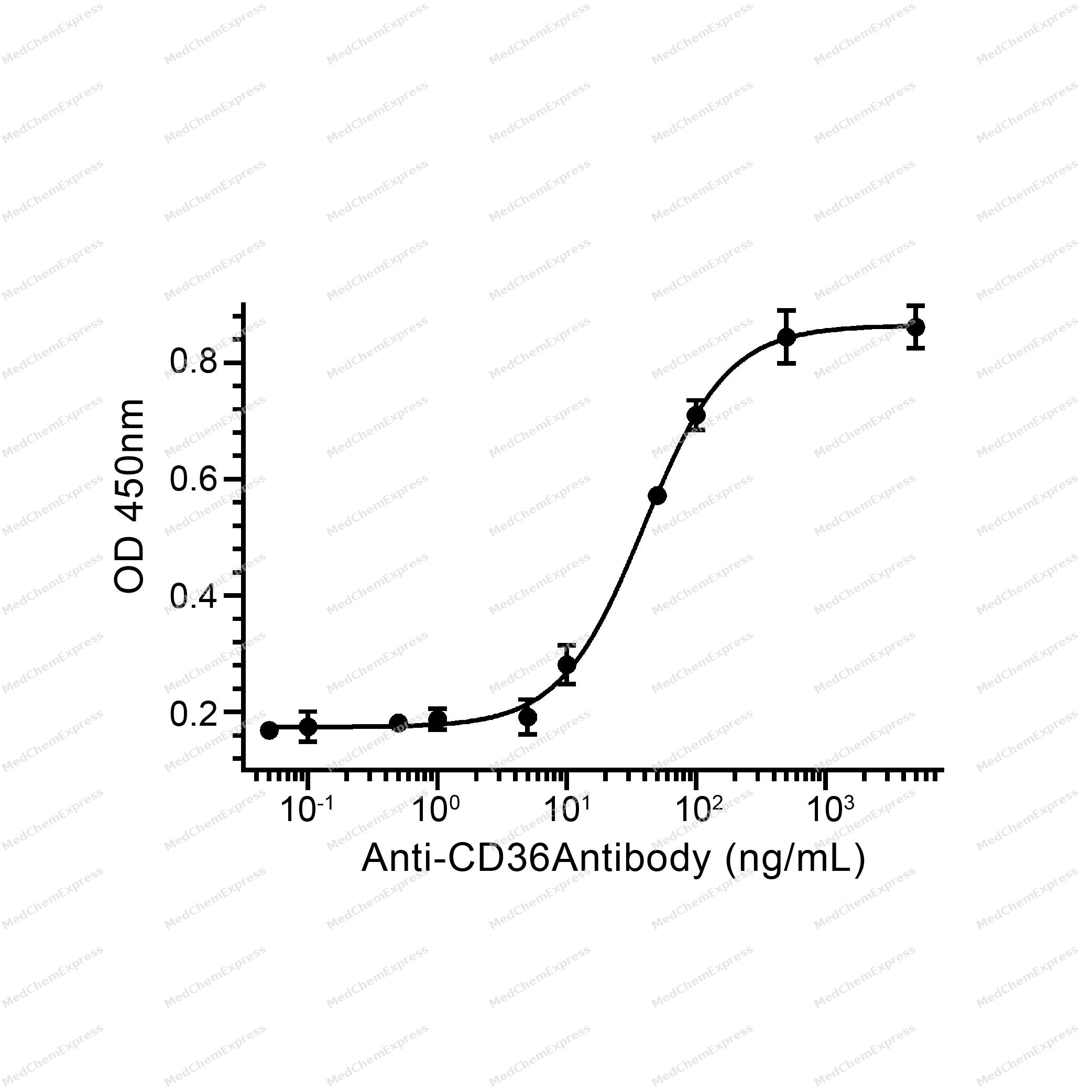
Bioactivity - ELISA


Publications (1)
-
Journal Impact Factor
-
Most Recent
-
Int Immunopharmacol
Structural polysaccharide PCP1 from Polygonatum cyrtonema Hua attenuates atherosclerosis via dual-target suppression of CD36/MSR1 and TLR4/NF-κB pathways. [Abstract]2025 Dec 3:166:115644. PMID: 41045802


Technical Parameters
-
Species Mouse
-
Source HEK293
-
Tag C-10*His
-
Accession
Q08857 (G30-K439)
-
Molecular Construction
-
N-term
-
CD36 (G30-K439)
Accession # Q08857 -
10*His
-
C-term
-
-
Protein Length
Extracellular Domain
-
Synonyms
CD36; Leukocyte Differentiation Antigen CD36; CD36 Molecule (CD36 Blood Group); Thrombospondin Receptor; Platelet Glycoprotein 4; CD36 Antigen; GPIIIB; PAS-4; GPIV; CD36 Molecule (CD36 Blood Group) Transcript; GP3B; Scavenger Receptor Class B, Member 3; F
-
AA Sequence
GDMLIEKTIKREVVLEEGTTAFKNWVKTGTTVYRQFWIFDVQNPDDVAKNSSKIKVKQRGPYTYRVRYLAKENITQDPEDHTVSFVQPNGAIFEPSLSVGTEDDNFTVLNLAVAAAPHIYQNSFVQVVLNSLIKKSKSSMFQTRSLKELLWGYKDPFLSLVPYPISTTVGVFYPYNDTVDGVYKVFNGKDNISKVAIIESYKGKRNLSYWPSYCDMINGTDAASFPPFVEKSRTLRFFSSDICRSIYAVFGSEIDLKGIPVYRFVLPANAFASPLQNPDNHCFCTEKVISNNCTSYGVLDIGKCKEGKPVYISLPHFLHASPDVSEPIEGLHPNEDEHRTYLDVEPITGFTLQFAKRLQVNILVKPARKIEALKNLKRPYIVPILWLNETGTIGDEKAEMFKTQVTGKIK
-
Molecular Weight
Approximately 66-90 kDa, based on SDS-PAGE under reducing conditions, due to the glycosylation.
-
Glycosylation
Yes
-
Purity
≥ 95%, as determined by reducing SDS-PAGE.


Product Properties
Lyophilized powder.
Lyophilized from a 0.22 μm filtered solution of PBS, pH 7.4.
<1 EU/μg, determined by LAL method.
It is not recommended to reconstitute to a concentration less than 100 μg/mL in ddH2O. For long term storage it is recommended to add a carrier protein (0.1% BSA, 5% HSA, 10% FBS or 5% Trehalose).
Stored at -20°C for 2 years from date of receipt. After reconstitution, it is stable at 4°C for 1 week or -20°C for longer (with carrier protein). It is recommended to freeze aliquots at -20°C or -80°C for extended storage.
Room temperature in continental US; may vary elsewhere.


Documentation
-
Data Sheet (239 KB)
-
SDS (251 KB)
- English - EN (251 KB)
- Français - FR (251 KB)
- Deutsch - DE (251 KB)
- Norwegian - NO (251 KB)
- Español - ES (251 KB)
- Swedish - SV (251 KB)
- Italian - IT (251 KB)
- Korean - KR (251 KB)
- Portuguese - PT (251 KB)
-
Handling Instructions (2659 KB)

Calculators
Concentration (start) × Volume (start) = Concentration (final) × Volume (final)


 Powered by Bioz

