



IGF2 Protein, Human
Based on 3 publication(s) in Google Scholar
IGF2 Protein, Human is a mitogenic cytokine, binds to IGF type 1 receptor, and modulates growth in many tissues, such as nervous tissue, lymphoid tissue, reproductive tissue, smooth muscle, endothelium, and bone.
- Species: Human
- Source: E. coli
-
Storage:Stored at -20°C for 2 years from date of receipt. After reconstitution, it is stable at 4°C for 1 week or -20°C for longer (with carrier protein). It is recommended to freeze aliquots at -20°C or -80°C for extended storage.


To place orders, for customer services and technical support, please contact: MedChemExpress USA
Tel: 609-228-6898 E-mail: [email protected] [email protected]


-
 Biological Activity
-
Technical Parameters
-
Product Properties
- Documentation
- References
- Help & FAQs


-

HY-P7018
IGF-I/IGF-1 Protein, Human (70a.a) -
HY-P7007
BMP-4 Protein, Human -
HY-P70311
Activin A Protein, Human/Mouse/Rat (HEK293) -
HY-90006
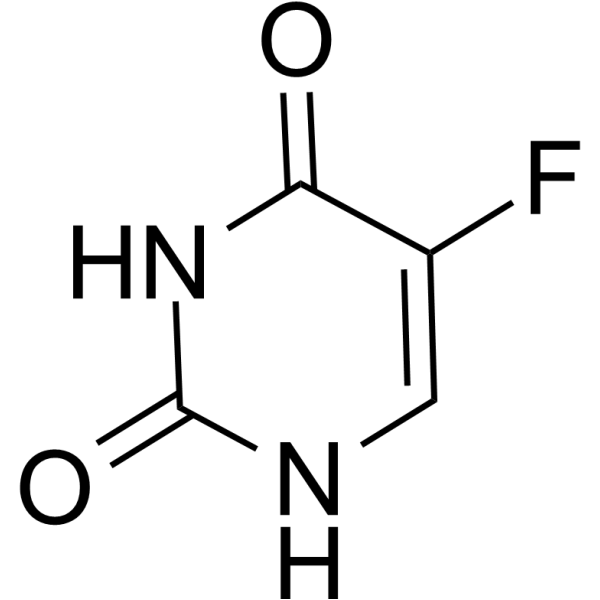
5-FluorouracilThymidylate Synthase Inhibitor -
HY-16562
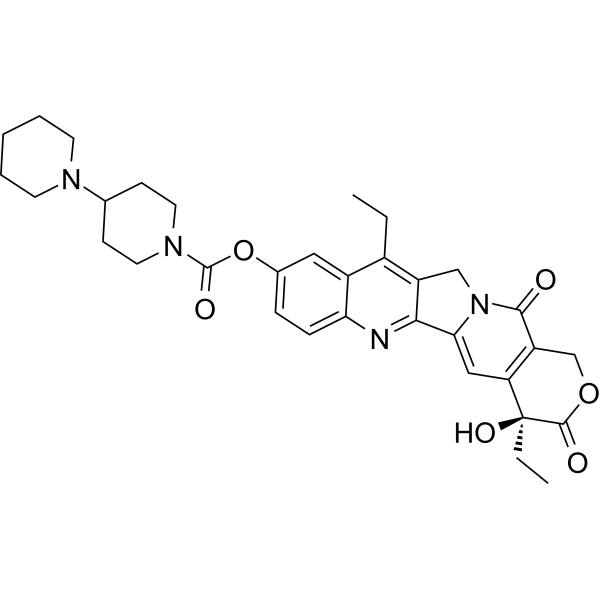
IrinotecanTopoisomerase I Inhibitor -
HY-70062
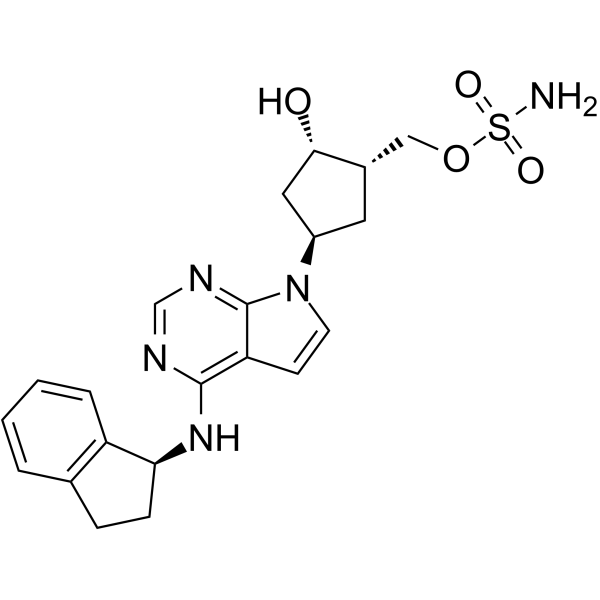
PevonedistatNAE Inhibitor -
HY-P7004
FGF basic/bFGF Protein, Human (146a.a) -
HY-18739
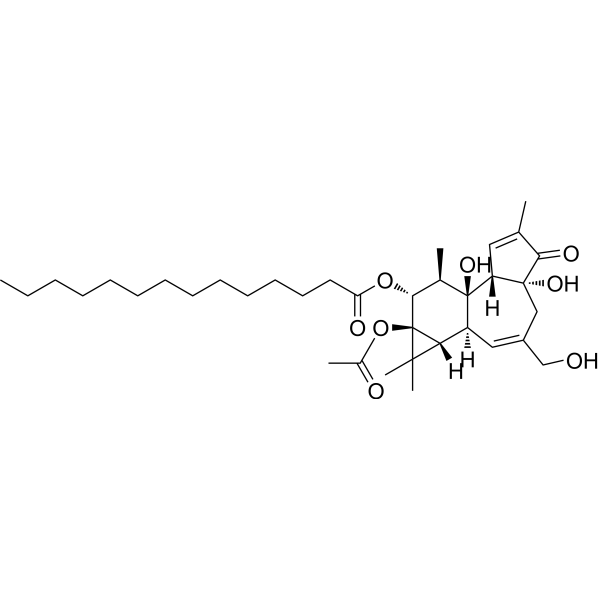
Phorbol 12-myristate 13-acetatePKC Activator -
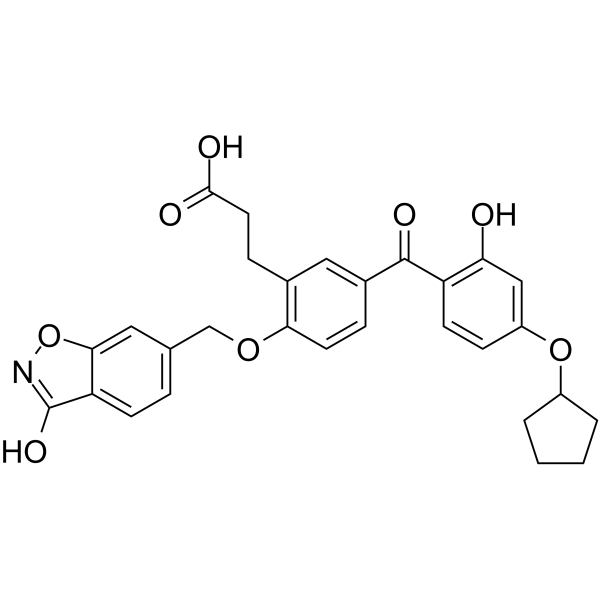
HY-12270
T-5224c-Fos/AP-1 Inhibitor -
HY-P7109
EGF Protein, Human -
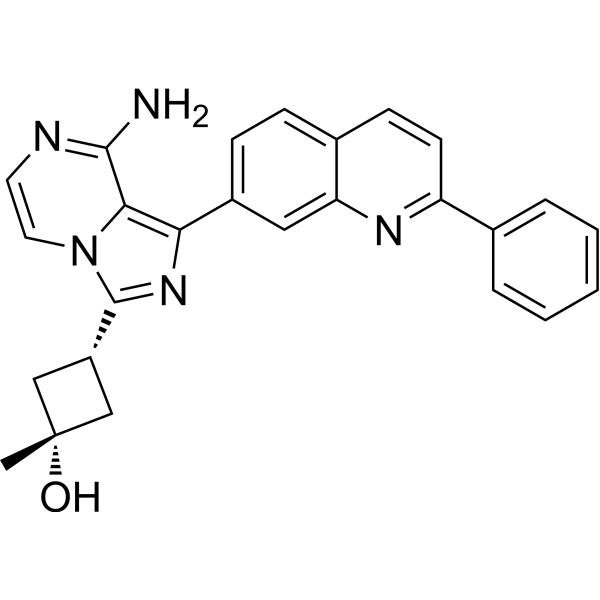
HY-10191
LinsitinibIGF-1R/Insulin Receptor Inhibitor -
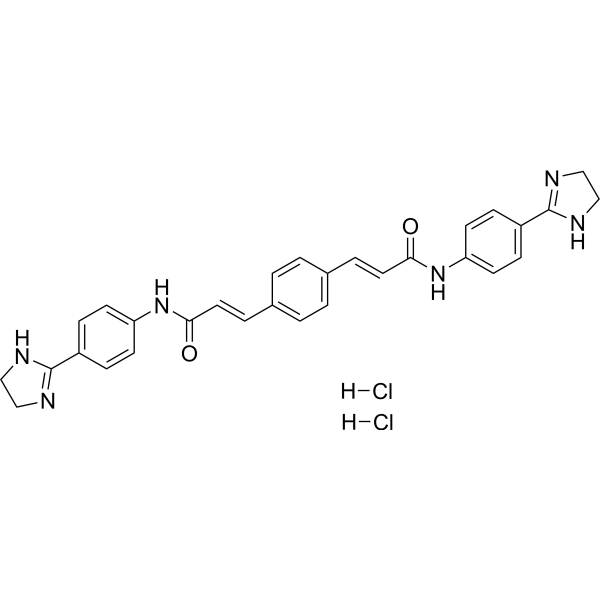
HY-19363
GW4869N-SMase Inhibitor


Biological Activity
Description
IGF2 Protein, Human is a mitogenic cytokine, binds to IGF type 1 receptor, and modulates growth in many tissues, such as nervous tissue, lymphoid tissue, reproductive tissue, smooth muscle, endothelium, and bone.
Background
Insulin-like growth factor (IGF) modulates growth in many tissues, such as nervous tissue, lymphoid tissue, reproductive tissue, smooth muscle, endothelium, and bone. Human Insulin-like Growth factor-2 (IGF-II) is produced by osteoblasts, and its mitogenic effects are mediated by their binding to the IGF plasma membrane receptors. The IGF type 1 receptor binding to both IGF-I and IGF-II, is thought to be the predominate receptor involved in mediating the effects of these growth factors in most cell types, including osteoblasts[1].
Verified Bioactivity
1.The ED50 is <20 ng/mL as measured by FDCP-1 cells, corresponding to a specific activity of >5 × 10⁴ units/mg.
2.Measured in a serum-free cell proliferation assay using MCF-7 human breast cancer cells. The ED50 for this effect is 1.5-6 ng/mL.
MCE Validation Data
-
Purity - SDS-PAGE
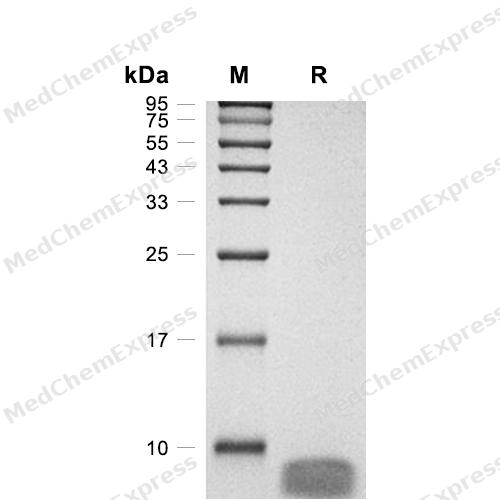
Purity - SDS-PAGE
-
Bioactivity - Cell-Based Assay
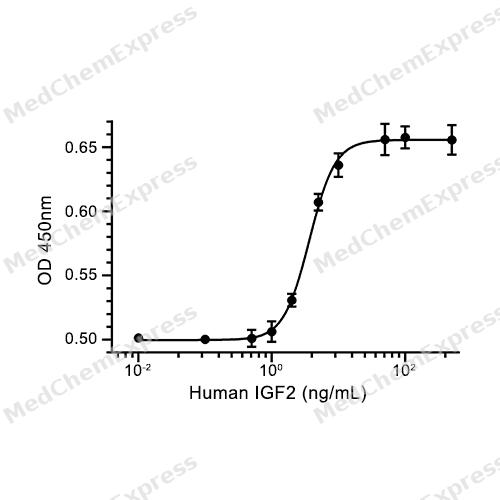
Bioactivity - Cell-Based Assay


Publications (3)
-
Journal Impact Factor
-
Most Recent
-
Theranostics
Overexpression of BACH1 mediated by IGF2 facilitates hepatocellular carcinoma growth and metastasis via IGF1R and PTK2. [Abstract]2022 Jan 1;12(3):1097-1116. PMID: 35154476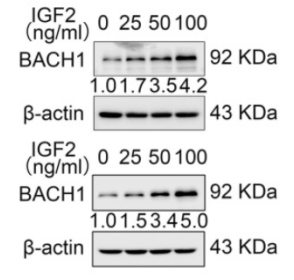
IGF2 Protein, Human purchased from MedChemExpress. Usage Cited in: Theranostics. 2022 Jan 1;12(3):1097-1116. [Abstract]
After treating PLC/PRF/5 cells and HepG2 cells with 0 ng/mL, 25 ng/mL, 50 ng/ml and 100 ng/mL IGF2 Protein, Human, respectively, for 24 hours, the protein level of BACH1 was measured.
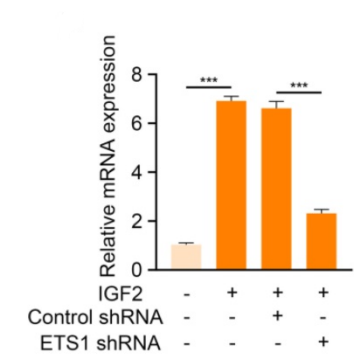
IGF2 Protein, Human purchased from MedChemExpress. Usage Cited in: Theranostics. 2022 Jan 1;12(3):1097-1116. [Abstract]
PLC/PRF/5 cells were transfected with shETS1 or control shRNA in the presence of IGF2 Protein, Human (100 ng/mL, 24 h). BACH1 mRNA expression was detected by RT-qPCR.
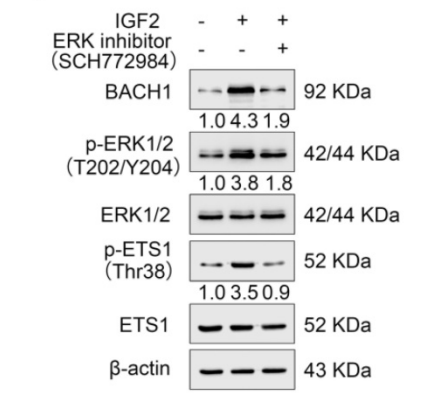
IGF2 Protein, Human purchased from MedChemExpress. Usage Cited in: Theranostics. 2022 Jan 1;12(3):1097-1116. [Abstract]
Effects of ERK inhibitors on the levels of BACH1, p-ERK1/2, ERK1/2, p-ETS1, and ETS1 in PLC/PRF/5 cells treated with IGF2 Protein, Human (100 ng/mL, 24 h).
-
CNS Neurosci Ther
2023 Nov;29(11):3430-3445. PMID: 37308741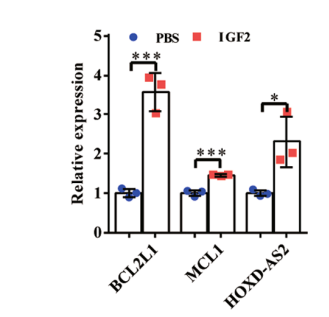
IGF2 Protein, Human purchased from MedChemExpress. Usage Cited in: CNS Neurosci Ther. 2023 Nov;29(11):3430-3445. [Abstract]
The levels of MCL1, BCL2L1, and HOXD-AS2 mRNA in GBM cells after treatment with IGF2 Protein and Human (1 μg/mL, 72 h) were quantitatively analyzed using RT-qPCR.
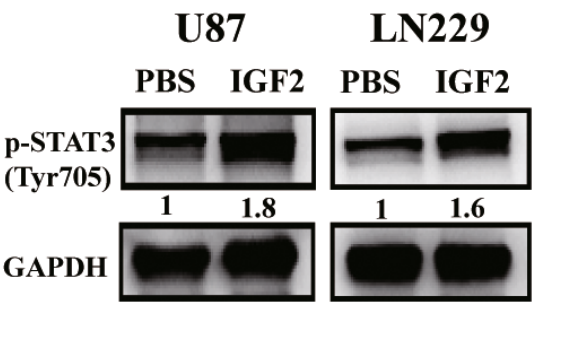
IGF2 Protein, Human purchased from MedChemExpress. Usage Cited in: CNS Neurosci Ther. 2023 Nov;29(11):3430-3445. [Abstract]
The levels of IGF2 protein and STAT3 (phosphorylated Tyr705) protein after human treatment were detected by immunoblotting.
-
J Chromatogr B Analyt Technol Biomed Life Sci
A validated liquid chromatography-tandem mass spectrometry assay for simultaneous quantitation of intact IGF-1 and IGF-2 in human serum. [Abstract]2025 May 1:1257:124572. PMID: 40158466


Technical Parameters
-
Species Human
-
Source E. coli
-
Tag Tag Free
-
Accession
P01344-1 (A25-E91)
-
Molecular Construction
-
N-term
-
IGF2 (A25-E91)
Accession # P01344-1 -
C-term
-
-
Protein Length
Full Length of IGF2 Chain
-
Synonyms
IGF2; Insulin-Like Growth Factor 2 (Somatomedin A); Prev. C11orf43; Insulin-Like Growth Factor Type 2; Insulin-Like Growth Factor 2; Somatomedin A; IGF-II; Somatomedin-A; Insulin-Like Growth Factor II; PP9974; T3M-11-Derived Growth Factor; IGF-2; FLJ44734
-
AA Sequence
AYRPSETLCGGELVDTLQFVCGDRGFYFSRPASRVSRRSRGIVEECCFRSCDLALLETYCATPAKSE
-
Predicted Molecular Mass
8.9 kDa
-
Molecular Weight
Approximately 8-11 kDa, based on SDS-PAGE under reducing conditions, due to the glycosylation.
-
Purity
≥ 95%, as determined by reducing SDS-PAGE.


Product Properties
Lyophilized powder
1.Lyophilized from a 0.22 μm filtered solution of 20 mM Glycine-HCl, 4% sucrose, 4% mannitol, 0.02% Tween 80, pH 3.0.
2.Lyophilized from a 0.22 μm filtered solution of 25 mM Tris, pH 8.0.
3.Lyophilized from a 0.22 μm filtered solution of PBS, pH 7.4.
4.Lyophilized from a 0.22 μm filtered solution of PBS, pH 7.4, 8% trehalose.
Please refer to the lot-specific COA for specific buffer information.
Note: For SPR assay, please replace the buffer. Primary amine components (e.g., Tris, imidazole) can affect protein-coupled chips.
<1 EU/μg, determined by LAL method.
It is not recommended to reconstitute to a concentration less than 100 μg/mL in ddH2O. For long term storage it is recommended to add a carrier protein (0.1% BSA, 5% HSA, 10% FBS or 5% Trehalose).
Stored at -20°C for 2 years from date of receipt. After reconstitution, it is stable at 4°C for 1 week or -20°C for longer (with carrier protein). It is recommended to freeze aliquots at -20°C or -80°C for extended storage.
Room temperature in continental US; may vary elsewhere.


Documentation
-
Data Sheet (261 KB)
-
SDS (252 KB)
- English - EN (252 KB)
- Français - FR (252 KB)
- Deutsch - DE (252 KB)
- Norwegian - NO (252 KB)
- Español - ES (252 KB)
- Swedish - SV (252 KB)
- Italian - IT (252 KB)
- Korean - KR (252 KB)
- Portuguese - PT (252 KB)
-
Handling Instructions (2659 KB)


References

Calculators
Concentration (start) × Volume (start) = Concentration (final) × Volume (final)


 Powered by Bioz

