



Leptin Protein, Mouse
Based on 7 publication(s) in Google Scholar
Leptin Protein, Mouse is a hormone secreted by fat cells that helps to regulate energy balance by inhibiting feeding and increase thermogenesis.
- Species: Mouse
- Source: E. coli
-
Storage:Stored at -20°C for 2 years from date of receipt. After reconstitution, it is stable at 4°C for 1 week or -20°C for longer (with carrier protein). It is recommended to freeze aliquots at -20°C or -80°C for extended storage.


To place orders, for customer services and technical support, please contact: MedChemExpress USA
Tel: 609-228-6898 E-mail: [email protected] [email protected]


-
 Biological Activity
-
Technical Parameters
-
Product Properties
- Documentation
- References
- Help & FAQs




Biological Activity
Description
Leptin Protein, Mouse is a hormone secreted by fat cells that helps to regulate energy balance by inhibiting feeding and increase thermogenesis.
Background
A sensor (leptin production by adipose cells) monitors the size of the adipose tissue mass. Hypothalamic centers receive and integrate the intensity of the leptin signal through leptin receptors (LRb). Effector systems, including the sympathetic nervous system, control the two main determinants of energy balance-energy intake and energy expenditure[1]. Recessive mutations in the leptingene are associated with massive obesity in mice and humans, establishing a genetic basis for obesity. Leptin circulates in blood and acts on the brain to regulate food intake and energy expenditure. When fat mass falls, plasma leptin levels fall, stimulating appetite and suppressing energy expenditure until fat mass is restored. When fat mass increases, leptin levels increase, suppressing appetite until weight is lost. This system maintains homeostatic control of adipose tissue mass[2].
Verified Bioactivity
1.Measured in a cell proliferation assay using MCF-7 Human breast cancer cells. The ED50 for this effect is 1.286 ng/mL, corresponding to a specific activity is 7.77×10⁵ units/mg.
2.Measured in a cell proliferation assay using BaF3 mouse pro-B cells transfected with human Leptin R. The ED50 for this effect is ≤0.5 ng/mL, corresponding to a specific activity is ≥2×10⁶ units/mg.
MCE Validation Data
-
Purity - SDS-PAGE
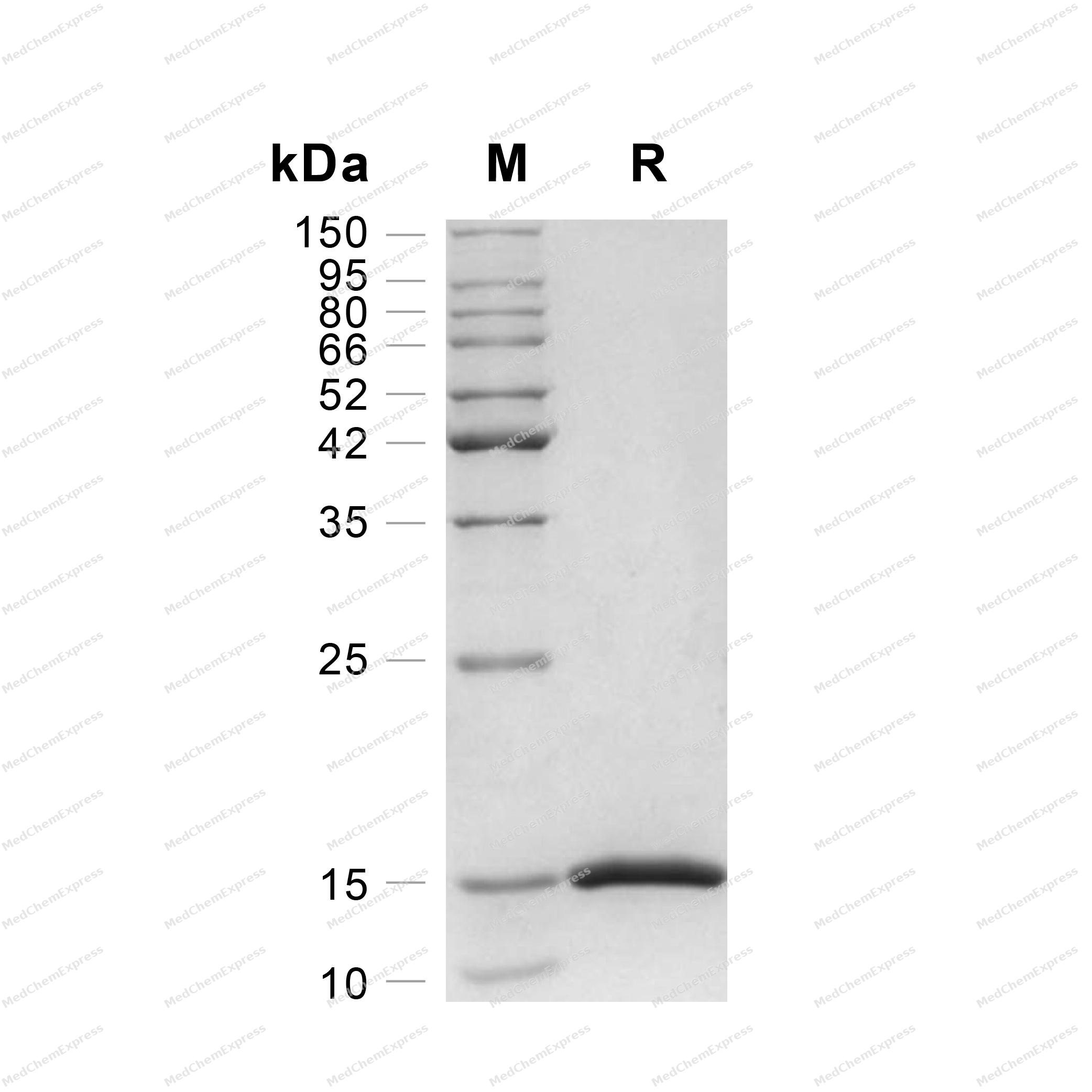
Purity - SDS-PAGE
-
Bioactivity - Cell-Based Assay
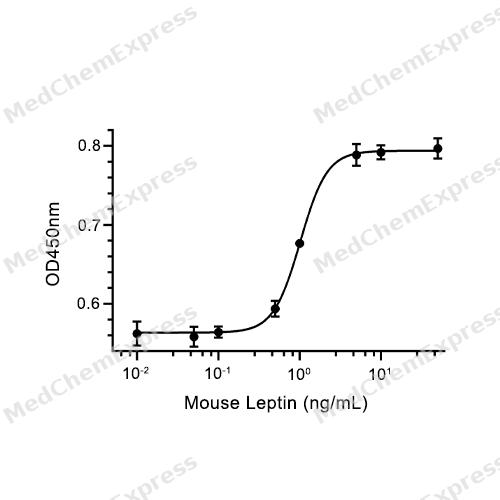
Bioactivity - Cell-Based Assay


Publications (7)
-
Journal Impact Factor
-
Most Recent
-
Sci China Life Sci
Berberine combined with stachyose protects against obesity by modulating gut microbiota and increasing leptin sensitivity. [Abstract]2025 Oct 10. PMID: 41077606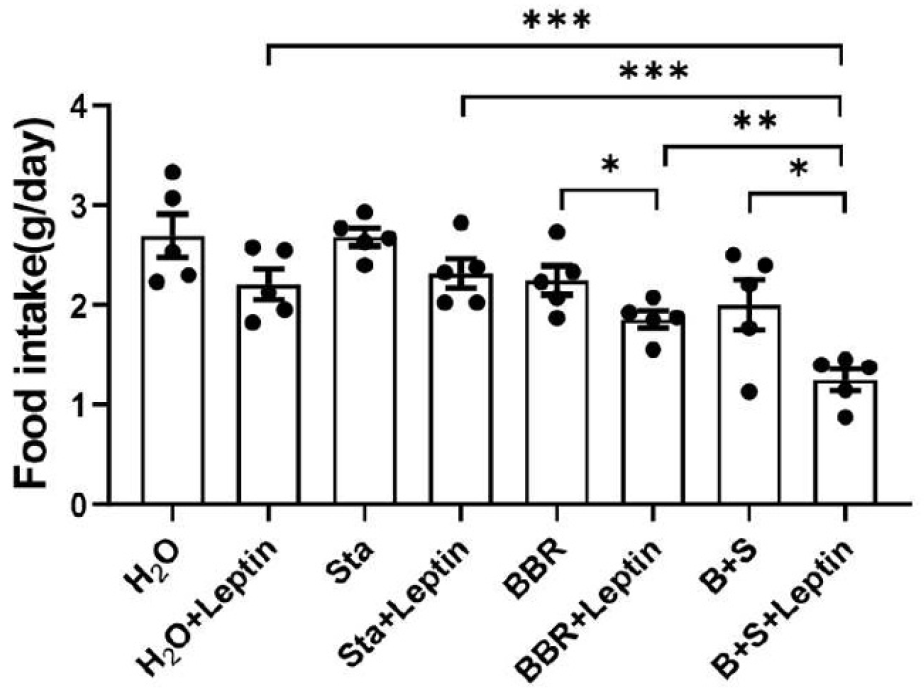
Leptin Protein, Mouse purchased from MedChemExpress. Usage Cited in: Sci China Life Sci. 2025 Oct 10. [Abstract]
The changes of average daily food intake during the Leptin Protein, Mouse (1 mg/kg; i.p.; twice daily for 3 d) sensitivity test.
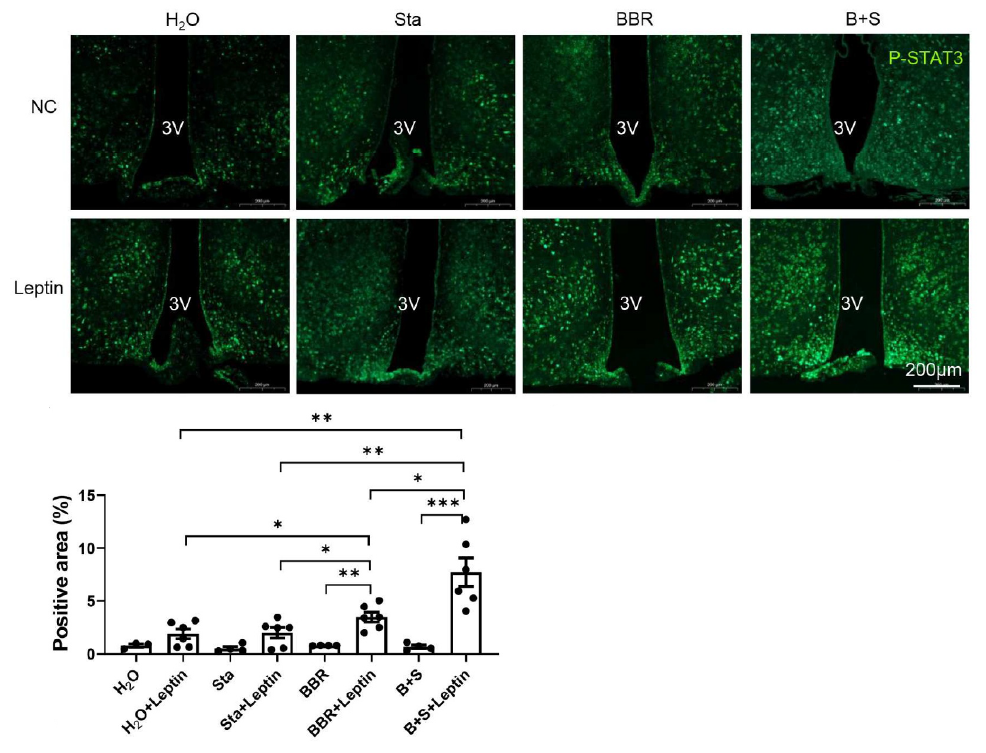
Leptin Protein, Mouse purchased from MedChemExpress. Usage Cited in: Sci China Life Sci. 2025 Oct 10. [Abstract]
Leptin Protein, Mouse (1 mg/kg; i.p.; twice daily for 3 d). The immunofluorescent staining of P-STAT3 at the arcuate nucleus of hypothalamus in DIO mice and intensity of positive stain areas were quantified by Image J.
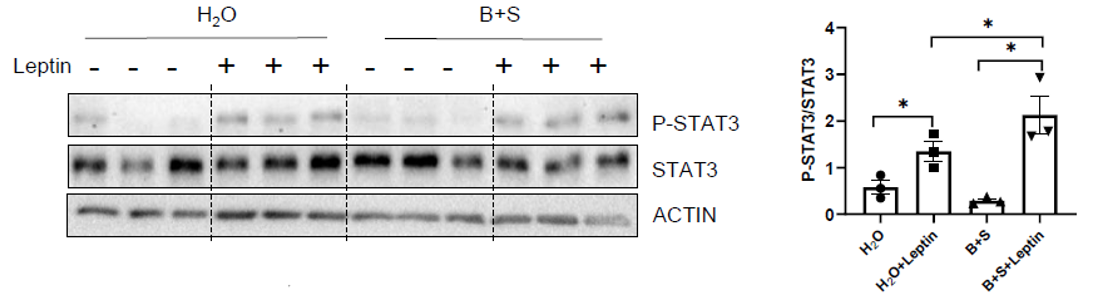
Leptin Protein, Mouse purchased from MedChemExpress. Usage Cited in: Sci China Life Sci. 2025 Oct 10. [Abstract]
Leptin Protein, Mouse (0.1 mg/kg; i.p.; once daily) administration markedly increased P-STAT3 intensity in the hypothalamus of ob/ob mice.
-
Int Immunopharmacol
Leptin aggravates house dust mite-induced airway inflammation by accelerating macrophage necroptosis. [Abstract]2025 Sep 3:165:115427. PMID: 40907335 -
Mol Neurobiol
The Protective Role of Leptin in Neurological Damage Induced by Chronic Intermittent Hypoxia. [Abstract]2025 May 7. PMID: 40335790 -
J Nutr Biochem
Hypothalamic FTO promotes high-fat diet-induced leptin resistance in mice through increasing CX3CL1 expression. [Abstract]2024 Jan:123:109512. PMID: 37907171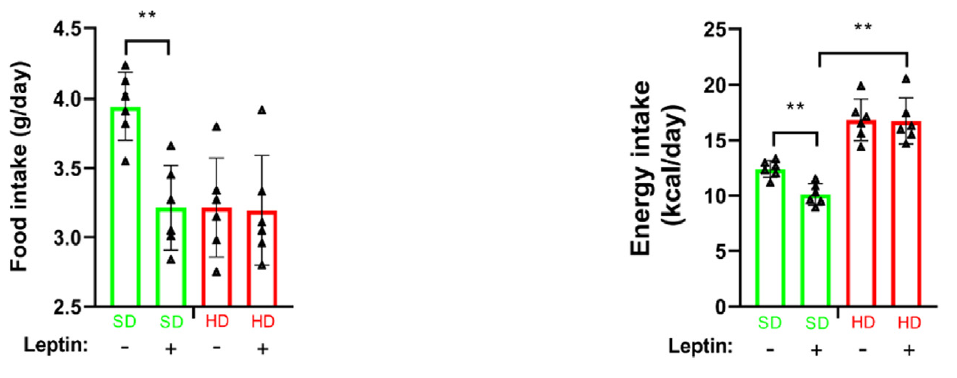
Leptin Protein, Mouse purchased from MedChemExpress. Usage Cited in: J Nutr Biochem. 2024 Jan:123:109512. [Abstract]
A 24-h food intake and energy intake of SD and HD mice after Leptin Protein, Mouse (2.5 mg/kg; i.p.) treatment compared to saline treatment.
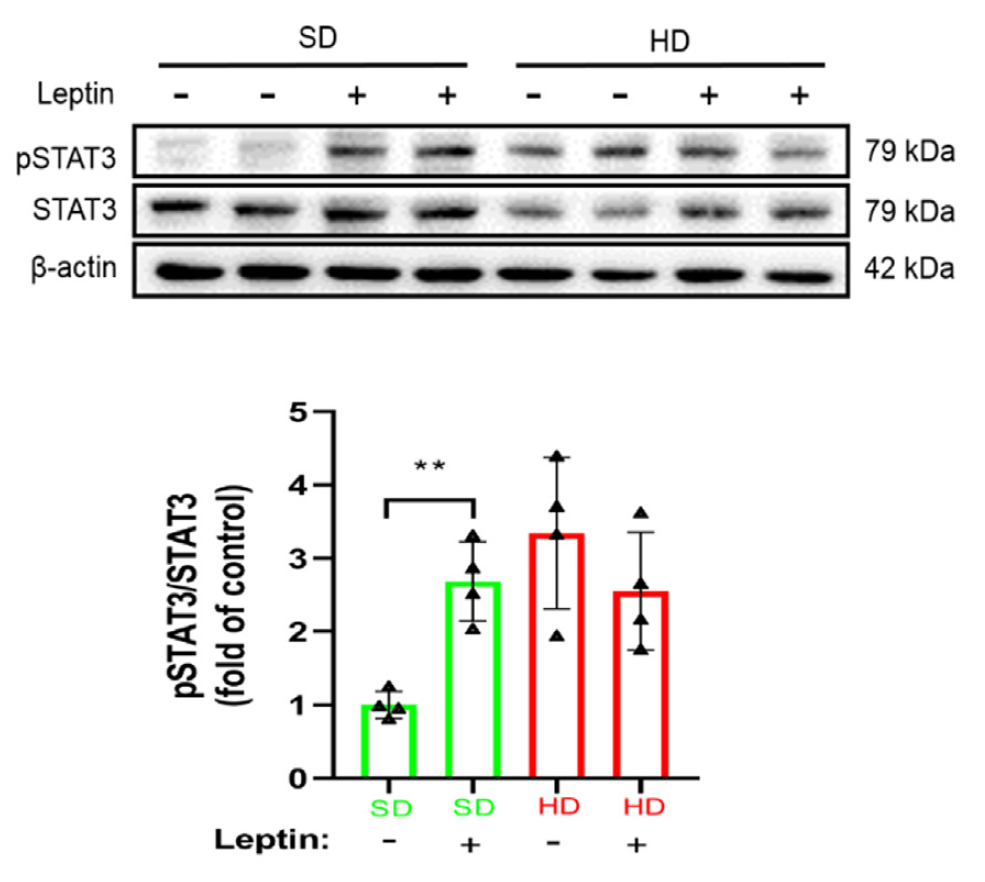
Leptin Protein, Mouse purchased from MedChemExpress. Usage Cited in: J Nutr Biochem. 2024 Jan:123:109512. [Abstract]
Two sets of mice received Leptin Protein, Mouse (2.5 mg/kg; i.p.), were killed after 1 h, and the hypothalamic protein was extracted. Representative images of western blotting for pSTAT3 and STAT3 levels were shown.
-
Mol Biol Rep
Tirzepatide improves neutrophilic inflammation in obese asthmatic mice by downregulating Th17 cell differentiation. [Abstract]2025 Dec 13;53(1):197. PMID: 41389087 -
-


Technical Parameters
-
Species Mouse
-
Source E. coli
-
Tag Tag Free
-
Accession
Q544U0 (V22-C167)
-
Molecular Construction
-
N-term
-
Leptin (V22-C167)
Accession # Q544U0 -
C-term
-
-
Protein Length
Full Length of Mature Protein
-
Synonyms
LEP; Leptin (Murine Obesity Homolog); Prev. OBS; Obese Protein; Prev. OB; Obese, Mouse, Homolog Of; Obesity Factor; LEPD; Leptin; Leptin (Obesity Homolog, Mouse)
-
AA Sequence
VPIQKVQDDTKTLIKTIVTRINDISHTQSVSAKQRVTGLDFIPGLHPILSLSKMDQTLAVYQQVLTSLPSQNVLQIANDLENLRDLLHLLAFSKSCSLPQTSGLQKPESLDGVLEASLYSTEVVALSRLQGSLQDILQQLDVSPEC
-
Molecular Weight
Approximately 14 kDa, based on SDS-PAGE under reducing conditions.
-
Purity
≥ 95%, as determined by reducing SDS-PAGE.


Product Properties
Lyophilized powder
1.Lyophilized from a 0.22 μm filtered solution of 20 mM PB, 300 mM NaCl, pH 7.5.
2.Lyophilized from a 0.22 μm filtered solution of 10 mM Tris-HCl, pH 9.0.
Please refer to the lot-specific COA for specific buffer information.
Note: For SPR assay, please replace the buffer. Primary amine components (e.g., Tris, imidazole) can affect protein-coupled chips.
<1 EU/μg, determined by LAL method.
It is not recommended to reconstitute to a concentration less than 100 μg/mL in ddH2O. For long term storage it is recommended to add a carrier protein (0.1% BSA, 5% HSA, 10% FBS or 5% Trehalose).
Stored at -20°C for 2 years from date of receipt. After reconstitution, it is stable at 4°C for 1 week or -20°C for longer (with carrier protein). It is recommended to freeze aliquots at -20°C or -80°C for extended storage.
Room temperature in continental US; may vary elsewhere.


Documentation
-
Data Sheet (262 KB)
-
SDS (252 KB)
- English - EN (252 KB)
- Français - FR (252 KB)
- Deutsch - DE (252 KB)
- Norwegian - NO (252 KB)
- Español - ES (252 KB)
- Swedish - SV (252 KB)
- Italian - IT (252 KB)
- Korean - KR (252 KB)
- Portuguese - PT (252 KB)
-
Handling Instructions (2659 KB)


References

Calculators
Concentration (start) × Volume (start) = Concentration (final) × Volume (final)


 Powered by Bioz

