2543 Results for "

class

" in MedChemExpress (MCE) Product Catalog:
Products (2543)

2543 Results for "class" in MCE Product Catalog:

Cat. No.: HY-101925R
CAS No.: 1846570-31-7
CM-272 (Standard) is the analytical standard of CM-272 (HY-101925). This product is intended for research and analytical applications. CM-272 is a first-in-class, potent, selective, substrate-competitive and reversible dual G9a/DNA methyltransferases (DNMTs) inhibitor with antitumor activities. CM-272 inhibits G9a, DNMT1, DNMT3A, DNMT3B and GLP with IC50s of 8 nM, 382 nM, 85 nM, 1200 nM and 2 nM, respectively. CM-272 inhibits cell proliferation and promotes apoptosis, inducing IFN-stimulated genes and immunogenic cell death .
loading...
    loading...
Cat. No.: HY-129636
CAS No.: 1611483-29-4
Synonyms: (E)-GABAB receptor antagonist 1
Target:  

GABA Receptor ERK

Research Areas:  

Neurological Disease

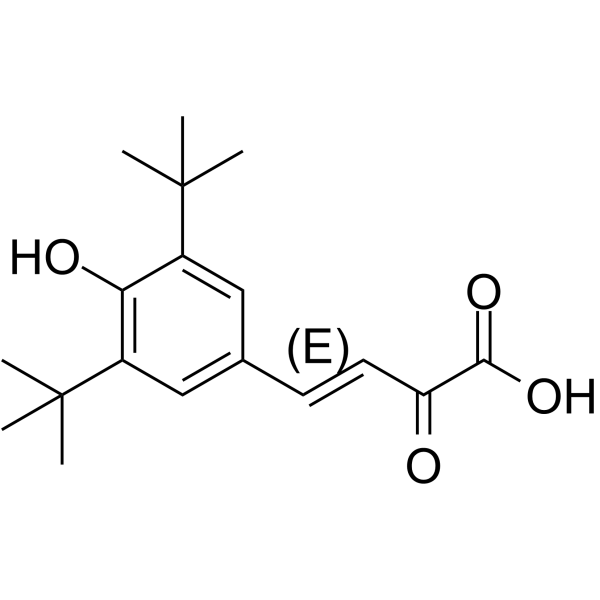
CLH304a (compound 14) is a specific and noncompetitive GABAB receptor negative allosteric modulator (NAM). CLH304a decreases GABA-induced IP3 production with an IC50 of 37.9 μM. CLH304a has no effect on other GPCR Class C members such as mGluR1, mGluR2, and mGluR5. CLH304a acts on the heptahelical domain of GB2 subunits and non-competitively inhibits the effect of agonists with inverse agonist properties. CLH304a inhibits Baclofen (HY-B0007)-induced ERK1/2 phosphorylation in HEK293 cells overexpressing GABAB receptor .
loading...
    loading...
Cat. No.: HY-13246R
CAS No.: 1032754-93-0
Synonyms: GDC-0980 (Standard); GNE 390 (Standard); RG 7422 (Standard)
Research Areas:  

Cancer

Apitolisib (Standard) is the analytical standard of Apitolisib. This product is intended for research and analytical applications. Apitolisib (GDC-0980; GNE 390; RG 7422) is a selective, potent, orally bioavailable Class I PI3 kinase and mTOR kinase (TORC1/2) inhibitor with IC50s of 5 nM/27 nM/7 nM/14 nM for PI3Kα/PI3Kβ/PI3Kδ/PI3Kγ, and with a Ki of 17 nM for mTOR.
loading...
    loading...
Cat. No.: HY-140661
Purity:  ≥95.0%
Research Areas:  

Cancer

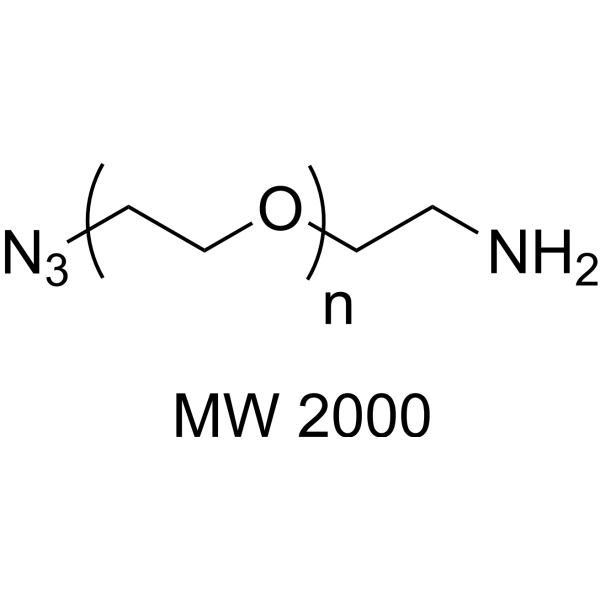
Azide-PEG2000-amine is a class of functionalized polymers composed of a methoxy-terminated polyethylene glycol backbone and a terminal primary amine group. Azide-PEG2000-amine serves as an important intermediate for constructing functionalized nanocarriers, modifying proteins or polypeptides, and developing novel drug delivery systems. Azide-PEG2000-amine is a click chemistry reagent, it contains an Azide group and can undergo copper-catalyzed azide-alkyne cycloaddition reaction (CuAAc) with molecules containing Alkyne groups. It can also undergo strain-promoted alkyne-azide cycloaddition (SPAAC) reactions with molecules containing DBCO or BCN groups.
loading...
    loading...
Cat. No.: HY-140662
Research Areas:  

Cancer

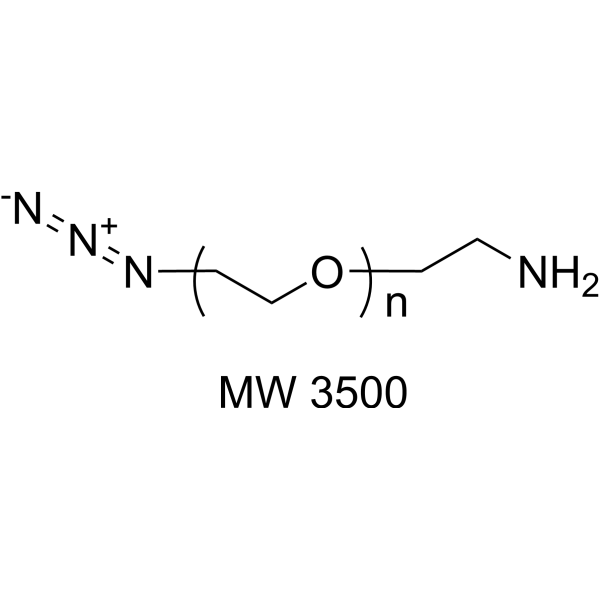
Azide-PEG3500-amine is a class of functionalized polymers composed of a methoxy-terminated polyethylene glycol backbone and a terminal primary amine group. Azide-PEG3500-amine serves as an important intermediate for constructing functionalized nanocarriers, modifying proteins or polypeptides, and developing novel drug delivery systems. Azide-PEG3500-amine is a click chemistry reagent, it contains an Azide group and can undergo copper-catalyzed azide-alkyne cycloaddition reaction (CuAAc) with molecules containing Alkyne groups. It can also undergo strain-promoted alkyne-azide cycloaddition (SPAAC) reactions with molecules containing DBCO or BCN groups.
loading...
    loading...
Cat. No.: HY-140663
Purity:  ≥95.0%
Research Areas:  

Cancer

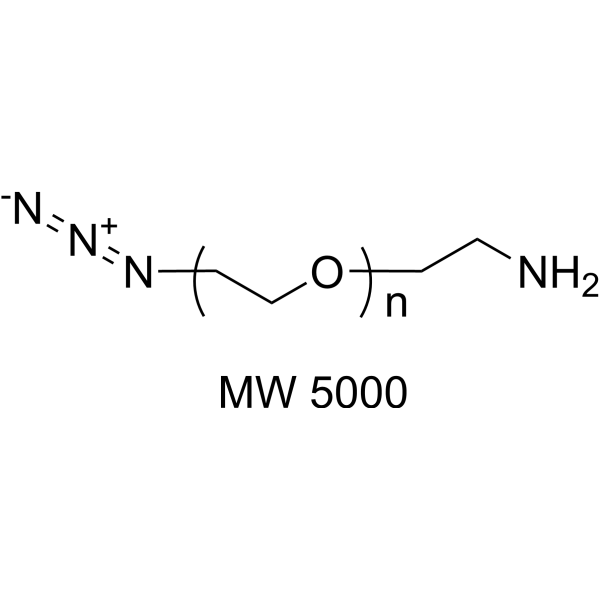
Azide-PEG5000-amine is a class of functionalized polymers composed of a methoxy-terminated polyethylene glycol backbone and a terminal primary amine group. Azide-PEG5000-amine serves as an important intermediate for constructing functionalized nanocarriers, modifying proteins or polypeptides, and developing novel drug delivery systems. Azide-PEG5000-amine is a click chemistry reagent, it contains an Azide group and can undergo copper-catalyzed azide-alkyne cycloaddition reaction (CuAAc) with molecules containing Alkyne groups. It can also undergo strain-promoted alkyne-azide cycloaddition (SPAAC) reactions with molecules containing DBCO or BCN groups.
loading...
    loading...
Cat. No.: HY-155222
CAS No.: 2614417-90-0
Research Areas:  

Cancer

TW9 is a potent dual inhibitor simultaneously targeting BET and HDAC proteins with KDs of 0.069 μM, 0.231 μM for BRD4(1), BRD4(2), and an IC50 of 0.29 μM for HDAC1, respectively. TW9 is a newly generated adduct of the BET inhibitor (+)-JQ1 (HY-13030) and class I HDAC inhibitor CI994 (HY-50934). TW9 shows high potency in suppressing tumor growth in pancreatic ductal adenocarcinoma (PDAC). TW9 improves the efficacy of the chemotherapeutic agent Gemcitabine (HY-17026) .
loading...
    loading...
Cat. No.: HY-159899
CAS No.: 2941327-87-1
DHFR-IN-22 (Compound 8) is a DHFR (Dihydrofolate Reductase) inhibitor belonging to the class of 2,4-diaminopyrimidine compounds. DHFR-IN-22 exhibits significant inhibitory activity against purified DHFR enzyme and major species of nontuberculous mycobacteria (NTM), namely Mycobacterium avium and Mycobacterium abscessus. It shows an IC50 of 1.1 nM and MIC of 1.5 μg/mL against M. abscessus, and an IC50 of 6.3 nM and MIC of 0.1 μg/mL against M. avium. Additionally, it demonstrates an IC50 of 2100 nM against human DHFR. DHFR-IN-22 holds potential for studying novel strategies to combat NTM infections .
loading...
    loading...
Cat. No.: HY-165381
CAS No.: 71555-14-1
Research Areas:  

Cancer

ZMC2 is a thiosemicarbazone-class metal ion chelator and zinc ionophore with a human mutant p53 R175H binding Ka of 27.4 nM.ZMC2 binds Fe, Cu, Mn, Zn, and other transition metals.ZMC2 facilitates zinc transport across membranes.ZMC2 restores zinc binding to zinc-deficient p53 mutants, restoring wild-type structure and function, including site-specific DNA binding.ZMC2 generates reactive oxygen species (ROS).ZMC2 can be used for the research of cancer .
loading...
    loading...
Cat. No.: HY-183058
CAS No.: 2140164-84-5
Research Areas:  

Cancer

EZM8266 is an orally active and selective G9a (EHMT2) histone methyltransferase inhibitor with a human EHMT2 IC50 of 1 pM. EZM8266 reduces repressive H3K9me2 marks at immune-stimulatory gene and endogenous retroviral element promoters. EZM8266 reduces colony formation, migration, and invasion of cancer cells. EZM8266 enhances IFN-γ response, increases MHC class I expression, and enhances CXCL10-mediated T cell recruitment in cancer cells. EZM8266 can be used for the research of hepatocellular carcinoma .
loading...
    loading...
Cat. No.: HY-B2221B2
CAS No.: 9004-62-0
Research Areas:  

Others

Hydroxyethyl cellulose, Viscosity (2%):40000mPa.s is a class of nonionic cellulose ether gel-forming polymers with pH-independent drug release properties. When used as a tablet coating, Hydroxyethyl cellulose, Viscosity (2%):40000mPa.s regulates the water permeation rate, thereby altering the drug release lag time; the higher the viscosity, the longer the drug release lag time. When used as a hydrogel thickener, it increases the dynamic viscosity of the system. Hydroxyethyl cellulose, Viscosity (2%):40000mPa.s can be used in organic synthesis-related research, such as pharmaceutical excipients, hydrogel thickeners, etc.
loading...
    loading...
Cat. No.: HY-B2221B3
CAS No.: 9004-62-0
Research Areas:  

Others

Hydroxyethyl cellulose, Viscosity (2%):6000mPa.s is a class of nonionic cellulose ether gel-forming polymers with pH-independent drug release properties. When used as a tablet coating, Hydroxyethyl cellulose, Viscosity (2%):6000mPa.s regulates the water permeation rate, thereby altering the drug release lag time; the higher the viscosity, the longer the drug release lag time. When used as a hydrogel thickener, it increases the dynamic viscosity of the system. Hydroxyethyl cellulose, Viscosity (2%):6000mPa.s can be used in organic synthesis-related research, such as pharmaceutical excipients, hydrogel thickeners, etc.
loading...
    loading...
Cat. No.: HY-W009783R
CAS No.: 73465-43-7
1-Deoxymannojirimycin (hydrochloride) (Standard) is the analytical standard of 1-Deoxymannojirimycin (hydrochloride) (HY-W009783). This product is intended for research and analytical applications. 1-Deoxymannojirimycin hydrochloride is a selective class I α1,2-mannosidase inhibitor with an IC50 of 20 μM. 1-Deoxymannojirimycin hydrochloride is also a N-linked glycosylation inhibitor. 1-Deoxymannojirimycin hydrochloride has antiviral activity against HIV‐1 strains . 1-Deoxymannojirimycin hydrochloride increases high mannose structures. 1-Deoxymannojirimycin hydrochloride can be used for the study of liver cancer and colon cancer .
loading...
    loading...
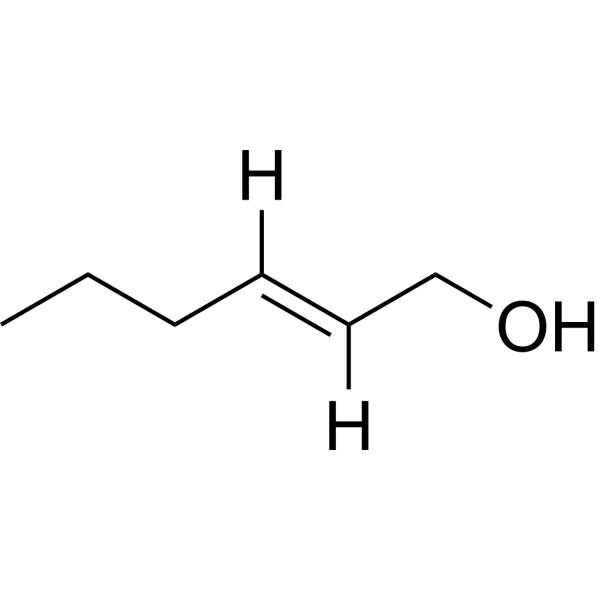
Cat. No.: HY-W015936
CAS No.: 928-95-0
Synonyms: trans-Hex-2-en-1-ol
(E)-Hex-2-en-1-ol belongs to the class of unsaturated alcohols consisting of a six-carbon chain with a double bond between carbon atoms 2 and 3 and a hydroxyl group attached to carbon atom 1. The compound has a grassy or herbaceous smell and is commonly used as a flavoring in foods such as baked goods, candy and beverages. It can also be used as a fragrance ingredient in personal care products and as a starting material for the synthesis of other organic compounds. Furthermore, (E)-hex-2-en-1-ol can be used as a solvent or reagent in various chemical reactions.
loading...
    loading...
Cat. No.: HY-W145545
CAS No.: 138906-41-9
Synonyms: 4-Methoxyphenyl 3,4,6-Tri-O-acetyl-2-deoxy-2-phthalimido-beta-D-glucopyranoside
4-Methoxyphenyl 3,4, 6-tri-o-acetyl-2-deoxy-2-phthalimido-β-d-Glucopyranoside (4-methoxyphenyl) 3,4, 6-tri-o-acetyl-2-deoxy-2-phthalimido-beta-d-Glucopyranoside is a class of biochemical reagents used in glycobiology research. Glycobiology studies the structure, synthesis, biology, and evolution of sugars. It deals with carbohydrate chemistry, glycan formation and degradation enzymology, protein-glycan recognition, and the role of glycans in biological systems. The field is closely related to basic research, biomedicine and biotechnology .
loading...
    loading...
Cat. No.: HY-W585368
CAS No.: 945921-51-7
Research Areas:  

Others

BODIPY dyes are a class of small-molecule fluorophores with strong ultraviolet absorption and sharp fluorescence emission peaks. BODIPY dyes can non-specifically label erythrocyte membranes, fail to inhibit the proliferation of Plasmodium falciparum, exhibit weak cytotoxicity against Chinese hamster ovary cells, and have extremely low hemolytic activity. BODIPY dyes serve as a universal scaffold for fluorescent compounds such as laser dyes and fluorescent probes, and can also be used to construct photoelectric and biophotonic molecular assembly units. BODIPY dyes are applicable to research related to live-cell imaging, fluorescent labeling of proteins and DNA, and various biological imaging assays .
loading...
    loading...
Cat. No.: HY-L928
7,106 compounds

G protein-coupled receptors (GPCRs) are membrane proteins in humans and one of the most important targets in drug discovery. Approximately 35% of launched drugs are targeted GPCRs, making them a crucial class of targets in drug discovery.

The orthosteric site of a GPCR is its endogenous ligand’s (such as neurotransmitters or hormones) binding site. This site plays a central role in signal transduction. Small molecules binding to this site typically contain a protonatable amino group, enabling the formation of salt bridges or hydrogen bonds with acidic residues in the binding pocket. In contrast, the allosteric site does not directly initiate signaling but modulates the signal intensity of the GPCR by altering or stabilizing the conformation of the orthosteric site. Small molecules binding to the allosteric site often contain multiple aromatic rings to occupy hydrophobic pockets and achieve their functional effects.

MCE has collected over 7,106 reported bioactive molecules targeting GPCRs, covering Class A, B, and C GPCRs. These small molecules were subjected to AI representation to extract 2D and 3D features. Subsequently, we do screening by AI score based on similarity to identify molecules in diversity library highly similar to the reported bioactive molecules in both 2D and 3D, with a threshold greater than 0.7. Further screening based on cLogP was applied to select molecules with good lipophilicity, which facilitates the binding of small molecules to GPCRs. This diversity library can be widely applied to the discovery of compounds targeting GPCR proteins.

Cat. No.: HY-P70656
Purity:  ≥ 95%, as determined by reducing SDS-PAGE.
Synonyms: FCGRT; Major Histocompatibility Complex class I-Like Fc Receptor; Fc Gamma Receptor And Transporter; Neonatal Crystallizable Fc Receptor FcRn Splice Variant 6; Neonatal Fc Receptor; Neonatal Crystallizable Fc Receptor FcRn Splice Variant 5; FcRn; Neonatal
Species:  
Mouse
Source:  
HEK293
loading...
    loading...
Cat. No.: HY-P72093
Purity:  ≥ 90%, as determined by reducing SDS-PAGE.
Synonyms: ASPN; PLAP1; Asporin; Periodontal Ligament Associated Protein 1; SLRR1C; Periodontal Ligament-Associated Protein 1; PLAP-1; Small Leucine-Rich Protein 1C; Asporin (LRR class 1); Alternative Protein ASPN; Asporin Proteoglycan; ASPN Protein; FLJ20129; OS3
Species:  
Human
Source:  
E. coli
loading...
    loading...
Cat. No.: HY-P72377
Purity:  ≥ 95%, as determined by reducing SDS-PAGE.
Synonyms: HLAA; HLA-A; Human leukocyte antigen A; HLA class I histocompatibility antigen, A alpha chain; HDCMA22P; CDABP0092; B2M; Beta-2-microglobulin form pI 5.3
Species:  
Human
Source:  
HEK293
loading...
    loading...

