
2735 Results for "

complexation

" in MedChemExpress (MCE) Product Catalog:
Products (2735)

2735 Results for "complexation" in MCE Product Catalog:

Cat. No.: HY-183984
Target:  

G-quadruplex

Research Areas:  

Cancer

G-quadruplex ligand 6 is a G-quadruplex ligand targeting the c-MYC promoter with anti-tumor activity. G-quadruplex ligand 6 forms a non-covalent complex with Pu22, a G-quadruplex model of the c-MYC promoter, with a microscopic dissociation constant Kd of 0.202 μM. G-quadruplex ligand 6 selectively inhibits tumor cell proliferation, blocks the binding of transcription factors by stabilizing the G-quadruplex in the c-MYC promoter, and thereby regulates the expression of proto-oncogenes. G-quadruplex ligand 6 can be used in the research of pancreatic cancer, non-small cell lung cancer, colorectal cancer, and triple-negative breast cancer .
loading...
    loading...
Cat. No.: HY-184106
CAS No.: 1268273-85-3
Target:  

HSP Apoptosis

Research Areas:  

Cancer

HSP70-IN-9 is an Hsp70 inhibitor that induces caspase-3,7 activation with an IC50 of 25.2 μM. HSP70-IN-9 reversibly binds to the allosteric pocket of the N-terminal domain, disrupts the Hsp70-HOP-Hsp90 mega-complex, and inhibits client protein refolding, thereby inducing apoptosis and degradation of Hsp90-Hsp70 tumor client proteins, ultimately inhibiting cancer cell growth. HSP70-IN-9 can be used for research on breast cancer, pancreatic cancer, and acute myeloid leukemia .
loading...
    loading...
Cat. No.: HY-184657
Target:  

Molecular Glues CDK

Research Areas:  

Cancer

CDK2 degrader 10 is an orally active, cereblon-based molecular glue degrader targeting CDK2, with a DC50 of 120 nM. CDK2 degrader 10 forms a ternary complex with cereblon and CDK2 via a non-canonical recruitment mode, thereby driving CDK2 degradation through the ubiquitin-proteasome system. CDK2 degrader 10 inhibits retinoblastoma protein phosphorylation, induces G1/S cell cycle arrest, and suppresses CDK2-dependent cell proliferation. CDK2 degrader 10 can be used in studies related to CDK2-dependent cancers .
loading...
    loading...
Cat. No.: HY-187533
Research Areas:  

Cancer

EGFR AUTOTAC-1 is a p62/SQSTM1-directed EGFR AUTOTAC degrader. EGFR AUTOTAC-1 recruits p62 to form a ternary complex, activates the ubiquitin-proteasome system-independent Atg5-dependent autophagy-lysosome pathway, mediates autophagic degradation of EGFR and inhibits the AKT/ERK signaling pathway, thereby promoting apoptosis and activating autophagy. EGFR AUTOTAC-1 can be used for the research of non-small cell lung cancer.(Pink: EGFR ligand (HY-79511); Blue: p62 ligand (HY-187557); Black: Linker)
loading...
    loading...
Cat. No.: HY-187716
Target:  

PROTACs Virus Protease

Research Areas:  

Infection

PROTAC 3CPro degrader-1 is a picornavirus 3C protease (3CPro) PROTAC degrader with an DC50 value of 0.16 μM. PROTAC 3CPro degrader-1 directly inhibits the catalytic function of 3CPro, induces degradation via the ubiquitin-proteasome pathway, and binds to CRBN to form a ternary complex. PROTAC 3CPro degrader-1 inhibits viral replication, degrades drug-resistant EV71 3CPro mutants, and exhibits broad-spectrum activity against multiple picornavirus 3CPro variants. PROTAC 3CPro degrader-1 can be used in studies related to picornavirus infections .
loading...
    loading...
Cat. No.: HY-DY1111
CAS No.: 1539318-40-5
Target:  

DNA Stain

Research Areas:  

Neurological Disease

DFHBI-2T solution is a membrane-permeable, RNA aptamer-activated fluorescent probe (Ex/Em=500 nm/523 nm), with a Kd value of 1300 nM for the RNA aptamer Spinach2. DFHBI-2T solution binds to Spinach2, converting the fluorophore to a fluorescent state, stabilizing its planar structure to facilitate the radiative fluorescence decay pathway, and forming a complex with red-shifted excitation and emission peaks. DFHBI-2T solution can be used for RNA imaging in live cells. It is also applicable to research related to fragile X-associated tremor/ataxia syndrome .
Solvent and concentration: DMSO: 5 mM
loading...
    loading...
Cat. No.: HY-DY2032
Research Areas:  

Others

Methyl Green Staining Solution (Chloroform-Extracted, 1%) is a basic dye stock solution with differential nucleic acid binding activity that distinguishes double-stranded DNA from RNA, and it can be used for assays related to nucleic acid distribution and DNA localization. Methyl Green Staining Solution (Chloroform-Extracted, 1%) functions by competitively binding to the phosphate groups of nucleic acids and stably binds to intact double-stranded DNA; RNA within the oocyte-specific ribonucleoprotein complex specifically binds to this dye, and RNase completely blocks this binding reaction. The nucleic acid recognition of Methyl Green Staining Solution (Chloroform-Extracted, 1%) depends on the size of the dye cation and the intact double-helical structure of DNA .
loading...
    loading...
Cat. No.: HY-E71265A
Research Areas:  

Others

β-Acetylglucosaminidase 73A, Lactococcus lactis releases non-reducing terminal β1-2, β1-3, β1-4 and β1-6 linked N-acetylglucosamine from complex carbohydrates. When incubated with oligosaccharides at low concentrations (<50 mU/mL) the enzyme can differentiate between GlcNAcβ1-2Man, GlcNAcβ1-4Man and GlcNAcβ1-6Man linkages.
loading...
    loading...
Cat. No.: HY-N0492R
CAS No.: 1077-28-7
Synonyms: Thioctic acid (Standard); (±)-α-Lipoic acid (Standard); DL-α-Lipoic acid (Standard)
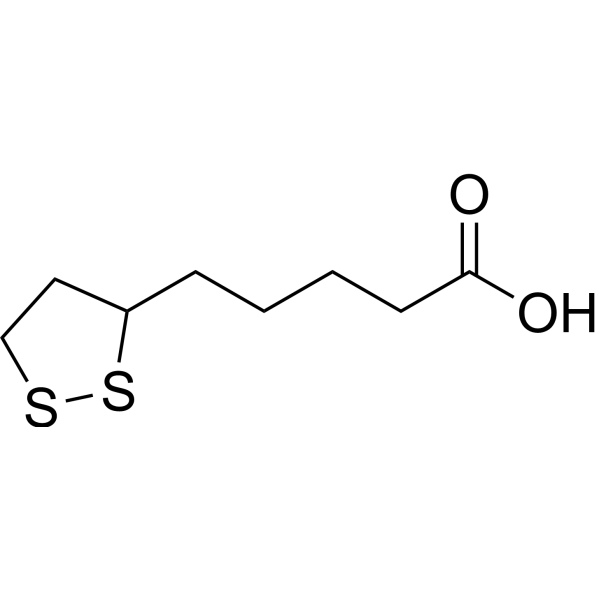
α-Lipoic Acid (Standard) is the analytical standard of α-Lipoic Acid. This product is intended for research and analytical applications. α-Lipoic Acid (Thioctic acid) is an antioxidant, which is an essential cofactor of mitochondrial enzyme complexes. α-Lipoic Acid inhibits NF-κB-dependent HIV-1 LTR activation . α-Lipoic Acid induces endoplasmic reticulum (ER) stress-mediated apoptosis in hepatoma cells . α-Lipoic Acid can be used with CPUL1 (HY-151802) to construct the self-assembled nanoaggregate CPUL1-LA NA, which has improved antitumor efficacy than CPUL1 .
loading...
    loading...
Cat. No.: HY-N2345R
CAS No.: 23567-23-9
Procyanidin B3 (Standard) is the analytical standard of Procyanidin B3. This product is intended for research and analytical applications. Procyanidin B3 is a natural product with antioxidant activity and oral bioavailability, possessing good blood-brain barrier penetration. Procyanidin B3 is a selective inhibitor of histone acetyltransferase (HAT). By inhibiting p300 HAT-mediated acetylation of the androgen receptor (androgen receptor). Procyanidin B3 alleviates intervertebral disc degeneration (IVDD) by inhibiting the formation of the TLR4/MD-2 complex. Procyanidin B3 can be used in research on prostate cancer and arthritis .
loading...
    loading...
Cat. No.: HY-N6664
CAS No.: 9000-01-5
Synonyms: Arabic gum
Gum Arabic is an orally active complex branched polysaccharide. Gum Arabic can be isolated from the Acacia senegal tree. Gum Arabic upregulates the expression of maturation markers (CD86, CD40, and CD54), promotes ERK1/2 phosphorylation, and inhibits Apoptosis. Gum Arabic exhibits antimalarial effects against Plasmodium berghei ANKA. Gum Arabic exhibits hepatoprotective, renal, and cardiovascular protective activities. Gum Arabic improves obesity. Gum Arabic is commonly used as a stabilizer and thickener. Gum Arabic can be used in the research of brain tumor imaging .
loading...
    loading...
Cat. No.: HY-P11933
Research Areas:  

Others

FAHF is a polypeptide-based dual-signal fluorescent colorimetric probe synthesized by conjugating the 5-carboxyfluorescein (5-FAM) (HY-66022) fluorophore to the Ala-His-Phe-NH2 tripeptide backbone. FAHF achieves highly selective recognition of Cu 2+ via fluorescence quenching and colorimetric change. The FAHF-Cu 2+ complex responds to Glyphosate (HY-B0863) based on the displacement effect, resulting in fluorescence enhancement and a visually distinguishable color change. FAHF can penetrate cell membranes to enable cascade detection of copper (II) and glyphosate in living cells, and it can also be combined with smartphone RGB analysis for semi-quantitative identification .
loading...
    loading...
Cat. No.: HY-P12013
Research Areas:  

Inflammation/Immunology

PEG12KL4 is a PEG-modified amphipathic cell-penetrating peptide. PEG12KL4 promotes the transfection and delivery of mRNA into lung cells, maintains mRNA stability, and forms mRNA complexes that retain integrity and translatability. PEG12KL4 endows lipid nanoparticles (LNPs) with anti-nebulization properties, enhances transfection efficiency in artificial mucus when used in combination with LNPs, and enables the formation of dry powder formulations with low toxicity and mild inflammatory responses. PEG12KL4 can be used in studies related to drug delivery for pulmonary diseases (cystic fibrosis, chronic obstructive pulmonary disease) .
loading...
    loading...
Cat. No.: HY-P990219

Target:  

Interleukin Related

Research Areas:  

Infection Inflammation/Immunology

Anti-Mouse IL-2 Antibody (JES6-1A12) is an anti-mouse IL-2 IgG1 monoclonal antibody. Anti-Mouse IL-2 Antibody (JES6-1A12) can inhibit Treg amplification and enhance Th1 response. Anti-Mouse IL-2 Antibody (JES6-1A12) can form a complex with IL-2 for experimentation. Anti-Mouse IL-2 Antibody (JES6-1A12) can be used for research on infection conditions such as malaria .
loading...
    loading...
Cat. No.: HY-P990673
Synonyms: DSTP-3086S Antibody; RG-7450 Antibody

Research Areas:  

Cancer

Vandortuzumab (DSTP-3086S Antibody; RG-7450 Antibody) is a humanized anti-STEAP1 IgG1 antibody and antimitotic agent that can be conjugated with MMAE (HY-15162) to form the antibody-drug conjugate (ADC) Vandortuzumab vedotin. Vandortuzumab vedotin specifically binds to STEAP1 and drives internalization of the complex, releasing the MMAE (HY-15162) payload intracellularly. After binding to tubulin, MMAE inhibits cell division and induces cell death. Vandortuzumab exhibits antitumor activity in preclinical xenograft models of prostate cancer and can be used for research related to metastatic castration-resistant prostate cancer (mCRPC) .
loading...
    loading...
Cat. No.: HY-P992335

Target:  

Interleukin Related

Research Areas:  

Cancer

COM503 is a high-affinity anti-IL18BP human monoclonal antibody with a Kd value of 0.291 pM. COM503 binds to IL18BP, blocks the IL18BP:IL18 interaction, displaces IL18 from preformed complexes, and enhances the activation and function of T cells and NK cells. COM503 induces anti-tumor effects by relieving the activity inhibition of endogenous IL18 in the tumor microenvironment. COM503 can be used for cancer research. The recommended isotype control is Human IgG4 (S228P) kappa, Isotype Control (HY-P99003) .
loading...
    loading...
Cat. No.: HY-W015788R
CAS No.: 93-56-1
Synonyms: Styrene Glycol (Standard)
1-Phenylethane-1,2-diol (Standard) is the analytical standard of 1-Phenylethane-1,2-diol. This product is intended for research and analytical applications. 1-Phenylethane-1,2-diol (Styrene Glycol) is a benzyl diol compound, which is the major metabolite of Styrene. 1-Phenylethane-1,2-diol can be oxidized to hydroxyl ketone (2-hydroxy-1-phenylethan-1-one) selectively with variety of catalysts, including organocatalysts, metal complexes, non-noble metal oxides, bimetallics[1][2][3].
loading...
    loading...
Cat. No.: HY-W072496
CAS No.: 1965330-59-9
10-(3,5-Di-OMe-Ph)-9-mesityl-(1,3,6,8-tetra-OMe-acridinium) tetrafluoroborate is a photocatalyst with the activity of enhancing the efficiency of organic reactions. 10-(3,5-Di-OMe-Ph)-9-mesityl-(1,3,6,8-tetra-OMe-acridinium) tetrafluoroborate is widely used in the synthesis of complex molecules and compounds. 10-(3,5-Di-OMe-Ph)-9-mesityl-(1,3,6,8-tetra-OMe-acridinium) tetrafluoroborate also exhibits excellent performance in photosensitization reactions.
loading...
    loading...
Cat. No.: HY-W342441
CAS No.: 54827-14-4
Research Areas:  

Metabolic Disease Cancer

Monosialoganglioside GM3 (bovine) is a monosialoganglioside and an inhibitor of VEGFR2 and Akt. At a concentration of 20 μM, Monosialoganglioside GM3 inhibits angiogenesis and reduces the proliferation and migration of human umbilical vein endothelial cells (HUVECs) by inhibiting VEGFR2 and Akt phosphorylation. Ganglioside GM3 also inhibits ferroptosis, providing protective effects during the formation of abdominal aortic aneurysms. Additionally, Monosialoganglioside GM3 (bovine) acts as an inhibitor of insulin signaling, inducing the dissociation of the insulin receptor (IR)-Caveolin-1 complex from lipid microdomains and causing insulin resistance in adipocytes. Monosialoganglioside GM3 (bovine) can be used in cancer and metabolic disease research .
loading...
    loading...
Cat. No.: HY-W611371A
CAS No.: 2490401-57-3
Target:  

TRP Channel iGluR

Research Areas:  

Neurological Disease

FP802 dihydrochloride is an orally active potent TwinF interface inhibitor that disrupts and detoxifies the NMDAR/TRPM4 death complex. FP802 dihydrochloride exerts powerful neuroprotective effects in the 5xFAD mouse model of Alzheimer’s disease (AD) by preventing cognitive decline, preserving neuronal structural integrity, reducing amyloid-β plaque formation, and mitigating mitochondrial pathology . FP802 dihydrochloride stops loss of motor neurons, reduces serum neurofilament light chain (NfL) levels, improves motor performance, and extends life in a mouse model of amyotrophic lateral sclerosis (ALS) . FP802 dihydrochloride can be used for AD and ALS research .
loading...
    loading...

