2349 Results for "

component

" in MedChemExpress (MCE) Product Catalog:
Products (2349)

2349 Results for "component" in MCE Product Catalog:

Cat. No.: HY-L935
1039 compounds

POI (Protein of Interest) refers to the target protein, namely the disease-causing protein or key functional protein that undergoes degradation or functional modulation in molecular glue-mediated processes. The Molecular Glue POI Library consists of a series of fragments that can specifically bind to different types of POIs. As key components of molecular glues, these ligands form stable interactions with target proteins, laying the foundation for molecular glues to induce the interaction between POIs and E3 ubiquitin ligases. The covered POIs include various types such as cancer-associated GSPT1, androgen receptors, and abnormally aggregated proteins linked to neurodegenerative diseases.

This fragment library can be applied to the screening and optimization of targeted protein degraders. By screening ligands with high affinity and strong selectivity for specific POIs from the library, core structures can be identified to develop novel molecular glues. For instance, optimization of ligands targeting GSPT1 has yielded molecular glue degraders with enhanced degradation activity. Since many POIs are difficult to drug due to the lack of traditional small-molecule binding pockets, some ligands in the POI Ligand Library can modulate such POIs by inducing protein-protein interactions, thereby further expanding the scope of drug discovery for undruggable targets.

MCE has compiled a POI Fragment Library comprising thousands of POI fragments with molecular weights ranging from 150 to 400. This compound library can be widely applied in Molecular Glue research and development.

Cat. No.: HY-P86704
Synonyms: Cell surface glycoprotein Trop 2; Cell surface glycoprotein Trop-2; Cell surface glycoprotein Trop2; Epithelial glycoprotein 1; GA733 1; GA7331; M1S 1; M1S1; Membrane component chromosome 1 surface marker 1; Pancreatic carcinoma marker protein GA733 1; Pancreatic carcinoma marker protein GA733-1; Pancreatic carcinoma marker protein GA7331; TACD 2; TACD2_HUMAN; TACSTD 2; TACSTD2; Trop 2; Trop2; Tumor associated calcium signal transducer 2 precursor; Tumor-associated calcium signal transducer 2.

Host:  

Rabbit

Application:  

IHC-P, IHC-F, IF-Tissue

Reactivity:  

Human

loading...
    loading...
Cat. No.: HY-N0660
CAS No.: 55466-05-2
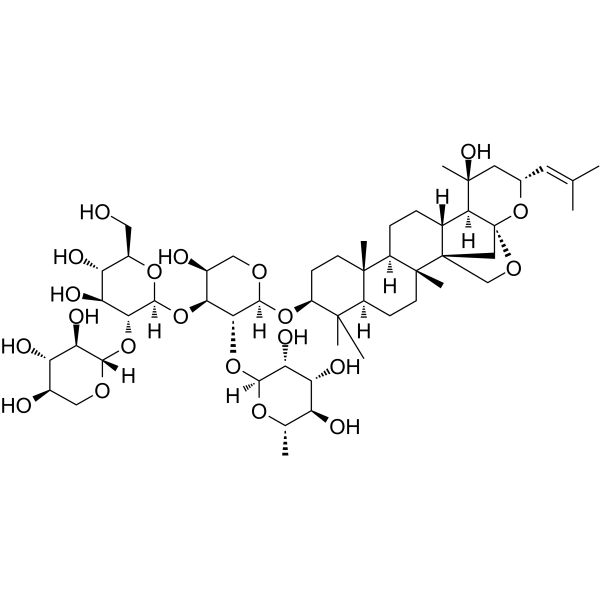
Jujuboside B is a bioactive saponin component isolated from Ziziphi Spinosae Semen (sour jujube seed), with oral efficacy and blood-brain barrier permeability. Jujuboside B induces acute leukemia cell death and drives necroptosis apoptosis by activating the RIPK1/RIPK3/MLKL pathway. Jujuboside B upregulates the expression of NOXA, PARP and caspase-3, activates AMPK, inhibits the proliferation of breast cancer cells, and induces cell apoptosis and autophagy. Jujuboside B inhibits angiogenesis and tumor growth by blocking the VEGFR-2 signaling pathway. Jujuboside B alleviates liver injury in mice by regulating the Nrf2-STING signaling pathway . Jujuboside B alleviates liver injury by regulating anti-inflammatory responses and downregulating the expression of 11β-HSD2. Jujuboside B induces ferroptosis and overcomes radioresistance in non-small cell lung cancer via the PPARγ-ATF3-Gpx4 signaling pathway. Jujuboside B exerts inhibitory effects on platelet aggregation. Jujuboside B inhibits febrile seizures by suppressing the activity of AMPA receptors. Jujuboside B reverses chronic unpredictable mild stress-promoted tumor progression by blocking the PI3K/Akt and MAPK/ERK pathways and dephosphorylating CREB signaling. Jujuboside B is applicable to related studies on acute leukemia, breast cancer, PM2.5-induced lung injury, hepatotoxicity, liver injury, colorectal cancer, non-small cell lung cancer, thromboembolic diseases, cardiovascular diseases associated with high platelet aggregation, febrile seizures, and depressive-like phenotypes .
loading...
    loading...
Cat. No.: HY-N0660R
CAS No.: 55466-05-2
Jujuboside B (Standard) is the analytical standard of Jujuboside B. This product is intended for research and analytical applications. Jujuboside B is a bioactive saponin component isolated from Ziziphi Spinosae Semen (sour jujube seed), with oral efficacy and blood-brain barrier permeability. Jujuboside B induces acute leukemia cell death and drives necroptosis apoptosis by activating the RIPK1/RIPK3/MLKL pathway. Jujuboside B upregulates the expression of NOXA, PARP and caspase-3, activates AMPK, inhibits the proliferation of breast cancer cells, and induces cell apoptosis and autophagy. Jujuboside B inhibits angiogenesis and tumor growth by blocking the VEGFR-2 signaling pathway. Jujuboside B alleviates liver injury in mice by regulating the Nrf2-STING signaling pathway . Jujuboside B alleviates liver injury by regulating anti-inflammatory responses and downregulating the expression of 11β-HSD2. Jujuboside B induces ferroptosis and overcomes radioresistance in non-small cell lung cancer via the PPARγ-ATF3-Gpx4 signaling pathway. Jujuboside B exerts inhibitory effects on platelet aggregation. Jujuboside B inhibits febrile seizures by suppressing the activity of AMPA receptors. Jujuboside B reverses chronic unpredictable mild stress-promoted tumor progression by blocking the PI3K/Akt and MAPK/ERK pathways and dephosphorylating CREB signaling. Jujuboside B is applicable to related studies on acute leukemia, breast cancer, PM2.5-induced lung injury, hepatotoxicity, liver injury, colorectal cancer, non-small cell lung cancer, thromboembolic diseases, cardiovascular diseases associated with high platelet aggregation, febrile seizures, and depressive-like phenotypes.
loading...
    loading...
Cat. No.: HY-P78883
Purity:  ≥ 95%, as determined by reducing SDS-PAGE.
Synonyms: EPCAM; HEA125; Prev. TACSTD1; CO-17A; Prev. MIC18; EGP314; Prev. M4S1; EGP34; Tumor-Associated Calcium Signal Transducer 1; CD326; TROP1; MOC31; KSA; 17-1A; GA733-2; Ly74; Ber-Ep4; MH99; Ep-CAM; Membrane component, Chromosome 4, Surface Marker (35kD Glycoprotein); MOC-31; Antigen Identified By Monoclonal Antibody AUA1; BerEp4; Human Epithelial Glycoprotein-2; EGP40; Epithelial Cell Surface Antigen; EGP-2; Epithelial Glycoprotein; KS1/4; KS 1/4 Antigen; MK-1; CD326 Antigen; ESA; HEGP314; Major Gastrointestinal Tumor-Associated Protein GA733-2; HNPCC8; Trophoblast Cell Surface Antigen 1; LYNCH8; Adenocarcinoma-Associated Antigen; DIAR5; Cell Surface Glycoprotein Trop-1; M1S2; Epithelial Glycoprotein 314; EGP; TACST-1; Epithelial Cell Adhesion Molecule; 323/A3
Species:  
Human
Source:  
HEK293
loading...
    loading...
Cat. No.: HY-P704581
Purity:  ≥ 95%, as determined by reducing SDS-PAGE.
Synonyms: EPCAM; HEA125; Prev. TACSTD1; CO-17A; Prev. MIC18; EGP314; Prev. M4S1; EGP34; Tumor-Associated Calcium Signal Transducer 1; CD326; TROP1; MOC31; KSA; 17-1A; GA733-2; Ly74; Ber-Ep4; MH99; Ep-CAM; Membrane component, Chromosome 4, Surface Marker (35kD Glycoprotein); MOC-31; Antigen Identified By Monoclonal Antibody AUA1; BerEp4; Human Epithelial Glycoprotein-2; EGP40; Epithelial Cell Surface Antigen; EGP-2; Epithelial Glycoprotein; KS1/4; KS 1/4 Antigen; MK-1; CD326 Antigen; ESA; HEGP314; Major Gastrointestinal Tumor-Associated Protein GA733-2; HNPCC8; Trophoblast Cell Surface Antigen 1; LYNCH8; Adenocarcinoma-Associated Antigen; DIAR5; Cell Surface Glycoprotein Trop-1; M1S2; Epithelial Glycoprotein 314; EGP; TACST-1; Epithelial Cell Adhesion Molecule; 323/A3
Species:  
Human
Source:  
HEK293
loading...
    loading...
Cat. No.: HY-P85597
Synonyms: 5''-deoxyribose-5-phosphate lyase Ku70; 5''-dRP lyase Ku70; 70 kDa subunit of Ku antigen; ATP dependent DNA helicase 2 subunit 1; ATP dependent DNA helicase II 70 kDa subunit; ATP-dependent DNA helicase 2 subunit 1; ATP-dependent DNA helicase II 70 kDa subunit; CTC box binding factor 75 kDa subunit; CTC box-binding factor 75 kDa subunit; CTC75; CTCBF; CTCBF; DNA repair protein XRCC6; G22P1; Ku 70; Ku autoantigen 70kDa; Ku autoantigen p70 subunit; Ku autoantigen, 70kDa; Ku p70; Ku70; Ku70 DNA binding component of DNA-dependent proteinkinase complex; thyroid autoantigen 70 kDa; Kup70; Lupus Ku autoantigen protein p70; ML8; Thyroid autoantigen 70kD; Ku antigen; Thyroid autoantigen; Thyroid lupus autoantigen; Thyroid lupus autoantigen; Thyroid lupus autoantigen p70; Thyroid-lupus autoantigen; TLAA; TLAA; X ray repair complementing defective repair in Chinese hamster cells 6; X-ray repair complementing defective repair in Chinese hamster cells 6; X-ray repair cross-complementing protein 6; XRCC 6; XRCC6; XRCC6_HUMAN.

Host:  

Mouse

Application:  

WB, ICC/IF, IP

Reactivity:  

Human, Monkey

loading...
    loading...
Cat. No.: HY-P701371
Purity:  ≥ 90%, as determined by reducing SDS-PAGE.
Synonyms: CDK7; Cyclin-Dependent Kinase 7 (Homolog Of Xenopus MO15 Cdk-Activating Kinase); Cyclin Dependent Kinase 7; Homolog Of Xenopus MO15 Cdk-Activating Kinase; CDKN7; Serine/Threonine Protein Kinase MO15; CAK1; Cyclin-Dependent Kinase 7 Isoform 3; MO15; Serine/Threonine Protein Kinase 1; STK1; Serine/Threonine-Protein Kinase 1; CAK; [RNA-Polymerase]-Subunit Kinase; TFIIH Basal Transcription Factor Complex Kinase Subunit; Serine/Threonine Kinase Stk1; Cell Division Protein Kinase 7; Kinase Subunit Of CAK; Cyclin-Dependent Kinase 7; P39 Mo15; Cyclin-Dependent Kinase 7 (MO15 Homolog, Xenopus Laevis, Cdk-Activating Kinase); P39MO15; CDK-Activating Kinase 1; HCAK; 39 KDa Protein Kinase; CCNH; CycH; Cyclin H; Cyclin-Dependent Kinase-Activating Kinase Complex Subunit; P34; CDK-Activating Kinase Complex Subunit; P37; CAK Complex Subunit; MO15-Associated Protein; CAK; Cyclin-H; MNAT1; CAP35; MNAT1 component Of CDK Activating Kinase; P36; RNF66; P35; MAT1; Menage A Trois Homolog 1, Cyclin H Assembly Factor (Xenopus Laevis); CDK-Activating Kinase Assembly Factor MAT1; Menage A Trois-Like Protein 1 Cyclin H Assembly Factor Isoform 2; CDK7/Cyclin-H Assembly Factor; Menage A Trois-Like Protein 1 Cyclin H Assembly Factor; RING Finger Protein MAT1; Menage A Trois Homolog 1, Cyclin H Assembly Factor; MNAT CDK-Activating Kinase Assembly Factor 1; CDK-Activating Kinase Assembly Factor; MNAT1, CDK Activating Kinase Assembly Factor; Cyclin G1 Interacting Protein; Menage A Trois 1 (CAK Assembly Factor); Cyclin-G1-Interacting Protein; RING Finger Protein 66; TFB3; Menage A Trois
Species:  
Human
Source:  
Sf9 insect cells
loading...
    loading...
Cat. No.: HY-P75361
Purity:  ≥ 85%, as determined by reducing SDS-PAGE.
Synonyms: CDK7; Cyclin-Dependent Kinase 7 (Homolog Of Xenopus MO15 Cdk-Activating Kinase); Cyclin Dependent Kinase 7; Homolog Of Xenopus MO15 Cdk-Activating Kinase; CDKN7; Serine/Threonine Protein Kinase MO15; CAK1; Cyclin-Dependent Kinase 7 Isoform 3; MO15; Serine/Threonine Protein Kinase 1; STK1; Serine/Threonine-Protein Kinase 1; CAK; [RNA-Polymerase]-Subunit Kinase; TFIIH Basal Transcription Factor Complex Kinase Subunit; Serine/Threonine Kinase Stk1; Cell Division Protein Kinase 7; Kinase Subunit Of CAK; Cyclin-Dependent Kinase 7; P39 Mo15; Cyclin-Dependent Kinase 7 (MO15 Homolog, Xenopus Laevis, Cdk-Activating Kinase); P39MO15; CDK-Activating Kinase 1; HCAK; 39 KDa Protein Kinase; CCNH; CycH; Cyclin H; Cyclin-Dependent Kinase-Activating Kinase Complex Subunit; P34; CDK-Activating Kinase Complex Subunit; P37; CAK Complex Subunit; MO15-Associated Protein; CAK; Cyclin-H; MNAT1; CAP35; MNAT1 component Of CDK Activating Kinase; P36; RNF66; P35; MAT1; Menage A Trois Homolog 1, Cyclin H Assembly Factor (Xenopus Laevis); CDK-Activating Kinase Assembly Factor MAT1; Menage A Trois-Like Protein 1 Cyclin H Assembly Factor Isoform 2; CDK7/Cyclin-H Assembly Factor; Menage A Trois-Like Protein 1 Cyclin H Assembly Factor; RING Finger Protein MAT1; Menage A Trois Homolog 1, Cyclin H Assembly Factor; MNAT CDK-Activating Kinase Assembly Factor 1; CDK-Activating Kinase Assembly Factor; MNAT1, CDK Activating Kinase Assembly Factor; Cyclin G1 Interacting Protein; Menage A Trois 1 (CAK Assembly Factor); Cyclin-G1-Interacting Protein; RING Finger Protein 66; TFB3; Menage A Trois
Species:  
Human
Source:  
Sf9 insect cells
loading...
    loading...

