2337 Results for "

component

" in MedChemExpress (MCE) Product Catalog:
Products (2337)

2337 Results for "component" in MCE Product Catalog:

27
27 Cited Publications
Cat. No.: HY-N6718
CAS No.: 480-49-9
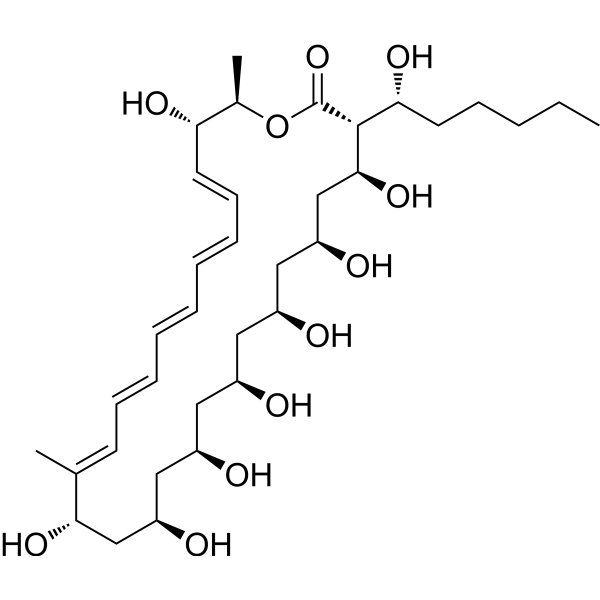
Filipin III is the major component of Filipin, a 28-membered ring pentaene macrolide antifungal antibiotic produced by S. filipinensis, S. avermitilis and S. miharaensis. Filipin interacts with membrane sterols causing the alteration of membrane structure .
loading...
    loading...
27
27 Cited Publications
Cat. No.: HY-129047E
CAS No.: 9002-07-7
Target:  

Ser/Thr Protease

Research Areas:  

Others

Trypsin, porcine pancreas (Cell culture grade) is a serine protease that hydrolyzes proteins at the carboxyl side of lysine or arginine residues. Trypsin, porcine pancreas (Cell culture grade) exhibits excellent protein digestibility for α-lactalbumin and β-casein. Trypsin, porcine pancreas (Cell culture grade) removes cellular components while preserving extracellular matrix structures to achieve uniform decellularization of porcine pancreas .
loading...
    loading...
25
25 Cited Publications
Cat. No.: HY-B0152
CAS No.: 73-24-5
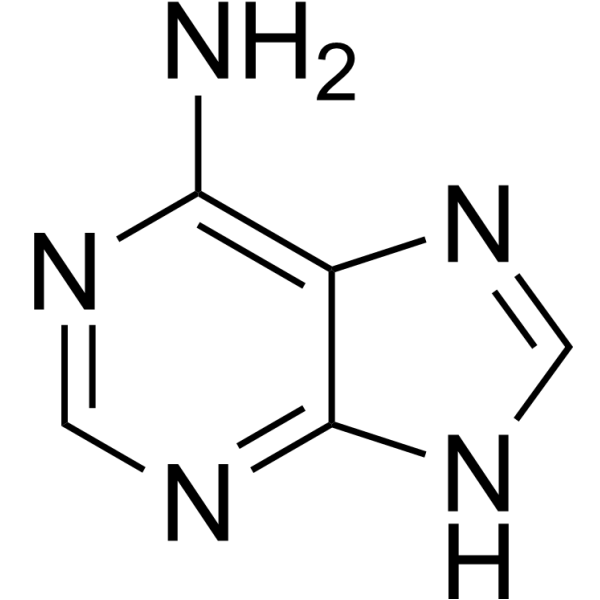
Adenine (6-Aminopurine), a purine, is one of the four nucleobases in the nucleic acid of DNA. Adenine acts as a chemical component of DNA and RNA. Adenine also plays an important role in biochemistry involved in cellular respiration, the form of both ATP and the cofactors (NAD and FAD), and protein synthesis .
loading...
    loading...
25
25 Cited Publications
Cat. No.: HY-B0152A
CAS No.: 2922-28-3
Synonyms: 6-Aminopurine hydrochloride; Vitamin B4 hydrochloride
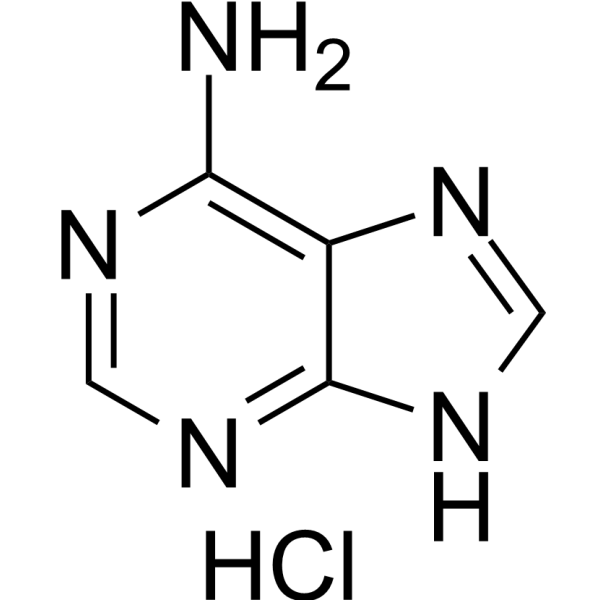
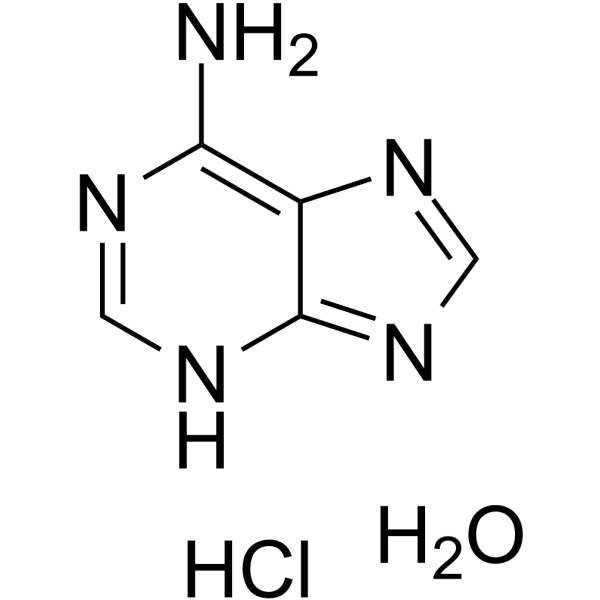
Adenine hydrochloride (6-Aminopurine hydrochloride), a purine, is one of the four nucleobases in the nucleic acid of DNA. Adenine hydrochloride acts as a chemical component of DNA and RNA. Adenine hydrochloride also plays an important role in biochemistry involved in cellular respiration, the form of both ATP and the cofactors (NAD and FAD), and protein synthesis .
loading...
    loading...
25
25 Cited Publications
Cat. No.: HY-B0152B
CAS No.: 321-30-2
Synonyms: 6-Aminopurine hemisulfate; Vitamin B4 hemisulfate
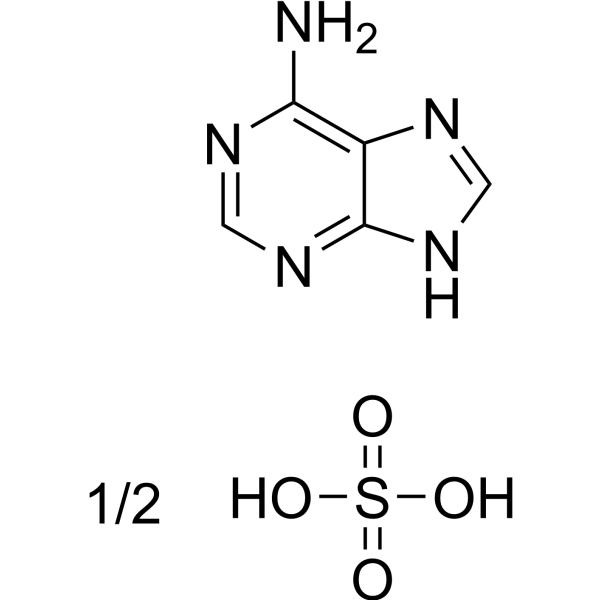
Adenine hemisulfate (6-Aminopurine hemisulfate), a purine, is one of the four nucleobases in the nucleic acid of DNA. Adenine hemisulfate acts as a chemical component of DNA and RNA. Adenine hemisulfate also plays an important role in biochemistry involved in cellular respiration, the form of both ATP and the cofactors (NAD and FAD), and protein synthesis .
loading...
    loading...
25
25 Cited Publications
Cat. No.: HY-W015213
CAS No.: 6055-72-7
Adenine monohydrochloride hemihydrate is a hydrochloride derivative of Adenine. Adenine (6-Aminopurine), a purine, is one of the four nucleobases in the nucleic acid of DNA. Adenine acts as a chemical component of DNA and RNA. Adenine also plays an important role in biochemistry involved in cellular respiration, the form of both ATP and the cofactors (NAD and FAD), and protein synthesis .
loading...
    loading...
22
22 Cited Publications
Cat. No.: HY-W040193
CAS No.: 816-94-4
Synonyms: 1,2-Distearoyl-sn-glycero-3-PC; 1,2-Distearoyl-sn-glycero-3-phosphorylcholine
Target:  

Liposome

Research Areas:  

Others

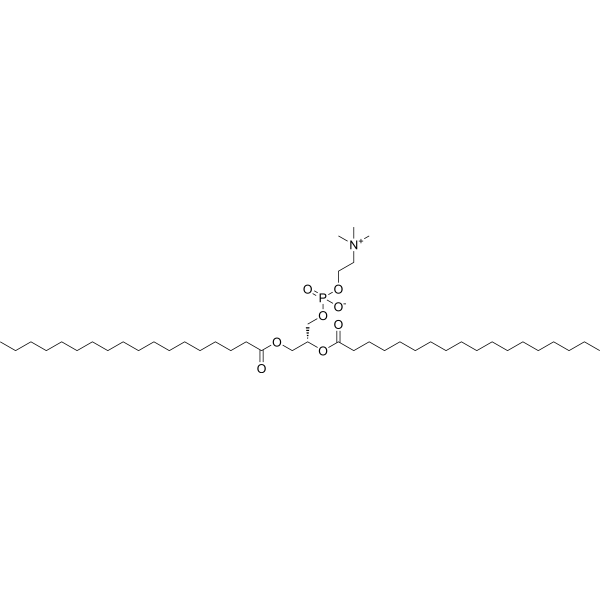
DSPC (1,2-Distearoyl-sn-glycero-3-phosphorylcholine) is a cylindrical-shaped lipid. DSPC is used to synthesize liposomes, and is the lipid component in the lipid nanoparticle (LNP) system .
loading...
    loading...
21
21 Cited Publications
Cat. No.: HY-E70005D
CAS No.: 9001-12-1
Synonyms: Collagenase, Type IV
Target:  

MMP

Research Areas:  

Others

Collagenase, Type IV (EC 3.4.24.3) is a microbially derived matrix metalloproteinases (MMPs) and zinc peptidase. Collagenase, Type IV degrades type IV collagen and type VII collagen, the main components of the basement membrane, and can also decompose basement matrix and elastin.

loading...
    loading...
21
21 Cited Publications
Cat. No.: HY-B0633
CAS No.: 9067-32-7
Synonyms: Sodium hyaluronate
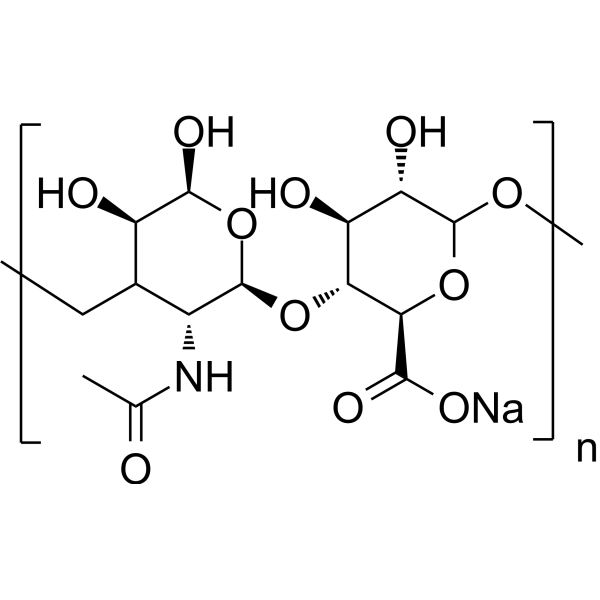
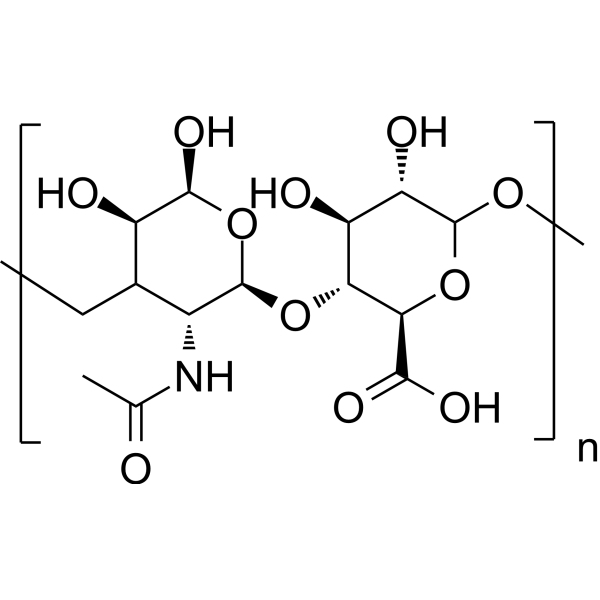
Hyaluronic acid sodium (Sodium hyaluronate) is a biopolymer composed of repeating units of disaccharides with various applications. Hyaluronic acid sodium is a major component of the extracellular matrix (ECM). Hyaluronic acid sodium is synthesized at the plasma membrane. Increased hyaluronic acid sodium levels are associated with tumor cell growth, adhesion, migration, invasion and angiogenesis in digestive cancers. Hyaluronic acid sodium participates in tissue remodeling and rapid cell proliferation in some physiological processes including embryonic morphogenesis and wound-healing. Hyaluronic acid sodium activates the PI3K-Akt signaling. Hyaluronic acid sodium acts as a regulator of cancer-associated lymphangiogenesis. Hyaluronic acid sodium also enhances cell invasion and angiogenesis by promoting proteolytic MMP-9 binding to cell surface or stimulating MMP-9 binding to cell surface. Hyaluronic acid sodium can be used as drug delivery for sodium butyrate to improve the anti-proliferative activity on breast cancer cell line. Hyaluronic acid sodium can be studied in joint diseases, wound healing and cancer .
loading...
    loading...
21
21 Cited Publications
Cat. No.: HY-B0633A
CAS No.: 9004-61-9
Synonyms: Hyaluronan; Hyaluronate
Hyaluronic acid is a biopolymer composed of repeating units of disaccharides with various applications. Hyaluronic acid is a major component of the extracellular matrix (ECM). Hyaluronic acid is synthesized at the plasma membrane. Increased hyaluronic acid levels are associated with tumor cell growth, adhesion, migration, invasion and angiogenesis in digestive cancers. Hyaluronic acid participates in tissue remodeling and rapid cell proliferation in some physiological processes including embryonic morphogenesis and wound-healing. Hyaluronic acid activates the PI3K-Akt signaling. Hyaluronic acid acts as a regulator of cancer-associated lymphangiogenesis. Hyaluronic acid also enhances cell invasion and angiogenesis by promoting proteolytic MMP-9 binding to cell surface or stimulating MMP-9 binding to cell surface. Hyaluronic acid can be used as drug delivery for sodium butyrate to improve the anti-proliferative activity on breast cancer cell line. Hyaluronic acid can be studied in joint diseases, wound healing and cancer .
loading...
    loading...
20
20 Cited Publications
Cat. No.: HY-117410
CAS No.: 1702967-37-0
Purity:  99.46%
Synonyms: PSMA-617
Research Areas:  

Cancer

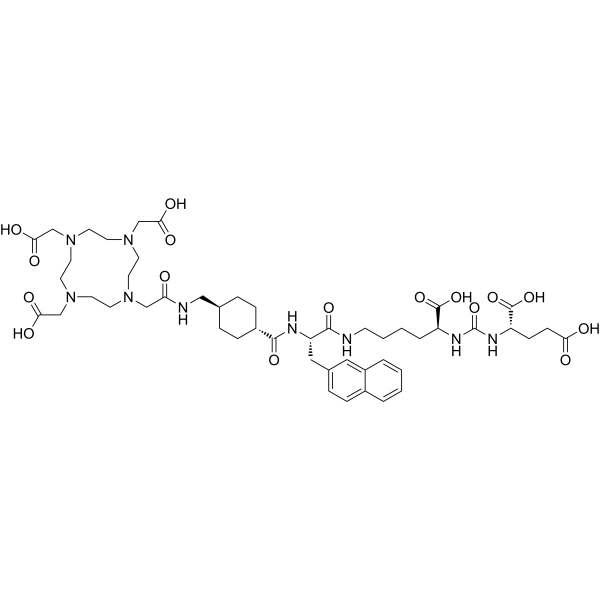
Vipivotide tetraxetan (PSMA-617) is a high potent prostate-specific membrane antigen (PSMA) inhibitor, with a Ki of 0.37 nM. Vipivotide tetraxetan (PSMA-617) is designed consisting of three components: the pharmacophore Glutamate-urea-Lysine, the chelator DOTA able to complex both 68Ga or 177Lu, and a linker connecting these two entities. Glutamate-urea-Lysine is the selective pharmacophore to bind to prostate specific membrane antigen.
loading...
    loading...
17
17 Cited Publications
Cat. No.: HY-N0045
CAS No.: 22427-39-0
Synonyms: Panaxoside A; Panaxoside Rg1
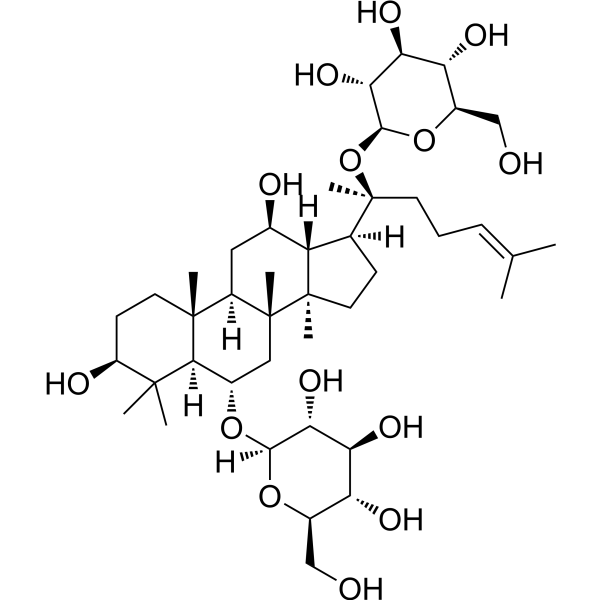
Ginsenoside Rg1 is one of the major active components of Panax ginseng. Ginsenoside Rg1 ameliorates the impaired cognitive function, displays promising effects by reducing cerebral levels. Ginsenoside Rg1 also reduces NF-κB nuclear translocation.
loading...
    loading...
16
16 Cited Publications
Cat. No.: HY-N0180
CAS No.: 471-53-4
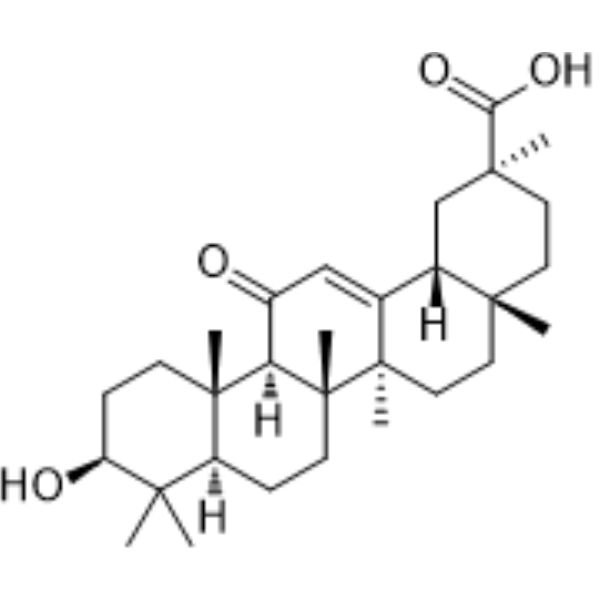
18β-Glycyrrhetinic acid is the major bioactive component of Glycyrrhiza uralensis and possesses anti-ulcerative, anti-inflammatory and antiproliferative properties.
loading...
    loading...
14
14 Cited Publications
Cat. No.: HY-N0322E
CAS No.: 57-88-5
Cholesterol (synthetic) is the major sterol in mammals. It is making up 20-25% of structural component of the plasma membrane. Plasma membranes are highly permeable to water but relatively impermeable to ions and protons. Cholesterol (synthetic) plays an important role in determining the fluidity and permeability characteristics of the membrane as well as the function of both the transporters and signaling proteins . Cholesterol (synthetic) is also an endogenous estrogen-related receptor α (ERRα) agonist .
loading...
    loading...
14
14 Cited Publications
Cat. No.: HY-N0322D
CAS No.: 57-88-5
Cholesterol (from plant) is the major sterol in mammals. It is making up 20-25% of structural component of the plasma membrane. Plasma membranes are highly permeable to water but relatively impermeable to ions and protons. Cholesterol (from plant) plays an important role in determining the fluidity and permeability characteristics of the membrane as well as the function of both the transporters and signaling proteins . Cholesterol (from plant) is also an endogenous estrogen-related receptor α (ERRα) agonist .
loading...
    loading...
13
13 Cited Publications
Cat. No.: HY-B2233B
CAS No.: 3616-04-4
Synonyms: Phosphocholine
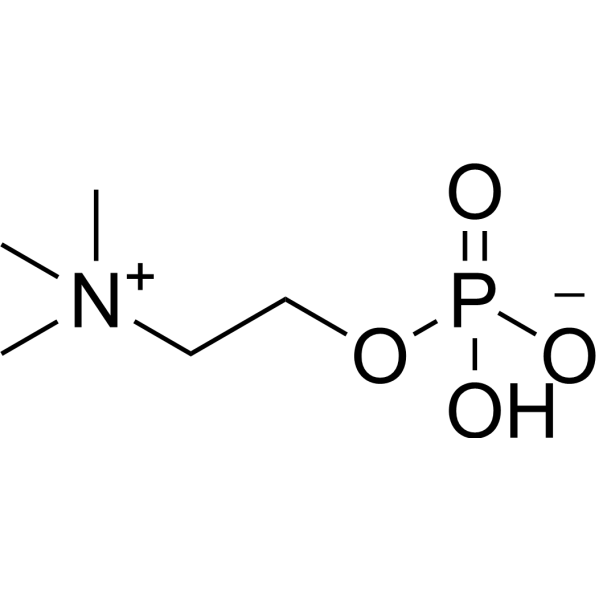
Phosphatidylcholine is the main phospholipid component in eukaryotic biofilms. Phosphatidylcholine exists in commensal or pathogenic bacteria associated with eukaryotes in prokaryotes. Phosphorylcholine exhibits a surprising range of immunomodulatory properties .
loading...
    loading...
13
13 Cited Publications
Cat. No.: HY-B2233
CAS No.: 107-73-3
Synonyms: Phosphocholine chloride
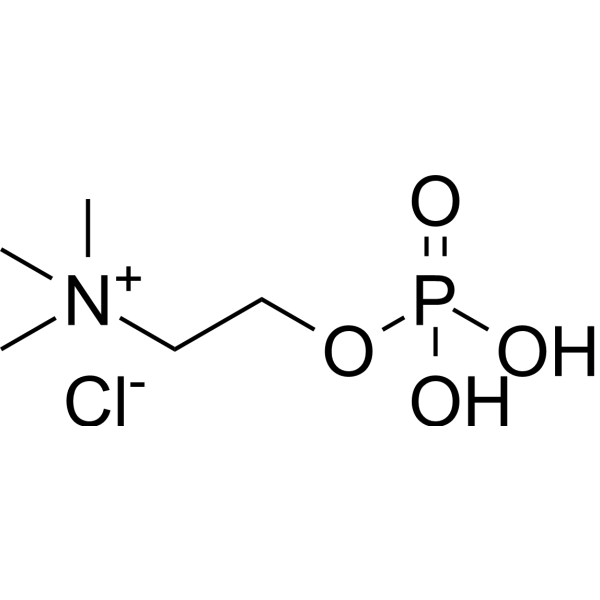
Phosphorylcholine chloride (Phosphocholine chloride) is the main phospholipid component in eukaryotic biofilms. Phosphorylcholine chloride exists in commensal or pathogenic bacteria associated with eukaryotes in prokaryotes. Phosphorylcholine chloride exhibits a surprising range of immunomodulatory properties .
loading...
    loading...
13
13 Cited Publications
Cat. No.: HY-B2233A
CAS No.: 4826-71-5
Calcium phosphorylcholine chloride, 98% is the main phospholipid component in eukaryotic biofilms. Calcium phosphorylcholine chloride, 98% exists in commensal or pathogenic bacteria associated with eukaryotes in prokaryotes. Calcium phosphorylcholine chloride, 98% exhibits a surprising range of immunomodulatory properties .
loading...
    loading...
12
12 Cited Publications
Cat. No.: HY-17006A
CAS No.: 162808-62-0
Synonyms: MK-0991; L-743872
Research Areas:  

Infection Cancer

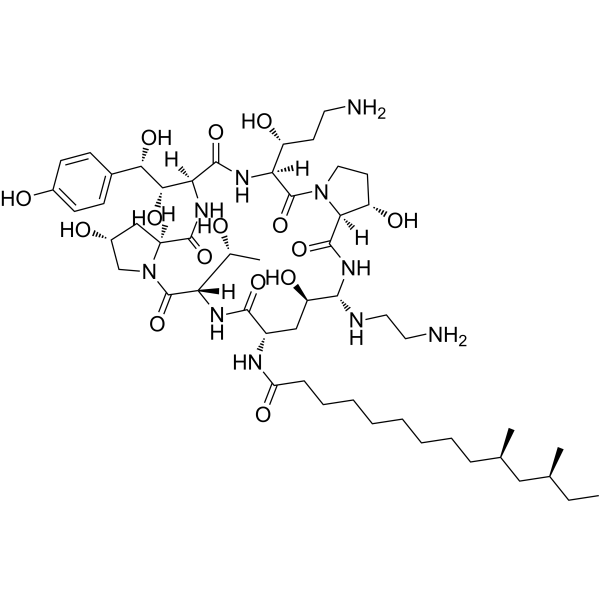
Caspofungin is a potent antifungal agent. Caspofungin inhibits the synthesis of the fungal cell wall component β-(l,3)-D-glucan .
loading...
    loading...
12
12 Cited Publications
Cat. No.: HY-17006
CAS No.: 179463-17-3
Synonyms: MK-0991 diacetate; L-743872 diacetate
Research Areas:  

Infection Cancer

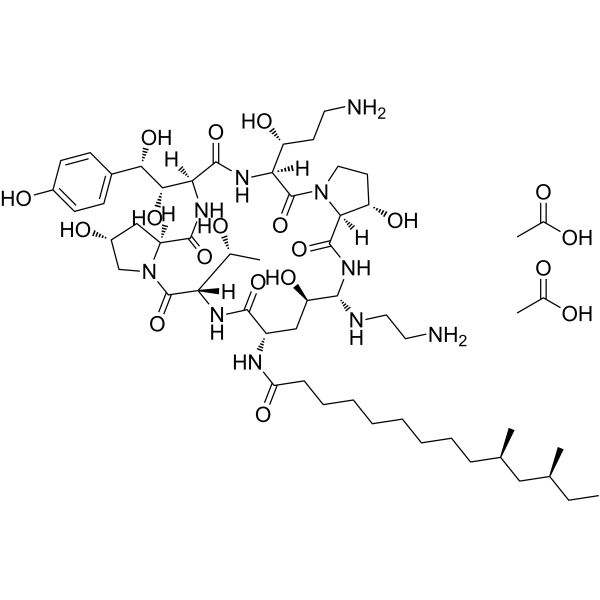
Caspofungin (MK-0991) diacetate is a potent antifungal agent. Caspofungin diacetate inhibits the synthesis of the fungal cell wall component β-(l,3)-D-glucan .
loading...
    loading...

