2983 Results for "

interaction

" in MedChemExpress (MCE) Product Catalog:
Products (2983)

2983 Results for "interaction" in MCE Product Catalog:

Cat. No.: HY-N0565S3
CAS No.: 1902958-13-7
Doxycycline- 13C,d3 is 13C and deuterium labeled Doxycycline (HY-N0565). Doxycycline is an orally active highly lipophilic, tissue-permeable MMP inhibitor with broad-spectrum antibacterial activity. Doxycycline is also a semi-synthetic antibiotic with chelating properties, which blocks bacterial protein synthesis and inhibits extracellular matrix degradation through interactions with zinc and calcium atoms. Doxycycline also inhibits mitochondrial biogenesis, translation, and the expression of respiratory chain proteins. Doxycycline induces apoptosis, inhibits autophagy and EMT, downregulates stem cell markers, and activates the PI3K-AKT pathway, thereby effectively inhibiting the viability and proliferation of cancer cells such as breast cancer cells. Doxycycline also promotes the survival and self-renewal of embryonic stem cells and neural stem cells, and reduces the frequency of medium changes in culture. Doxycycline has been applied in studies related to breast cancer, prostate cancer, bladder cancer, and other cancers .
loading...
    loading...
Cat. No.: HY-N10423
CAS No.: 18423-69-3
Synonyms: (-)-Cubebin
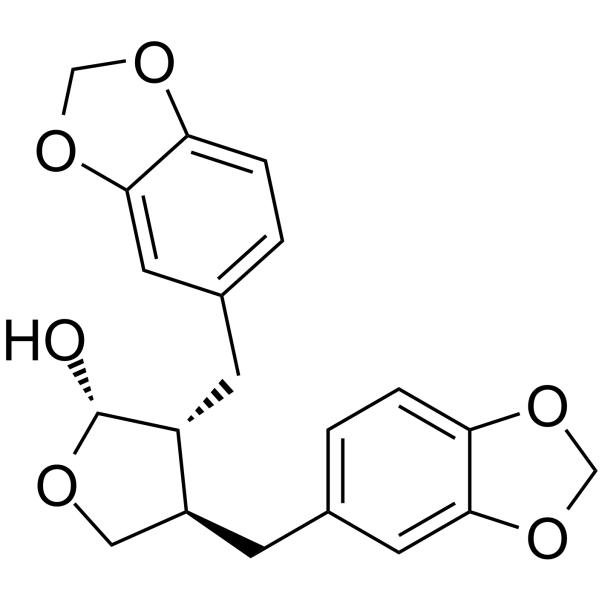
Cubebin ((-)-Cubebin), a dibenzyl butyrolactone lignan, is an orally active AChE inhibitor. Cubebin binds to active sites of NF-κB, TNF-α, and TGF-β1 via hydrogen and hydrophobic interactions, obstructing critical residues to inhibit pro-inflammatory or renal fibrosis-related activity. Cubebin enhances p38 MAPK phosphorylation to increase tyrosinase gene expression, stimulating melanogenesis via elevated tyrosinase activity, expression, and mRNA levels. Cubebin reduces oxidative stress via enhanced endogenous antioxidant enzyme activity and inhibited lipid peroxidation, regulates lipid metabolism, improves glycemic control, and exerts renoprotective effects via reduced renal dysfunction markers and improved renal architecture. Cubebin shows antimicrobial activity. Cubebin exerts larvicidal activity against Angiostrongylus cantonensis larvae, with no cytotoxicity toward monkey or human cell lines or Caenorhabditis elegans. Cubebin can be used for the research of diabetic nephropathy, melanoma, colon adenocarcinoma, neuroangiostrongyliasis, Alzheimer’s disease (AD) and depression .
loading...
    loading...
Cat. No.: HY-N15378
CAS No.: 132541-62-9
β-carotene-15,15ʹ-epoxide is a XIAP antagonist with apoptosis-inducing and antitumor activity, found in the leaves of Spondias mombin. In a DMBA (HY-W011845)-induced rat model of breast cancer, β-carotene-15,15ʹ-epoxide binds to the BIR3 domain of the anti-apoptotic protein XIAP, blocking its interaction with caspase-9 and thereby promoting tumor cell apoptosis. In addition, β-carotene-15,15ʹ-epoxide significantly downregulates the expression of BCL-2, COX-2, and TNF-α in tumor tissues, reduces MDA levels, increases catalase activity, and modulates serum levels of LDH, ALP, and ALT, demonstrating strong antioxidant, anti-inflammatory, and metabolic protective effects. β-carotene-15,15ʹ-epoxide may be used in research on inflammation-related conditions and cancers such as breast cancer .
loading...
    loading...
Cat. No.: HY-P10797
TAT-N24 is a cell-penetrating peptide and also an inhibitor of p55PIK. TAT-N24 disrupts the interactions between p55PIK and p53, PCNA or Rb, blocks the p53-dependent ubiquitin-mediated degradation process, and inhibits the nuclear translocation and phosphorylation of NF-κB p65. TAT-N24 enhances MMS-induced p53-dependent cell apoptosis, inhibits DNA synthesis, reduces the expression of Cyclin D1, and induces cell cycle arrest at the G0/G1 or S phase. TAT-N24 inhibits the activation of NLRP3 and NLRC4 inflammasomes, reduces the expression of ZBP1-PANoptosome components, and suppresses PANoptosis. TAT-N24 can be used in research related to leukemia, colon cancer, cervical cancer, liver cancer, corneal neovascularization, restenosis and acute glaucoma .
loading...
    loading...
Cat. No.: HY-P992053

Target:  

Integrin

Research Areas:  

Inflammation/Immunology

Anti-CD11a Antibody (MHM24) is a monoclonal antibody targeting murine CD11a. Anti-CD11a Antibody (MHM24) binds to high-affinity (open) and low-affinity (closed) conformations of the αL subunit of LFA-1, and functionally blocks LFA-1-mediated interactions. Anti-CD11a Antibody (MHM24) blocks ICAM-1 binding to LFA-1-expressing cells. Anti-CD11a Antibody (MHM24) inhibits adhesion of high-affinity LFA-1-expressing cells to keratinocytes. Anti-CD11a Antibody (MHM24) inhibits PHA-induced lymphocyte proliferation. Anti-CD11a Antibody (MHM24) can be used for the research of inflammatory and autoimmune diseases. Recommend Isotype Controls: mouse IgG1 kappa, Isotype Control (HY-P99977) .
loading...
    loading...
Cat. No.: HY-184339
BRD4-IN-42 is a BRD4 BD1 inhibitor with an IC50 of 108.50 nM. BRD4-IN-42 can be used for the synthesis of PROTACs and serves as the target protein moiety of PROTAC BET Degrader-18 (HY-184335). BRD4-IN-42 inhibits the proliferation of wild-type and SHP099-resistant acute myeloid leukemia cells. BRD4-IN-42 is applicable to research related to acute myeloid leukemia .
loading...
    loading...
Cat. No.: HY-103019R
CAS No.: 1610408-97-3
Synonyms: (+)-BAY-1251152 (Standard); (+)-VIP152 (Standard); (S)-Enitociclib (Standard)
Enitociclib (Standard) is the analytical standard of Enitociclib (HY-103019). This product is intended for research and analytical applications. Enitociclib ((+)-BAY-1251152; (+)-VIP152) is a selective CDK9 inhibitor (IC50=3 nM) that inhibits transcriptional elongation by blocking Ser2/Ser5 phosphorylation of RNA polymerase II. Enitociclib specifically depletes key short-lived proteins such as c-MYC, MCL-1 and induces tumor cell apoptosis. Enitociclib also interferes with the production of enhancer RNAs (eRNA) and enhancer-promoter interactions, and downregulates oncogene expression at the epigenetic level. Enitociclib exerts synergistic effects with agents including Bortezomib (HY-10227), Lenalidomide (HY-A0003), Pomalidomide (HY-10984), Venetoclax (HY-15531) and Paclitaxel (HY-B0015), and even reverses paclitaxel resistance. Enitociclib serves as a vital research tool for various malignancies such as double-hit diffuse large B-cell lymphoma, multiple myeloma and pancreatic ductal adenocarcinoma .
loading...
    loading...
Cat. No.: HY-109056R
CAS No.: 868046-19-9
Synonyms: R-1206 (Standard)
Elsulfavirine (Standard) is the analytical standard of Elsulfavirine (HY-109056). This product is intended for research and analytical applications. Elsulfavirine (R-1206) is an orally active human carbonic anhydrase (carbonic anhydrase, CA) inhibitor and an allosteric inhibitor of HIV-1 non-nucleoside reverse transcriptase (NNRT). Elsulfavirine also targets and blocks the interaction between adenylosuccinate lyase (ADSL) and insulin-induced gene proteins INSIG1/2, blocks SREBP-1-mediated de novo lipid synthesis, and inhibits the proliferation of liver cancer cells. The combination of Elsulfavirine and Lenvatinib (HY-10981) produces a synergistic anti-tumor effect. Elsulfavirine is converted into the active metabolite VM1500A in vivo, blocks the DNA polymerase activity of reverse transcriptase, and inhibits HIV-1 replication. Elsulfavirine exhibits a Ki of 1960 nM-52400 nM against human carbonic anhydrase isoforms including I, VII, VI, VA, VB, IX, XIII, XIV. Elsulfavirine is used in studies related to HIV-1 infection and liver cancer .
loading...
    loading...
Cat. No.: HY-159892
CAS No.: 1393644-68-2
Research Areas:  

Cancer

PD-1/PD-L1-IN-54 (Compound 6) is a moderately affinic PD-1/PD-L1 inhibitor (KD: PD-1, 55.8 μM; PD-L1, 46.4 μM; IC50: 88.6 μM). PD-1/PD-L1-IN-54 inhibits PD-1/PD-L1 interactions and shows anticancer activity by activating CD8 + T cells, upregulating PD-1 expression, and increasing secretion of IFN-γ and IL-2. PD-1/PD-L1-IN-54 inhibits cancer cell proliferation and promotes apoptosis. PD-1/PD-L1-IN-54 also regulates T cell immunity through the PI3K/Akt pathway correlated with PD-1/PD-L1 .
loading...
    loading...
Cat. No.: HY-173033
CAS No.: 2530027-71-3
MI-883 is orally active constitutive androstane receptor (CAR) (EC50 of 73 nM) agonist and pregnane X Receptor (PXR) (IC50 of 100 nM) antagonist. MI-883 binds to CAR and PXR ligand-binding domains, promotes CAR LBD assembly, activates CAR3 variant, stimulates CAR cytoplasmic-nuclear translocation, upregulates CAR target genes, recruits coactivators NCOA1, NCOA2, NCOA3, inhibits basal and agonist-induced PXR activation, downregulates PXR target genes, disrupts PXR-NCOR2 interaction, blocks agonist-mediated PXR-NCOA1 recruitment. MI-883 reduces plasma total cholesterol, LDL cholesterol, and hepatic free cholesterol levels, increases fecal bile acid excretion, regulates genes involved in xenobiotic metabolism, cholesterol homeostasis, and bile acid homeostasis. MI-883 exhibits metabolic stability, liver-predominant distribution, a safety profile with no observed toxicity, and does not stimulate human hepatocyte hypertrophy or hyperplasia. MI-883 can be used for the research of diet-induced hypercholesterolemia .
loading...
    loading...
Cat. No.: HY-182380
CAS No.: 1632152-27-2
ODZ10117 is a STAT3 and NLRP3 inhibitor with a human STAT3 SH2 domain IC50 of 7.5 μM. ODZ10117 binds to the STAT3 SH2 domain, suppressing tyrosine phosphorylation, dimerization, nuclear translocation, and transcriptional activity. ODZ10117 binds to NLRP3, impairs NEK7 interaction, prevents inflammasome formation, and inhibits caspase-1 and IL-1β cleavage.ODZ10117 reduces MSU (HY-B2130A)-induced IL-1β release, lowers LPS (HY-D1056)-induced sepsis mortality, and exhibits anti-inflammatory effects. ODZ10117 induces apoptosis, suppresses breast cancer cell migration and invasion, reduces tumor growth and lung metastasis, and extends survival in breast cancer models. ODZ10117 can be used for the research of Monosodium urate (HY-B2130A)-induced peritonitis, LPS-induced sepsis, breast cancer, glioblastoma, and Alzheimer's disease .
loading...
    loading...
Cat. No.: HY-N0565AG
CAS No.: 10592-13-9
Doxycycline hydrochloride GMP is Doxycycline (hydrochloride) (HY-N0565A) produced by using GMP guidelines. GMP small molecules works appropriately as an auxiliary reagent for cell therapy manufacture. Doxycycline hydrochloride is an orally active highly lipophilic, tissue-permeable MMP inhibitor with broad-spectrum antibacterial activity. Doxycycline hydrochloride is also a semi-synthetic antibiotic with chelating properties, which blocks bacterial protein synthesis and inhibits extracellular matrix degradation through interactions with zinc and calcium atoms. Doxycycline hydrochloride also inhibits mitochondrial biogenesis, translation, and the expression of respiratory chain proteins. Doxycycline hydrochloride induces apoptosis, inhibits autophagy and EMT, downregulates stem cell markers, and activates the PI3K-AKT pathway, thereby effectively inhibiting the viability and proliferation of cancer cells such as breast cancer cells. Doxycycline hydrochloride also promotes the survival and self-renewal of embryonic stem cells and neural stem cells, and reduces the frequency of medium changes in culture. Doxycycline hydrochloride has been applied in studies related to breast cancer, prostate cancer, bladder cancer, and other cancers .
loading...
    loading...
Cat. No.: HY-N0565BR
CAS No.: 24390-14-5
Synonyms: Doxycycline hydrochloride hemiethanolate hemihydrate (Standard); WC2031 (Standard)
Doxycycline hyclate (Standard) is the analytical standard of Doxycycline hyclate (HY-N0565B). This product is intended for research and analytical applications. Doxycycline hyclate is an orally active highly lipophilic, tissue-permeable MMP inhibitor with broad-spectrum antibacterial activity. Doxycycline hyclate is also a semi-synthetic antibiotic with chelating properties, which blocks bacterial protein synthesis and inhibits extracellular matrix degradation through interactions with zinc and calcium atoms. Doxycycline hyclate also inhibits mitochondrial biogenesis, translation, and the expression of respiratory chain proteins. Doxycycline hyclate induces apoptosis, inhibits autophagy and EMT, downregulates stem cell markers, and activates the PI3K-AKT pathway, thereby effectively inhibiting the viability and proliferation of cancer cells such as breast cancer cells. Doxycycline hyclate also promotes the survival and self-renewal of embryonic stem cells and neural stem cells, and reduces the frequency of medium changes in culture. Doxycycline hyclate has been applied in studies related to breast cancer, prostate cancer, bladder cancer, and other cancers .
loading...
    loading...
Cat. No.: HY-N0565S1
Doxycycline-d3 hyclate (major) is the deuterium labeled Doxycycline hyclate (HY-N0565B). Doxycycline hyclate is an orally active highly lipophilic, tissue-permeable MMP inhibitor with broad-spectrum antibacterial activity. Doxycycline hyclate is also a semi-synthetic antibiotic with chelating properties, which blocks bacterial protein synthesis and inhibits extracellular matrix degradation through interactions with zinc and calcium atoms. Doxycycline hyclate also inhibits mitochondrial biogenesis, translation, and the expression of respiratory chain proteins. Doxycycline hyclate induces apoptosis, inhibits autophagy and EMT, downregulates stem cell markers, and activates the PI3K-AKT pathway, thereby effectively inhibiting the viability and proliferation of cancer cells such as breast cancer cells. Doxycycline hyclate also promotes the survival and self-renewal of embryonic stem cells and neural stem cells, and reduces the frequency of medium changes in culture. Doxycycline hyclate has been applied in studies related to breast cancer, prostate cancer, bladder cancer, and other cancers .
loading...
    loading...
Cat. No.: HY-P1047
CAS No.: 182912-74-9
Synonyms: [Pro18, Asp21] β-Amyloid (17-21)
Target:  

Amyloid-β

Research Areas:  

Neurological Disease

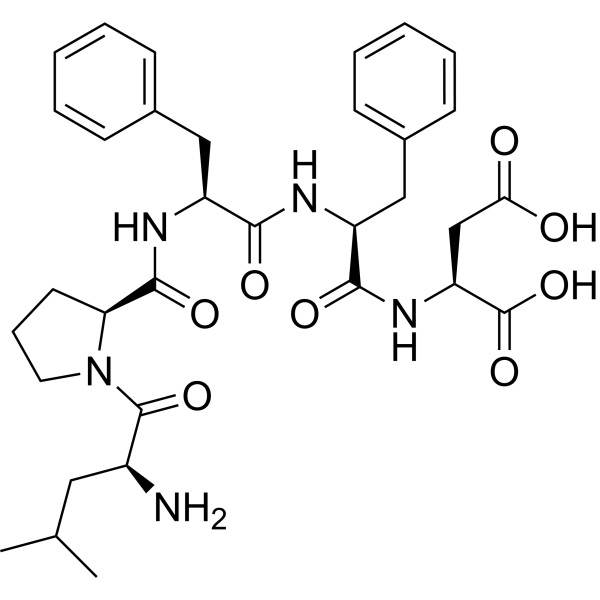
β-Sheet Breaker Peptide iAβ5 ([Pro18, Asp21] β-Amyloid (17-21)) is an amyloid fibril disaggregation inducer. β-Sheet Breaker Peptide iAβ5 inhibits fibril formation and disaggregates preformed fibrils by binding to the central hydrophobic region of Aβ (LVFFA) and disrupting the interactions between Aβ monomers/oligomers. β-Sheet Breaker Peptide iAβ5 reproducibly induces the disaggregation of fibrillar amyloid deposits in rat brain. β-Sheet Breaker Peptide iAβ5 prevents and reverses Aβ-induced neuronal shrinkage, reduces IL-1β-positive microglia surrounding Aβ deposits, and decreases the size of cerebral amyloid plaques. β-Sheet Breaker Peptide iAβ5 labeled with HBA enables blue quantitative detection under acidic conditions. β-Sheet Breaker Peptide iAβ5 is used in research related to Alzheimer's disease .
loading...
    loading...
Cat. No.: HY-P992201
Synonyms: CL1-R2
Anti-CD160 Antibody (MAT 302) (CL1-R2) is a human monoclonal antibody targeting CD160. Anti-CD160 Antibody (MAT 302) blocks the CD160-HVEM protein interaction, inhibits FGF2-mediated renal tubular vascular growth, and induces endothelial cell apoptosis. Anti-CD160 Antibody (MAT 302) targets CD160 on neovascularization to exert anti-angiogenic and vascular normalization effects, trigger the production of IFN-γ, TNF and IL-6 by NK cells, and enhance glucose metabolism of NK cells through the AKT/mTOR/s6k signaling pathway. Anti-CD160 Antibody (MAT 302) reduces vascular density, normalizes remaining tumor blood vessels, and inhibits tumor growth in melanoma-bearing mice. Anti-CD160 Antibody (MAT 302) can be used in research related to neovascularization, proliferative diabetic retinopathy, and melanoma .
loading...
    loading...
Cat. No.: HY-L934
122 compounds

CRBN, namely cereblon, is the substrate recognition subunit of the E3 ubiquitin ligase complex in the ubiquitin-proteasome system. A CRBN ligand library refers to a collection of numerous fragments that can specifically bind to the CRBN protein.

These ligands are mostly designed based on validated CRBN-binding warheads and modified through AI-driven molecular generation optimization systems. They not only include classic lenalidomide-derived structures but also cover novel non-lenalidomide scaffolds. After drug-likeness filtering, these ligands exhibit structural diversity and favorable druggable properties. They can be further optimized and modified to facilitate the development of novel molecular glue degraders, accelerate the discovery of molecular glues that induce interactions between CRBN and new substrate proteins, and enable the exploration of novel CRBN substrates for identifying previously unknown CRBN-binding proteins.

MCE compiles 122 fragments that can specifically bind to the CRBN protein, with molecular weights ranging from 200 to 500. Compounds developed based on the library ligands target multiple disease targets such as cancer and autoimmune diseases, further advancing the development of Molecular Glues and PROTACs therapeutic agents.

Cat. No.: HY-L081
185 compounds

Protein phosphorylation is a key post-translational modification underlying the regulation of many cellular processes. Phosphatases and kinases contribute to the regulation of protein phosphorylation homeostasis in the cell. This reversible regulation of protein phosphorylation is critical for the proper control of a wide range of cellular activities, including cell cycle, proliferation and differentiation, metabolism, cell-cell interactions, etc.

Protein phosphatases have evolved in separate families that are structurally and mechanistically distinct. Based on substrate specificity and functional diversity, protein phosphatases are classified into two superfamilies: Protein serine/threonine phosphatases and Protein tyrosine phosphatases. Ser/Thr phosphatases are metalloenzymes belonging to two major gene families termed PPP (phosphoprotein phosphatase) and PPM (metal-dependent protein phosphatases), whereas protein tyrosine phosphatases (PTPs) belong to distinct classes of enzymes that utilize a phospho-cysteine enzyme intermediate as a part of their catalytic action.

MCE supplies a unique collection of 185 phosphatase inhibitors that mainly targeting protein tyrosine phosphatases (PTPs) and serine/threonine-specific protein phosphatases. MCE Phosphatase Inhibitor Library is a useful tool for phosphatase drug discovery and related research.

loading...
    loading...
Cat. No.: HY-181727
Research Areas:  

Cancer

AR/AR-V7 degrader-1 is an orally active AR and AR-V7 degrader. AR/AR-V7 degrader-1 disrupts the interaction between AR/AR-V7 and HSP90, leading to their ubiquitination and degradation in castration-resistant prostate cancer cells. AR/AR-V7 degrader-1 regulates the expression of cell cycle-related proteins in prostate cancer cells (downregulates CDK4, CDK6, Cyclin D1, Cyclin E1; upregulates P21) and induces G0/G1 phase arrest. AR/AR-V7 degrader-1 inhibits the proliferation and migration of prostate cancer cells. AR/AR-V7 degrader-1 suppresses the growth of castration-resistant prostate cancer tumors in nude mice and induces the degradation of AR and AR-V7 in tumor tissues. AR/AR-V7 degrader-1 is applicable to the research of castration-resistant prostate cancer .
loading...
    loading...

