317 Results for "

ternary complexes

" in MedChemExpress (MCE) Product Catalog:
Products (317)

317 Results for "ternary complexes" in MCE Product Catalog:

Cat. No.: HY-161250
Research Areas:  

Cancer

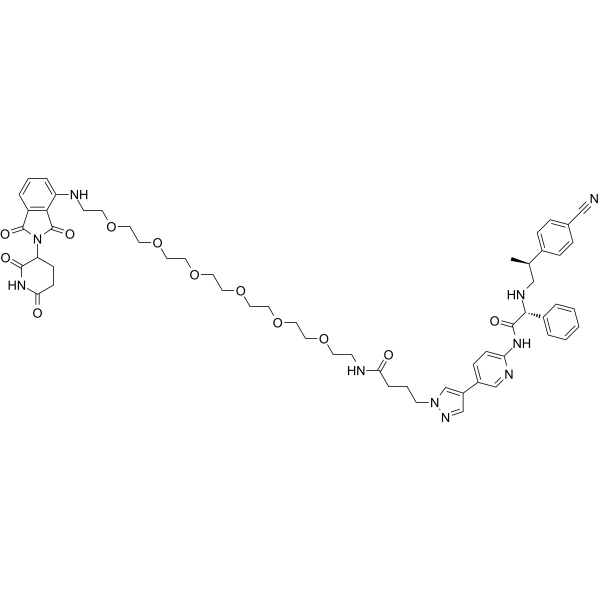
Pomalidomide-NH-PEG6-amide-C2-CPI-1612 is a CBP/EP300 PROTAC degrader with a DC50 value of 1.3 μM. Pomalidomide-NH-PEG6-amide-C2-CPI-1612 mediates the formation of a ternary complex between CRBN and the core of CBP, with an EC50 of 1.2 μM. Pomalidomide-NH-PEG6-amide-C2-CPI-1612 inhibits cancer cell growth and exhibits cell line-specific degradation activity. Pomalidomide-NH-PEG6-amide-C2-CPI-1612 can be used in research related to multiple myeloma and leukemia .
loading...
    loading...
Cat. No.: HY-164924
CAS No.: 3026007-23-5
Research Areas:  

Cancer

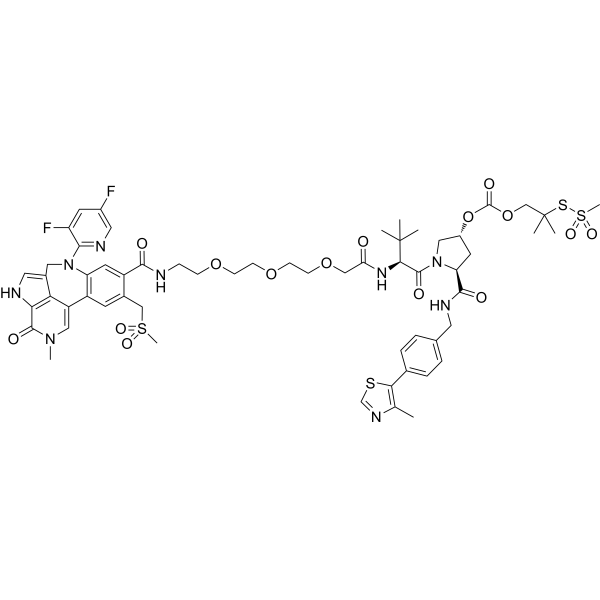
ERD-12310A is an orally active ERα PROTAC degrader, with a Ki value of 0.95 nM against human ERα and a DC50 of 47 pM for ERα in MCF-7 cells. ERD-12310A forms a ternary complex with ERα and the CRBN E3 ubiquitin ligase, thereby inducing ubiquitination and proteasomal degradation of wild-type and ESR1 Y537S mutant ERα. ERD-12310A induces tumor regression in ER+ breast cancer xenografts and inhibits tumor growth in ESR1 Y537S mutant breast cancer xenografts. ERD-12310A can be used in studies related to ER-positive breast cancer and ESR1-mutant breast cancer .
loading...
    loading...
Cat. No.: HY-169279
Research Areas:  

Cancer

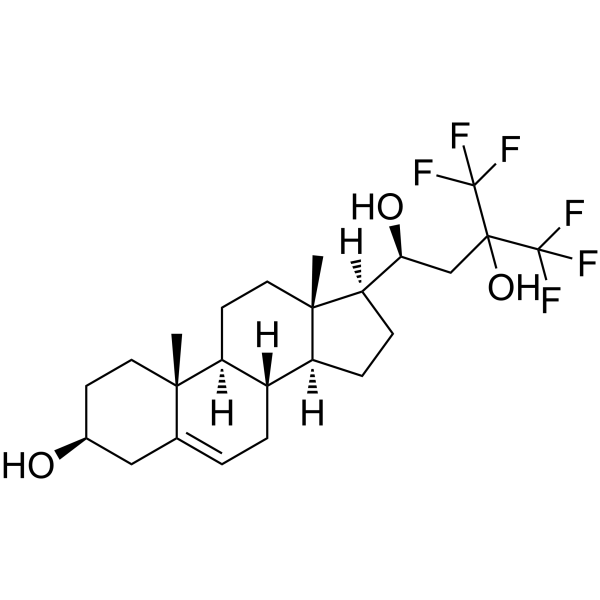
PROTAC PXR degrader-1 is a PROTAC degrader targeting PXR, with a DC50 value of 49.8 nM in SNU-C4 3xFLAG-PXR KI cells. PROTAC PXR degrader-1 exhibits selectivity towards CAR, VDR, FXR, LXRα and LXRβ. PROTAC PXR degrader-1 induces the formation of a ternary complex with PXR and VHL, triggering proteasomal degradation of PXR. PROTAC PXR degrader-1 reduces both agonist-induced and basal PXR-mediated CYP3A4 promoter activation, and decreases the expression of endogenous CYP3A4 gene in cancer cells. PROTAC PXR degrader-1 enhances the cytotoxic effect of paclitaxel on cancer cells. PROTAC PXR degrader-1 can be used for the research of colorectal cancer .
loading...
    loading...
Cat. No.: HY-173351
CAS No.: 2901806-51-5
Research Areas:  

Cancer

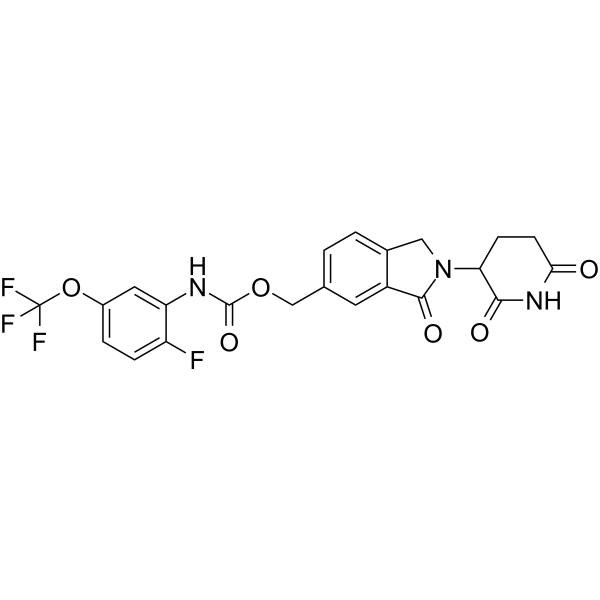
G-6599 is a covalent molecular glue degrader targeting SMARCA2/SMARCA4, with DC50 values of 0.017 nM and 0.057 nM against SMARCA2 and SMARCA4 in SW1573 cells, respectively. G-6599 exhibits proteome selectivity for SMARCA2, SMARCA4, and PBRM1. G-6599 induces the assembly of the SMARCA2-FBXO22 ternary complex, enabling ubiquitination and proteasomal degradation of both proteins via the ubiquitin-proteasome pathway without the need for biotransformation. G-6599 shows antiproliferative effects in relevant cancer cell models. G-6599 can be used for research on androgen-dependent prostate cancer and SMARCA4-mutant non-small cell lung cancer .
loading...
    loading...
Cat. No.: HY-173679
CAS No.: 2569517-30-0
Research Areas:  

Infection Cancer

RBN012811 is a highly selective PROTAC-based PARP14 degrader. RBN012811 forms a ternary complex with cereblon by binding to the NAD + site of PARP14, and mediates the specific degradation of PARP14 via the ubiquitin-proteasome pathway (IC50=10 nM). RBN012811 effectively depletes endogenous PARP14 in various cell lines and primary human macrophages, thereby downregulating IL-10 production and IFN-β mRNA levels, increasing phosphorylated STAT1 levels to enhance inflammatory signaling, and inhibiting interferon-induced ADPr condensate formation. RBN012811 also modulates viral replication, exhibiting increased HSV1 replication while reducing VSV replication. RBN012811 has important application value in research related to cancer and viral infections .
loading...
    loading...
Cat. No.: HY-183826
CAS No.: 2841473-91-2
Target:  

Autophagy

Research Areas:  

Infection Cancer

ATG5 PPI-IN-4 is an autophagy inhibitor targeting ATG5, with an IC50 of 12.78 μM against ATG5-ATG16L1 and an IC50 of 12.00 μM against ATG5-TECAIR. ATG5 PPI-IN-4 blocks the protein interactions between ATG5 and ATG16L1, as well as between ATG5 and TECAIR, disrupts the assembly of the ATG12-ATG5-ATG16L1 ternary complex, inhibits the lipidation modification of LC3/ATG8, and ultimately downregulates cellular autophagy levels. ATG5 PPI-IN-4 can be used in autophagy-related research, such as studies on infection and cancer .
loading...
    loading...
Cat. No.: HY-184389
Research Areas:  

Inflammation/Immunology

PROTAC HDAC6 degrader 10 is a highly efficient, safe and selective HDAC6 PROTAC degrader with a pIC50 of 8.75 and a pDC50 of 9.2 in BEAS-2B cells. PROTAC HDAC6 degrader 10 recruits cereblon to form a ternary complex with HDAC6, thereby achieving the degradation of HDAC6. PROTAC HDAC6 degrader 10 significantly induces hyperacetylation of α-tubulin without affecting the acetylation of H3, and achieves sustained HDAC6 knockdown in mouse lung tissues. PROTAC HDAC6 degrader 10 exhibits high bioavailability after subcutaneous administration in mice. PROTAC HDAC6 degrader 10 enables the study of HDAC6 pharmacology via chemical knockdown of HDAC6 in vitro and in vivo, and can be used for research on pulmonary diseases .
loading...
    loading...
Cat. No.: HY-187168
CAS No.: 2407654-72-0
Research Areas:  

Cancer

KAT2A degrader-1 is a molecular glue degrader targeting KAT2A, with a DC50 of 89 nM in Kelly cells. KAT2A degrader-1 recruits KAT2A to cereblon (CRBN) in a degron-independent manner, forms a ternary complex with KAT2A and CRBN, and drives the polyubiquitination and proteasome-dependent degradation of KAT2A. KAT2A degrader-1 reduces the level of histone H3 lysine 9 acetylation (H3K9Ac). KAT2A degrader-1 induces antiproliferative effects in acute myeloid leukemia cells, while enhancing KAT2A-CRBN dimerization activity and eliminating the targeting effect on GSPT1. KAT2A degrader-1 can be used for research related to acute myeloid leukemia .
loading...
    loading...
Cat. No.: HY-187810
Synonyms: LC-04-118
Research Areas:  

Cancer

dWBP4-1 (LC-04-118) is a CRBN-dependent molecular glue degrader targeting WBP4. dWBP4-1 binds to the IMiD site of CRBN via its glutarimide ring, induces the formation of the CRBN-WBP4 ternary complex (EC50 = 224 nM), and mediates the rapid degradation of WBP4 through the G-loop dependent ubiquitin-proteasome pathway, a process that can be rescued by MLN4924 (HY-70062), Lenalidomide (HY-A0003) or Bortezomib (HY-10227). dWBP4-1 causes almost no perturbation at the transcriptome and alternative splicing levels, exhibits no obvious cytotoxicity, and produces no hook effect. dWBP4-1 can be used for the construction of chemical genetic protein degradation platforms and research related to acute T-lymphoblastic leukemia .
loading...
    loading...
Cat. No.: HY-208742
CAS No.: 2414418-56-5
ZNL-02-096 is a selective Wee1 PROTAC degrader. ZNL-02-096 binds to CRBN and Wee1 to form a ternary complex, inducing CRBN- and proteasome-dependent ubiquitination and proteasomal degradation of Wee1. ZNL-02-096 inhibits recombinant PLK1 with an IC50 of 102 nM, but does not induce its degradation in cells. ZNL-02-096 induces G2/M phase arrest, Apoptosis, transient integrated stress response, upregulation of ATF4, and phosphorylation of GCN2. ZNL-02-096 reduces Tyr15 phosphorylation of CDK1. ZNL-02-096 can be used in research related to ovarian cancer, acute lymphoblastic leukemia, triple-negative breast cancer, multiple myeloma, and pancreatic ductal adenocarcinoma .
loading...
    loading...
Cat. No.: HY-138632
CAS No.: 2417370-42-2
Purity:  98.23%
PROTAC BRD4 Degrader linker conjugate is a linker-payload conjugate as well as a bifunctional degrader of BRD4 that binds to VHL, consisting of PROTAC and a linker. PROTAC BRD4 Degrader linker conjugate can be conjugated with STEAP1 and CLL1 antibodies to degrade BRD4 protein, with DC50 values of 0.86 nM and 7.6 nM, respectively. PROTAC BRD4 Degrader linker conjugate can be used in research related to prostate cancer and acute myeloid leukemia (BRD4 ligand: (HY-129939); VHL ligand: (HY-125845)) .\n


loading...
    loading...
Cat. No.: HY-107194
CAS No.: 102586-30-1
Purity:  99.07%
NSC12 is an orally active pan-FGF trap. NSC12 inhibits the interaction between FGF2/FGFR. NSC12 suppresses the phosphorylation of FGFR3. NSC12 reduces c-Myc levels, induces DNA damage, triggers the cleavage of Caspase 3, and promotes ROS production. NSC12 exhibits anticancer activity against lung cancer and multiple myeloma .
loading...
    loading...
Cat. No.: HY-189352
Target:  

PROTACs RIP kinase

Research Areas:  

Cancer

LD5095 is a potent and orally active RIPK1 PROTAC degrader with a DC50 of 1.4 nM. LD5095 induces ubiquitination and degradation of RIPK1 target protein by recruiting Cereblon E3 ligase. LD5095 can be used for leukemia research .
loading...
    loading...
Cat. No.: HY-153356
CAS No.: 2803881-11-8
Purity:  99.91%
MRT-2359 is an orally active and selective GSPT1 molecular glue degrader, with a DC50 of 5 nM. MRT-2359 induces CRBN/GSPT1 ternary complex formation to drive CRBN- and degron-dependent proteasomal GSPT1 degradation, with selectivity for wild-type GSPT1 over the GSPT1G575N mutant. MRT-2359 disrupts protein translation, induces ribosome stalling, downregulates MYC family proteins and their transcriptional output, reduces proliferation, and induces apoptosis in cancer cells. MRT-2359 can be used for the research of non-small cell lung cancer (NSCLC), small cell lung cancer (SCLC), neuroendocrine lung cancer, high grade neuroendocrine cancers, diffuse large B-cell lymphoma, prostate cancer, and MYC-driven solid tumors .
loading...
    loading...
Cat. No.: HY-158429
CAS No.: 2836297-26-6
Research Areas:  

Cancer

PROTAC CYP1B1 degrader-2 is a CYP1B1 PROTAC degrader with a DC50 of approximately 0.1 nM. PROTAC CYP1B1 degrader-2 induces ubiquitination and proteasomal degradation of CYP1B1, and forms a ternary complex with VHL ubiquitin ligase and CYP1B1. PROTAC CYP1B1 degrader-2 inhibits P-gp. PROTAC CYP1B1 degrader-2 inhibits FAK/SRC. PROTAC CYP1B1 degrader-2 exhibits anticancer activity against paclitaxel (HY-B0015)-resistant non-small cell lung cancer. PROTAC CYP1B1 degrader-2 can be used in studies related to non-small cell lung cancer .
loading...
    loading...
Cat. No.: HY-172767
Target:  

PROTACs STAT Apoptosis

Research Areas:  

Cancer

STAT3-D11-PROTAC-VHL (Compound D11-PROTAC) is a PROTAC degrader targeting Signal Transducer and Activator of Transcription 3 (STAT3). STAT3-D11-PROTAC-VHL exhibits anti-tumor activity with IC50 values of 1335 nM and 1973 nM against HeLa and MCF-7 cells, respectively. STAT3-D11-PROTAC-VHL binds to the DNA-binding domain of STAT3 and recruits the E3 ligase VHL to form a ternary complex, leading to the ubiquitination of STAT3 and subsequent degradation by the proteasome. STAT3-D11-PROTAC-VHL also inhibits tumor cell growth, induces cell cycle arrest and apoptosis, and suppresses tumor immune evasion .
loading...
    loading...
Cat. No.: HY-175834
CAS No.: 3113779-38-4
DNA/TOP2A-IN-1 is an inhibitor of DNA and TOP2A. DNA/TOP2A-IN-1 selectively binds to TOP2A, not TOP2B, and interacts with DNA and TOP2A to form a stable DM1-TOP2A-DNA ternary complex. DNA/TOP2A-IN-1 induces DNA damage, increases reactive oxygen species (ROS) and triggers apoptosis in triple-negative breast cancer (TNBC) cells. DNA/TOP2A-IN-1 disrupts microtubule distribution and induces cell cycle arrest. DNA/TOP2A-IN-1 shows strong antiproliferative activity and inhibits cell migration. DNA/TOP2A-IN-1 inhibits tumor growth and can be used for TNBC research .
loading...
    loading...
Cat. No.: HY-178122
THNAN69 is a PROTAC degrader targeting LIMK2, which efficiently degrades ectopically expressed EGFP-LIMK2 in live HuCCT1 cells with a DC50 of 1 nM. THNAN69 induces isoform-specific ubiquitin-mediated degradation of LIMK2 by recruiting the CRBN E3 ligase, forming a stable ternary complex with LIMK2 and CRBN; this degradation process depends on the activity of cullin-RING ligase. THNAN69 does not reduce phosphorylated cofilin levels, as LIMK1 can compensate for the loss of LIMK2; it also stimulates compensatory activation of the Rho signaling pathway including PAK1/2 and ROCK1/2. THNAN69 serves as a selective chemical probe for dissecting the LIMK2 isoform-dependent biological mechanisms. THNAN69 can be used in the research of cholangiocellular carcinoma and acute lymphoblastic leukemia .
loading...
    loading...
Cat. No.: HY-179424
CAS No.: 3095636-64-6
PROTAC HIF-1α degrader-2 is a highly efficient and selective PROTAC degrader targeting HIF-1α. PROTAC HIF-1α degrader-2 promotes HIF-1α degradation via the ubiquitin-proteasome pathway by facilitating the formation of a HIF-1α/VHL ternary complex. PROTAC HIF-1α degrader-2 inhibits HeLa cell proliferation, migration, and colony formation, and induces apoptosis. PROTAC HIF-1α degrader-2 reduces p-MEK and p-AKT expression in the MAPK and PI3K/AKT pathways. PROTAC HIF-1α degrader-2 can be used for the study of cervical cancer .
loading...
    loading...
Cat. No.: HY-181532
Research Areas:  

Cancer

IAP ligand 8 is an ASX-series, non-peptidic SMAC mimetic and IAP binder with high cell permeability. IAP ligand 8 selectively targets cIAP1-BIR3, XIAP-BIR2 (with a KD of 15.8 nM for both). IAP ligand 8 serves as an IAP ligand moiety to synthesize IAP-recruiting protein degrader (IPD) (HY-181590). This IPD simultaneously forms two ternary complexes, cIAP1-A538-TEAD1 and XIAP-A538-TEAD1, and efficiently degrades TEAD1 via a dual E3 recruitment mechanism, while inducing the autodegradation of cIAP1. IAP ligand 8 and its series of degraders are applicable to targeted research on Hippo pathway-dysregulated cancers such as NF2-mutant mesothelioma .
loading...
    loading...

