353 Results for "

MSPE-GC-MS/MS method

" in MedChemExpress (MCE) Product Catalog:
Products (353)

353 Results for "MSPE-GC-MS/MS method" in MCE Product Catalog:

Cat. No.: HY-167822
CAS No.: 1531600-36-8
Target:  

iGluR GABA Receptor

Research Areas:  

Neurological Disease

Caramboxin is a phenylalanine-like α-amino acid neurotoxin found in star fruit (Averrhoa carambola) with glutamatergic ionotropic action. Caramboxin activates NMDA, AMPA, and kainate receptors while inhibiting GABA binding to synaptic membranes, shifting the CNS toward an excitatory state and exerting neurotoxic effects linked to star fruit ingestion. Caramboxin can be used for research on neurotoxicity and as a reference standard for toxicological studies .
loading...
    loading...
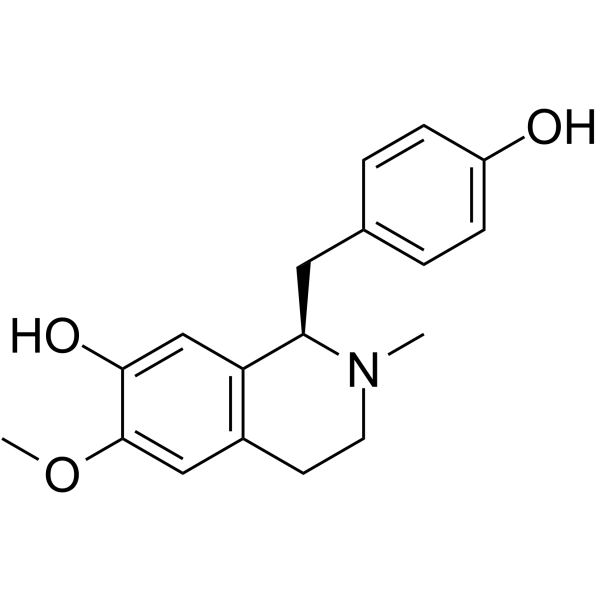
Cat. No.: HY-N7717
CAS No.: 5096-70-8
Synonyms: (–)-(1R)-N-methylcoclaurine
(-)-N-methylcoclaurine ((-)-(1R)-N-methylcoclaurine) is a benzylisoquinoline alkaloid and melanogenesis inhibitor with an IC50 of 6.5 μM that can be found in the flower buds of Nelumbo nucifera. (-)-N-methylcoclaurine inhibits theophylline-stimulated melanogenesis in melanoma cells. (-)-N-methylcoclaurine can be used for the research of skin hyperpigmentation disorders .
loading...
    loading...
Cat. No.: HY-184634
OA Coated Fe3O4 Nanoparticles (Oleic acid-modified iron(III) oxide nanoparticles) were prepared using a high-temperature pyrolysis method. Oleic acid was added as a surfactant to a solution containing an iron precursor. Oleic acid not only helps control the growth of nanoparticles but also forms a stable coating on the particle surface. The solution containing the iron precursor and oleic acid was heated to a high temperature, typically around 300°C, to promote the thermal decomposition of the iron precursor. At high temperatures, the iron precursor decomposes to produce iron atoms, which aggregate to form magnetic nanoparticles. During pyrolysis, the iron nanoparticles react with oxygen in the air to form iron(III) oxide (Fe3O4).
loading...
    loading...
Cat. No.: HY-L0115V
10,091 compounds

ASINEX has elaborated a library of diverse macrocycles using an effective tool box of synthetic methods. The resulting scaffolds are novel, tremendously diverse, medchem-relevant, macrocyclic frameworks.

Macrocyles tend to be larger than traditional screening molecules which make them perfect discovery tools for targets with shallow or extended binding sites. At the same time, their unique character based on restricted flexibility and ability to form intra-molecular hydrogen bonds allows for design approaches effectively optimizing properties such asaqueous solubility and membrane permeability. Many of these macrocycles have been tested for aqueous and DMSO solubility with cut-offs applied at 10 mM in DMSO and 50 µM in PBS (pH 7.4) followed by PAMPA permeability assay.

Cat. No.: HY-B1543
CAS No.: 7654-03-7
Synonyms: Benmoxine; Nerusil; Neuralex
Target:  

Monoamine Oxidase

Research Areas:  

Neurological Disease

Benmoxin is a monoamine oxidase (MAO) inhibitor. Benmoxin is used in depression research .
loading...
    loading...
Cat. No.: HY-N21774
CAS No.: 302345-19-3
Flakinin A is a sesquiterpene and anticancer agent. Flakinin A can be isolated from the whole plant of Dendrobium Snowflake 'Red Star'. Flakinin A exhibits anticancer activity against leukemia. Flakinin A can be used for research on leukemia .
loading...
    loading...
Cat. No.: HY-117845
CAS No.: 122535-63-1
Synonyms: LL-E19085α
Citreamicin alpha (LL-E 19085-alpha) is an antibiotic whose in vitro antimicrobial activity against 429 clinical isolates of Gram-positive cocci has been tested by the agar dilution method. These microorganisms included 313 strains of Staphylococci and 116 strains of Streptococci. The in vitro activity of Citreamicin alpha was compared with that of ampicillin, amoxicillin, ceftriaxone, erythromycin, and vancomycin. For Staphylococci, the MIC values of Citreamicin alpha ranged from 0.12-4.0 μg/ml, and for Streptococcus pyogenes of the genus Streptococcus, it was 0.03-0.12 μg/ml. However, enterococci were relatively resistant, requiring 2.0 μg/ml of the agent to inhibit 64% of the 62 tested strains. The in vitro activity of this antibiotic was much better than that of ampicillin, amoxicillin, ceftriaxone, and erythromycin, but comparable or slightly inferior to that of vancomycin.
loading...
    loading...
Cat. No.: HY-135752
CAS No.: 99827-19-7
Target:  

Bacterial

Research Areas:  

Infection

Carbendazim mixture with flusilazole is a fungicide used to control sooty mold caused by Botrytis narcissicola. The disease is the most common foliar disease of daffodils (Narcissus cultivars) in the UK and causes significant losses in bulb and flower production. Carbendazim mixture with flusilazole was found to be effective in reducing lesion size and significantly reducing symptoms of secondary sooty mold after spraying when used in combination with several other fungicides. In field trials in Cambridgeshire and Lincolnshire, a spraying program using this fungicide mixture was effective in controlling sooty mold. In addition, alternating four to six sprays using two or three fungicides with different modes of action not only reduced disease damage but also increased bulb production. The study discusses the selection of appropriate fungicides and control methods that may reduce the number of spraying applications.
loading...
    loading...
Cat. No.: HY-N1442R
CAS No.: 633-96-5
Synonyms: Orange II (Standard); D&C Orange NO. 4 (Standard)
Acid orange 7 (Standard) is the analytical standard of Acid orange 7 (HY-1442). This product is intended for research and analytical applications. Acid Orange 7 (Orange II; D&C Orange NO. 4) is an azo dye widely used in the textile, food and cosmetic industries. Acid Orange 7 is mainly used as a colorant by combining with fibers and other substances through azo bonds. Acid Orange 7 has a maximum absorption wavelength at 484-485 nm, and the concentration is measured using a UV-visible spectrophotometer. Acid Orange 7 is difficult to degrade and has a certain degree of toxicity. Acid Orange 7 is often used to study various sewage treatment technologies and photocatalytic degradation reactions, and to evaluate the removal effects of different treatment methods on organic pollutants .
loading...
    loading...
Cat. No.: HY-W750212
CAS No.: 2734676-29-8
Synonyms: Orange II-13C6; D&C Orange NO. 4-13C6
Acid Orange 7- 13C6 (Orange II- 13C6) is the 13C-labeled Acid orange 7 (HY-N1442). Acid Orange 7 (Orange II; D&C Orange NO. 4) is an azo dye widely used in the textile, food and cosmetic industries. Acid Orange 7 is mainly used as a colorant by combining with fibers and other substances through azo bonds. Acid Orange 7 has a maximum absorption wavelength at 484-485 nm, and the concentration is measured using a UV-visible spectrophotometer. Acid Orange 7 is difficult to degrade and has a certain degree of toxicity. It is often used to study various sewage treatment technologies and photocatalytic degradation reactions, and to evaluate the removal effects of different treatment methods on organic pollutants .
loading...
    loading...
Cat. No.: HY-Y1219C
CAS No.: 112926-00-8
Silica gel, high-purity grade, 220-440 mesh is a low-density, high-surface-area, high-purity inert additive that can be used to prepare chromatographic column sieve plates based on the sol-gel method. Silica gel, high-purity grade prevents DNA degradation by absorbing water from plant leaves, and is suitable for the preservation of field-collected samples for subsequent DNA extraction, restriction endonuclease digestion, PCR amplification and gene sequencing. It can also be reused after being saturated with water. Silica gel, high-purity grade can provide a non-toxic, inert aquatic environment for embedded cells, allowing nutrients, oxygen and metabolic waste to diffuse freely and blocking external pollution, thereby maintaining the activity of fibroblasts and epithelial cells .
loading...
    loading...
Cat. No.: HY-Y1219D
CAS No.: 112926-00-8
Silica gel, high-purity grade, 35-70 mesh is a low-density, high-surface-area, high-purity inert additive that can be used to prepare chromatographic column sieve plates based on the sol-gel method. Silica gel, high-purity grade prevents DNA degradation by absorbing water from plant leaves, and is suitable for the preservation of field-collected samples for subsequent DNA extraction, restriction endonuclease digestion, PCR amplification and gene sequencing. It can also be reused after being saturated with water. Silica gel, high-purity grade can provide a non-toxic, inert aquatic environment for embedded cells, allowing nutrients, oxygen and metabolic waste to diffuse freely and blocking external pollution, thereby maintaining the activity of fibroblasts and epithelial cells .
loading...
    loading...
Cat. No.: HY-Y1219E
CAS No.: 112926-00-8
Silica gel, high-purity grade, 130-270 mesh is a low-density, high-surface-area, high-purity inert additive that can be used to prepare chromatographic column sieve plates based on the sol-gel method. Silica gel, high-purity grade prevents DNA degradation by absorbing water from plant leaves, and is suitable for the preservation of field-collected samples for subsequent DNA extraction, restriction endonuclease digestion, PCR amplification and gene sequencing. It can also be reused after being saturated with water. Silica gel, high-purity grade can provide a non-toxic, inert aquatic environment for embedded cells, allowing nutrients, oxygen and metabolic waste to diffuse freely and blocking external pollution, thereby maintaining the activity of fibroblasts and epithelial cells .
loading...
    loading...
Cat. No.: HY-Y1219H
CAS No.: 112926-00-8
Silica gel, high-purity grade, 200-400 mesh is a low-density, high-surface-area, high-purity inert additive that can be used to prepare chromatographic column sieve plates based on the sol-gel method. Silica gel, high-purity grade prevents DNA degradation by absorbing water from plant leaves, and is suitable for the preservation of field-collected samples for subsequent DNA extraction, restriction endonuclease digestion, PCR amplification and gene sequencing. It can also be reused after being saturated with water. Silica gel, high-purity grade can provide a non-toxic, inert aquatic environment for embedded cells, allowing nutrients, oxygen and metabolic waste to diffuse freely and blocking external pollution, thereby maintaining the activity of fibroblasts and epithelial cells .
loading...
    loading...
Cat. No.: HY-Y1219I
CAS No.: 112926-00-8
Silica gel, high-purity grade, 70-230 mesh is a low-density, high-surface-area, high-purity inert additive that can be used to prepare chromatographic column sieve plates based on the sol-gel method. Silica gel, high-purity grade prevents DNA degradation by absorbing water from plant leaves, and is suitable for the preservation of field-collected samples for subsequent DNA extraction, restriction endonuclease digestion, PCR amplification and gene sequencing. It can also be reused after being saturated with water. Silica gel, high-purity grade can provide a non-toxic, inert aquatic environment for embedded cells, allowing nutrients, oxygen and metabolic waste to diffuse freely and blocking external pollution, thereby maintaining the activity of fibroblasts and epithelial cells .
loading...
    loading...
Cat. No.: HY-L198
140 compounds

Unlike the 20 natural amino acids commonly found within living organisms, non-natural amino acids are synthesized through chemical or biosynthetic methods, thereby being endowed with unique chemical properties or biological activities. In drug development, these amino acids can be utilized to design novel pharmaceutical molecules that may exhibit superior pharmacological characteristics, such as increased selectivity, improved pharmacokinetic profiles, or reduced toxicity. In biomedical research, uon-natural amino acids can act as biological markers or probes for investigating biological processes like cell signaling, protein conformation, and protein-protein interactions. In addition, non-natural amino acids can also be used in the field of agriculture to develop new pesticides, plant growth regulators and so on.

Cat. No.: HY-116772
CAS No.: 40601-76-1
Purity:  99.39%
Synonyms: Irganox 1790
Research Areas:  

Others

Cyanox CY 1790 (Irganox 1790) is a synthetic phenolic antioxidant. Cyanox CY 1790 is mainly used to protect polyolefin materials such as polypropylene and polyethylene from thermo-oxidative degradation during processing (high temperature) and service .
loading...
    loading...
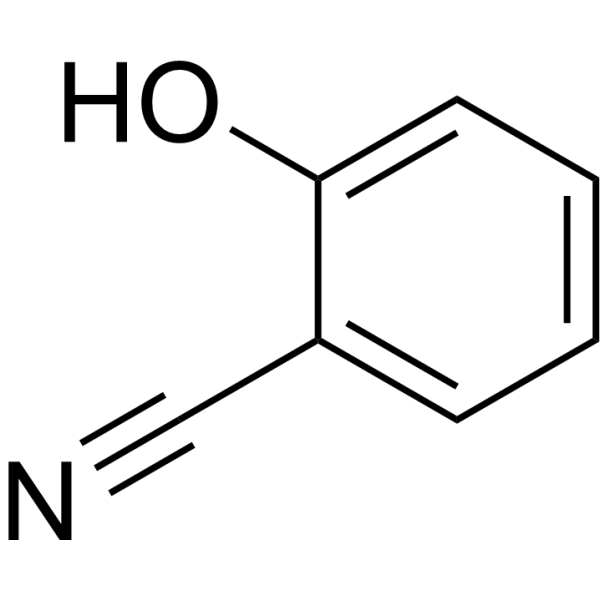
Cat. No.: HY-W012869
CAS No.: 611-20-1
Research Areas:  

Cancer

2-Hydroxybenzonitrile is a biochemical reagent. It serves as a precursor for compounds associated with thromboembolic diseases and for reagents that regulate anti-tumor cytotoxicity .
loading...
    loading...
Cat. No.: HY-W108424
CAS No.: 20711-10-8
Target:  

Insecticide

Research Areas:  

Infection

(Z)-11-Tetradecenyl acetate is a sex pheromone component and male attractant. (Z)-11-Tetradecenyl acetate triggers strong and stable electrophysiological responses in the antennal sensilla of male Euhyponomeutoides albithoracellus. (Z)-11-Tetradecenyl acetate, when used in combination with (E)-11-tetradecenyl acetate (HY-W1067200), attracts male Euhyponomeutoides albithoracellus. (Z)-11-Tetradecenyl acetate contributes to the development of sustainable pest control strategies including monitoring and mating disruption .
loading...
    loading...
Cat. No.: HY-W706725
CAS No.: 2733842-09-4
2-Hydroxybenzonitrile-d4 is the deuterated-labeled 2-Hydroxybenzonitrile (HY-W012869). 2-Hydroxybenzonitrile is a biochemical reagent. It serves as a precursor for compounds associated with thromboembolic diseases and for reagents that regulate anti-tumor cytotoxicity .
loading...
    loading...

