328 Results for "

pathogenicity

" in MedChemExpress (MCE) Product Catalog:
Products (328)

328 Results for "pathogenicity" in MCE Product Catalog:

Cat. No.: HY-147412D
Target:  

Fluorescent Dye

Research Areas:  

Neurological Disease

FAM labled Ultevursen sodiumis a FAM labled Ultevursen sodium (HY-147412A). Ultevursen sodium (QR-421a) is a splice-modulating antisense oligonucleotide targeting exon 13 of the USH2A gene, which restores the functional expression of Usherin protein by inducing exon skipping. Ultevursen sodium binds to USH2A pre-mRNA and modulates the splicing process to specifically skip exon 13 carrying the pathogenic mutation c.2299delG, generating an in-frame transcript and a truncated yet functionally normal protein. Ultevursen sodium exhibits concentration-dependent exon skipping activity in human cells and retinal organoid models, and restores Usherin expression and retinal function in zebrafish and gene-edited mouse models. Ultevursen sodium can be used for related research on type 2 Usher syndrome and non-syndromic retinitis pigmentosa .
loading...
    loading...
Cat. No.: HY-147412E
Target:  

Fluorescent Dye

Research Areas:  

Neurological Disease

Cy3 labled Ultevursen sodium is a Cy3 labled Ultevursen sodium (HY-147412A). Ultevursen sodium (QR-421a) is a splice-modulating antisense oligonucleotide targeting exon 13 of the USH2A gene, which restores the functional expression of Usherin protein by inducing exon skipping. Ultevursen sodium binds to USH2A pre-mRNA and modulates the splicing process to specifically skip exon 13 carrying the pathogenic mutation c.2299delG, generating an in-frame transcript and a truncated yet functionally normal protein. Ultevursen sodium exhibits concentration-dependent exon skipping activity in human cells and retinal organoid models, and restores Usherin expression and retinal function in zebrafish and gene-edited mouse models. Ultevursen sodium can be used for related research on type 2 Usher syndrome and non-syndromic retinitis pigmentosa .
loading...
    loading...
Cat. No.: HY-182788
CAS No.: 3113741-59-3
Research Areas:  

Neurological Disease

Multitarget AD-IN-7 is an orally active multi-target anti-AD compound. Multitarget AD-IN-7 exhibits inhibitory activity against GSK-3β and GSK-3α (IC50 = 0.66, 0.83 nM). Multitarget AD-IN-7 upregulates the expression of p-GSK-3β-Ser9, inhibits the phosphorylation of tau-Ser396, targets 1-42, chelates pathogenic metal ions, scavenges ABTS•+, upregulates the expression of β-catenin and neurogenesis biomarkers, and promotes neurite outgrowth. Multitarget AD-IN-7 improves motor ability in Alzheimer's disease zebrafish. Multitarget AD-IN-7 is applicable to research related to Alzheimer's disease .
loading...
    loading...
Cat. No.: HY-N18656
CAS No.: 90131-48-9
Category:  

Extract

Target:  

Bacterial

Terminalia chebula extract is an extract from the Terminalia chebula tree. Rich in bioactive compounds such as tannins, flavonoids, phenols, and organic acids like gallic acid and ellagic acid, this extract demonstrates a wide range of pharmacological activities. It acts as a natural laxative, supports digestive health, and exhibits potent antioxidant, anti-inflammatory, and antibacterial properties, effectively targeting various pathogenic bacteria, including Helicobacter pylori, Staphylococcus aureus, and Escherichia coli. Terminalia Chebula Extract also shows significant hepatoprotective effects, shielding the liver from damage through antioxidant and anti-inflammatory mechanisms. It has nephroprotective properties, alleviating renal dysfunction and enhancing kidney health by modulating inflammatory pathways. Additionally, the extract demonstrates neuroprotective activity, reducing neuronal damage and improving memory function. It has potential anti-diabetic effects, enhancing glucose uptake and reducing oxidative stress.
loading...
    loading...
Cat. No.: HY-P2977
CAS No.: 9027-60-5
Synonyms: Sialic acid aldolase (CgNal)
N-Acetylneuraminate lyase (CgNal) (Sialic acid aldolase (CgNal)) is a rate-limiting enzyme in bacteria metabolism that catalyzes the reversible aldol cleavage of sialic acid, and it regulates the overall metabolism of the bacterial sialic acid catabolic pathway. N-Acetylneuraminate lyase (CgNal) catalyzes the reversible condensation reaction of pyruvate and N-acetyl-d-mannosamine (ManNAc) to produce sialic acid N-acetylneuraminic acid (Neu5Ac). The protein expression of N-Acetylneuraminate lyase is downregulated at the translational level under the regulation of methyl methanesulfonate, and this change significantly impairs the adhesion and invasion abilities of bacteria to eukaryotic cells. N-Acetylneuraminate lyase is a key virulence-related protein in various pathogenic bacteria and is considered an antibiotic drug target. N-Acetylneuraminate lyase (CgNal) can be used in studies of invasive (extraintestinal) infectious diseases, Crohn's disease, and methicillin-resistant Staphylococcus aureus infections .
loading...
    loading...
Cat. No.: HY-L072
58 compounds

Exosomes are small membrane vesicles of endocytic origin that are secreted by most cells in culture. Exosomes contain nucleic acids, proteins, lipids, amino acids, and metabolites, etc. Their diverse constituents can reflect their cell of origin. Exosomes are associated with immune responses, viral pathogenicity, pregnancy, cardiovascular diseases, central nervous system-related diseases, and cancer progression. Proteins, metabolites, and nucleic acids delivered by exosomes into recipient cells effectively alter their biological response. Such exosome-mediated responses can be disease promoting or restraining.

The biology of exosomes in disease is still emerging, and the number of studies addressing their utility in the diagnosis and treatment of various pathologies has increased substantially. MCE supplies a unique collection of 58 compounds with the activity of inhibiting or stimulating exsomes secretion/biosynthesis. MCE Exosomes Compound Library is a useful tool for exsomes research.

Cat. No.: HY-L172
150 compounds

Immunity refers to the ability of the body to resist the invasion of pathogenic microorganisms and resist a variety of diseases. Immunocompromised will inevitably lead to a series of diseases. Immunopotentiator are a class of compounds that enhance immune function and induce immune response. Immunopotentiator can activate the proliferation and differentiation of one or more kinds of immune active cells in the body, promote the secretion of lymphocytes, and then enhance the immune function of the body. Immunopotentiator are mainly used in the treatment of tumors, infectious diseases and immunodeficiency diseases. In addition, immunopotentiator are often used as adjuvants in combination with vaccine antigens to enhance the immunogenicity of vaccines.

MCE designs a unique collection of 150 compounds with definite or potential Immunopotentiating effect, mainly targeting the NOD-like Receptor (NLR), Toll-like Receptor (TLR), NF-κB, etc. It is an effective tool for development and research of anti-cancer, anti-infectious diseases and anti-immunodeficiency diseases compounds.

Cat. No.: HY-W558657A
CAS No.: 14990-09-1
Target:  

Fungal

Research Areas:  

Infection

Tert-Butyl cinnamate is a tert-butyl cinnamate with antifungal activity and comonomer function, which exhibits an average inhibition rate of 73.0% against phytopathogenic fungi at a concentration of 0.5 mM. Tert-Butyl cinnamate can be used in studies related to phytopathogenic fungal infections .
loading...
    loading...
Cat. No.: HY-W743904
CAS No.: 84-31-1
Quininone is a Quinine (HY-D0143) derivative that exhibits in vitro antifungal activity. Quininone can be used for antifungal research .
loading...
    loading...
Cat. No.: HY-130323
CAS No.: 67597-26-6
Target:  

Bacterial

Research Areas:  

Infection

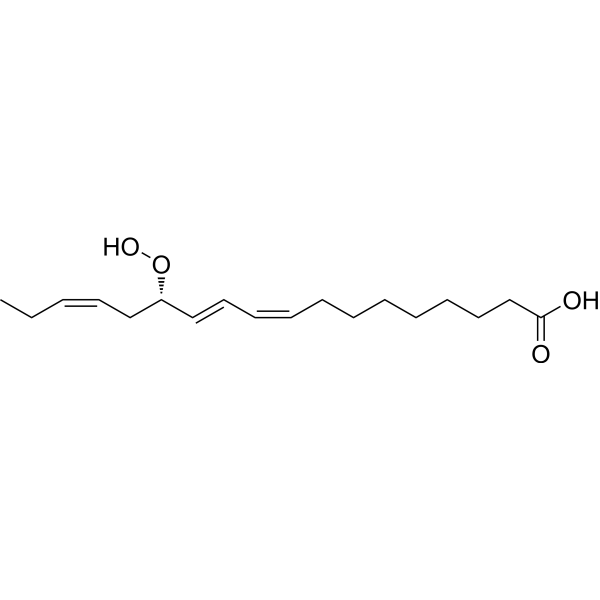
13-HPOT is a linolenic acid hydroperoxide and an antibacterial agent. 13-HPOT interacts with lipid representatives of bacterial inner membranes. 13-HPOT exerts dose-dependent in vitro antibacterial activity against Pectobacterium carotovorum, Pseudomonas syringae pv. syringae DC3000, and Xanthomonas translucens pv. translucens .
loading...
    loading...
Cat. No.: HY-N7368
CAS No.: 55366-56-8
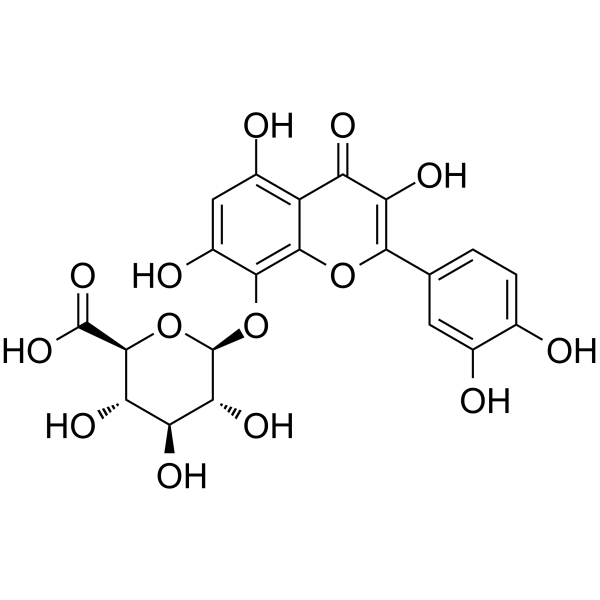
Hibifolin is a flavonol glycoside that can be isolated from Helicteres isora. Hibifolin is an inhibitor of adenosine deaminase (ADA) (Ki = 49.92 μM). Hibifolin protects neurons against β-amyloid-induced neurotoxicity. Hibifolin possesses a potent protective activity against cell death induced by aggregated Aβ. Hibifolin can abolish Aβ-induced caspase-3 and caspase-7 activation. Hibifolin induces Akt phosphorylation in cortical neurons. Hibifolin is also a natural sortase A (SrtA) inhibitor (IC50 = 31.2 μM) through direct binding to SrtA protein. Hibifolin attenuates the pathogenic behavior of Staphylococcus aureus including adhesion, invasion, and biofilm formation. Hibifolin improves the survival of pneumonia induced by Staphylococcus aureus in mouse model and alleviates pathological damage. Hibifolin shows a synergistic antibacterial effect with Cefotaxime (HY-A0088A) .
loading...
    loading...
Cat. No.: HY-P10785
CAS No.: 83785-07-3
Target:  

Bacterial Antibiotic

Research Areas:  

Infection

Iturin A-2 is a cyclic lipopeptide discovered in B. subtilis and exhibits inhibitory activity against the plant pathogenic fungus P. expansum (MIC = 8 µg/disk). Iturin A-2 is cytotoxic to MCF-7 and BT474 breast cancer cells, as well as HeLa cervical cancer cells, with IC50 values of 66.81, 95.04, and 77.5 µg/mL, respectively. In greenhouse studies, Iturin A-2 at concentrations of 100 and 300 mg/kg Iturin A-2 reduces the lesion area of southern corn leaf blight caused by B. maydis, and in field studies, concentrations of 300 and 500 mg/kg Iturin A-2 reduce the incidence of the disease. Iturin A-2 (12.5 µg/mL) inhibits cell division, but not nuclear division, in isolated fertilized starfish eggs .
loading...
    loading...
Cat. No.: HY-L137
124 compounds

Targeted protein degradation(TPD) is a novel and promising approach to new drug discovery and development. It shows great potential for treating diseases with “undruggable” pathogenic protein targets and for overcoming drug resistance. Molecular glues and PROTACs are both targeted protein degraders that have attracted the most attention.

Molecular glues are small molecular degraders that mainly induce novel interaction between an E3 ligase and a target protein to form a ternary complex, leading to protein ubiquitination and subsequent proteasome degradation. Compared with PROTACs, molecular glues generally possess more favorable drug-like properties, such as lower MW, higher cell permeability, and better oral absorption. Molecular glues are emerging as a promising new therapeutic strategy.

MCE supplies a unique collection of 124 molecular glues which target various proteins. MCE Molecular Glue Compound Library is a useful tool to conduct scientific research and disease mechanism study.

Cat. No.: HY-L224
2,478 compounds

Diarrhea is a disease symptom, and the pathophysiologic basis of diarrhea is a disturbance in intestinal water and electrolyte balance, which may be due to increased secretion of osmotically active electrolytes (secretory diarrhea) or increased intake of osmotically active substances (osmotic diarrhea). Food poisoning, pathogenic bacterial infections, and intestinal-related diseases can all contribute to the development of diarrhea. Traditional Chinese Medicine (TCM) considers diarrhea to be a symptom of an imbalance in the body's systems, particularly related to the functions of the spleen and stomach. Spleen qi deficiency, dampness-heat, liver and spleen disharmony are closely related to diarrhea. Many types of Chinese herbs regulate the function of diarrhea, such as: Dysosmae Verspiellis Rhixoma Et Radix, Ginkgo Semen, Forsythiae Fructus, and Campsis Flos.

MCE can provide 2,478 active monomers that can be obtained from TCM herbs with diarrhea-regulating functions, which can be applied to drug development and disease mechanism research.

Cat. No.: HY-184308
CAS No.: 3123321-73-0
Research Areas:  

Infection

Antifungal agent-165 is an antifungal agent with in vitro activity against Rhizoctonia solani. Antifungal agent-165 inhibits catalase (CAT) activity, drives intracellular ROS accumulation, and induces oxidative damage. Antifungal agent-165 disrupts fungal hyphal morphology, compromises cell membrane integrity, and triggers cellular content leakage in Rhizoctonia solani. Antifungal agent-165 can be used for the research of potato black scurf disease .
loading...
    loading...
Cat. No.: HY-N19641
CAS No.: 244182-09-0
Synonyms: Dichlorodiaportin
Dichlorodiaporthin (Dichlorodiaportin) is an isocoumarin metabolite found in cultures of Penicillium nalgiovense. Dichlorodiaporthin acts as an antibacterial agent against various bacterial species .
loading...
    loading...
Cat. No.: HY-N19907
CAS No.: 1374428-43-9
Phomopsinone A is an Antifungal agent. Phomopsinone A is isolated from Phomopsis sp. Phomopsinone A exhibits activity against plant and crop pathogens Pyricularia oryzae, Septoria tritici and Botrytis cinerea. Phomopsinone A can be used in the research of plant/crop fungal diseases .
loading...
    loading...
Cat. No.: HY-N7104
CAS No.: 585-86-4
Synonyms: D-Lactitol
Target:  

Bacterial

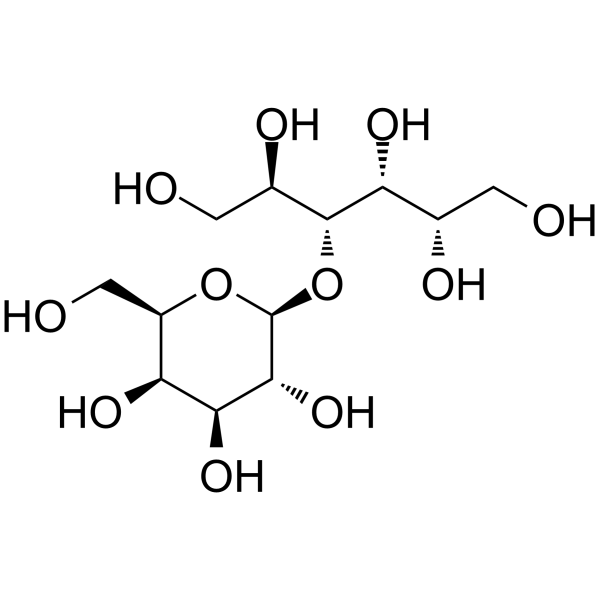
Lactitol (D-Lactitol) is a non-absorbable disaccharide and Bacterial regulator. Lactitol reduces the populations of Bacteroides, Clostridium, coliforms and Eubacterium, while increasing the populations of Lactobacillus and Streptococcus. Lactitol can be used in the research of portosystemic encephalopathy and chronic constipation .
loading...
    loading...
Cat. No.: HY-W011117
CAS No.: 112398-08-0
Research Areas:  

Infection

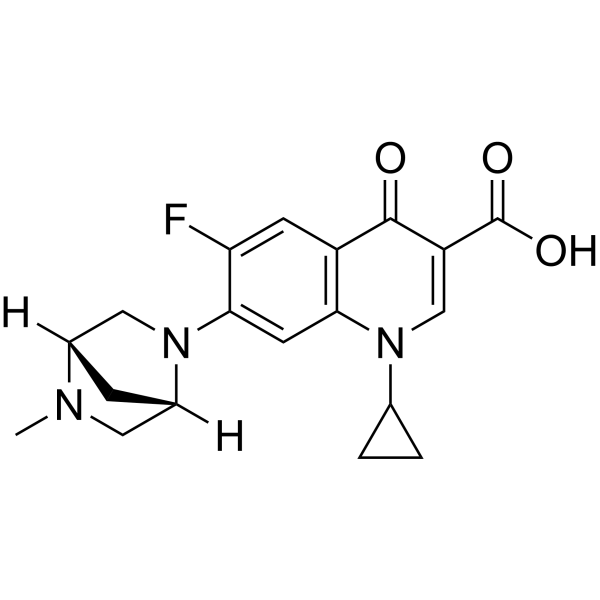
Danofloxacin is an orally active quinolone antibiotic. Danofloxacin targets bacterial DNA gyrase and inhibits bacterial DNA replication, transcription and growth. Danofloxacin can be used for various bacterial infections caused by Escherichia coli, Mycoplasma and other pathogens .
loading...
    loading...
Cat. No.: HY-N7368R
CAS No.: 55366-56-8
Hibifolin (Standard) is the analytical standard of Hibifolin. This product is intended for research and analytical applications. Hibifolin is a flavonol glycoside that can be isolated from Helicteres isora. Hibifolin is an inhibitor of adenosine deaminase (ADA) (Ki = 49.92 μM). Hibifolin protects neurons against β-amyloid-induced neurotoxicity. Hibifolin possesses a potent protective activity against cell death induced by aggregated Aβ. Hibifolin can abolish Aβ-induced caspase-3 and caspase-7 activation. Hibifolin induces Akt phosphorylation in cortical neurons. Hibifolin is also a natural sortase A (SrtA) inhibitor (IC50 = 31.2 μM) through direct binding to SrtA protein. Hibifolin attenuates the pathogenic behavior of Staphylococcus aureus including adhesion, invasion, and biofilm formation. Hibifolin improves the survival of pneumonia induced by Staphylococcus aureus in mouse model and alleviates pathological damage. Hibifolin shows a synergistic antibacterial effect with Cefotaxime (HY-A0088A) .
loading...
    loading...

