356 Results for "

Proline

" in MedChemExpress (MCE) Product Catalog:
Products (356)

356 Results for "Proline" in MCE Product Catalog:

  • Targets Recommended:
Cat. No.: HY-P703253
Purity:  ≥ 90%, as determined by reducing SDS-PAGE.
Synonyms: ARHGEF7; PAK3; Rho Guanine Nucleotide Exchange Factor 7; P50; P85SPR; Rho Guanine Nucleotide Exchange Factor (GEF) 7; COOL1; SH3 Domain-Containing Proline-Rich Protein; PIXB; DKFZp686C12170; P85; DKFZp761K1021; PAK-Interacting Exchange Factor Beta; COOL-1
Species:  
Human
Source:  
E. coli
loading...
    loading...
Cat. No.: HY-P87333
Synonyms: AUTS17 antibody; Cortactin binding protein 1 antibody; Cortactin SH3 domain-binding protein antibody; Cortactin-binding protein 1 antibody; CortBP1 antibody; CTTNBP1 antibody; GKAP/SAPAP interacting protein antibody; GKAP/SAPAP-interacting protein antibody; KIAA1022 antibody; Proline rich synapse associated protein 1 antibody

Host:  

Rabbit

Application:  

WB, IHC-P, IF-Tissue

Reactivity:  

Human, Mouse, Rat

loading...
    loading...
Cat. No.: HY-P811793
Synonyms: ADPRTL1, KIAA0177, PARPL, PARP4, Protein mono-ADP-ribosyltransferase PARP4, 193 kDa vault protein, ADP-ribosyltransferase diphtheria toxin-like 4, PARP-related/IalphaI-related H5/Proline-rich, Poly [ADP-ribose] polymerase 4, Vault poly(ADP-ribose) polymerase, ARTD4, PH5P, PARP-4, VPARP

Host:  

Rabbit

Application:  

WB, IHC-P, ICC/IF, IP, FC

Reactivity:  

Human

loading...
    loading...
Cat. No.: HY-P703327
Purity:  ≥ 90%, as determined by reducing SDS-PAGE.
Synonyms: EGLN1; HPH-2; Prev. C1orf12; Hypoxia-Inducible Factor-Proline Dioxygenase; PHD2; Egl-9 Family Hypoxia-Inducible Factor 1; ZMYND6; Egl Nine Homolog 1 (C. Elegans); HIFPH2; EGL Nine (C.Elegans) Homolog 1; SM-20; HIF Prolyl Hydroxylase 2; Prolyl Hydroxylase
Species:  
Human
Source:  
E. coli
loading...
    loading...
Cat. No.: HY-P705866
Purity:  ≥ 90%, as determined by reducing SDS-PAGE.
Synonyms: PTK2B; Protein-Tyrosine Kinase 2-Beta; Prev. FAK2; Cell Adhesion Kinase Beta; RAFTK; Focal Adhesion Kinase 2; CADTK; CAK-Beta; CAKB; FADK 2; PYK2; PTK2B Protein Tyrosine Kinase 2 Beta; PTK; Protein Kinase B; Calcium-Regulated Non-Receptor Proline-Rich Tyr
Species:  
Human
Source:  
sf9 insect cells
loading...
    loading...
Cat. No.: HY-P705867
Purity:  ≥ 85%, as determined by reducing SDS-PAGE.
Synonyms: PTK2B; Protein-Tyrosine Kinase 2-Beta; Prev. FAK2; Cell Adhesion Kinase Beta; RAFTK; Focal Adhesion Kinase 2; CADTK; CAK-Beta; CAKB; FADK 2; PYK2; PTK2B Protein Tyrosine Kinase 2 Beta; PTK; Protein Kinase B; Calcium-Regulated Non-Receptor Proline-Rich Tyr
Species:  
Human
Source:  
sf9 insect cells
loading...
    loading...
Cat. No.: HY-P706012
Purity:  ≥ 95%, as determined by reducing SDS-PAGE.
Synonyms: EGLN1; HPH-2; Prev. C1orf12; Hypoxia-Inducible Factor-Proline Dioxygenase; PHD2; Egl-9 Family Hypoxia-Inducible Factor 1; ZMYND6; Egl Nine Homolog 1 (C. Elegans); HIFPH2; EGL Nine (C.Elegans) Homolog 1; SM-20; HIF Prolyl Hydroxylase 2; Prolyl Hydroxylase
Species:  
Human
Source:  
E. coli
loading...
    loading...
Cat. No.: HY-P811793A
Synonyms: ADPRTL1, KIAA0177, PARPL, PARP4, Protein mono-ADP-ribosyltransferase PARP4, 193 kDa vault protein, ADP-ribosyltransferase diphtheria toxin-like 4, PARP-related/IalphaI-related H5/Proline-rich, Poly [ADP-ribose] polymerase 4, Vault poly(ADP-ribose) polymerase, ARTD4, PH5P, PARP-4, VPARP

Host:  

Rabbit

Application:  

WB, IHC-P, ICC/IF, IP, FC

Reactivity:  

Human

loading...
    loading...
Cat. No.: HY-P706088
Purity:  ≥ 85%, as determined by reducing SDS-PAGE.
Synonyms: PTK2B; Protein-Tyrosine Kinase 2-Beta; Prev. FAK2; Cell Adhesion Kinase Beta; RAFTK; Focal Adhesion Kinase 2; CADTK; CAK-Beta; CAKB; FADK 2; PYK2; PTK2B Protein Tyrosine Kinase 2 Beta; PTK; Protein Kinase B; Calcium-Regulated Non-Receptor Proline-Rich Tyr
Species:  
Human
Source:  
Sf9 insect cells
loading...
    loading...
Cat. No.: HY-P86673
Synonyms: Prolyl endopeptidase FAP; FAPA; Fibroblast activation protein, alpha; 170 kDa melanoma membrane bound gelatinase; 170 kDa melanoma membrane-bound gelatinase; DPPIV; Fibroblast activation protein alpha; Integral membrane serine protease; SEPR_HUMAN; 170 kDa melanoma membrane-bound gelatinase; Dipeptidyl peptidase FAP; FAPalpha; Gelatine degradation protease FAP; Integral membrane serine protease; Post-Proline cleaving enzyme; Serine integral membrane protease; SIMP; Surface-expressed protease; Seprase; Antiplasmin-cleaving enzyme FAP, soluble form; APCE.

Host:  

Rabbit

Application:  

WB

Reactivity:  

Human

loading...
    loading...
Cat. No.: HY-P86673A
Synonyms: Prolyl endopeptidase FAP; FAPA; Fibroblast activation protein, alpha; 170 kDa melanoma membrane bound gelatinase; 170 kDa melanoma membrane-bound gelatinase; DPPIV; Fibroblast activation protein alpha; Integral membrane serine protease; SEPR_HUMAN; 170 kDa melanoma membrane-bound gelatinase; Dipeptidyl peptidase FAP; FAPalpha; Gelatine degradation protease FAP; Integral membrane serine protease; Post-Proline cleaving enzyme; Serine integral membrane protease; SIMP; Surface-expressed protease; Seprase; Antiplasmin-cleaving enzyme FAP, soluble form; APCE.

Host:  

Rabbit

Application:  

WB

Reactivity:  

Human

loading...
    loading...
Cat. No.: HY-153552
CAS No.: 2758337-19-6
Target:  

FAP

Research Areas:  

Cancer

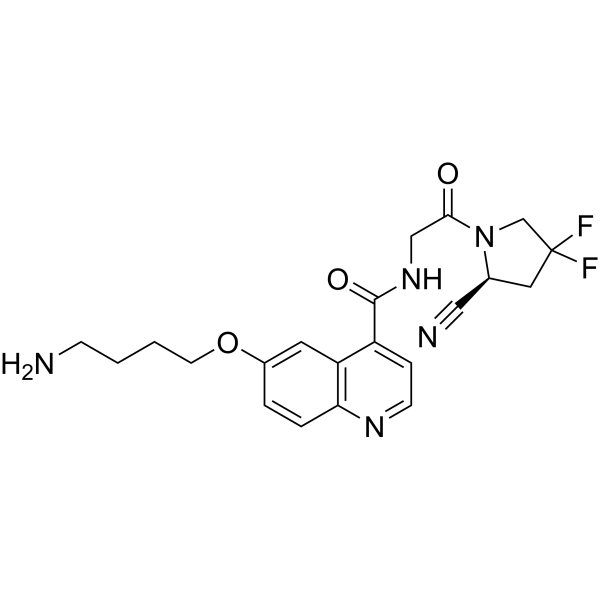
NH2-UAMC1110 is an aminobutoxy derivative of the fibroblast activation protein (FAP) inhibitor UAMC1110 (HY-100684), and is a precursor compound for the synthesis of FAP inhibitor probes, not directly used in bioactivity experiments. For example, NH2-UAMC1110 is involved in the synthesis of the radiotracer FAPI-QS, which exhibits high tumor selectivity and high dose-response, and has been used for tumor diagnosis. NH2-UAMC1110 introduces an active amino group into its structure, enabling it to form covalent bonds with various molecules (such as DOTA, DATA5m, radionuclide chelators, etc.), thereby synthesizing molecular imaging probes or targeted compounds with the ability to target FAP. NH2-UAMC1110 specifically binds to the FAP active site, inhibiting its proline-selective serine protease activity (including dipeptidyl peptidase and endopeptidase activity), blocking FAP-mediated tissue remodeling processes. Its key activity is high targeting and high affinity, and its core function is to be coupled with bifunctional chelators (such as DOTA, DATA5m) as a targeting module. NH2-UAMC1110 can be applied to diagnostic imaging studies of tumors expressing FAP (such as colorectal cancer, pancreatic cancer, etc.), and also provides molecular tools for targeted research of FAP-related diseases with high FAP expression, such as fibrosis and arthritis .
loading...
    loading...
Cat. No.: HY-153552A
CAS No.: 2990021-73-1
Purity:  99.89%
Target:  

FAP

Research Areas:  

Cancer

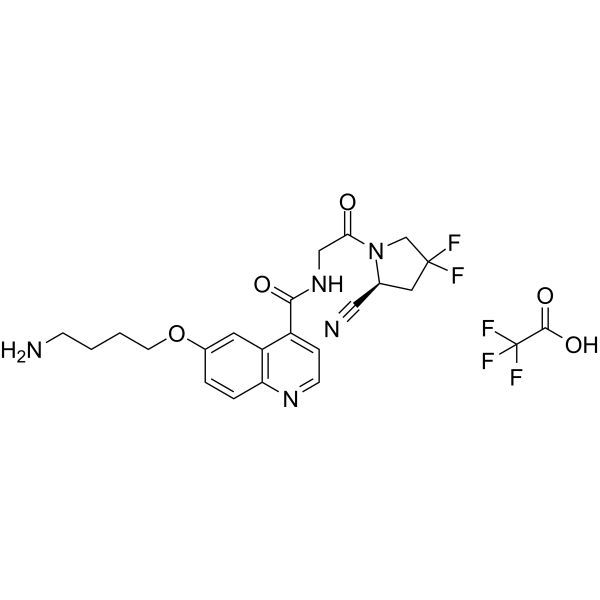
NH2-UAMC1110 TFA is an aminobutoxy derivative of the fibroblast activation protein (FAP) inhibitor UAMC1110 (HY-100684), and is a precursor compound for the synthesis of FAP inhibitor probes, not directly used in bioactivity experiments. For example, NH2-UAMC1110 TFA is involved in the synthesis of the radiotracer FAPI-QS, which exhibits high tumor selectivity and high dose effect, and has been used in tumor diagnosis. NH2-UAMC1110 TFA structurally incorporates an active amino group, allowing it to form covalent bonds with various molecules (such as DOTA, DATA5m, radionuclide chelators, etc.) to synthesize molecular imaging probes or targeted compounds with the ability to target FAP. NH2-UAMC1110 TFA specifically binds to the FAP active site, inhibiting its proline-selective serine protease activity (including dipeptidyl peptidase and endopeptidase activity), blocking FAP-mediated tissue remodeling-related processes. Its key activity is high targeting and high affinity, and its core function is to act as a targeting module coupled with bifunctional chelators (such as DOTA, DATA5m). NH2-UAMC1110 TFA can be applied to diagnostic imaging studies of tumors expressing FAP (such as colorectal cancer, pancreatic cancer, etc.), and also provides molecular tools for targeted research of FAP-related diseases with high FAP expression, such as fibrosis and arthritis .
loading...
    loading...
Cat. No.: HY-P705417
Purity:  ≥ 90%, as determined by Bis-Tris PAGE.
Synonyms: DPP4; DPP IV; Prev. ADCP2; TP103; Prev. CD26; Post-Proline Dipeptidyl Aminopeptidase IV; Adenosine Deaminase Complexing Protein 2; Xaa-Pro-Dipeptidylaminopeptidase; T-Cell Activation Antigen CD26; Gly-Pro Naphthylamidase; Dipeptidyl Peptidase IV; Dipeptidyl-Peptidase IV; DPPIV; Dipeptidyl-Peptidase 4; Dipeptidylpeptidase IV (CD26, Adenosine Deaminase Complexing Protein 2); Dipeptidylpeptidase 4; ADCP-2; CD26 Antigen; Dipeptidyl Peptidase 4; ADABP
Species:  
Human
Source:  
HEK293
loading...
    loading...
Cat. No.: HY-P86940
Synonyms: AMPL_HUMAN antibody; Cytosol aminopeptidase antibody; epididymis secretory protein Li 106 antibody; HEL-S-106 antibody; LAP 3 antibody; LAP antibody; LAP-3 antibody; Lap3 antibody; LAPEP antibody; Leucine aminopeptidase 3 antibody; AMPL_HUMAN antibody; Cytosol aminopeptidase antibody; epididymis secretory protein Li 106 antibody; HEL-S-106 antibody; LAP 3 antibody; LAP antibody; LAP-3 antibody; Lap3 antibody; LAPEP antibody; Leucine aminopeptidase 3 antibody; Leucyl aminopeptidase antibody; PEPS antibody; Peptidase S antibody; Proline aminopeptidase antibody; Prolyl aminopeptidase antibody;

Host:  

Rabbit

Application:  

WB, IHC-P

Reactivity:  

Human, Mouse, Rat

loading...
    loading...
Cat. No.: HY-L045
4,317 compounds

Oxygen homeostasis regulation is the most fundamental cellular process for adjusting physiological oxygen variations, and its irregularity leads to various human diseases, including cancer. Hypoxia is closely associated with cancer development, and hypoxia/oxygen-sensing signaling plays critical roles in the modulation of cancer progression.

Hypoxia-inducible factor 1 (HIF-1) is a transcription factor that functions as a master regulator of oxygen homeostasis. A variety of HF-1 target genes have been identified thus far which encode proteins that play key roles in critical developmental and physiological processes including angiogenesis/vascular remodeling, erythropoiesis, glucose transport, glycolysis, iron transport, and cell proliferation/survival.

HIF-1 is a heterodimeric transcription factor consisting of a constitutively expressed β-subunit and an oxygen-regulated α-subunit. The unique feature of HIF-1 is the regulation of HIF-1α expression and activity based upon the cellular O2 concentration. Under normoxic conditions, hydroxylation of HIF-1α on these different proline residues is essential for HIF proteolytic degradation by promoting interaction with the von Hippel-Lindau tumor-suppressor protein (pVHL) through hydrogen bonding to the hydroxyproline-binding pocket in the pVHL β-domain. As oxygen levels decrease, hydroxylation of HIF decreases; HIF-1α then no longer binds pVHL, and becomes stabilized, allowing more of the protein to translocate to the cell’s nucleus, where it acts as a transcription factor, upregulating (often within minutes) the production of proteins that stimulate blood perfusion in tissues and thus tissue oxygenation.

MCE offers a unique collection of 4,317 oxygen sensing related compounds targeting HIF/HIF Prolyl-Hydroxylase, MAPK/ERK, PI3K/AKT signaling pathways, etc. MCE Oxygen Sensing Compound Library is a useful tool to study hypoxia, oxidative stress and discover new anti-cancer drugs.

