

415 Results for "

Additive

" in MedChemExpress (MCE) Product Catalog:
Products (415)

415 Results for "Additive" in MCE Product Catalog:

Cat. No.: HY-W012399
CAS No.: 88-58-4
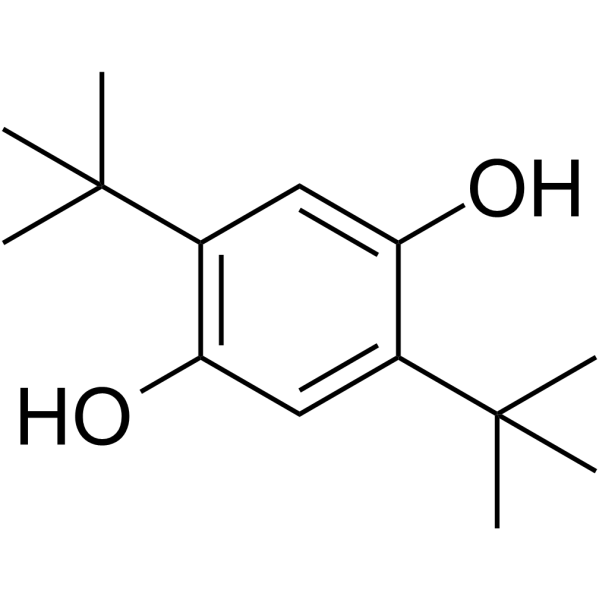
2,5-Di-tert-butylhydroquinone (BHQ) (Compound 2), an indirect food additive, is a Sarco/endoplasmic reticulum Ca 2+ ATPase (SERCA) inhibitor with an IC50 of 400 nM. 2,5-Di-tert-butylhydroquinone disrupts the gating function of the residue Glu309 which prevents Ca 2+ from reaching their binding site. 2,5-Di-tert-butylhydroquinone regulates the activity of 5-lipoxygenase and COX-2 (IC50: 1.8 and 14.1 μM for 5-LO and COX-2, respectively) .
loading...
    loading...
Cat. No.: HY-W064918
CAS No.: 1473450-60-0
Target:  

Bacterial

Research Areas:  

Infection

NITD-304 is an orally active anti-tuberculosis agent. NITD-304 exerts inhibitory and bactericidal activities gainst Mycobacterium tuberculosis and multidrug-resistant Mycobacterium tuberculosis. NITD-304 inhibits mycobacterial cell wall biosynthesis and demonstrates synergistic or additive growth inhibitory activity with select antibacterial agents. NITD-304 shows low risk of cardiotoxicity and drug-drug interactions, with no inhibition of major cytochrome P-450 enzymes or hERG channel. NITD-304 can be used for the research of tuberculosis and multidrug-resistant tuberculosis .
loading...
    loading...
Cat. No.: HY-W134423
CAS No.: 9002-18-0
Agar, microbiology tested, for cell culture (powder) is a jelly like substance that contains agarose and agar gel. Agar, microbiology tested, for cell culture (powder) can be isolated from the cell walls of red algae species such as Gelidium and Gracilaria (Ogonori). The gelation and melting of Agar, microbiology tested, for cell culture (powder) is based on the hydrogen bridge (physical gels), so the gelation is reversible. Agar, microbiology tested, for cell culture (powder) is widely used in food additives, plant tissue culture, microorganisms culture media, fingerprint recognition, and medical fields .
loading...
    loading...
Cat. No.: HY-Y0546R
CAS No.: 119-61-9
Benzophenone (Standard) is the analytical standard of Benzophenone. This product is intended for research and analytical applications. Benzophenone standard is a photosensitizer, that absorbs UV light, transfers its energy to DNA, and triggers DNA damage. Benzophenone standard can be used as the fragrance enhancer, ultraviolet curing agent, additive in plastics, or the flavor ingredient. Benzophenone standard can also be used in the manufacturing of insecticides, agricultural chemicals, hypnotics, antihistamines, and other pharmaceuticals. Benzophenone standard exhibits certain carcinogenicity in mouse/rat models under long term exposure. Benzophenone standard exhibits estrogenic activity .
loading...
    loading...
Cat. No.: HY-129843
CAS No.: 76692-12-1
Target:  

Drug Derivative

Research Areas:  

Cancer

CGP-15720 hydrochloride is an orally active imidazolinylurea compound with anticancer activity, which exhibits inhibitory effects on human bronchial carcinoma in nude mice and respiratory tract tumors induced by diethylnitrosamine in Syrian hamsters. CGP-15720 hydrochloride acts via a non-cytotoxic mode of action, reduces tumor area and tumor incidence, and prolongs the survival time of tumor-bearing animals. Its combination with Bleomycin (HY-108345) or CCNU (HY-13669) produces additive antitumor effects. CGP-15720 hydrochloride can be used in cancer-related research such as bronchogenic carcinoma and laryngeal carcinoma .
loading...
    loading...
Cat. No.: HY-D3162
CAS No.: 2390002-31-8
Research Areas:  

Cancer

HMBI is a fluorescent probe that enables dual-color visualization of both the nucleus and mitochondria and monitors apoptosis. HMBI emits green fluorescence in the nucleus with Ex/Em=405/510-560 nm, and red fluorescence in mitochondria with Ex/Em=543/560-660 nm. The localization and emission properties of HMBI depend on subcellular pH and mitochondrial membrane potential. HMBI can serve as a feed additive for in vitro rumen fermentation; it is partially degraded, absorbed or converted into HMB by microorganisms in the system, so as to support microbial protein synthesis, alter the concentration of rumen metabolites and adjust the composition of bacterial communities .
loading...
    loading...
Cat. No.: HY-N6660R
CAS No.: 621-71-6
Synonyms: Tricaprin (Standard); Glyceryl tridecanoate (Standard)
Trisdecanoin (Standard) is the analytical standard of Trisdecanoin. This product is intended for research and analytical applications. Trisdecanoin (Tricaprin; Glyceryl tridecanoate) is an orally available precursor of decanoic acid (DA precursor) that can be hydrolyzed to decanoic acid. Trisdecanoin and its metabolite capric acid not only provide the body with a quick source of energy, but can also affect lipid metabolism. Trisdecanoin is a major component of medium chain triglycerides (MCT), which has preventive or inhibitory properties for abdominal aortic aneurysms (AAA), inhibition of cardiovascular disease, and anti-androgen (NSAA) and anti-hyperglycemic properties. Trisdecanoin can be used as an additive in food, medicine and cosmetics .
loading...
    loading...
Cat. No.: HY-P1032S
CAS No.: 2226467-14-5
Research Areas:  

Others

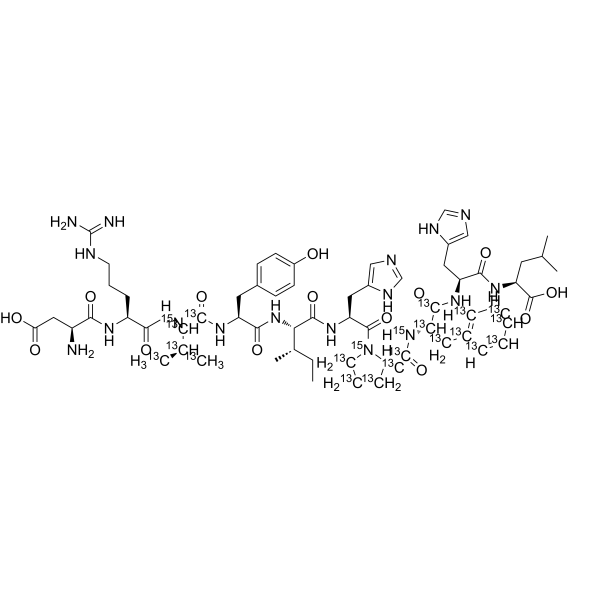
Angiotensin I- 13C19, 15N3 (human, mouse, rat) is the 13C and 15N labeled Angiotensin I (human, mouse, rat) (HY-P1032). Cellulose (Pectin glycosidase) is a natural high molecular weight polysaccharide found in many plants and organisms. It is widely used in manufacturing industries, such as in paper making, textiles, food and medicine, etc. As a renewable resource, Cellulose is biodegradable and sustainable, and can also be used to manufacture chemicals such as Cellulose Esters, Cellulose Acetate and Cellulose Nitrate. In addition, Cellulose is often used as a food additive to increase the stability and quality of food .
loading...
    loading...
Cat. No.: HY-W010807
CAS No.: 540-10-3
Hexadecyl palmitate is an organic compound commonly used in the cosmetic industry as an emollient, thickener and skin conditioning agent. Cetyl palmitate is derived from a mixture of cetyl alcohol (a fatty alcohol) and palmitic acid (a saturated fatty acid). It is often used in skin care products such as moisturizers, lotions, and creams to improve their texture and Helps them glide smoothly on the skin. In addition to its use in cosmetics, cetyl palmitate is used in other industries including pharmaceuticals, food additives and lubricants. Overall, it's considered safe for use in personal care products, but like any other ingredient, it may cause irritation or an allergic reaction in some people.
loading...
    loading...
Cat. No.: HY-W013762
CAS No.: 77-94-1
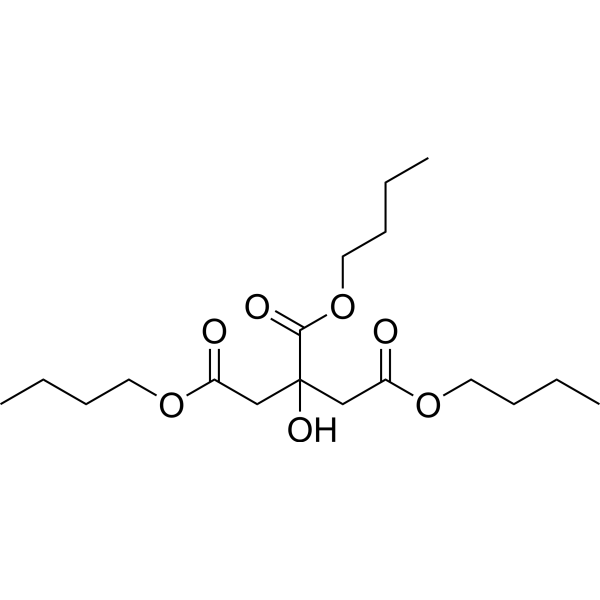
Tributyl citrate is a low-toxicity and orally active citrate ester with no genotoxicity or skin sensitizing activity. Tributyl citrate also acts as a plasticizer, solvent, FDA-approved indirect food additive, and topical anesthetic, among other uses. Tributyl citrate induces a needle-prick insensitivity response that lasts for more than 2 hours, and a 5% suspension of it temporarily eliminates the corneal reflex in rabbits. Tributyl citrate causes no significant systemic toxicity in rats and cats at most tested doses, and only may cause growth retardation and gastrointestinal reactions such as diarrhea and nausea at high doses or with repeated oral administration .
loading...
    loading...
Cat. No.: HY-W017960R
CAS No.: 1149-23-1
Synonyms: Et-HE (Standard); 1,4-DHP (Standard)
Target:  

SOD Reference Standards

Research Areas:  

Metabolic Disease

Diludine (Standard) is the analytical standard of Diludine (HY-W017960). This product is intended for research and analytical applications. Diludine (BNP-7787) is an orally effective feed additive. Diludine reduces the activity of G6PD and increases the level of superoxide dismutase (SOD). Diludine reduces the mutagenic effect of environmental pollutants, protects parental reproductive systems and improves offspring quality. Diludine is mainly applied during the transition period of dairy cows to increase milk yield and milk fat content, and improve health status during parturition. Diludine can be used in animal feeding research .
loading...
    loading...
Cat. No.: HY-W099538R
CAS No.: 123-28-4
Synonyms: Dilauryl 3,3'-Thiodipropionate (Standard)
Research Areas:  

Others

Dilauryl thiodipropionate (Standard) is the analytical standard of Dilauryl thiodipropionate. This product is intended for research and analytical applications. Dilauryl thiodipropionate (DLTDP), which is a sulfur-containing antioxidant commonly used to stabilize polymers and plastics against degradation caused by heat, oxygen, and UV light, acts to scavenge free radicals and others that may cause polymer chain scission and cross-linked active substances, in addition, DLTDP has been used as an additive to lubricants, oils and other industrial fluids to improve their oxidation stability, the long hydrocarbon chain in DLTDP makes it low volatility and compatible with many materials and Good compatibility with substrates.
loading...
    loading...
Cat. No.: HY-W250308
CAS No.: 28211-04-3
Synonyms: Epsilon-polylysine (MW 3800-4200); ε-Polylysine (MW 3800-4200); ε-PL (MW 3800-4200)
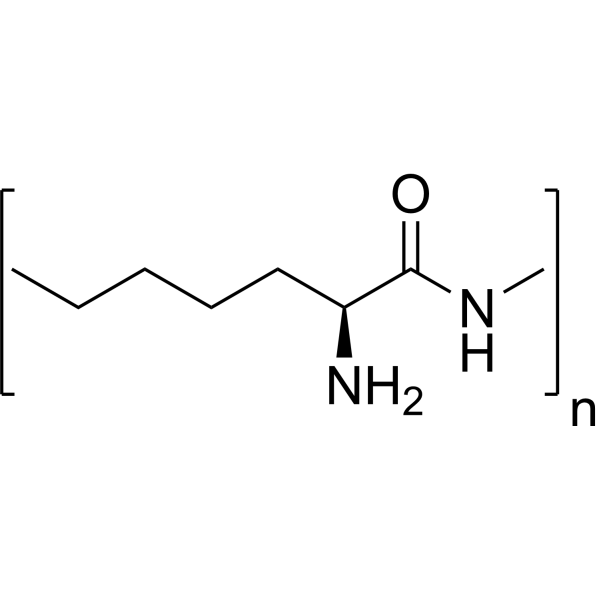
Epsilon-polylysine is an antimicrobial peptide that can be produced by bacteria such as Streptomyces. Epsilon-polylysine inhibits the growth of microorganisms such as bacteria, yeasts and molds and is therefore often used as a green food additive and preservative in various food and beverage products. Epsilon-polylysine has a variety of properties, including thermal stability, resistance to acidic conditions, and broad-spectrum antimicrobial activity. Epsilon-polylysine can be loaded on other materials to form nanoparticles or form nanofiber membranes for targeted delivery to exert sustained antibacterial efficacy. Epsilon-polylysine is also used as a liposome stabilizer .
loading...
    loading...
Cat. No.: HY-Y0121
CAS No.: 103-36-6
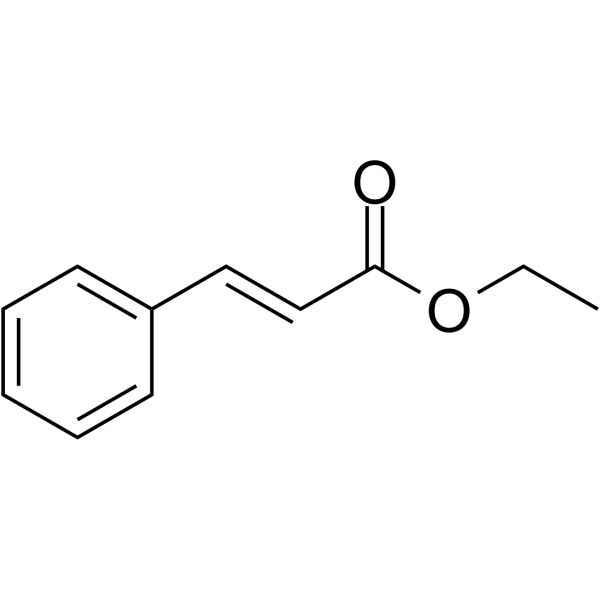
Ethyl cinnamate, an orally active chemical constituent of the rhizome of Kaempferia galanga, exhibits anti-cancer, nematocidal, sedative and vasorelaxant activities. Ethyl cinnamate is a fragrance ingredient used as a food flavor and additive for cosmetic products. Ethyl cinnamate is also an excellent clearing reagent for mammalian tissues. Ethyl cinnamate suppresses tumor growth through anti-angiogenesis by attenuating VEGFR2 signal pathway in colorectal cancer. Ethyl cinnamate inhibits the tonic contractions induced by high K+ and phenylephrine (PE) with respective IC50 values of 0.30 mM and 0.38 mM in rat aorta .
loading...
    loading...
Cat. No.: HY-121067
CAS No.: 121-59-5
Target:  

Parasite

Research Areas:  

Cancer

Carbarsone, also known as p-ureidobenzenearsonic acid, is historically used as an amebicide in human and veterinary medicine and extensively employed in poultry and swine feed, often in combination with antibiotics to prevent conditions like blackhead in turkeys. It exhibits relatively low acute toxicity, prompting investigations into its safety for food additives under the Federal Food, Drug, and Cosmetic Act. Studies aimed at assessing its potential carcinogenicity in laboratory animals have shown negative evidence similar to other arsanilic acid derivatives, suggesting minimal risk under chronic ingestion conditions. Metabolically, carbarsone is converted to arsanilic acid, which has been observed in preliminary studies involving dogs at high doses .
loading...
    loading...
Cat. No.: HY-15947B
CAS No.: 1817728-45-2
Synonyms: GDC-0994 benzenesulfonate
Research Areas:  

Cancer

Ravoxertinib benzenesulfonate (GDC-0994 benzenesulfonate) is an orally active ERK1/2 inhibitor. Ravoxertinib benzenesulfonate inhibits the ERK1/2 MAPK signaling pathway and reduces the expression levels of c-Myc, HK2 and LDHA. Ravoxertinib benzenesulfonate decreases mammosphere formation, and exerts additive and/or superadditive cytotoxicity when combined with Ipatasertib (HY-15186) in 3D tumor sphere models. Ravoxertinib benzenesulfonate can be used in research related to various cancers including breast cancer, melanoma, head and neck cancer, non-small cell lung cancer, ovarian cancer and Merkel cell carcinoma .
loading...
    loading...
Cat. No.: HY-171985
CAS No.: 4175-38-6
Research Areas:  

Others

DCPD is an amine substance with both embryotoxicity and teratogenicity, and its total effect ED50 is 0.6 μmol per egg. DCPD induces early and late embryonic death, and causes multiple embryonic malformations including microcephaly, hypoplastic optic cup, eyelid and corneal defects. DCPD can serve as a calcium phosphate additive for biomimetic α-tricalcium phosphate bone cement, which inhibits the transformation of α-tricalcium phosphate into calcium-deficient hydroxyapatite, blocks the release of Gelatins (HY-Y1365), and effectively prolongs the setting time of bone cement. DCPD is applicable to studies related to embryonic malformations .\n
loading...
    loading...
Cat. No.: HY-W017187
CAS No.: 3602-55-9
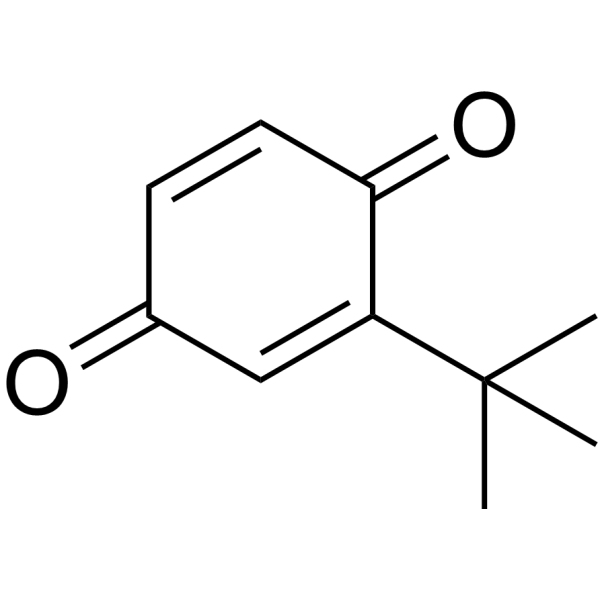
2-tert-Butyl-1,4-benzoquinone is a food additive oxidant, an electrophilic metabolite of Butylated hydroxyanisole (HY-B1066), and an antibacterial agent. 2-tert-Butyl-1,4-benzoquinone reduces virulence factors, activates Nrf2, and induces S-arylation of its negative regulator Keap1. 2-tert-Butyl-1,4-benzoquinone induces HO-1. 2-tert-Butyl-1,4-benzoquinone exhibits quorum sensing inhibitory activity against Chromobacterium violaceum .
loading...
    loading...
Cat. No.: HY-W770203
Synonyms: DG(18:1/0:0/18:2)-d5
1-Oleoyl-2-linoleoyl-rac-glycerol-d5 (DG(18:1/0:0/18:2)-d5) is the deuterium labeled 1-Oleoyl-2-linoleoyl-rac-glycerol (HY-W777107). 1-Oleoyl-2-linoleoyl-rac-glycerol (DG(18:1/0:0/18:2)) is a diacylglycerol, which is composed of a linoleic acid and an oleic acid. 1-Oleoyl-2-linoleoyl-rac-glycerol can be found in dry-cured ham, and acts as the food additive .
loading...
    loading...
Cat. No.: HY-123630R
CAS No.: 25956-17-6
Synonyms: FD&C RED NO. 40 (Standard); CI 16035 (Standard)
Allura Red AC (Standard) is an analytical standard of Allura Red AC. This product is intended for research and analytical applications. Allura Red AC is a food colorant, appearing as a deep red water-soluble powder or granules, used in various applications such as beverages, syrups, candies, and cereals. Allura Red AC can statically quench the intrinsic fluorescence of HSA. Additionally, Allura Red AC is a 5-hydroxytryptamine (5-HT) pathway-associated pro-inflammatory agent, capable of exacerbating experimental colitis. Allura Red AC holds potential for research in inflammatory bowel disease (IBD), intestinal barrier function, and food additive safety .
loading...
    loading...

