

417 Results for "

Additive

" in MedChemExpress (MCE) Product Catalog:
Products (417)

417 Results for "Additive" in MCE Product Catalog:

Cat. No.: HY-W019901B
CAS No.: 7778-18-9
Synonyms: Gypsum ustum (97%)
Anhydrous calcium sulfate (97%) serves as an oil-based drilling fluid additive and an osteogenic material. Anhydrous calcium sulfate (97%) increases the plastic viscosity, yield point, apparent viscosity and gel strength of oil-based drilling fluids. Anhydrous calcium sulfate (97%) upregulates the expression of bone-related genes FOSL1, RUNX2 and SPP1. Anhydrous calcium sulfate (97%) significantly affects the behavior of dental pulp stem cells, enhancing their proliferation, differentiation and matrix deposition .
loading...
    loading...
Cat. No.: HY-W099538
CAS No.: 123-28-4
Synonyms: Dilauryl 3,3'-Thiodipropionate
Dilauryl thiodipropionate (DLTDP), which is a sulfur-containing antioxidant commonly used to stabilize polymers and plastics against degradation caused by heat, oxygen, and UV light, acts to scavenge free radicals and others that may cause polymer chain scission and cross-linked active substances, in addition, DLTDP has been used as an additive to lubricants, oils and other industrial fluids to improve their oxidation stability, the long hydrocarbon chain in DLTDP makes it low volatility and compatible with many materials and Good compatibility with substrates.
loading...
    loading...
Cat. No.: HY-W127349R
CAS No.: 1182-42-9
Research Areas:  

Others

Cholesterol n-Octanoate (Standard) is the analytical standard of Cholesterol n-Octanoate. This product is intended for research and analytical applications. Cholesterol n-Octanoate is an organic compound belonging to the class of esters. It is formed from the reaction between cholesterol and caprylic acid. Cholesterol n-octanoate has various applications in the pharmaceutical industry, notably as a bioactive compound with potential research potential to improve a range of medical conditions, such as high cholesterol and inflammation-related diseases. Additionally, it has potential applications as a food additive to improve texture and stability.
loading...
    loading...
Cat. No.: HY-123630
CAS No.: 25956-17-6
Purity:  98.01%
Synonyms: FD&C RED NO. 40; CI 16035
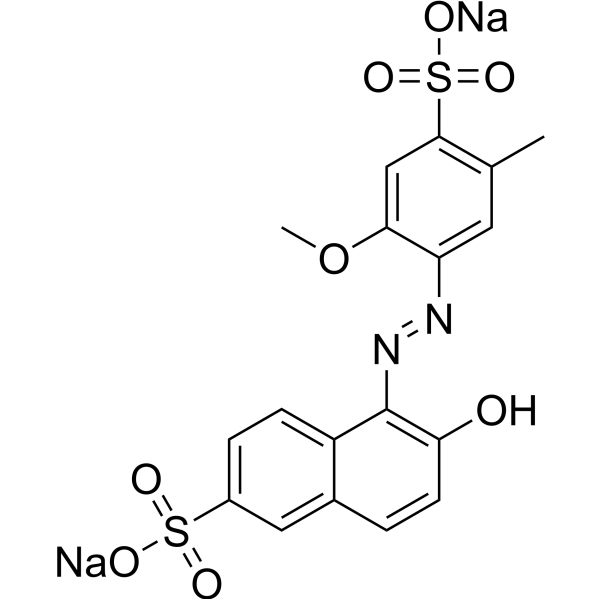
Allura Red AC is a food colorant, appearing as a deep red water-soluble powder or granules, used in various applications such as beverages, syrups, candies, and cereals. Allura Red AC can statically quench the intrinsic fluorescence of HSA. Additionally, Allura Red AC is a 5-hydroxytryptamine (5-HT) pathway-associated pro-inflammatory agent, capable of exacerbating experimental colitis. Allura Red AC holds potential for research in inflammatory bowel disease (IBD), intestinal barrier function, and food additive safety .
loading...
    loading...
Cat. No.: HY-181282
CAS No.: 3105177-29-2
Target:  

Bacterial

Research Areas:  

Infection

MSU-44147 is an inhibitor and antimicrobial agent targeting MmpL3 in Mycobacterium abscessus, with low eukaryotic cytotoxicity, a narrow antimicrobial spectrum that is specific only to mycobacteria, and low drug resistance frequency. MSU-44147 reduces trehalose dimycolate levels by inhibiting MmpL3 function, disrupts biofilm formation and reduces the viability of related bacteria, while exerting bactericidal effects on intracellular Mycobacterium abscessus. MSU-44147 exhibits additive or synergistic effects with antibiotics and can be used in research on multidrug-resistant isolates and infections of Mycobacterium abscessus .
loading...
    loading...
Cat. No.: HY-B1004R
CAS No.: 148-01-6
Synonyms: Zoalene (Standard)
Research Areas:  

Infection

Dinitolmide (Zoalene) (Standard) is the analytical standard of Dinitolmide (HY-B1004). This product is intended for research and analytical applications. Dinitolmide is an orally active anticoccidial agent used as a fodder additive. Dinitolmide has a wide anticoccidial spectrum with no effect on host immunity. Dinitolmide mainly acts on the first generation merozoite stage of coccidia and also has an inhibitory effect on the sporulation process of oocysts. Dinitolmide has anti-Toxoplasma gondii effect in vitro with an EC50 of 3.625 μg/mL. Dinitolmide can be used to inhibits infections caused by Eimeria tenella.
loading...
    loading...
Cat. No.: HY-B2221S
U- 13C Cellulose high DP from potato is the 13C labeled Cellulose (HY-B2221). Cellulose (Pectin glycosidase) is a natural high molecular weight polysaccharide found in many plants and organisms. It is widely used in manufacturing industries, such as in paper making, textiles, food and medicine, etc. As a renewable resource, Cellulose is biodegradable and sustainable, and can also be used to manufacture chemicals such as Cellulose Esters, Cellulose Acetate and Cellulose Nitrate. In addition, Cellulose is often used as a food additive to increase the stability and quality of food .
loading...
    loading...
Cat. No.: HY-B2221S3
U- 13C Cellulose high DP from maize is the 13C labeled Cellulose (HY-B2221). Cellulose (Pectin glycosidase) is a natural high molecular weight polysaccharide found in many plants and organisms. It is widely used in manufacturing industries, such as in paper making, textiles, food and medicine, etc. As a renewable resource, Cellulose is biodegradable and sustainable, and can also be used to manufacture chemicals such as Cellulose Esters, Cellulose Acetate and Cellulose Nitrate. In addition, Cellulose is often used as a food additive to increase the stability and quality of food .
loading...
    loading...
Cat. No.: HY-P11614
Target:  

Liposome

Research Areas:  

Cancer

LCA-H10 is a lithocholic acid-histidine decapeptide conjugate, a biocompatible lipid nanoparticle (LNP) additive that reduces ionizable lipid proportions, functions as an endosomal escape inducer, and enhances siRNA encapsulation. LCA-H10 increases hepatic accumulation of LNPs in mice after intravenous injection when incorporated into LiLNP-LH and reduces proinflammatory cytokines (IL-6, TNF, IL-1β) in mouse serum. LCA-H10 can be used for the research of prostate cancer .
loading...
    loading...
Cat. No.: HY-P2840
CAS No.: 9025-70-1
Target:  

Glycosidase

Research Areas:  

Metabolic Disease

Dextranase, Trichoderma reesei belongs to glycoside hydrolase family 49. It catalyzes the hydrolysis of α-1,6-glycosidic linkages in dextran via a single-displacement reaction, ultimately releasing shorter isomaltooligosaccharides. Dextranase, Trichoderma reesei reduces the molecular size of dextran, inhibits the formation of insoluble dextran and dental plaque, and decreases the viscosity of dextran-contaminated sugar juice. Dextranase, Trichoderma reesei can be used in relevant research in fields such as chemical production, including beer manufacturing, feed additives, and toothpaste formulations .
loading...
    loading...
Cat. No.: HY-P2840A
Target:  

Glycosidase

Research Areas:  

Metabolic Disease

Dextranase, Penicillium sp. belongs to glycoside hydrolase family 49. It catalyzes the hydrolysis of α-1,6-glycosidic linkages in dextran via a single-displacement reaction, ultimately releasing shorter isomaltooligosaccharides. Dextranase, Penicillium sp. reduces the molecular size of dextran, inhibits the formation of insoluble dextran and dental plaque, and decreases the viscosity of dextran-contaminated sugar juice. Dextranase, Penicillium sp. can be used in relevant research in fields such as chemical production, including beer manufacturing, feed additives, and toothpaste formulations .
loading...
    loading...
Cat. No.: HY-W010795
CAS No.: 4368-51-8
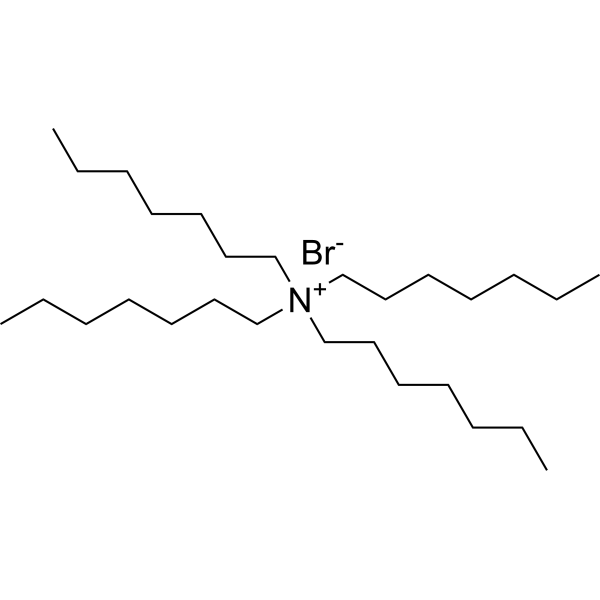
Tetraheptylammonium bromide (>98%,BC) (THAB) is a quaternary ammonium compound commonly used as a phase transfer catalyst in organic synthesis reactions, especially those involving charged species or polar reagents. It can facilitate the transfer of reactants between two immiscible phases, such as water and organic solvents, by forming stable ion pairs. In addition, THAB is used as a surfactant, and as an additive in various products such as cosmetics, pharmaceuticals, and detergents. Due to THAB's ability to form complexes with these ions, its potential use in the removal of heavy metal ions from wastewater was also investigated.
loading...
    loading...
Cat. No.: HY-Y0546S
CAS No.: 22583-75-1
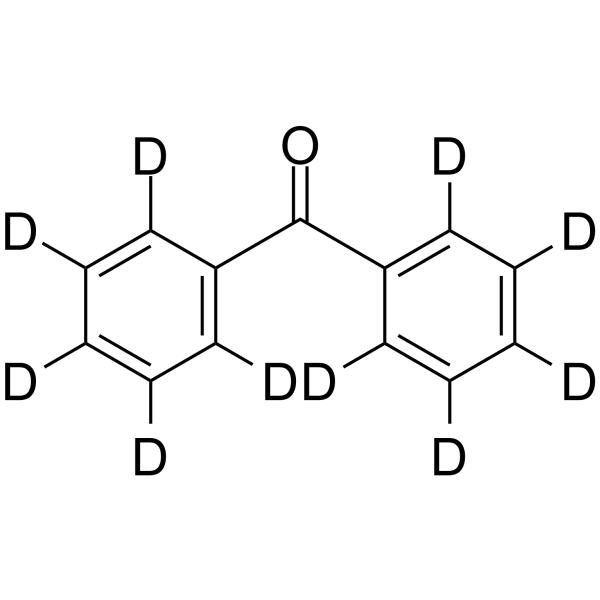
Benzophenone-d10 is the deuterium labeled Benzophenone (HY-Y0546). Benzophenone is an endogenous metabolite. Benzophenone is a photosensitizer, that absorbs UV light, transfers its energy to DNA, and triggers DNA damage. Benzophenone can be used as the fragrance enhancer, ultraviolet curing agent, additive in plastics, or the flavor ingredient. Benzophenone can also be used in the manufacturing of insecticides, agricultural chemicals, hypnotics, antihistamines, and other pharmaceuticals. Benzophenone exhibits certain carcinogenicity in mouse/rat models under long term exposure. Benzophenone exhibits estrogenic activity .
loading...
    loading...
Cat. No.: HY-Y0546S1
CAS No.: 2694-78-2
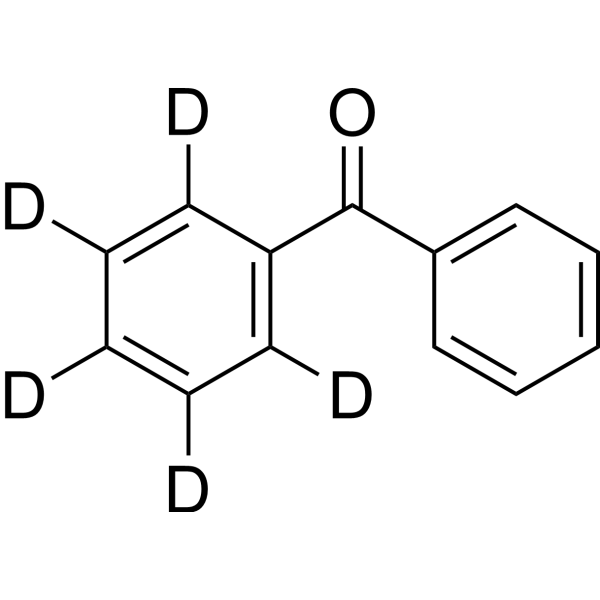
Benzophenone-d5 is the deuterium labeled Benzophenone (HY-Y0546). Benzophenone is an endogenous metabolite. Benzophenone is a photosensitizer, that absorbs UV light, transfers its energy to DNA, and triggers DNA damage. Benzophenone can be used as the fragrance enhancer, ultraviolet curing agent, additive in plastics, or the flavor ingredient. Benzophenone can also be used in the manufacturing of insecticides, agricultural chemicals, hypnotics, antihistamines, and other pharmaceuticals. Benzophenone exhibits certain carcinogenicity in mouse/rat models under long term exposure. Benzophenone exhibits estrogenic activity .
loading...
    loading...
Cat. No.: HY-Y0546S2
CAS No.: 32488-48-5
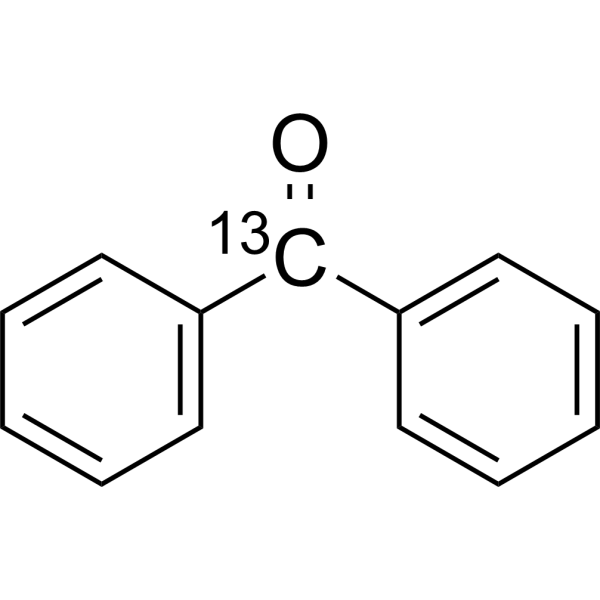
Benzophenone- 13C is the 13C labeled Benzophenone (HY-Y0546). Benzophenone is an endogenous metabolite. Benzophenone is a photosensitizer, that absorbs UV light, transfers its energy to DNA, and triggers DNA damage. Benzophenone can be used as the fragrance enhancer, ultraviolet curing agent, additive in plastics, or the flavor ingredient. Benzophenone can also be used in the manufacturing of insecticides, agricultural chemicals, hypnotics, antihistamines, and other pharmaceuticals. Benzophenone exhibits certain carcinogenicity in mouse/rat models under long term exposure. Benzophenone exhibits estrogenic activity .
loading...
    loading...
Cat. No.: HY-Y1134R
CAS No.: 147-71-7
Synonyms: D-(-)-Tartaric acid (Standard)
D-Tartaric acid (Standard) is the analytical standard of D-Tartaric acid (HY-Y1134). This product is intended for research and analytical applications. D-Tartaric acid (D-(-)-Tartaric acid) serves as an additive in beverages and other food products. When combined with pyrrole, D-Tartaric acid is used to construct a D-TA/polypyrrole-based bacterial imprinted polymer sensor for the detection of Vibrio parahaemolyticus. D-Tartaric acid enhances the sensitivity of polypyrrole-based bacterial imprinted polymer sensors for detecting Vibrio parahaemolyticus. D-Tartaric acid is applicable to research on Vibrio parahaemolyticus infection .
loading...
    loading...
Cat. No.: HY-Y1155S
CAS No.: 51219-90-0
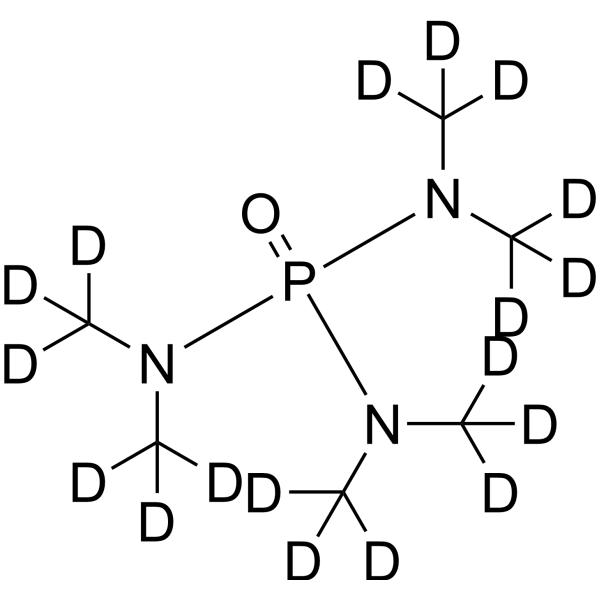
Hexamethylphosphoramide-d18 is the deuterium labeled Hexamethylphosphoramide (HY-Y1155). Hexamethylphosphoramide is an orally active polar aprotic solvent, flame retardant additive, and carcinogen. Hexamethylphosphoramide undergoes cytochrome P-450-mediated N-demethylation to Formaldehyde. Hexamethylphosphoramide induces DNA-protein crosslinks. Hexamethylphosphoramide has been linked to nasal tumors (squamous cell carcinoma, adenoid squamous cell carcinoma), squamous metaplasia, rhinitis, tracheitis, and reversible and irreversible infertility .
loading...
    loading...
Cat. No.: HY-W115818
CAS No.: 9005-67-8
Polyoxyethylene Sorbitan Monostearate is a nonionic polysorbate surfactant. Polyoxyethylene Sorbitan Monostearate acts as an emulsifier, stabilizer, gastrointestinal hydrolysis substrate, and skin tumor promoter/carcinogen in mice. Polyoxyethylene Sorbitan Monostearate can be used in the study of skin tumors .
loading...
    loading...
Cat. No.: HY-165568
CAS No.: 76470-87-6
OPC 3911 is a highly selective inhibitor of cGMP-inhibited cAMP phosphodiesterase (cGI-PDE/PDE3) and a vasodilator, with an IC50 of 0.042 μM against rat cGI-PDE. OPC 3911 upregulates the expression of Osteopontin. OPC 3911 mediates vasodilation of arterial smooth muscle, induces vasodilatory responses in isolated rat arteriovenous tissues, and exhibits additive vasodilatory effects with Isoprenaline (HY-108353) and Forskolin (HY-15371). OPC 3911 can be used in studies related to congestive heart failure and insulin resistance .
loading...
    loading...
Cat. No.: HY-P5552
CAS No.: 709611-59-6
Target:  

Bacterial Fungal

Research Areas:  

Infection

Melimine is an antimicrobial peptide with broad-spectrum antimicrobial activity against Gram-negative/Gram-positive bacteria, fungi and protozoa. Melimine neutralizes endotoxin activity by interacting with the phosphate groups of lipid A, depolarizes and permeabilizes the cytoplasmic membrane of *Pseudomonas aeruginosa*, and induces bacterial lysis. Melimine exerts additive antiviral effects against H1N1 and MHV-1 when used in combination with RK610. Melimine retains its antimicrobial activity when conjugated to polymer and titanium surfaces. Melimine can be used in infection-related research .
loading...
    loading...

