
75 Results for "

PLGA

" in MedChemExpress (MCE) Product Catalog:
Products (75)

75 Results for "PLGA" in MCE Product Catalog:

Cat. No.: HY-156829
Research Areas:  

Cancer

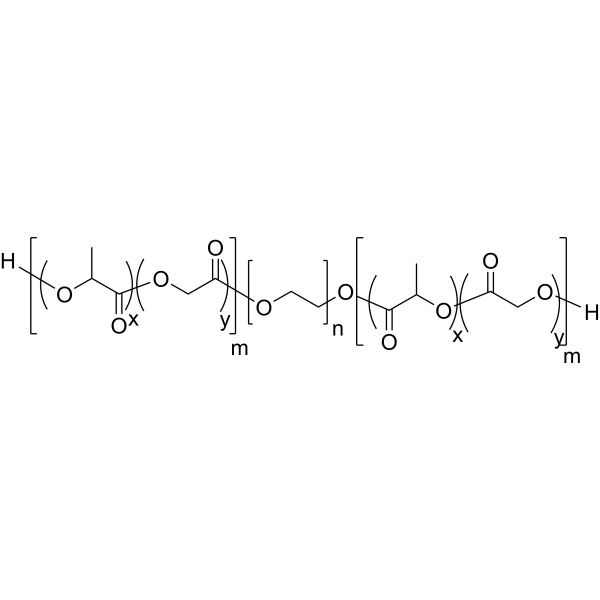
PLGA-PEG-PLGA (1500-1500-1500) (LA/GA 1:1) is a matrix materia, with lactic acid (LA):glycolic acid (GA) = 1:1, that acts as anti-cancer drug delivery. PLGA-PEG-PLGA (1500-1500-1500) (LA/GA 1:1) can improve a drug's bioavailability, efficacy, water solubility, drug encapsulation efficiency, sustained drug release, and to minimize undesirable toxicity .
loading...
    loading...
Cat. No.: HY-172174
Red Fluorescent PLGA nanoparticles, 100nm is a nanoparticle made from the polymer PLGA and labeled with a red fluorescent dye. Red Fluorescent PLGA nanoparticles, 100nm can be used for drug delivery and for tracing .
loading...
    loading...
Cat. No.: HY-148776
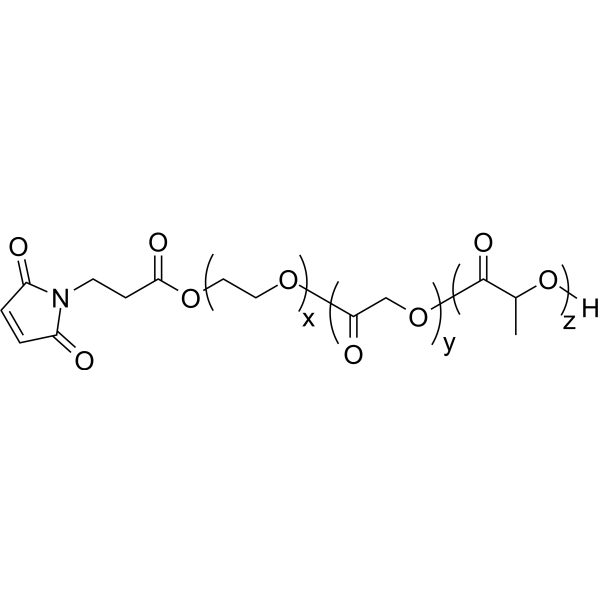
PLGA-PEG-MAL (20kDA-5.0kDA, LA:GA ratio 50:50) is a degradable amphiphilic polymer nanocarrier of poly (lactic acid-co-glycolic acid)-block-poly (ethylene glycol) (PLGA-PEG-Mal) that allows covalent modification of functional molecules. PLGA-PEG-MAL (20kDA-5.0kDA, LA:GA ratio 50:50) serves as a core polymer for nanoparticle synthesis, and also acts as a nanoparticle component for site-specific antibody conjugation to construct artificial antigen-presenting cells. PLGA-PEG-MAL (20kDA-5.0kDA, LA:GA ratio 50:50) is applicable for drug delivery-related research .
loading...
    loading...
Cat. No.: HY-154818
Synonyms: Bovine Serum Albumin, Acetylated
BSA Protein, Acetylated (Bovine Serum Albumin, Acetylated) is a polypeptide of known structure with strong antigenicity. BSA Protein, Acetylated produced a significant immune response, validating the accuracy and reliability of the experimental method. BSA Protein, Acetylated can be used as a positive control substance in ELISA or WB experiments, and can be used in experiments with acetylated lysine monoclonal or polyclonal antibodies. BSA Protein, Acetylated also improves encapsulation efficiency at low concentrations of PLGA, a polymer for biopharmaceutical delivery with biocompatibility, degradability, and controlled release properties .
loading...
    loading...
Cat. No.: HY-P4125
Target:  

HIV Fluorescent Dye

Research Areas:  

Infection

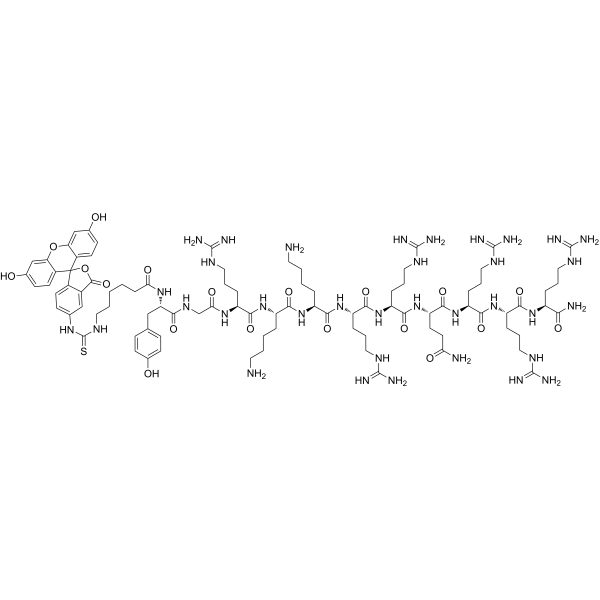
FITC-LC-TAT (47-57) is a FITC-labeled TAT peptide (HY-P0281) (λex: 493 nm, λem: 522 nm). Derived from the trans-activator of transcription (TAT) of human immunodeficiency virus (HIV-1), TAT enhances the yield of heterologous proteins .
loading...
    loading...
Cat. No.: HY-164077
CAS No.: 743423-15-6
Research Areas:  

Others

mPEG-PLGA is a mucus-penetrating polymer. mPEG-PLGA is a raw material to prepare nanomedicine .
loading...
    loading...
Cat. No.: HY-P10427A
Target:  

CXCR Dengue Virus

Research Areas:  

Infection

DV1 TFA is a CXCR4 inhibitor with anti-proteolytic properties that specifically blocks the binding of SDF-1α to its receptor. DV1 TFA inhibits the migration of breast cancer cells and enables the targeted delivery of avidin-PLGA nanoparticles to CXCR4-expressing cancer cells. DV1 TFA not only effectively suppresses the progression of metastatic breast cancer in mouse models, but also preferentially accumulates in brain tumor tissues rather than normal brain tissues, showing potential for inhibiting intracranial tumor metastasis. As a humoral immune stimulant, DV1 TFA induces the production of specific IgG, neutralizing antibodies and cellular immune responses, thereby providing the host with protection against lethal challenges. DV1 TFA has been applied to studies on CXCR4-expressing cancers, glioblastoma, dengue fever and other related diseases .
loading...
    loading...
Cat. No.: HY-156829H
PLGA-PEG-PLGA (hydrogel) (LA:GA 7:1) (20% solution) is a biodegradable thermosensitive hydrogel product that can undergo phase transition at a specific temperature. PLGA-PEG-PLGA (hydrogel) (LA:GA 7:1) (20% solution) can be widely used in drug delivery systems, tissue engineering, wound dressings, and biosensors. The gelation temperature varies with concentration. The gelation temperature varies with the concentration; the higher the concentration, the lower the gelation temperature .
loading...
    loading...
Cat. No.: HY-158255
Purity:  ≥95.0%
Research Areas:  

Others

mPEG-PLGA (2000-80000) (LA/GA 50:50) is a copolymer, which consists of hydrophilic mPEG and biodegradable PLGA (molar ratio is 50:50) with a molecular weight of 2000 (mPEG) + 80000 (PLGA). mPEG-PLGA (2000-80000) (LA/GA 50:50) forms nanoparticles or microparticles, which is stable in aqueous solution at different pH values and elevated temperatures as well as in serum. mPEG-PLGA (2000-80000) (LA/GA 50:50) is utilized as carrier material in drug delivery systems .
loading...
    loading...
Cat. No.: HY-148775
Purity:  ≥95.0%
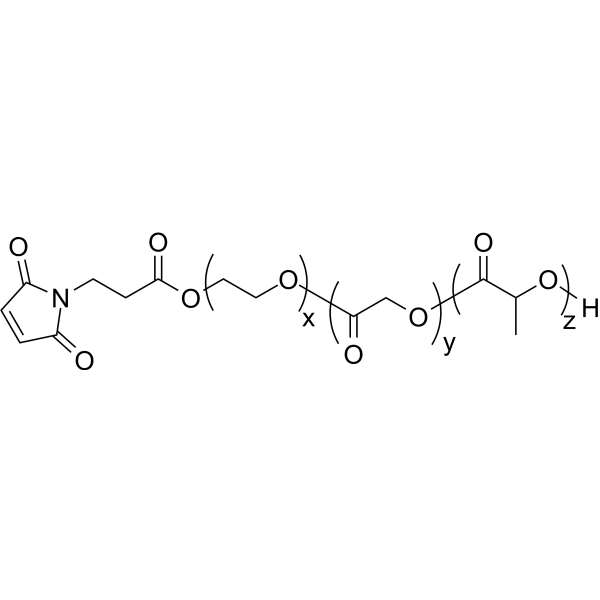
PLGA-PEG-MAL (60kDa-3.4kDa, LA:GA ratio 75:25) is a biodegradable amphipathic polymeric nanocarrier of poly (lactic-co-glycolic acid)-block-poly (ethylene glycol) (PLGA-PEG-Mal) that allows covalent modification of functional molecules. PLGA-PEG-MAL (60kDa-3.4kDa, LA:GA ratio 75:25) modified with Angiopep-2 can cross the blood-brain barrier and exhibits targeting selectivity for glioblastoma cells. PLGA-PEG-MAL (60kDa-3.4kDa, LA:GA ratio 75:25) can capture tumor-derived protein antigens, and exerts immunomodulatory effects when conjugated with anti-OX40 antibody; when used in combination with A2-CL/Dbait nanoparticles and radiotherapy, it prolongs survival time and reduces tumor volume in glioblastoma mouse models. PLGA-PEG-MAL (60kDa-3.4kDa, LA:GA ratio 75:25) can be used for studies related to bacterial wound infections and glioblastoma .
loading...
    loading...
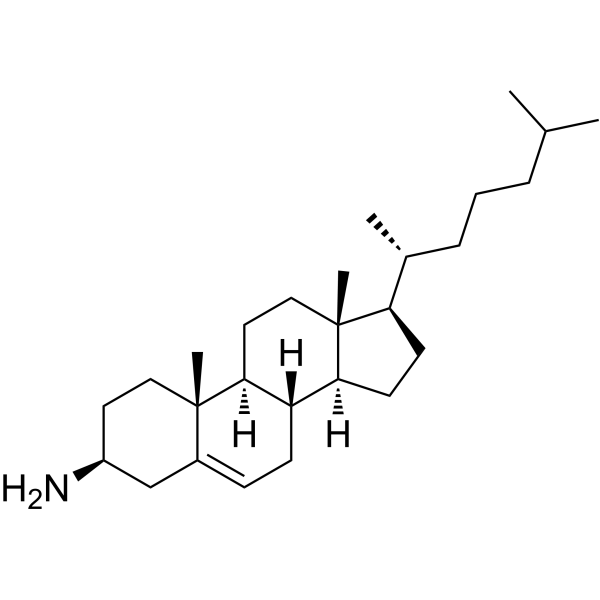
Cat. No.: HY-W409806
CAS No.: 2126-93-4
Target:  

Liposome

Research Areas:  

Inflammation/Immunology

Cholesterylamine is a cationic lipid and cholesterol analog. Cholesterylamine mimics the membrane transport properties of cholesterol, cycles between the plasma membrane and early/recycling endosomes in mammalian cells, and serves as a platform for constructing synthetic cell surface receptors. Cholesterylamine can be used to prepare PLGA particles with surface charges for antigen binding. Cholesterylamine is applicable for drug delivery. Cholesterylamine is used in research on autoimmune diseases and allergies .
loading...
    loading...
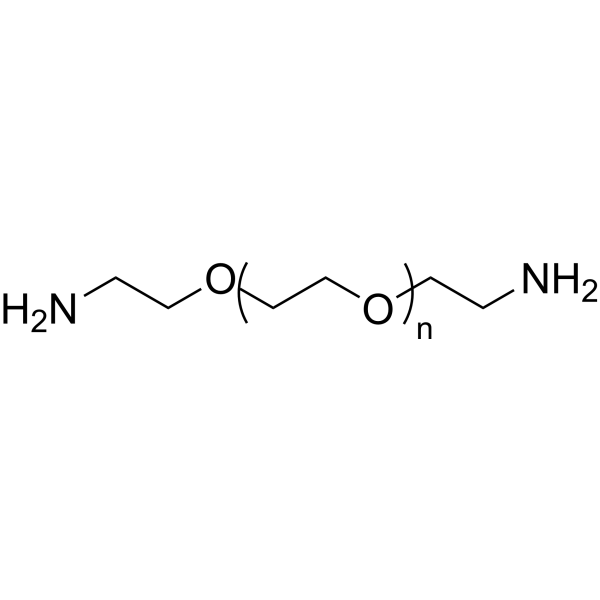
Cat. No.: HY-W591632
CAS No.: 24991-53-5
Synonyms: Poly(ethylene glycol)-bis-amine 1000
PEG1000-bis-amine (Poly (ethylene glycol)-bis-amine 1000) is a polyethylene glycol-based diamine linker/spacer. PEG-bis-amine can be used to synthesize CS-PEG-PLGA copolymers, which are further employed to prepare 5-fluorouracil (HY-90006)-loaded nanoparticles. PEG-bis-amine facilitates the formation of amino-terminated PLGA-PEG-NH2 for conjugation with Chondroitin sulfate (HY-B2162) .
loading...
    loading...
Cat. No.: HY-178794
CAS No.: 3038861-75-2
Target:  

PGE synthase

Research Areas:  

Inflammation/Immunology

AGU661 is a Microsomal prostaglandin E2 synthase 1 (mPGES-1) inhibitor with an IC50 of 0.22  nM. AGU661 lowers PGE2 formation in human pro-inflammatory M1 macrophages and activated monocytes without affecting other lipid mediator pathways. AGU661 has unfavorable physicochemical properties with poor metabolic stability and strong plasma protein binding tendencies. AGU661 into PLGA-based NPs significantly enhances its bioactivity. AGU661 can be used for inflammatory disorders research .
loading...
    loading...
Cat. No.: HY-167006
Synonyms: PLGA10000-PEG3000-Vinylsulfone
PLGA10000-PEG3000-VS (PLGA10000-PEG3000-Vinylsulfone) is an amphiphilic polymer. Amphiphilic polymers can be used in drug delivery studies due to their ability to self-assemble into discrete aggregates .
loading...
    loading...
Cat. No.: HY-158255A
CAS No.: 743423-15-6
Purity:  ≥95.0%
Research Areas:  

Others

mPEG-PLGA (22500-26500) is a biodegradable polymer composed of methyl polyethylene glycol (mPEG) and poly(lactic-co-glycolic acid) (PLGA). mPEG-PLGA (22500-26500) can be used in drug delivery systems .
loading...
    loading...
Cat. No.: HY-168947
Green Fluorescent PLGA nanoparticles, 100nm is a PLGA nanoparticle labeled with a green fluorescent dye and is commonly used in imaging and diagnostic applications.
loading...
    loading...
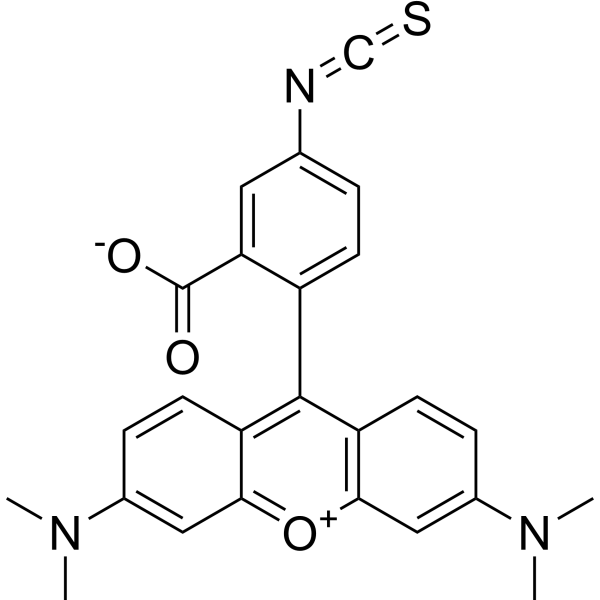
Cat. No.: HY-D0153
CAS No.: 80724-19-2
Tetramethylrhodamine-5-isothiocyanate is a potent fluorescent dye. Tetramethylrhodamine-5-isothiocyanate can be used for label PG-M3 antibody for rapid diagnosis of acute promyelocytic leukemia (APL). Tetramethylrhodamine-5-isothiocyanate can be used as probe to quantify in vivo the biodistribution of PLGA (poly(lactic-co-glycolic) acid) and PLGA/chitosan nanoparticles .
loading...
    loading...
Cat. No.: HY-167033
Synonyms: PLGA4000-PEG5000-Vinylsulfone
PLGA4000-PEG5000-VS (PLGA4000-PEG5000-Vinylsulfone) is an amphiphilic polymer. Amphiphilic polymers can be used in drug delivery studies due to their ability to self-assemble into discrete aggregates .
loading...
    loading...
Cat. No.: HY-156829E
PLGA-PEG-PLGA (hydrogel) (LA:GA 7:1) (15% solution) is a biodegradable thermosensitive hydrogel product that can undergo phase transition at a specific temperature. PLGA-PEG-PLGA (hydrogel) (LA:GA 7:1) (15% solution) can be widely used in drug delivery systems, tissue engineering, wound dressings, and biosensors. The gelation temperature varies with concentration. The gelation temperature varies with the concentration; the higher the concentration, the lower the gelation temperature .
loading...
    loading...
Cat. No.: HY-172168
Orange Fluorescent PLGA nanoparticles, 100nm a nanoparticle made from the polymer PLGA and labeled with an orange fluorescent dye. Orange Fluorescent PLGA nanoparticles, 100nm can be used for drug delivery and for tracing .
loading...
    loading...

