53 Results for "

side effect

" in MedChemExpress (MCE) Product Catalog:
Products (53)

53 Results for "side effect" in MCE Product Catalog:

Cat. No.: HY-129748
CAS No.: 70873-80-2
Research Areas:  

Others

SQ-24,798 is a compound that inhibits carboxypeptidase B with high affinity and specificity. Its inhibitory effect may be achieved through the binding of the sulfhydryl group to the zinc ion of the enzyme and specific side chains.
loading...
    loading...
Cat. No.: HY-118499
CAS No.: 81982-32-3
Synonyms: RIV-2093
Target:  

Drug Derivative

Research Areas:  

Endocrinology

Alpiropride (RIV-2093) is a metoclopramide (HY-17382) analog that is effective in reducing the gastrointestinal side effects of cancer chemotherapy drugs. In animal studies, alpiropride showed a stronger antiemetic effect than metoclopramide .
loading...
    loading...
Cat. No.: HY-118242
CAS No.: 119286-92-9
Research Areas:  

Others

RU 45144 is an anti-estrogen compound that has the activity of antagonizing the binding of estrogen receptors to calmodulin. RU 45144 can inhibit the binding of estrogen receptors to calmodulin, and its effect is similar to that of tamoxifen. Its anti-estrogen effect may be related to specific side chains in the molecular structure, and the steroid skeleton may be involved in its anti-proliferative activity.
loading...
    loading...
Cat. No.: HY-A0140
CAS No.: 14009-24-6
Research Areas:  

Neurological Disease

Drotaverine is a selective phosphodiesterase 4 inhibitor with angina relief activity. Drotaverine is used to suppress angina, including pain in the gastrointestinal tract and biliary tract. Drotaverine may also cause compound-induced priapism, a side effect of sustained penile erection .
loading...
    loading...
Cat. No.: HY-147821
CAS No.: 2527805-39-4
Target:  

Cannabinoid Receptor

Research Areas:  

Metabolic Disease

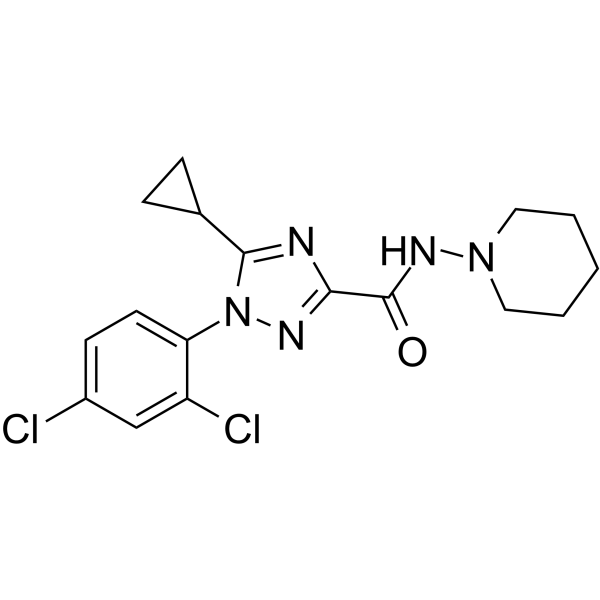
CB1-IN-2 (Compound 4g) is a selective CB1 inhibitor with an IC50 of 0.644 μM. CB1-IN-2 can penetrates BBB and might cause CNS side effect similar with Rimonabant .
loading...
    loading...
Cat. No.: HY-144050
CAS No.: 2711105-59-6
Target:  

EGFR

Research Areas:  

Cancer

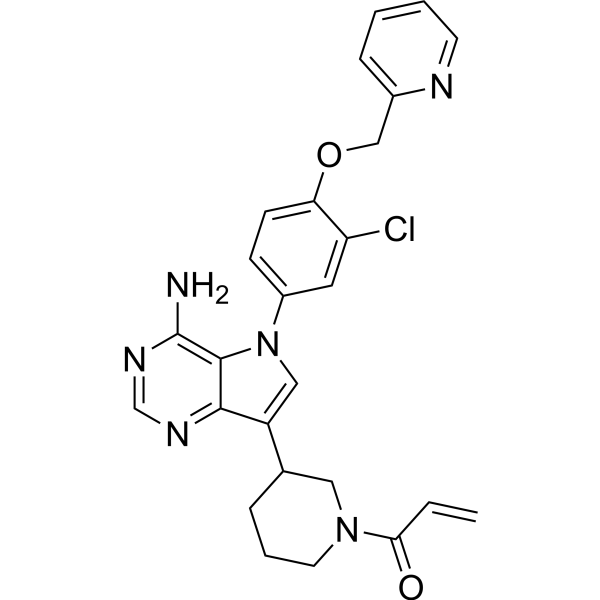
EGFR-IN-33 is a potent inhibitor of EGFR. EGFR-IN-33 is an anti-tumor agent with low toxic side effects. EGFR-IN-33 is an acrylamide derivative compound. Overexpression and mutation of the epidermal growth factor receptor (EGFR) has been clearly demonstrated to lead to uncontrollable cell growth and is associated with the progression of most cancer diseases, especially NSCLC. EGFR-IN-33 has the potential for the research of diseases associated with EGFR mutations (extracted from patent WO2021185348A1, compound 13) .
loading...
    loading...
Cat. No.: HY-144051
Target:  

EGFR

Research Areas:  

Cancer

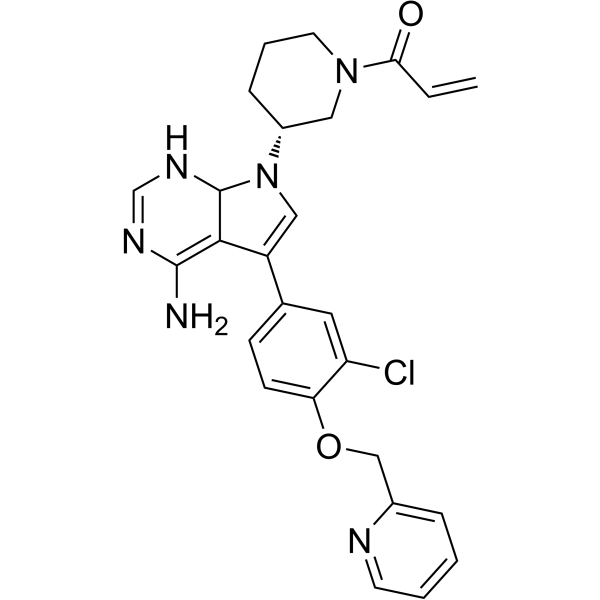
EGFR-IN-34 is a potent inhibitor of EGFR. EGFR-IN-34 is an anti-tumor agent with low toxic side effects. EGFR-IN-35 is an acrylamide derivative compound. Overexpression and mutation of the epidermal growth factor receptor (EGFR) has been clearly demonstrated to lead to uncontrollable cell growth and is associated with the progression of most cancer diseases, especially NSCLC. EGFR-IN-34 has the potential for the research of diseases associated with EGFR mutations (extracted from patent WO2021185348A1, compound 12) .
loading...
    loading...
Cat. No.: HY-144052
CAS No.: 2711105-57-4
Target:  

EGFR

Research Areas:  

Cancer

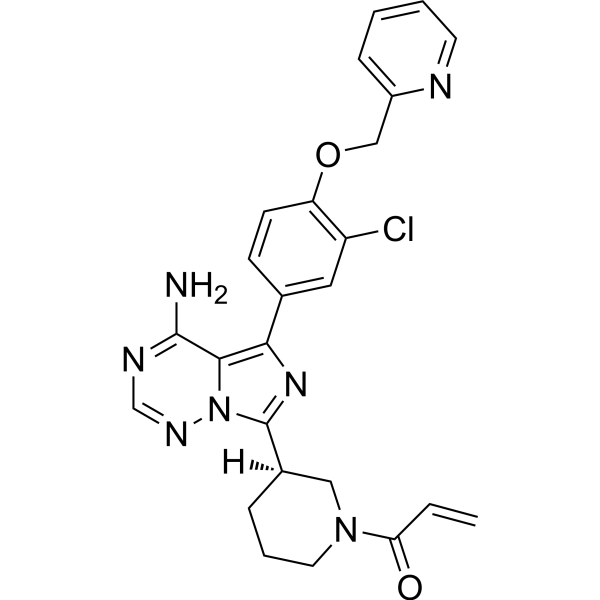
EGFR-IN-35 is a potent inhibitor of EGFR. EGFR-IN-35 is an anti-tumor agent with low toxic side effects. EGFR-IN-35 is an acrylamide derivative compound. Overexpression and mutation of the epidermal growth factor receptor (EGFR) has been clearly demonstrated to lead to uncontrollable cell growth and is associated with the progression of most cancer diseases, especially NSCLC. EGFR-IN-35 has the potential for the research of diseases associated with EGFR mutations (extracted from patent WO2021185348A1, compound 11) .
loading...
    loading...
Cat. No.: HY-144054
CAS No.: 2711105-53-0
Target:  

EGFR

Research Areas:  

Cancer

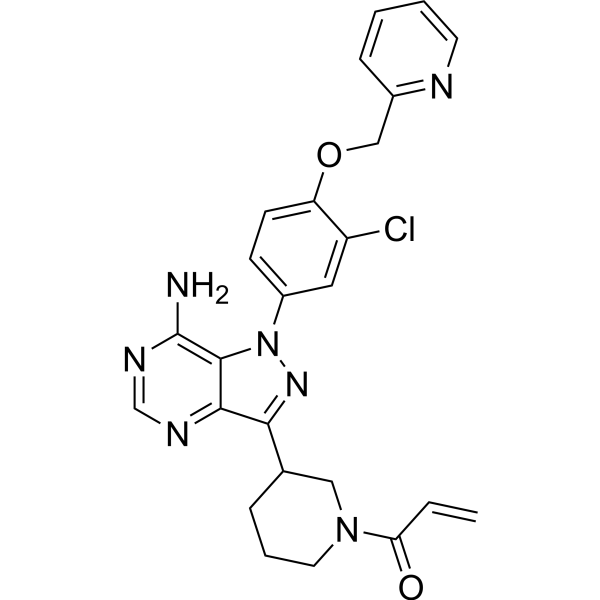
EGFR-IN-37 is a potent inhibitor of EGFR. EGFR-IN-37 is an anti-tumor agent with low toxic side effects. EGFR-IN-39 is an acrylamide derivative compound. Overexpression and mutation of the epidermal growth factor receptor (EGFR) has been clearly demonstrated to lead to uncontrollable cell growth and is associated with the progression of most cancer diseases, especially NSCLC. EGFR-IN-37 has the potential for the research of diseases associated with EGFR mutations (extracted from patent WO2021185348A1, compound 7) .
loading...
    loading...
Cat. No.: HY-144055
CAS No.: 2711105-50-7
Target:  

EGFR

Research Areas:  

Cancer

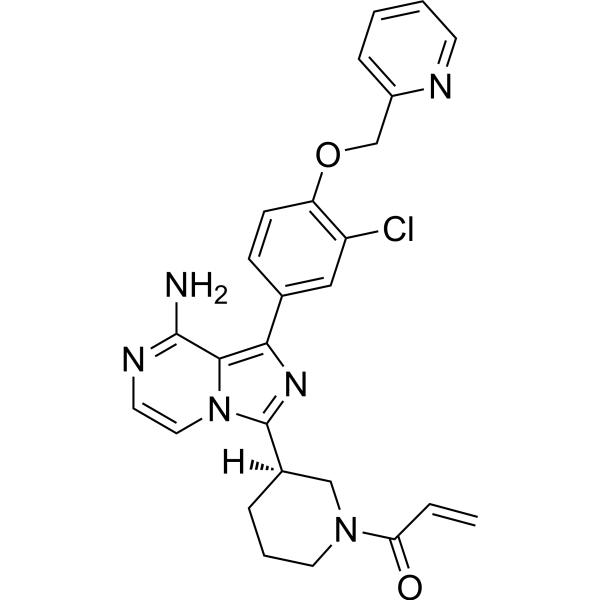
EGFR-IN-38 is a potent inhibitor of EGFR. EGFR-IN-38 is an anti-tumor agent with low toxic side effects. EGFR-IN-33 is an acrylamide derivative compound. Overexpression and mutation of the epidermal growth factor receptor (EGFR) has been clearly demonstrated to lead to uncontrollable cell growth and is associated with the progression of most cancer diseases, especially NSCLC. EGFR-IN-38 has the potential for the research of diseases associated with EGFR mutations (extracted from patent WO2021185348A1, compound 4) .
loading...
    loading...
Cat. No.: HY-144056
CAS No.: 2711105-48-3
Target:  

EGFR

Research Areas:  

Cancer

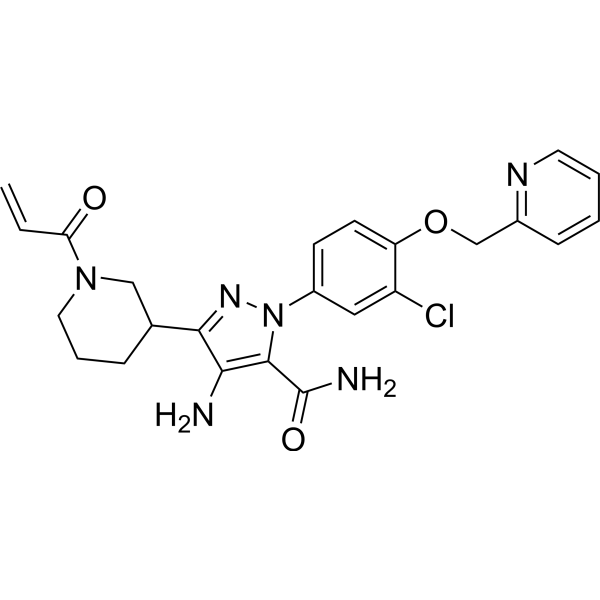
EGFR-IN-39 is a potent inhibitor of EGFR. EGFR-IN-39 is an anti-tumor agent with low toxic side effects. EGFR-IN-39 is an acrylamide derivative compound. Overexpression and mutation of the epidermal growth factor receptor (EGFR) has been clearly demonstrated to lead to uncontrollable cell growth and is associated with the progression of most cancer diseases, especially NSCLC. EGFR-IN-39 has the potential for the research of diseases associated with EGFR mutations (extracted from patent WO2021185348A1, compound 2) .
loading...
    loading...
Cat. No.: HY-119385
CAS No.: 79262-47-8
Target:  

Dopamine Receptor

Research Areas:  

Neurological Disease

Savoxepin mesylate is a D2 dopamine receptor (D2 Dopamine Receptor) antagonist with antipsychotic activity. Savoxepin mesylate selectively blocks dopamine D2 receptors in the hippocampus while having no significant effect on D2 receptors in the striatum. This selective blockade helps reduce the risk of extrapyramidal side effects (EPS) .
loading...
    loading...
Cat. No.: HY-143585
CAS No.: 2650640-17-6
Purity:  99.91%
Target:  

CDK

Research Areas:  

Cancer

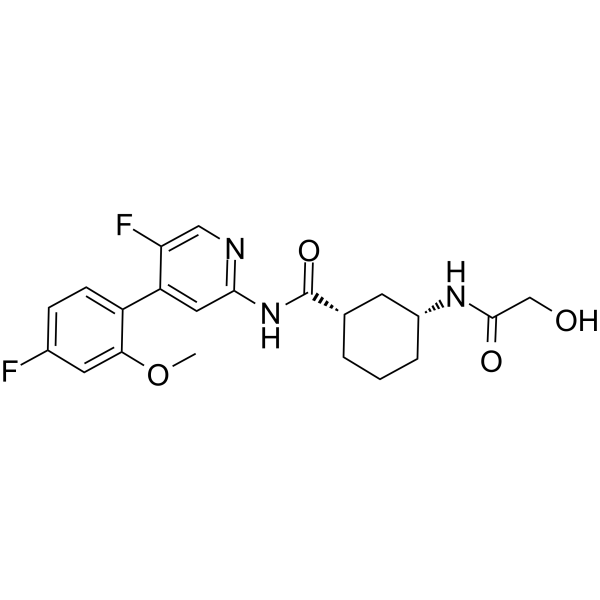
CDK9-IN-14 is a potent and selective CDK9 inhibitor with IC50 of 6.92 nM. CDK9-IN-14 has a relatively strong inhibitory effect on MV4;11 cells and in vivo tumor models, and has a good selectivity and a low toxicity and few side effects .
loading...
    loading...
Cat. No.: HY-120721
CAS No.: 150693-65-5
Lagunamycin is a 5-lipoxygenase inhibitor isolated from the culture medium of Streptomyces sp. AA0310. Lagunamycin has a significant inhibitory activity against rat 5-lipoxygenase with an IC50 value of 6.08 μM. Lagunamycin can effectively inhibit 5-lipoxygenase without causing lipid peroxidation, indicating that it has an effective inhibitory effect without causing side effects.
loading...
    loading...
Cat. No.: HY-B0557R
CAS No.: 603-50-9
Bisacodyl (Standard) is the analytical standard of Bisacodyl. This product is intended for research and analytical applications. Bisacodyl is a stimulant laxative agent that works directly on the colon to produce a bowel movement. Bisacodyl increases the secretion of PGE2 by direct activation of colon macrophages. PGE2 acts as a paracrine factor and decreases the expression of AQP3 in the colon, which inhibits water transfer from the luminal to the vascular side and leads to a laxative effect .
loading...
    loading...
Cat. No.: HY-W328882
CAS No.: 1075-61-2
Target:  

Endogenous Metabolite

Research Areas:  

Cardiovascular Disease

3-(2-Aminopropyl)phenol is a biologically active compound with significant blood pressure-raising activity. 3-(2-Aminopropyl)phenol can effectively improve the symptoms of orthostatic hypotension in patients. 3-(2-Aminopropyl)phenol can significantly increase blood pressure at rest and when standing after oral administration. 3-(2-Aminopropyl)phenol can help reduce pathological orthostatic adjustment disorders. 3-(2-Aminopropyl)phenol has a relatively small effect on heart rate, and no significant side effects have been observed .
loading...
    loading...
Cat. No.: HY-117649
CAS No.: 120382-04-9
Target:  

Estrogen Receptor/ERR

Research Areas:  

Cancer

RU-39411 is a steroidal anti-estrogen with mixed estrogenic/antiestrogen activity. RU-39411 has shown inhibitory effects on cell growth in the MCF-7 breast cancer model, with the effect being correlated with its binding affinity to the estrogen receptor. RU-39411 was able to downregulate the estrogen binding capacity of cells, but did not reduce estrogen receptor mRNA levels, indicating that the grafting of its side chain prevents the antagonistic effects usually associated with steroidal estrogens. The administration of RU-39411 can promote the synthesis of progesterone receptors, further supporting its activity as an estrogen .
loading...
    loading...
Cat. No.: HY-138110
CAS No.: 19804-27-4
Purity:  97.23%
Synonyms: 4-Methyldiphenhydramine
Toladryl is a derivative of Diphenhydramine (HY-B0303), capable of penetrating the blood-brain barrier and possessing oral activity, as well as antihistamine and anticholinergic activities. The anticholinergic activity of Toladryl is approximately one-tenth that of Diphenhydramine (HY-B0303), and its protective effect against lethal doses of histamine in guinea pigs is 2 to 4 times that of Diphenhydramine (HY-B0303). The side effects of Toladryl are fewer and milder than those of Diphenhydramine (HY-B0303), but at higher doses, it may cause central nervous system symptoms such as insomnia, agitation, and disorientation. Toladryl can be used for research in allergic diseases .
loading...
    loading...
Cat. No.: HY-173397
CAS No.: 3081681-34-4
Research Areas:  

Metabolic Disease

β-Glucuronidase-IN-3 (Compound 49) is a covalent allosteric β-glucuronidase inhibitor. β-Glucuronidase-IN-3 has potent inhibitory activity against Escherichia coli β-glucuronidase (EcGUS) (IC50: 12.9 nM). β-Glucuronidase-IN-3 exerts its inhibitory effect by reversibly covalently modifying the cysteine residues (Cys28, Cys443, and Cys197) of EcGUS. β-Glucuronidase-IN-3 can be used in the study of intestinal microbiota-related diseases, especially to alleviate the toxic side effects of Irinotecan (HY-16562) and nonsteroidal anti-inflammatory drugs (NSAIDs) .
loading...
    loading...
Cat. No.: HY-138110R
CAS No.: 19804-27-4
Synonyms: 4-Methyldiphenhydramine (Standard)
Toladryl (Standard) is the analytical standard of Toladryl. This product is intended for research and analytical applications. Toladryl is a derivative of Diphenhydramine (HY-B0303), capable of penetrating the blood-brain barrier and possessing oral activity, as well as antihistamine and anticholinergic activities. The anticholinergic activity of Toladryl is approximately one-tenth that of Diphenhydramine (HY-B0303), and its protective effect against lethal doses of histamine in guinea pigs is 2 to 4 times that of Diphenhydramine (HY-B0303). The side effects of Toladryl are fewer and milder than those of Diphenhydramine (HY-B0303), but at higher doses, it may cause central nervous system symptoms such as insomnia, agitation, and disorientation. Toladryl can be used for research in allergic diseases .
loading...
    loading...

