

61 Results for "

stem tissue

" in MedChemExpress (MCE) Product Catalog:
Products (61)

61 Results for "stem tissue" in MCE Product Catalog:

Cat. No.: HY-N0565R
CAS No.: 564-25-0
Doxycycline (Standard) is the analytical standard of Doxycycline (HY-N0565). This product is intended for research and analytical applications. Doxycycline is an orally active highly lipophilic, tissue-permeable MMP inhibitor with broad-spectrum antibacterial activity. Doxycycline is also a semi-synthetic antibiotic with chelating properties, which blocks bacterial protein synthesis and inhibits extracellular matrix degradation through interactions with zinc and calcium atoms. Doxycycline also inhibits mitochondrial biogenesis, translation, and the expression of respiratory chain proteins. Doxycycline induces apoptosis, inhibits autophagy and EMT, downregulates stem cell markers, and activates the PI3K-AKT pathway, thereby effectively inhibiting the viability and proliferation of cancer cells such as breast cancer cells. Doxycycline also promotes the survival and self-renewal of embryonic stem cells and neural stem cells, and reduces the frequency of medium changes in culture. Doxycycline has been applied in studies related to breast cancer, prostate cancer, bladder cancer, and other cancers .
loading...
    loading...
Cat. No.: HY-113081R
CAS No.: 15763-06-1
1-Methyladenosine (Standard) is the analytical standard of 1-Methyladenosine. This product is intended for research and analytical applications. 1-Methyladenosine is an RNA modification that can serve as a tumor marker, with elevated levels in the body associated with cancer development. Following 1-methyladenosine methylation, upregulation of PPARδ expression regulates cholesterol metabolism and activates Hedgehog signaling pathway, driving liver tumorigenesis . In Vitro:Compared to surrounding tumor tissues, 1-methyladenosine methylation in RNA is aberrantly elevated in hepatocellular carcinoma (HCC) cell lines and liver cancer stem cells (CSCs). Methylated 1-methyladenosine can promote cholesterol synthesis and activate the Hedgehog signaling pathway by enhancing the translation of PPARδ in liver CSCs, ultimately driving the self-renewal and tumorigenesis of liver cancer stem cells .
loading...
    loading...
Cat. No.: HY-N0565BR
CAS No.: 24390-14-5
Synonyms: Doxycycline hydrochloride hemiethanolate hemihydrate (Standard); WC2031 (Standard)
Doxycycline hyclate (Standard) is the analytical standard of Doxycycline hyclate (HY-N0565B). This product is intended for research and analytical applications. Doxycycline hyclate is an orally active highly lipophilic, tissue-permeable MMP inhibitor with broad-spectrum antibacterial activity. Doxycycline hyclate is also a semi-synthetic antibiotic with chelating properties, which blocks bacterial protein synthesis and inhibits extracellular matrix degradation through interactions with zinc and calcium atoms. Doxycycline hyclate also inhibits mitochondrial biogenesis, translation, and the expression of respiratory chain proteins. Doxycycline hyclate induces apoptosis, inhibits autophagy and EMT, downregulates stem cell markers, and activates the PI3K-AKT pathway, thereby effectively inhibiting the viability and proliferation of cancer cells such as breast cancer cells. Doxycycline hyclate also promotes the survival and self-renewal of embryonic stem cells and neural stem cells, and reduces the frequency of medium changes in culture. Doxycycline hyclate has been applied in studies related to breast cancer, prostate cancer, bladder cancer, and other cancers .
loading...
    loading...
Cat. No.: HY-B0356R
CAS No.: 85721-33-1
Synonyms: Bay-09867 (Standard)
Ciprofloxacin (Standard) is the analytical standard of Ciprofloxacin. This product is intended for research and analytical applications. Ciprofloxacin (Bay-09867) is an orally active, blood-brain barrier permeable fluoroquinolone antibacterial agent. Ciprofloxacin exerts bactericidal effects primarily by inhibiting topoisomerase II and IV. Ciprofloxacin inhibits the proliferation of human dental pulp stem cells and chondrocytes from young rats, and also activates the Akt signaling pathway and upregulates markers such as β-catenin and Nanog to maintain the morphological characteristics of stem cells. Ciprofloxacin induces significant neurotoxicity and tissue damage, including reducing serotonin and glutathione levels in the brain, inducing oxidative stress and depression-like behaviors, and causing articular cartilage damage. Ciprofloxacin can be applied to research related to infections of necrotic young permanent teeth and neurotoxicity .
loading...
    loading...
Cat. No.: HY-P0316
CAS No.: 121341-81-9
Target:  

Thrombin NO Synthase

Research Areas:  

Cardiovascular Disease

TP508 is a 23-amino acid nonproteolytic thrombin peptide that represents a portion of the receptor-binding domain of thrombin molecule. TP508 activates endothelial NO synthase (eNOS) and stimulates production of NO in human endothelial cells. TP508 activates endothelial cells and stem cells to revascularize and regenerate tissues .
loading...
    loading...
Cat. No.: HY-Y0332G
CAS No.: 7778-77-0
Synonyms: Potassium phosphate monobasic, for molecular biology
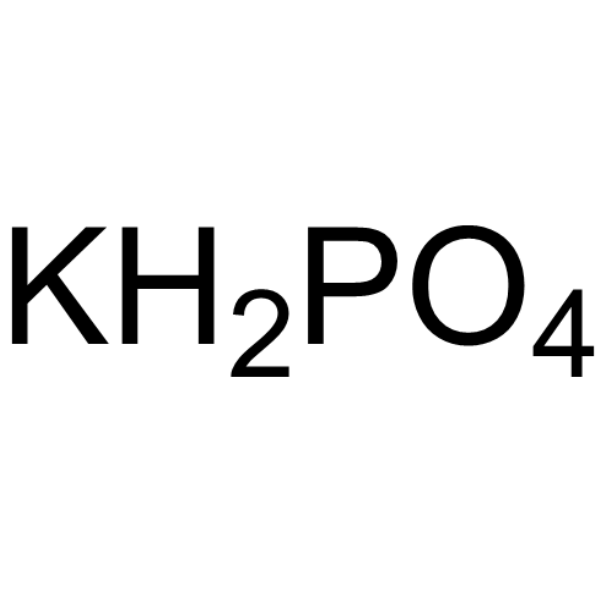
Potassium dihydrogen phosphate, for molecular biology (Potassium phosphate monobasic, for molecular biology) is a potassium salt. Potassium dihydrogen phosphate, for molecular biology activates NF-κB. Potassium dihydrogen phosphate, for molecular biology upregulates the expression of dental/osteogenic markers (OCN, DSP/DSPP, OSX, RUNX2, ALP) and enhances the mineralization capacity of human periodontal ligament stem cells. Potassium dihydrogen phosphate, for molecular biology promotes the proliferation of human periodontal ligament stem cells in logarithmic growth phase. Potassium dihydrogen phosphate, for molecular biology promotes the growth of somatic embryos of Dendrobium Sonia, increases leaf number, leaf length and fresh weight of tissue-cultured seedlings. Potassium dihydrogen phosphate, for molecular biology is applicable to periodontal disease-related research .
loading...
    loading...
Cat. No.: HY-N0565AS
Doxycycline-d3 hydrochloride is deuterium labeled Doxycycline hydrochloride (HY-N0565A). Doxycycline hydrochloride is an orally active highly lipophilic, tissue-permeable MMP inhibitor with broad-spectrum antibacterial activity. Doxycycline hydrochloride is also a semi-synthetic antibiotic with chelating properties, which blocks bacterial protein synthesis and inhibits extracellular matrix degradation through interactions with zinc and calcium atoms. Doxycycline hydrochloride also inhibits mitochondrial biogenesis, translation, and the expression of respiratory chain proteins. Doxycycline hydrochloride induces apoptosis, inhibits autophagy and EMT, downregulates stem cell markers, and activates the PI3K-AKT pathway, thereby effectively inhibiting the viability and proliferation of cancer cells such as breast cancer cells. Doxycycline hydrochloride also promotes the survival and self-renewal of embryonic stem cells and neural stem cells, and reduces the frequency of medium changes in culture. Doxycycline hydrochloride has been applied in studies related to breast cancer, prostate cancer, bladder cancer, and other cancers .
loading...
    loading...
Cat. No.: HY-N0565S3
CAS No.: 1902958-13-7
Doxycycline- 13C,d3 is 13C and deuterium labeled Doxycycline (HY-N0565). Doxycycline is an orally active highly lipophilic, tissue-permeable MMP inhibitor with broad-spectrum antibacterial activity. Doxycycline is also a semi-synthetic antibiotic with chelating properties, which blocks bacterial protein synthesis and inhibits extracellular matrix degradation through interactions with zinc and calcium atoms. Doxycycline also inhibits mitochondrial biogenesis, translation, and the expression of respiratory chain proteins. Doxycycline induces apoptosis, inhibits autophagy and EMT, downregulates stem cell markers, and activates the PI3K-AKT pathway, thereby effectively inhibiting the viability and proliferation of cancer cells such as breast cancer cells. Doxycycline also promotes the survival and self-renewal of embryonic stem cells and neural stem cells, and reduces the frequency of medium changes in culture. Doxycycline has been applied in studies related to breast cancer, prostate cancer, bladder cancer, and other cancers .
loading...
    loading...
Cat. No.: HY-Y0332L
CAS No.: 7778-77-0
Synonyms: Potassium phosphate monobasic, meets analytical specification of Ph. Eur., NF, E340
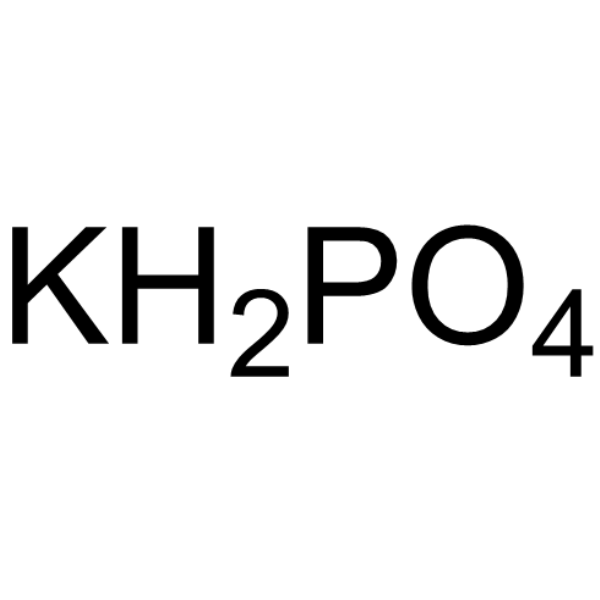
Potassium dihydrogen phosphate, meets analytical specification of Ph. Eur., NF, E340 (Potassium phosphate monobasic, meets analytical specification of Ph. Eur., NF, E340) is a potassium salt. Potassium dihydrogen phosphate, meets analytical specification of Ph. Eur., NF, E340 activates NF-κB. Potassium dihydrogen phosphate, meets analytical specification of Ph. Eur., NF, E340 upregulates the expression of dental/osteogenic markers (OCN, DSP/DSPP, OSX, RUNX2, ALP) and enhances the mineralization capacity of human periodontal ligament stem cells. Potassium dihydrogen phosphate, meets analytical specification of Ph. Eur., NF, E340 promotes the proliferation of human periodontal ligament stem cells in logarithmic growth phase. Potassium dihydrogen phosphate, meets analytical specification of Ph. Eur., NF, E340 promotes the growth of somatic embryos of Dendrobium Sonia, increases leaf number, leaf length and fresh weight of tissue-cultured seedlings. Potassium dihydrogen phosphate, meets analytical specification of Ph. Eur., NF, E340 is applicable to periodontal disease-related research .
loading...
    loading...
Cat. No.: HY-P0316A
Target:  

Thrombin NO Synthase

Research Areas:  

Cardiovascular Disease

TP508 TFA is a 23-amino acid nonproteolytic thrombin peptide that represents a portion of the receptor-binding domain of thrombin molecule. TP508 TFA activates endothelial NO synthase (eNOS) and stimulates production of NO in human endothelial cells. TP508 TFA activates endothelial cells and stem cells to revascularize and regenerate tissues .
loading...
    loading...
Cat. No.: HY-145686
CAS No.: 1107710-62-2
Purity:  99.31%
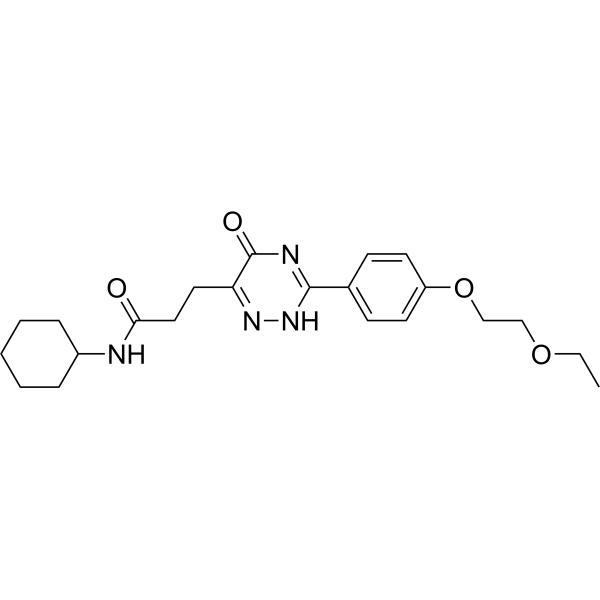
AV023 is a potent inhibitor of ANKRD22. AV023 promotes the expansion of gastrointestinal mucosal epithelial stem cells and indirectly activates the Wnt classical pathway, which helps the recovery of damaged gastrointestinal mucosal tissues in the body (extracted from patent CN111205231B) .
loading...
    loading...
Cat. No.: HY-Y0332J
CAS No.: 7778-77-0
Synonyms: Potassium phosphate monobasic (Pharmaceutical primary standard, USP)
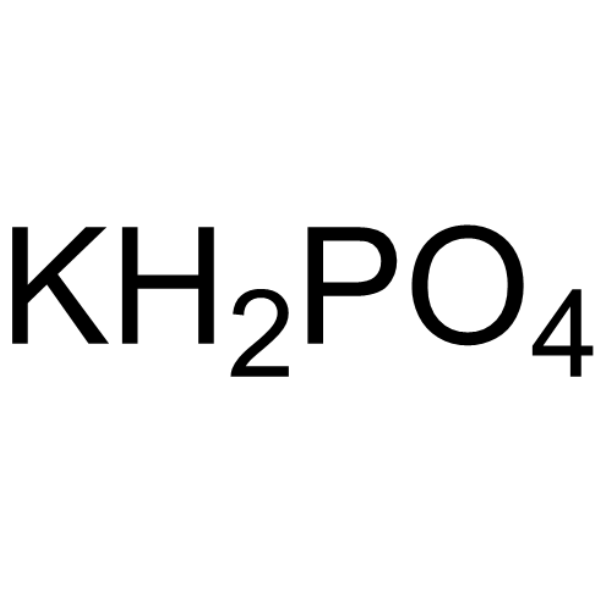
Potassium dihydrogen phosphate, United States Pharmacopeia (USP) Reference Standard (Potassium phosphate monobasic (Pharmaceutical primary standard, USP)) is a potassium salt. Potassium dihydrogen phosphate, United States Pharmacopeia (USP) Reference Standard activates NF-κB. Potassium dihydrogen phosphate, United States Pharmacopeia (USP) Reference Standard upregulates the expression of dental/osteogenic markers (OCN, DSP/DSPP, OSX, RUNX2, ALP) and enhances the mineralization capacity of human periodontal ligament stem cells. Potassium dihydrogen phosphate, United States Pharmacopeia (USP) Reference Standard promotes the proliferation of human periodontal ligament stem cells in logarithmic growth phase. Potassium dihydrogen phosphate, United States Pharmacopeia (USP) Reference Standard promotes the growth of somatic embryos of Dendrobium Sonia, increases leaf number, leaf length and fresh weight of tissue-cultured seedlings. Potassium dihydrogen phosphate, United States Pharmacopeia (USP) Reference Standard is applicable to periodontal disease-related research .
loading...
    loading...
Cat. No.: HY-174544
Target:  

mRNA

Research Areas:  

Cancer

Human POU class 5 homeobox 1 (POU5F1) mRNA encodes a transcription factor containing a POU homeodomain that plays a key role in embryonic development and stem cell pluripotency. Aberrant expression of this gene in adult tissues is associated with tumorigenesis.
loading...
    loading...
Cat. No.: HY-171852
CAS No.: 2007-00-3
Research Areas:  

Cancer

Iodoquine is an analog of chloroquine. Iodoquine exhibits high uptake in tumor cells and can localize to cells with high ALDH1 content, including cancer stem cells. With low uptake in normal brain tissue, iodoquine can be used in research related to tumor diagnosis or as a radiotracer .
loading...
    loading...
Cat. No.: HY-N0565C
CAS No.: 94088-85-4
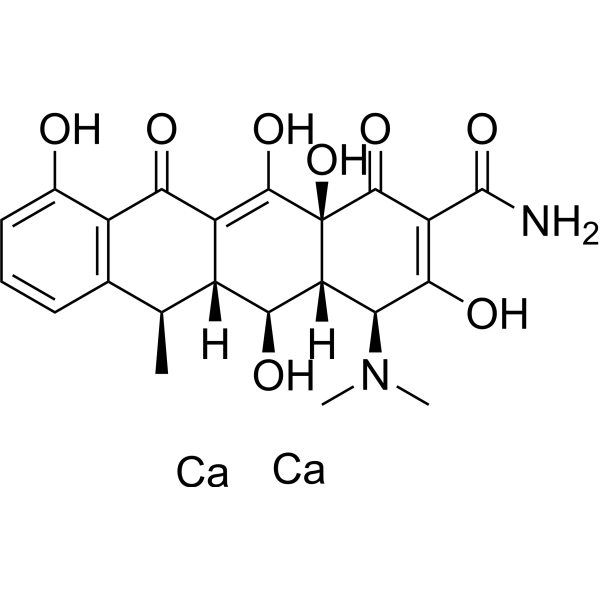
Doxycycline calcium is an orally active highly lipophilic, tissue-permeable MMP inhibitor with broad-spectrum antibacterial activity. Doxycycline calcium is also a semi-synthetic antibiotic with chelating properties, which blocks bacterial protein synthesis and inhibits extracellular matrix degradation through interactions with zinc and calcium atoms. Doxycycline calcium also inhibits mitochondrial biogenesis, translation, and the expression of respiratory chain proteins. Doxycycline calcium induces apoptosis, inhibits autophagy and EMT, downregulates stem cell markers, and activates the PI3K-AKT pathway, thereby effectively inhibiting the viability and proliferation of cancer cells such as breast cancer cells. Doxycycline calcium also promotes the survival and self-renewal of embryonic stem cells and neural stem cells, and reduces the frequency of medium changes in culture. Doxycycline calcium has been applied in studies related to breast cancer, prostate cancer, bladder cancer, and other cancers .
loading...
    loading...
Cat. No.: HY-W008923R
CAS No.: 17086-28-1
Doxycycline monohydrate (Standard) is the analytical standard of Doxycycline monohydrate (HY-W008923). Doxycycline monohydrate is an orally active highly lipophilic, tissue-permeable MMP inhibitor with broad-spectrum antibacterial activity. Doxycycline monohydrate is also a semi-synthetic antibiotic with chelating properties, which blocks bacterial protein synthesis and inhibits extracellular matrix degradation through interactions with zinc and calcium atoms. Doxycycline monohydrate also inhibits mitochondrial biogenesis, translation, and the expression of respiratory chain proteins. Doxycycline monohydrate induces apoptosis, inhibits autophagy and EMT, downregulates stem cell markers, and activates the PI3K-AKT pathway, thereby effectively inhibiting the viability and proliferation of cancer cells such as breast cancer cells. Doxycycline monohydrate also promotes the survival and self-renewal of embryonic stem cells and neural stem cells, and reduces the frequency of medium changes in culture. Doxycycline monohydrate has been applied in studies related to breast cancer, prostate cancer, bladder cancer, and other cancers .
loading...
    loading...
Cat. No.: HY-B0356AR
CAS No.: 93107-08-5
Synonyms: Bay-09867 monohydrochloride (Standard)
Ciprofloxacin monohydrochloride (Standard) is the analytical standard of Ciprofloxacin (monohydrochloride). This product is intended for research and analytical applications. Ciprofloxacin (Bay-09867) monohydrochloride is an orally active, blood-brain barrier permeable fluoroquinolone antibacterial agent. Ciprofloxacin monohydrochloride exerts bactericidal effects primarily by inhibiting topoisomerase II and IV. Ciprofloxacin monohydrochloride inhibits the proliferation of human dental pulp stem cells and chondrocytes from young rats, and also activates the Akt signaling pathway and upregulates markers such as β-catenin and Nanog to maintain the morphological characteristics of stem cells. Ciprofloxacin monohydrochloride induces significant neurotoxicity and tissue damage, including reducing serotonin and glutathione levels in the brain, inducing oxidative stress and depression-like behaviors, and causing articular cartilage damage. Ciprofloxacin monohydrochloride can be applied to research related to infections of necrotic young permanent teeth and neurotoxicity .
loading...
    loading...
Cat. No.: HY-123933
CAS No.: 330471-93-7
Target:  

Glutaminase

Research Areas:  

Neurological Disease Cancer

TTGM 5826 is a tissue transglutaminase (tTG) inhibitor with an EC50 of 20 μM. TTGM 5826 stabilizes the open conformation of tTG that exhibits protein cross-linking activity, and acts as a competitive inhibitor of tTG-mediated cross-linking activity. TTGM 5826 inhibits the transformed phenotypes of breast cancer cells, brain cancer cells and glioma stem cells. TTGM 5826 can be used in the research of breast cancer, glioblastoma, pancreatic cancer and glioma stem cell-related tumors .
loading...
    loading...
Cat. No.: HY-L017
2,931 compounds

Adult stem cells are important for tissue homeostasis and regeneration due to their ability to self-renew and generate multiple types of differentiated daughters. Self-renewal is reflected by their capacity to undergo multiple/limitless divisions. Several signaling pathways are involved in self-renewal of stem cells, that is, Notch, Wnt, and Hedgehog pathways or Polycomb family proteins. Recent studies mainly focus on cancer stem cell (CSCs), induced pluripotent stem cell (iPSCs), neural stem cell and maintenance of embryonic stem cell pluripotency. Among them, CSCs have been believed to be responsible for tumor initiation, growth, and recurrence that have implications for cancer therapy.

MCE owns a unique collection of 2,931 compounds that can be used for stem cell regulatory and signaling pathway research.

Cat. No.: HY-DY2035
Target:  

Fluorescent Dye

Research Areas:  

Others

Plant Tissue Staining Solution (Toluidine Blue Method) is suitable for staining paraffin sections and freehand sections of higher plant stems and leaves; it offers a short staining time, stable results, and high contrast.
loading...
    loading...

