
572 Results for "

buffer

" in MedChemExpress (MCE) Product Catalog:
Products (572)

572 Results for "buffer" in MCE Product Catalog:

Cat. No.: HY-Y0849C
CAS No.: 631-61-8
Ammonium acetate, for molecular biology, 98% is a biochemical reagent that can be used as a biological material or organic compound for life science related research.
loading...
    loading...
Cat. No.: HY-Y1083C
CAS No.: 7778-80-5
Synonyms: Salt of lemery, for cell culture
Potassium sulfate, for cell culture (Salt of lemery, for cell culture) can be used in plant cell culture and as a potassium source in media preparation, promoting cell growth and maintaining osmotic balance .
loading...
    loading...
Cat. No.: HY-Y1102A
CAS No.: 142-71-2
Copper(II) acetate, 99.99% trace metals basis is a dinuclear metal complex that can be used a source of copper and oxidizing agent in inorganic synthesis, and as a catalyst in organic synthesis .
loading...
    loading...
Cat. No.: HY-Y1106
CAS No.: 7778-53-2
Tripotassium phosphate is a Bactericid with bactericidal activity primarily against Gram-negative bacteria. Tripotassium phosphate reduces the population counts of Enterobacteriaceae and Campylobacter in poultry skin rinsates. Tripotassium phosphate fails to reduce the population count of Enterococcus in poultry skin rinsates .
loading...
    loading...
Cat. No.: HY-Y1184B
CAS No.: 298-14-6
Synonyms: Potassium hydrogen carbonate, 99.5%(T)
Potassium bicarbonate, 99.5%(T) (Potassium hydrogen carbonate, 99.5%(T)) is a biologically active chemical .
loading...
    loading...
Cat. No.: HY-Y1184C
CAS No.: 298-14-6
Synonyms: Potassium hydrogen carbonate, meets analytical specification of Ph. Eur., BP, USP, E501, 99.5%(T)
Potassium bicarbonate (Potassium hydrogen carbonate) is a commonly used biochemical reagent. Potassium bicarbonate, meets analytical specification of Ph. Eur., BP, USP, E501, 99.5%(T) can be used as a biomaterial related to life science research .
loading...
    loading...
Cat. No.: HY-Y1267D
CAS No.: 7487-88-9
Magnesium sulfate, for cell culture is a bioreagent. Magnesium sulfate is a calcium antagonist and a potent L-type calcium channel inhibitor, as well as a tocolytic. Magnesium sulfate has anti-inflammatory, anticonvulsant, vasodilatory, and neuroprotective effects. Magnesium sulfate can be used in the research of diseases such as preeclampsia/eclampsia .
loading...
    loading...
Cat. No.: HY-Y1269D
CAS No.: 12125-02-9
Synonyms: Salmiac, for molecular biology
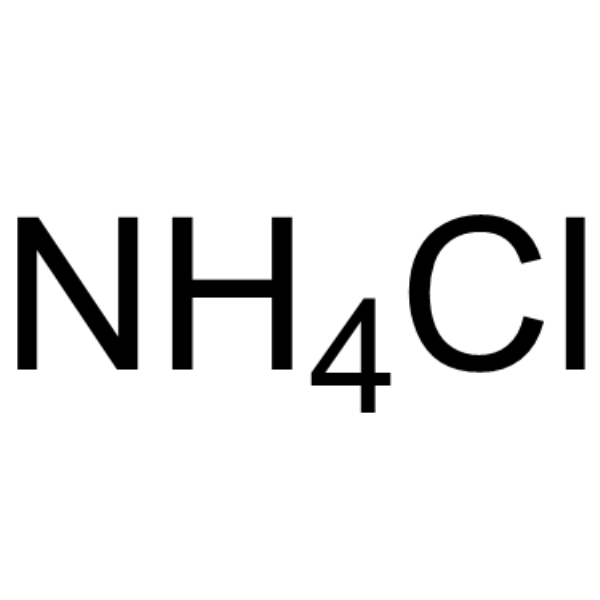
Ammonium chloride (Salmiac), for molecular biology is an inhibitor of Slc26a4 and SMAD2. Ammonium chloride, for molecular biology reduces the protein expression level of Slc26a4 in lung tissue, and attenuates ozone-induced increases in proinflammatory cytokines, inflammatory cells, pulmonary resistance, goblet cell hyperplasia, peribronchial inflammation and thiocyanate levels in mouse tissues and bronchoalveolar lavage fluid. Ammonium chloride, for molecular biology decreases the level of phosphorylated SMAD2, inhibits autophagy by reducing autophagy-related proteins, and enhances Cisplatin (HY-17394)-induced cancer cell apoptosis and DNA double-strand breaks. Ammonium chloride, for molecular biology also inhibits the TCA cycle, reduces ATP production, increases glucose utilization, regulates the levels of lactic acid, glutamic acid and ATP, and induces morphological degeneration of neuroblastoma cells. Ammonium chloride, for molecular biology can be used in studies related to ozone-induced airway injury, hepatocellular carcinoma, human cervical cancer, hepatic encephalopathy, Reye syndrome, epilepsy and neurodegenerative diseases .
loading...
    loading...
Cat. No.: HY-Y1269H
CAS No.: 12125-02-9
Synonyms: Salmiac, meets analytical specification of Ph. Eur. BP USP FCC
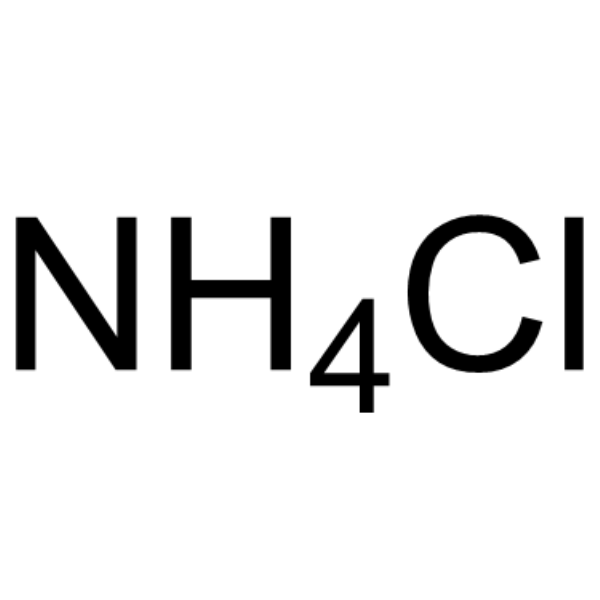
Ammonium chloride, meets analytical specification of Ph. Eur. BP USP FCC (Salmiac, meets analytical specification of Ph. Eur. BP USP FCC) is an inhibitor of Slc26a4 and SMAD2. Ammonium chloride, meets analytical specification of Ph. Eur. BP USP FCC reduces the protein expression level of Slc26a4 in lung tissue, and attenuates ozone-induced increases in proinflammatory cytokines, inflammatory cells, pulmonary resistance, goblet cell hyperplasia, peribronchial inflammation and thiocyanate levels in mouse tissues and bronchoalveolar lavage fluid. Ammonium chloride, meets analytical specification of Ph. Eur. BP USP FCC decreases the level of phosphorylated SMAD2, inhibits autophagy by reducing autophagy-related proteins, and enhances Cisplatin (HY-17394)-induced cancer cell apoptosis and DNA double-strand breaks. Ammonium chloride, meets analytical specification of Ph. Eur. BP USP FCC also inhibits the TCA cycle, reduces ATP production, increases glucose utilization, regulates the levels of lactic acid, glutamic acid and ATP, and induces morphological degeneration of neuroblastoma cells. Ammonium chloride, meets analytical specification of Ph. Eur. BP USP FCC can be used in studies related to ozone-induced airway injury, hepatocellular carcinoma, human cervical cancer, hepatic encephalopathy, Reye syndrome, epilepsy and neurodegenerative diseases .
loading...
    loading...
Cat. No.: HY-Y1269I
CAS No.: 12125-02-9
Synonyms: Salmiac (Pharmaceutical primary standard, USP)
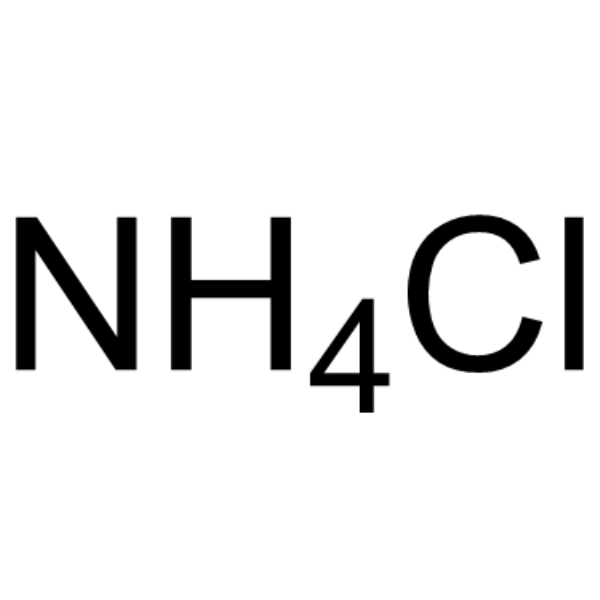
Ammonium chloride United States Pharmacopeia (USP) Reference Standard (Salmiac, Pharmaceutical primary standard, USP) is a reagent that can be used in cell culture to provide a source of nitrogen. Ammonium chloride can be used as a heteropolar compound to regulate pH value, which can cause intracellular alkalination and metabolic acidosis, thus affecting the activity of enzymes and affecting the process of biological systems. Ammonium chloride is also a lysosome inhibitor .
loading...
    loading...
Cat. No.: HY-Y1324
CAS No.: 10039-32-4
Synonyms: Disodium hydrogen phosphate dodecahydrate; Disodium phosphate dodecahydrate
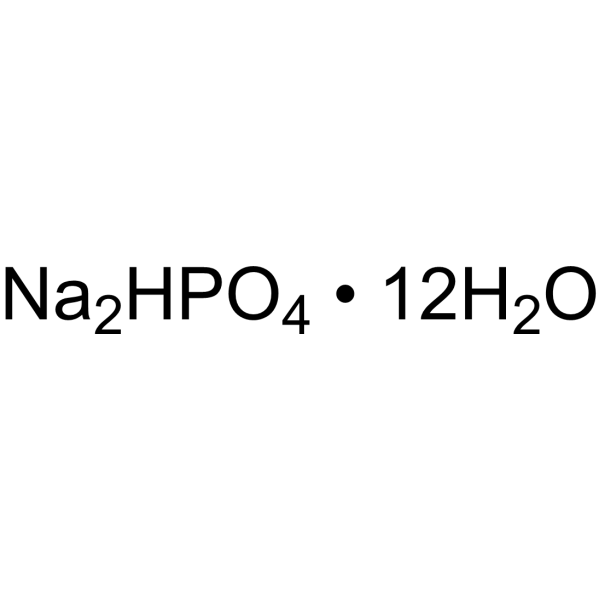
Phosphoric acid disodium dodecahydrate is an inorganic compound and food additive. Phosphoric acid disodium dodecahydrate promotes gel formation, improves food texture and thermal properties of materials. Phosphoric acid disodium dodecahydrate induces glomerular calcification. Phosphoric acid disodium dodecahydrate can be used in kidney disease research .
loading...
    loading...
Cat. No.: HY-Y1325E
CAS No.: 6131-90-4
Synonyms: Sodium acetate trihydrate (Pharmaceutical primary standard, USP)
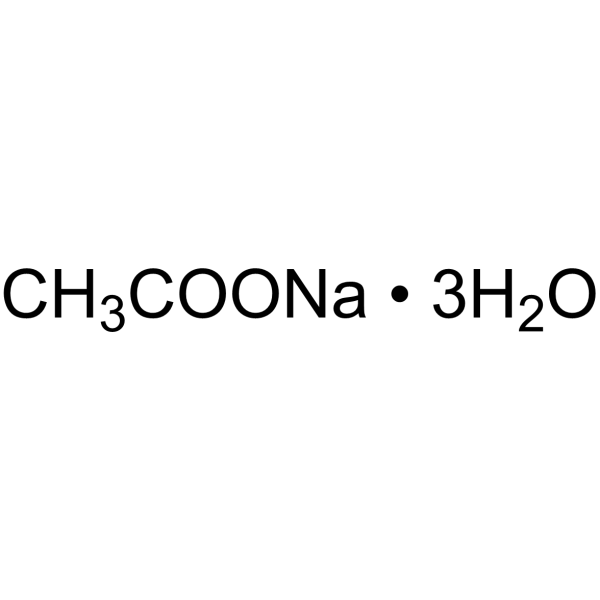
Sodium acetate trihydrate, United States Pharmacopeia (USP) Reference Standard (Sodium acetate trihydrate (Pharmaceutical primary standard, USP)) is a carboxylic acid and short-chain fatty acid (SCFAs). Sodium acetate trihydrate activates AMPK, increases ROS, cleaved caspase 9, PPARα, downregulates SREBP-1c, ChREBP expression. Sodium acetate trihydrate exhibits antifungal activity against Saccharomyces cerevisiae W303-1A. Sodium acetate trihydrate regulates energy metabolism. Sodium acetate trihydrate has anticancer activity against gastric cancer. Sodium acetate trihydrate induces writhing reaction and ulcerative colitis. Sodium acetate trihydrate can be used in the researches for gastric cancer, ulcerative colitis, hepatic steatosis, and pain .
loading...
    loading...
Cat. No.: HY-Y1325I
CAS No.: 6131-90-4
Sodium acetate trihydrate, 99.5% is a carboxylic acid and short-chain fatty acid (SCFAs). Sodium acetate trihydrate activates AMPK, increases ROS, cleaved caspase 9, PPARα, downregulates SREBP-1c, ChREBP expression. Sodium acetate trihydrate exhibits antifungal activity against Saccharomyces cerevisiae W303-1A. Sodium acetate trihydrate regulates energy metabolism. Sodium acetate trihydrate has anticancer activity against gastric cancer. Sodium acetate trihydrate induces writhing reaction and ulcerative colitis. Sodium acetate trihydrate can be used in the researches for gastric cancer, ulcerative colitis, hepatic steatosis, and pain .
loading...
    loading...
Cat. No.: HY-Y1329
CAS No.: 7601-54-9
Trisodium phosphate is a food additive. Trisodium phosphate affects the growth parameters (lag phase, maximum growth rate) of Listeria monocytogenes and increases the sensitivity of Gram-negative bacteria to Lysozyme (HY-P1068) and Nisin (HY-P1607) .
loading...
    loading...
Cat. No.: HY-Y1673
CAS No.: 7758-02-3
Potassium bromide, 99% is a salt, widely used as an anticonvulsant and a sedative. Potassium bromide is a redox reagent that can be used to remove peripheral membrane proteins in molecular biology .
loading...
    loading...
Cat. No.: HY-Y1881A
CAS No.: 7758-99-8
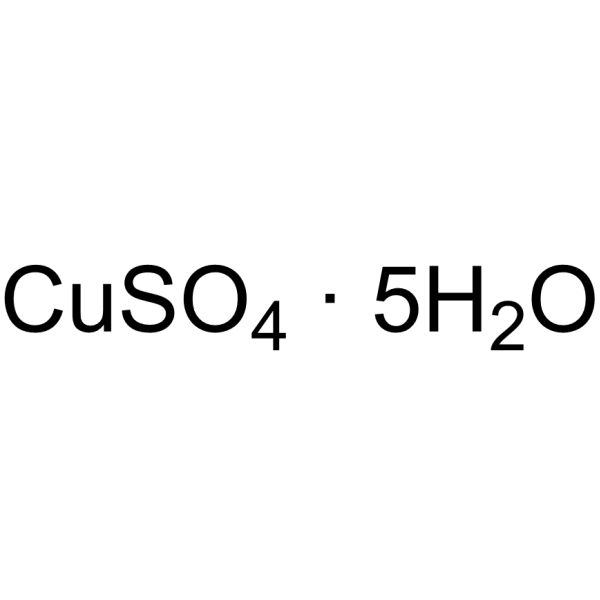
Copper sulfate pentahydrate, 99% is a biochemical reagent. Copper sulfate pentahydrate, 99% reduces the production of ROS and the expression levels of MyD88 as well as c-Rel genes. Copper sulfate pentahydrate, 99% decreases the activities of T-SOD, CAT, and GSH, increases the activities of caspase-3, caspase-8, and caspase-9. Copper sulfate pentahydrate, 99% is cytotoxic to various cells. Copper sulfate pentahydrate, 99% has antioxidant activity. Copper sulfate pentahydrate, 99% can be used in the research of diabetes, Parkinson's disease and DMBA (HY-W011845)-induced tumors .
loading...
    loading...
Cat. No.: HY-Y1913
CAS No.: 12045-78-2
Synonyms: Potassium biborate tetrahydrate, 99.5%
Potassium tetraborate tetrahydrate, 99.5% has antibacterial activity against Pectobacterium carotovorum. Potassium tetraborate tetrahydrate, 99.5% can be used as a biological material or organic compound for life science related research .
loading...
    loading...
Cat. No.: HY-Y1918
CAS No.: 7320-34-5
Synonyms: tetra-Potassium pyrophosphate
Potassium diphosphate (tetra-Potassium pyrophosphate) is a kind of biological materials or organic compounds that are widely used in life science research .
loading...
    loading...
Cat. No.: HY-Y1939A
CAS No.: 37267-86-0
Synonyms: Glacial phosphoric acid, 33.5-36.5%
Metaphosphoric acid, 33.5-36.5% (Glacial phosphoric acid, 33.5-36.5%) is a precipitant used for rapid enzymatic measurement of blood lactate and pyruvate. Metaphosphoric acid, 33.5-36.5% can also be used as a dehydrating agent, and its derivative sodium hexametaphosphate can be used as a chelating agent and food additive .
loading...
    loading...
Cat. No.: HY-D0008
CAS No.: 633-03-4
Target:  

Bacterial

Research Areas:  

Infection

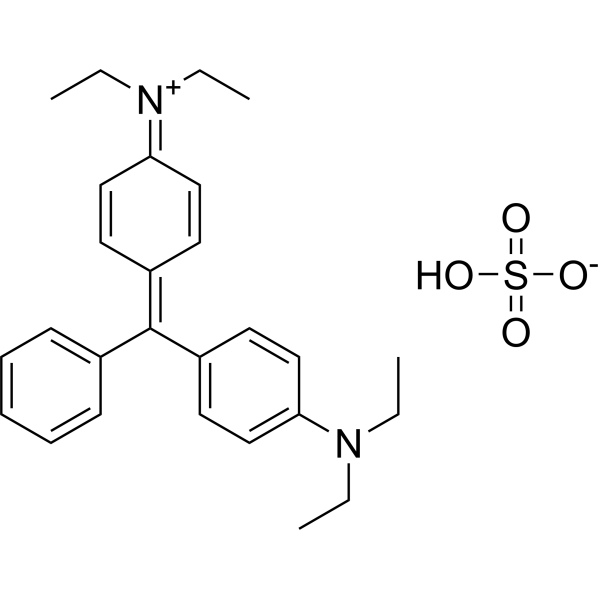
Brilliant green is a diaminotriphenylmethane compound and cationic dye that serves as a biological stain. Brilliant green exhibits strong antibacterial activity, with significant inhibitory effects on Gram-positive bacteria. The detection wavelength of Brilliant green is λmax = 625 nm .
loading...
    loading...

