



Sodium acetate trihydrate, United States Pharmacopeia (USP) Reference Standard
Based on 1 publication(s) in Google Scholar
Sodium acetate trihydrate, United States Pharmacopeia (USP) Reference Standard (Sodium acetate trihydrate (Pharmaceutical primary standard, USP)) is a carboxylic acid and short-chain fatty acid (SCFAs). Sodium acetate trihydrate activates AMPK, increases ROS, cleaved caspase 9, PPARα, downregulates SREBP-1c, ChREBP expression. Sodium acetate trihydrate exhibits antifungal activity against Saccharomyces cerevisiae W303-1A. Sodium acetate trihydrate regulates energy metabolism. Sodium acetate trihydrate has anticancer activity against gastric cancer. Sodium acetate trihydrate induces writhing reaction and ulcerative colitis. Sodium acetate trihydrate can be used in the researches for gastric cancer, ulcerative colitis, hepatic steatosis, and pain.
For research use only. We do not sell to patients.
- CAS No.: 6131-90-4
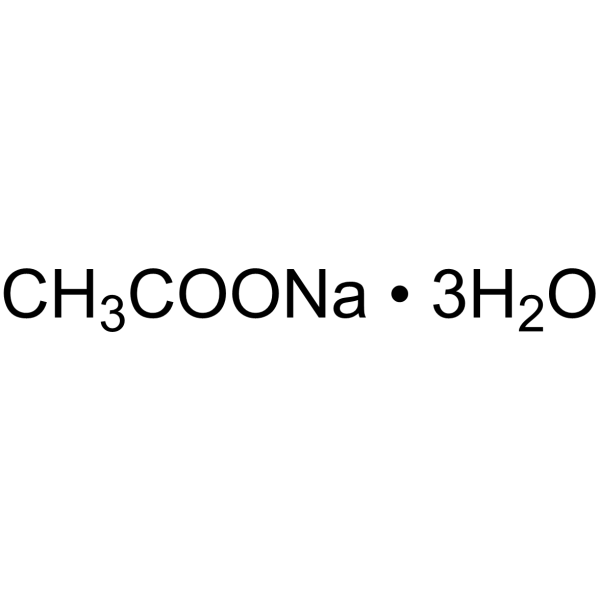
- Formula: C2H9NaO5
- Molecular Weight:136.08
-
Storage:
Please store the product under the recommended conditions in the Certificate of Analysis.

To place orders, for customer services and technical support, please contact: MedChemExpress USA
Tel: 609-228-6898 E-mail: [email protected] [email protected]


-
 Biological Activity
-
Chemical Information
- Purity & Documentation
- References
-
 Help & FAQs


-
HY-Y1325H
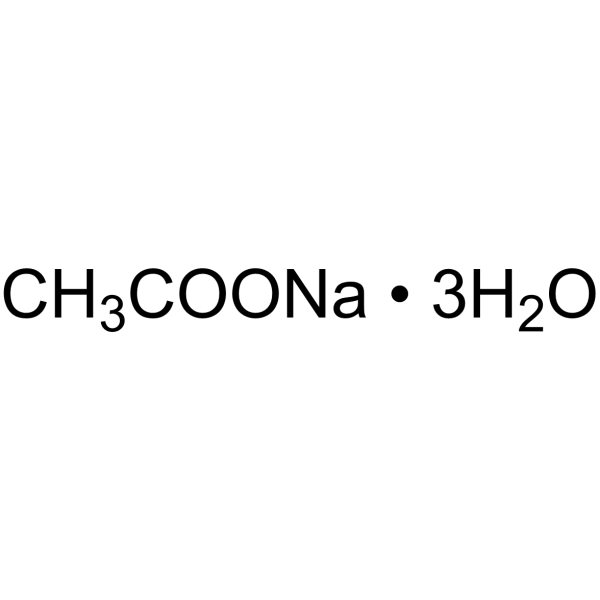
Sodium acetate trihydrate, meets analytical specification of Ph. Eur. BP USP FCC E262, ≤0.00002% Al -

HY-Y1325I
Sodium acetate trihydrate, 99.5% -
HY-Y0271
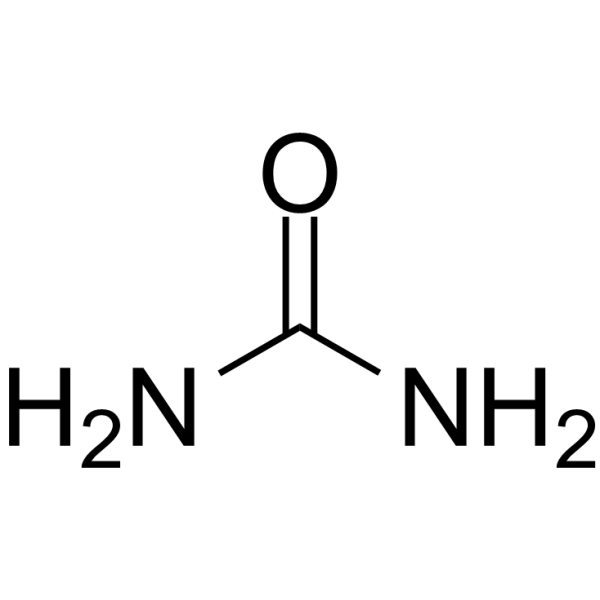
Urea -

HY-Y0344D
Sodium chloride, for cell culture -

HY-Y0271R
Urea (Standard) -
HY-B1659
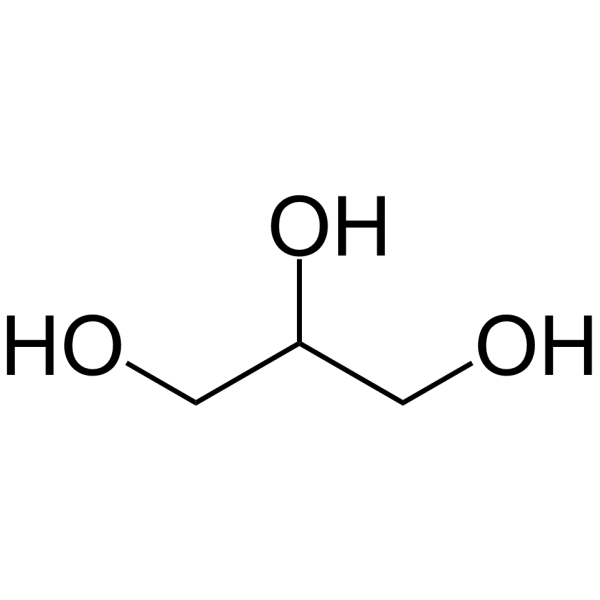
Glycerol -
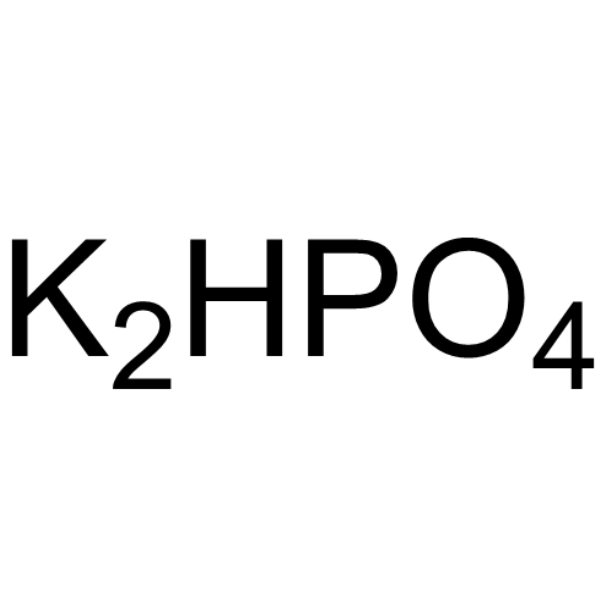
HY-W019883
Dipotassium hydrogen phosphate -
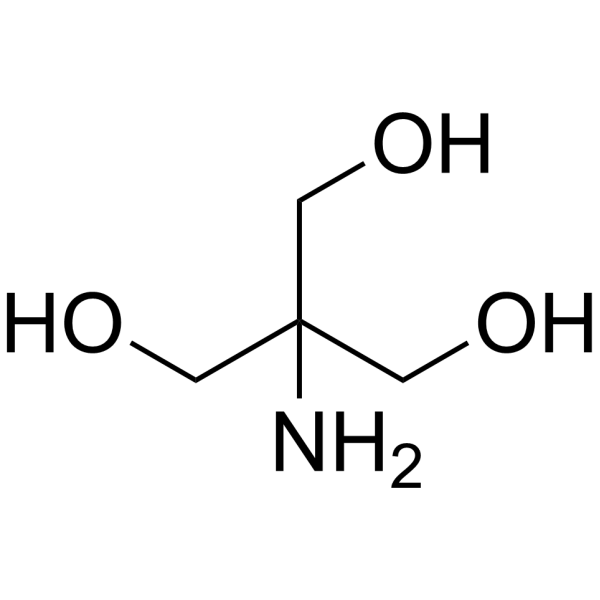
HY-D0227
THAM -
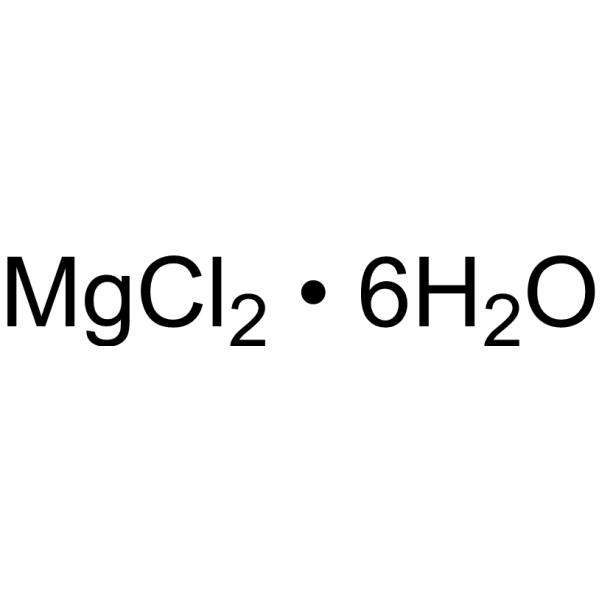
HY-W019981B
Magnesium chloride hexahydrate, for molecular biology
Publications Citing Use of MedChemExpress (MCE) Sodium acetate trihydrate, United States Pharmacopeia (USP) Reference Standard
MoreAll Caspase Isoforms
MoreAll Endogenous Metabolite Isoforms
MoreAll AMPK Isoforms
More

Biological Activity
Description
IC50 & Target
|
Microbial Metabolite |
Human Endogenous Metabolite |
PPARα |
Caspase 9 |
In Vitro
Sodium acetate trihydrate (Acetic acid; 2-5 µM; 24 h) induces cancer cell-selective death in gastric cancer cells (RGK1) via oxidative stress, while having minor effects on normal gastric mucosal cells (RGM1)[3].
Sodium acetate trihydrate (Acetic acid; 20-200 mM; 200 min) induces programmed cell death in Saccharomyces cerevisiae W303-1A[4].
Sodium acetate trihydrate (Acetic acid; 5 mM; 15 d) suppresses the increase in disaccharidase activity (sucrase, maltase, trehalase, lactase) in Caco-2 cells without affecting cell growth or glucose transport[5].
Sodium acetate trihydrate (Acetic acid; 1.8-7.2 mM; 3 h) activates the AMPKα signaling pathway by consuming ATP to increase the AMP/ATP ratio in bovine hepatocytes, upregulating lipid oxidation genes, downregulating lipogenic genes, and reducing intracellular triglyceride content[6].
MedChemExpress (MCE) has not independently confirmed the accuracy of these methods. They are for reference only.
-
Cell Line:Rat gastric mucosal cells (RGM1), cancerous gastric mucosal cells (RGK1)
-
Concentration:0, 1, 2, 5, 10, 20 µM
-
Incubation Time:24 h
-
Result:Increased monocarboxylic transporter 1 (MCT1) and cleaved caspase 9 in RGK1 cells.
Showed minor effects in RGM1 cells.
-
Cell Line:Bovine hepatocytes
-
Concentration:1.8 mM, 3.6 mM, 7.2 mM
-
Incubation Time:3 h
-
Result:Increased AMPKα phosphorylation and activity, upregulated PPARα expression, downregulated SREBP-1c and ChREBP expression.
In Vivo
Sodium acetate trihydrate (Acetic acid; 5% v/v; rectal instillation) induces ulcerative colitis in mice, causing weight loss, diarrhea, colonic inflammation, and tissue damage[8].
MedChemExpress (MCE) has not independently confirmed the accuracy of these methods. They are for reference only.


Chemical Information
-
CAS No. 6131-90-4
-
Molecular Weight 136.08
-
Formula C2H9NaO5
-
SMILES
[CH3COONa.3H2O]
-
Synonyms
Sodium acetate trihydrate (Pharmaceutical primary standard, USP)
-
Shipping
Room temperature in continental US; may vary elsewhere.
-
Storage
Please store the product under the recommended conditions in the Certificate of Analysis.


Publications (1)
-
Journal Impact Factor
-
Most Recent
-
Cell Death Dis
ACSS1 co-opts acetyl-CoA metabolism to drive DNA repair and undermine radiotherapy efficacy in breast cancer. [Abstract]2025 Dec 18. PMID: 41413018


Purity & Documentation
References
[1]. Syka JE, et al. Peptide and protein sequence analysis by electron transfer dissociation mass spectrometry. Proc Natl Acad Sci U S A. 2004 Jun 29;101(26):9528-33. [Content Brief]
[3]. Terasaki M, et al. Acetic acid is an oxidative stressor in gastric cancer cells. J Clin Biochem Nutr. 2018 Jul;63(1):36-41. [Content Brief]
[4]. Ludovico P, et al. Saccharomyces cerevisiae commits to a programmed cell death process in response to acetic acid. Microbiology (Reading). 2001 Sep;147(Pt 9):2409-2415. [Content Brief]
[5]. Ogawa N, et al. Acetic acid suppresses the increase in disaccharidase activity that occurs during culture of caco-2 cells. J Nutr. 2000 Mar;130(3):507-13. [Content Brief]
[6]. Li X, et al. Acetic acid activates the AMP-activated protein kinase signaling pathway to regulate lipid metabolism in bovine hepatocytes. PLoS One. 2013 Jul 4;8(7):e67880. [Content Brief]
[7]. Stevenson GW, et al. Targeting pain-suppressed behaviors in preclinical assays of pain and analgesia: effects of morphine on acetic acid-suppressed feeding in C57BL/6J mice. J Pain. 2006 Jun;7(6):408-16. [Content Brief]
[8]. Niu X, et al. Protective effect of sanguinarine against acetic acid-induced ulcerative colitis in mice. Toxicol Appl Pharmacol. 2013 Mar 15;267(3):256-65. [Content Brief]
[9]. Granado-Serrano AB, et al. Faecal bacterial and short-chain fatty acids signature in hypercholesterolemia. Sci Rep. 2019 Feb 11;9(1):1772. [Content Brief]

Calculators
Concentration (start) × Volume (start) = Concentration (final) × Volume (final)


Sodium acetate trihydrate, United States Pharmacopeia (USP) Reference Standard Related Classifications
HY-Y1325E Related Classifications
 Powered by Bioz
Keywords
- Sodium acetate trihydrate, United States Pharmacopeia (USP) Reference Standard
- 6131-90-4
- Sodium acetate trihydrate (Pharmaceutical primary standard, USP)
- Environmental Pollutants
- Caspase
- Reactive Oxygen Species (ROS)
- Endogenous Metabolite
- AMPK
- Fungal
- PPAR
- Inorganic salt
- Sodium acetate trihydrate
- Inhibitor
- inhibitor
- inhibit