59 Results for "

complement pathway

" in MedChemExpress (MCE) Product Catalog:
Products (59)

59 Results for "complement pathway" in MCE Product Catalog:

Cat. No.: HY-P5528
Target:  

Peptides

Research Areas:  

Others

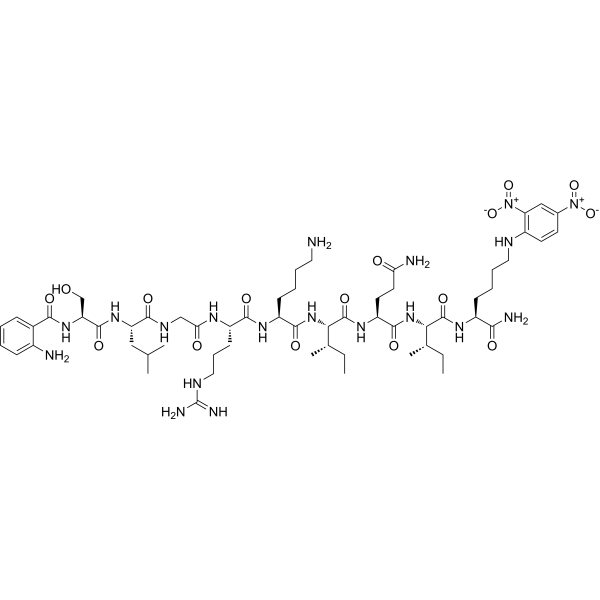
2Abz-SLGRKIQIK(Dnp)-NH2 is a biological active peptide. (This peptide is a second complement component (C2), the physiological substrate for the proenzyme Cls, first complement component. The complement system is a central component of host defense but can also contribute to the inflammation seen in pathological conditions. The C1s protease of the C1 complex initiates the host defense pathway. This peptide employs 2Abz/Dnp FRET pair for quantitation of complement enzyme activity.)
loading...
    loading...
Cat. No.: HY-NP0194B
C1q Protein (rabbit) is a complement protein and is a recognition molecule of the classical pathway, performs a diverse range of complement and non-complement functions. C1q Protein (rabbit) binds various ligands derived from self, non-self, and altered self and modulate the functions of immune
and non-immune cells. C1q Protein (rabbit) can be used for the research of mutiple disease .
loading...
    loading...
Cat. No.: HY-E70390
Synonyms: masp-2, c1 esterase, c1-esterase
Target:  

Wnt

C1s Enzyme is a subunit of the complement C1 complex, which activates the complement as a serine protease. C1s Enzyme cleaves LRP5 and LRP6, and thus activates the Wnt/β-Catenin signaling pathway. C1s Enzyme promotes the macrophage M2 polarization and inhibits M1 polarization. C1s Enzyme enhances efferocytosis, exhibits anti-inflammatory activity .
loading...
    loading...
Cat. No.: HY-P990955
CAS No.: 2839652-75-2
Synonyms: ADX-097

Target:  

CD3 Complement System

Research Areas:  

Inflammation/Immunology

Ebribafusp alfa (ADX-097) comprising a humanized anti-C3d monoclonal antibody linked to two moieties of the first five consensus repeats of factor H (fH1-5). Ebribafusp alfa binds C3d and related fragments, catalyzes AP convertase dissociation, acts as a factor I co-factor for C3b cleavage, and delivers fH1-5 moieties to C3d-deposited tissues for local complement inhibition without systemic blockade. Ebribafusp alfa reduces glomerular C3 deposition, proteinuria, urine albumin-creatinine ratios, and urine soluble C5b-9 levels, preserves podocyte foot-process architecture, inhibits skin complement activation, and localizes to UVB-damaged primate skin. Ebribafusp alfa can be used for the research of membranous nephropathy, bullous pemphigoid, discoid lupus erythematosus, C3 glomerulopathy, IgA nephropathy, and lupus nephritis .
loading...
    loading...
Cat. No.: HY-N21519
CAS No.: 2193052-99-0
8-Acetyl-9-hydroxy-3-methoxy-7-methyl-1-phenalenon is a phenalenone derivative found in the aerial parts of Helicteres angustifolia. 8-Acetyl-9-hydroxy-3-methoxy-7-methyl-1-phenalenon exhibits moderate anti-complement activity against the classical pathway and weak activity against the alternative pathway .
loading...
    loading...
Cat. No.: HY-P992456
Target:  

Complement System

SAR-443809 is a monoclonal antibody targeting complement factor Bb that inhibits the alternative complement pathway. SAR-443809 blocks the cleavage of C3 and factor B via selective binding to the activated form factor Bb, with a KD of 7.3 nM for human factor Bb. SAR-443809 inhibits the amplification loop of the alternative complement pathway and C3 activation, reduces C3b deposition, and blocks the activation of pathways associated with intravascular and extravascular hemolysis. SAR-443809 can be used for research on hematological and renal disorders mediated by abnormal alternative complement pathway activity .
loading...
    loading...
Cat. No.: HY-P991022
CAS No.: 2842046-67-5
Synonyms: NM8074

Target:  

Complement System

Research Areas:  

Endocrinology

Ruxoprubart (NM8074) is an inhibitor of complement factor B (Bb subunit). Ruxoprubart selectively binds to active Bb to inhibit the alternative complement pathway without affecting the classical complement pathway. By blocking the activities of AP C3 and C5 convertases, Ruxoprubart effectively inhibits red blood cell hemolysis and reduces C3b deposition, thereby preventing intravascular and extravascular hemolysis. Ruxoprubart can be used in research related to paroxysmal nocturnal hemoglobinuria, atypical hemolytic uremic syndrome, C3 glomerulopathy, and IgA nephropathy .
loading...
    loading...
Cat. No.: HY-P992463

Target:  

Ser/Thr Protease

Research Areas:  

Endocrinology

SHR-2010 is a fully humanized monoclonal antibody targeting MASP-2. SHR-2010 selectively inhibits lectin pathway activation without affecting classical or alternative complement pathways. SHR-2010 can be used for the research of IgA nephropathy .
loading...
    loading...
Cat. No.: HY-N19128
CAS No.: 1476801-10-1
Pulchinenoside J is a lupane-type triterpenoid saponin and a complement system inhibitor that acts via the classical pathway. Pulchinenoside J can be isolated from the roots of Pulsatilla chinensis .
loading...
    loading...
Cat. No.: HY-P991954

Target:  

Complement System Syk

Research Areas:  

Inflammation/Immunology Cancer

GT103 is a human-derived monoclonal antibody targeting complement factor H (CFH). GT103 binds to a conformationally distinct epitope of CFH on tumor cells. GT103 activates the classical complement pathway, induces complement-dependent cytotoxicity, and triggers antibody-dependent cellular phagocytosis (ADCP) of tumor cells. GT103 increases calreticulin translocation to tumor cell plasma membranes. GT103 mediates B-cell activation via Syk kinase phosphorylation. GT103 inhibits tumor growth and metastasis in animal models. GT103 can be used for the research of non-small cell lung cancer .
loading...
    loading...
Cat. No.: HY-P992512

Target:  

Complement System

Research Areas:  

Neurological Disease

ANX-M1 Mouse IgG1 is a brain-penetrant C1q inhibitor. ANX-M1 Mouse IgG1 blocks classical complement pathway activation, reduces C1q concentrations in brain and plasma, and inhibits microglia-mediated synapse engulfment. ANX-M1 Mouse IgG1 can be used for the research of Huntington's disease, Alzheimer's disease, retinopathy and neuropathic pain .
loading...
    loading...
Cat. No.: HY-N7955
CAS No.: 372096-70-3
23-O-Acetylcimigenol-3-O-α-L-arabinopyranside (Compound 1) is a triterpene glycoside found in the rhizomes of Cimicifuga heracleifolia.23-O-Acetylcimigenol-3-O-α-L-arabinopyranside does not inhibit the classical pathway of the complement system .
loading...
    loading...
Cat. No.: HY-184031
CAS No.: 133-65-3
Synonyms: Solapsone; Sulfetrone
Research Areas:  

Cancer

Solasulfone (Solapsone; Sulfetrone) is an inhibitor of complement protein C1q and β-lactamase. Solasulfone also acts as a chemotherapeutic agent and can be used in cancer research .
loading...
    loading...
Cat. No.: HY-127105B
CAS No.: 1644670-38-1
Synonyms: LNP023 TFA
Iptacopan (LNP023) TFA is an effective and orally-active highly selective factor B inhibitor with an IC50 value of 10 nM and KD of 7.9 nM. Iptacopan TFA exerts a proximal effect in the complement cascade reaction, preventing the destruction (hemolysis) of red blood cells in PNH and the damage of renal cells in IgAN and C3G. Iptacopan TFA can be used for the study of complement-mediated diseases, particularly paroxysmal nocturnal hemoglobinuria (PNH), primary immunoglobulin A nephropathy (IgAN), and complement 3 glomerulopathy (C3G) .
loading...
    loading...
Cat. No.: HY-P992349

Target:  

CD20 Apoptosis

Research Areas:  

Cancer

DXL625 is an autophilic CD20-targeting agent. DXL625 triggers downstream apoptosis signaling pathways dependent on intact lipid rafts and extracellular Ca 2+. DXL625 induces caspase-mediated apoptosis in cancer cells and selectively targets cells in the actively proliferative S phase. DXL625 mediates complement-dependent cytotoxicity in cancer cells and primary B lymphocytes. DXL625 can be used in research related to Burkitt's lymphoma and B-cell lymphoma .
loading...
    loading...
Cat. No.: HY-N17326
CAS No.: 242794-72-5
Ilekudinol B is an inhibitor of ACAT and PTP1B, with an IC50 of 5.3 μM and a Ki of 11.6 μM against human PTP1B. Ilekudinol B inhibits the classical pathway of the complement system, with an IC50 of 51 μM. Ilekudinol B inhibits TNF-α-induced cellular IL-8 secretion, promotes glucose uptake in skeletal muscle myotubes, and acts as an insulin mimetic and insulin sensitizer. Ilekudinol B can be used in research related to type 2 diabetes, obesity, and inflammatory diseases .
loading...
    loading...
Cat. No.: HY-185926
CAS No.: 2364414-05-9
Synonyms: NOX-D21; AON-D21
Ldalaptican pegol (AON-D21; NOX-D21) is a PEGylated mixed RNA/DNA L-aptamer that specifically binds to complement C5a. Ldalaptican pegol binds to C5a and the C5a moiety on uncleaved C5, thereby blocking C5a signaling. This inhibition suppresses downstream inflammatory responses, immune cell infiltration and chemotaxis, the release of pro-fibrotic factors, and abnormalities in lipid metabolism signaling pathways. Ldalaptican pegol can also alleviate allograft rejection. Ldalaptican pegol can be used in research on inflammatory muscle diseases, Duchenne muscular dystrophy (DMD), diabetes, renal fibrosis, and allograft organ transplant rejection .
loading...
    loading...
Cat. No.: HY-P10868A
Synonyms: RLS-0071 TFA
Pegtarazimod TFA (RLS-0071 TFA) is a dual-target anti-inflammatory peptide that exerts its effects by simultaneously regulating the complement system and neutrophil-associated inflammatory pathways. Pegtarazimod TFA reduces ROS production both in vitro and in vivo, and decreases the level of neutrophil elastase, a marker of neutrophil extracellular traps (NETs), in vivo, thereby alleviating inflammatory responses. Pegtarazimod TFA significantly improves the survival rate of mice in multiple in vivo models of acute graft-versus-host disease (aGVHD). Pegtarazimod TFA inhibits the activation of the C1 complex, reduces the herpes zoster-like spread of herpes simplex virus type 1 skin infection, and improves the survival rate of infected mice . Pegtarazimod TFA can be used in research related to acute graft-versus-host disease, acute pulmonary diseases, and skin herpes simplex virus type 1 infection .
loading...
    loading...
Cat. No.: HY-L001P
32,925 compounds

Bioactive compounds are a general term for a class of substances that can cause certain biological effects in the body, which are the main source of small molecule drugs. These compounds generally penetrate cell membranes, act on specific target proteins in cells, regulate intracellular signaling pathways, and cause some changes in cell phenotype.

MCE owns a unique collection of 32,925 compounds with confirmed biological activities and clear targets. These compounds include natural products, innovative compounds, approved compounds, and clinical compounds. This library is a useful tool for signal pathway research, drug discovery and drug repurposing, etc.

Bioactive Compound Library Plus, with more powerful screening capability, further complements Bioactive Compound Library (HY-L001) by adding some compounds with low solubility or solution stability (Part B) and some novel, rare or exclusive compounds (Part C) to this library. Overall, bioactive compound library plus (HY-L001P) includes tree parts: Part A, Part B and Part C. Compounds in Part A are equal to the products in HY-L001, which can be supplied in solution or solid form. Compounds in Part B and C are only supplied in solid form.

