

130 Results for "

physiological functions

" in MedChemExpress (MCE) Product Catalog:
Products (130)

130 Results for "physiological functions" in MCE Product Catalog:

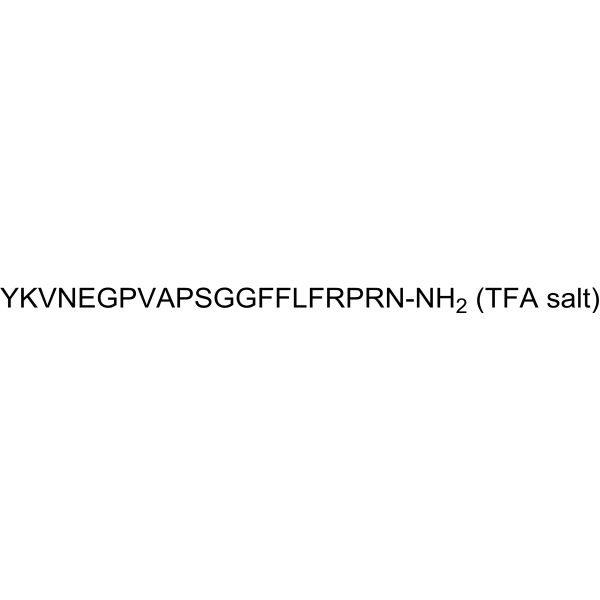
Cat. No.: HY-P1238A
Synonyms: Neuromedin U (rat) TFA; Rat neuromedin U-23 TFA
Research Areas:  

Neurological Disease

Neuromedin U, rat TFA is a 23-amino acid brain-gut peptide. Neuromedin U (NMU), through its cognate receptor NMUR2 in the central nervous system, regulates several important physiological functions, including energy balance, stress response, and nociception.
loading...
    loading...
Cat. No.: HY-E70523
CAS No.: 4752-33-4
Synonyms: Valeryl-CoA; Valeryl-coenzyme A; Pentanoyl coenzyme A free acid
Target:  

Endogenous Metabolite

Research Areas:  

Metabolic Disease

Pentanoyl coenzyme A (Valeryl-CoA) is a short-chain fatty acyl-CoA that functions as an intermediate in mitochondrial β-oxidation and related metabolic pathways. Pentanoyl coenzyme A results from the formal condensation of the thiol group of coenzyme A with the carboxy group of pentanoic acid. Pentanoyl coenzyme A's levels can reflect changes in lipid metabolism under different physiological and pathological conditions. Pentanoyl coenzyme A can be used for research on lipid metabolism .
loading...
    loading...
Cat. No.: HY-P11005
Target:  

Dynamin ATP Synthase

Research Areas:  

Neurological Disease

P259 is a Drp1-Mff inhibitor. P259 distinguishes physiological from pathological fission by specifically inhibiting Drp1-Mff interaction. P259 elongates cell mitochondria and disrupts mitochondrial function and motility. P259 reduces ATP levels and alters mitochondrial structure in the brain, resulting in behavioral deficits in wild-type mice and a short lifespan in Huntington's disease (HD) mice model .
loading...
    loading...
Cat. No.: HY-137955
CAS No.: 1197030-56-0
Purity:  97.9%
MRS 2211 sodium hydrate is a competitive P2Y13 receptor antagonist (pIC50= 5.97). MRS 2211 sodium hydrate is highly selective to the P2Y13 receptor, showing more than 20-fold selectivity compared to the P2Y1 and P2Y12 receptors. MRS 2211 sodium hydrate can be used to further investigate the role of the P2Y13 receptor in different physiological and pathological processes, such as its function in blood cells, the nervous system and the immune system .
loading...
    loading...
Cat. No.: HY-B1204S1
CAS No.: 751471-48-4
Synonyms: Ergamine-d4
Histamine-d4 (Ergamine-d4) is deuterium labeled Histamine (HY-B1204). Histamine is the agonist for histamine receptor and a vasodilator. Histamine is an organic nitrogen compound that participates in local immune responses, regulates intestinal physiological functions, and acts as a neurotransmitter. Histamine affects p38 MAPK/Akt signaling pathway, exhibits antitumor, antioxidant and anti-inflammatory activities. Histamine can be used in the research of acute myeloid leukemia, malignant melanoma, and renal cell carcinoma .
loading...
    loading...
Cat. No.: HY-P1245
CAS No.: 192387-39-6
Synonyms: Neuropeptide NPFF (human)
Target:  

CRFR

Research Areas:  

Others

Neuropeptide SF human augments paraventricular corticotrophin-releasing hormone (CRH) release and increases adrenocorticotropic hormone (ACTH) and corticosterone levels in the plasma. Neuropeptide SF human play a physiologic role in the regulation of such circadian functions as the activity of motor centers and the HPA axis, through the release of CRH .
loading...
    loading...
Cat. No.: HY-N15829
CAS No.: 397841-89-3
Synonyms: Fluorescein lisicol disodium; NRL972 disodium
Target:  

Fluorescent Dye

Research Areas:  

Metabolic Disease

Cholyl-Lys-fluorescein sodium is a fluorescein-labeled bile acid analog. Cholyl-Lys-fluorescein sodium mimics the physiological hepatobiliary properties of glycocholic acid. Cholyl-Lys-fluorescein sodium is efficiently taken up by the liver and rapidly excreted into bile in intact form in rats. Cholyl-Lys-fluorescein sodium can serve as a liver function assessment agent, bile salt transport probe, and liver-targeted carrier .
loading...
    loading...
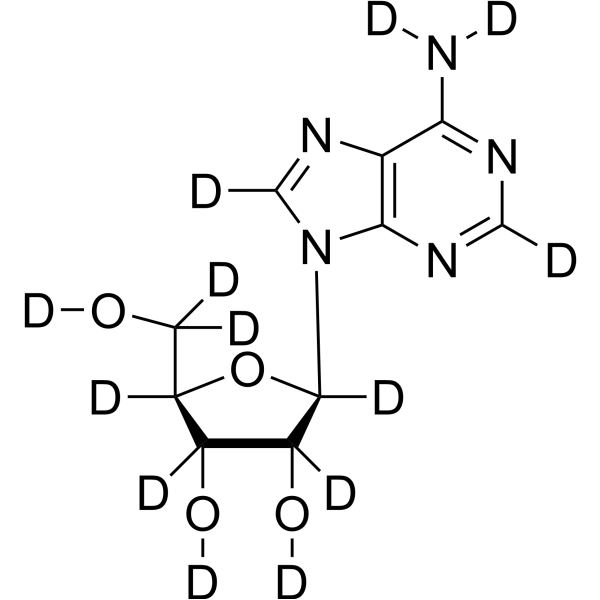
Cat. No.: HY-B0228S12
Synonyms: Adenine riboside-d13; D-Adenosine-d13
Adenosine-d13 (Adenine riboside-d13; D-Adenosine-d13) is deuterium labeled Adenosine (HY-B0228). Adenosine (Adenine riboside), a ubiquitous endogenous autacoid, acts through the enrollment of four G protein-coupled receptors: A1, A2A, A2B, and A3. Adenosine affects almost all aspects of cellular physiology, including neuronal activity, vascular function, platelet aggregation, and blood cell regulation.
loading...
    loading...
Cat. No.: HY-P1345
CAS No.: 869988-94-3
Target:  

Complement System

Research Areas:  

Neurological Disease Endocrinology

TLQP-21, a VGF-derived peptide endowed of endocrine and extraendocrine properties, is a potent G-protein-coupled receptor complement-3a receptor 1 (C3aR1) agonist (EC50: mouse TLQP-21=10.3 μM; human TLQP-21=68.8 μM). TLQP-21 activates C3aR1 to induce an increase of intracellular Ca 2+. TLQP-21 is used for the research in regulation of nociception and other relevant physiologic functions .
loading...
    loading...
Cat. No.: HY-17417R
CAS No.: 357-08-4
Research Areas:  

Neurological Disease

Naloxone (hydrochloride) (Standard) is the analytical standard of Naloxone (hydrochloride) (HY-17417). This product is intended for research and analytical applications. Naloxone hydrochloride is an orally active opioid receptor antagonist. Naloxone hydrochloride attenuates spinal cord stimulation‑associated anti‑hyperalgesic effects, antagonizes physiologic effects of endogenous opioid peptides linked to central nervous system injury sequelae, functions as a pressor agent to induce modest elevations in mean arterial blood pressure, exerts neuroprotective effects to improve post‑traumatic neurologic motor function, blocks opioid receptor‑mediated amnesic pathways, enhances memory consolidation, reverses Adrenocorticotropic hormone (ACTH) (HY-106373)‑ and epinephrine‑induced amnesia, and potentiates the memory‑facilitatory effects of ACTH and epinephrine .
loading...
    loading...
Cat. No.: HY-D2907
CAS No.: 3091879-39-6
Synonyms: DBCO-Cy5; Cyanine5 dibenzocyclooctyne
Cyanine5 DBCO (DBCO-Cy5) is a low-toxicity azide reactive probe (NIR fluorescent dye), for imaging azide-labeled biomolecules via a copper-free "click-through" reaction. Cyanine5 DBCO has no apparent cytotoxicity or animal toxicity and shows no damage to the physiological functions of cells other than the target cells (azide-labeled cells). Cyanine5 DBCO can be used to label and track cells in vitro and in vivo (Ex=635 nm, Em=650-700 nm) .
loading...
    loading...
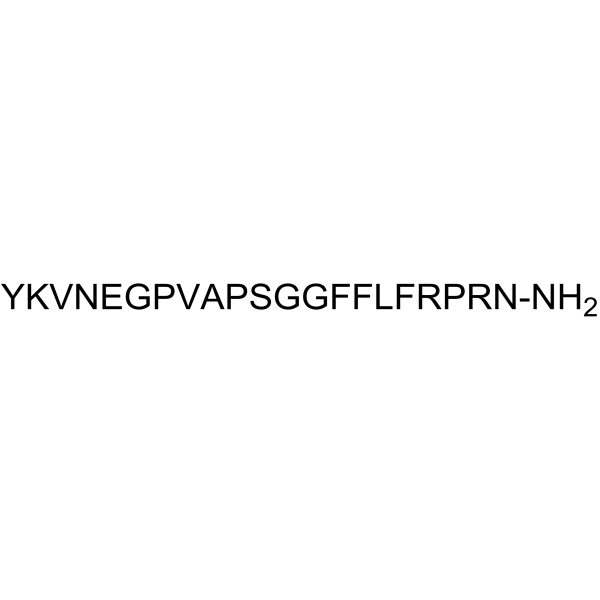
Cat. No.: HY-P1238
CAS No.: 117505-80-3
Synonyms: Neuromedin U (rat); Rat neuromedin U-23
Research Areas:  

Neurological Disease

Neuromedin U, rat is a 23-amino acid brain-gut peptide. Neuromedin U (NMU), through its cognate receptor NMUR2 in the central nervous system, regulates several important physiological functions, including energy balance, stress response, and nociception.
loading...
    loading...
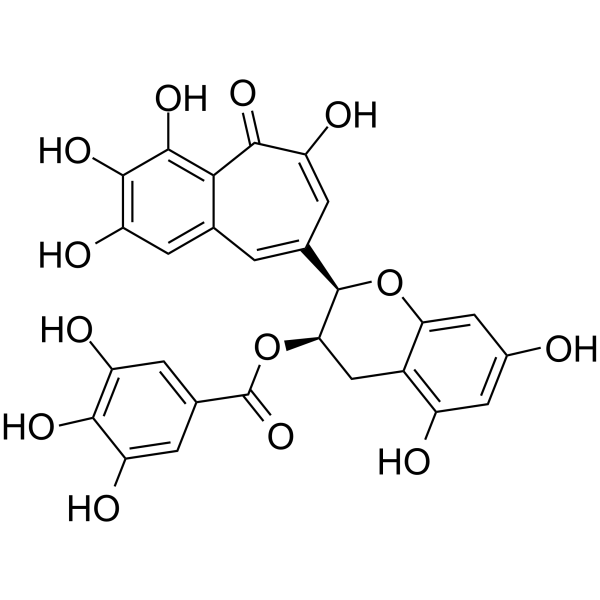
Cat. No.: HY-N4298
CAS No.: 102067-92-5
Epitheaflagallin 3-O-gallate is a minor polyphenol in black tea. Epitheaflagallin 3-O-gallate exhibits versatile physiological functions in vivo and in vitro, including antioxidative activity, pancreatic lipase inhibition, Streptococcus sorbinusglycosyltransferase inhibition, and an inhibiting effect on the activity of matrix metalloprotease-1 and -3 and their synthesis by human gingival fibroblasts .
loading...
    loading...
Cat. No.: HY-172400
CAS No.: 3046390-69-3
Target:  

Factor Xa

Research Areas:  

Cardiovascular Disease

FXIa-IN-16 is an orally active selective FXIa inhibitor with an IC50 of 0.19 nM. FXIa-IN-16 exerts highly selective competitive inhibition on endogenous FXIa, blocks the thrombin amplification loop to inhibit thrombosis, while preserving exogenous physiological hemostatic function. FXIa-IN-16 can be used in thrombosis-related research .
loading...
    loading...
Cat. No.: HY-23212A
CAS No.: 2421153-68-4
Research Areas:  

Cancer

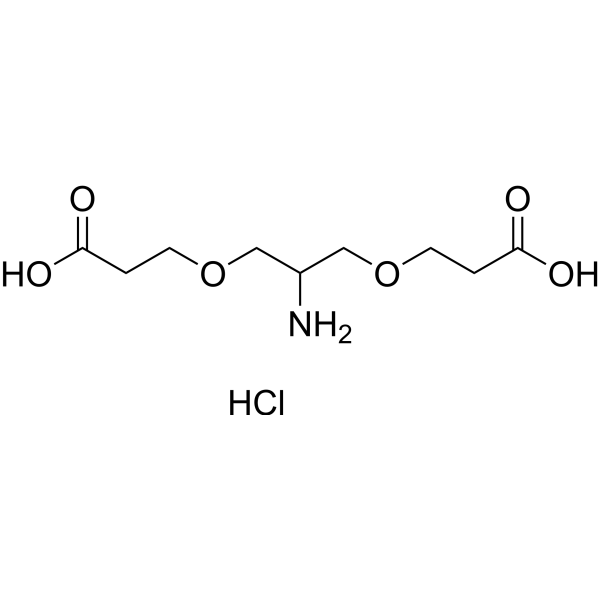
2-Amino-1,3-bis(carboxylethoxy)propane hydrochloride is a non-protein amino acid, sulfamic acid.2-Amino-1,3-bis(carboxylethoxy)propane hydrochloride contains one amino group and two terminal carboxylic acids.2-Amino-1,3-bis(carboxylethoxy)propane hydrochloride has a variety of physiological functions, including maintaining the stability of cell membranes, regulating cholesterol metabolism, supporting the normal function of the nervous system, participating in collagen synthesis, and anti-oxidation .
loading...
    loading...
Cat. No.: HY-B1204S2
Synonyms: Ergamine-13C5, 15N3
Histamine- 13C5, 15N3 (Ergamine- 13C5, 15N3) is the 13C and 15N labeled isotope of Histamine (HY-B1204). Histamine is the agonist for histamine receptor and a vasodilator. Histamine is an organic nitrogen compound that participates in local immune responses, regulates intestinal physiological functions, and acts as a neurotransmitter. Histamine affects p38 MAPK/Akt signaling pathway, exhibits antitumor, antioxidant and anti-inflammatory activities. Histamine can be used in the research of acute myeloid leukemia, malignant melanoma, and renal cell carcinoma .
loading...
    loading...
Cat. No.: HY-P99660
CAS No.: 2573121-53-4
Synonyms: IGM-2323

Target:  

CD20 CD3

Research Areas:  

Inflammation/Immunology Cancer

Imvotamab (IGM-2323) is a CD20 and CD3 bispecific IGM antibody with dual action mechanism. Imvotamab is used to induce physiological T cell activation to prevent over-stimulation and subsequent down-regulation of immune function. Imvotamab can be used for the study of B-cell malignant tumors, multiple myeloma (MM) and non-Hodgkin's lymphoma (NHL) .
loading...
    loading...
Cat. No.: HY-P1803
CAS No.: 120253-69-2
Synonyms: PKCε; PRKCE ; Peptide Epsilon
Protein Kinase C Peptide Substrate is targeted to a specific cellular compartment in a manner dependent on second messengers and on specific adapter proteins in response to extracellular signals that activate G-protein-coupled receptors, tyrosine kinase receptors, or tyrosine kinase-coupled receptors. Protein Kinase C Peptide Substrate then regulates various physiological functions including the activation of nervous, endocrine, exocrine, inflammatory, and immune systems .
loading...
    loading...
Cat. No.: HY-143865
CAS No.: 2695535-01-2
Target:  

LPL Receptor

Research Areas:  

Inflammation/Immunology

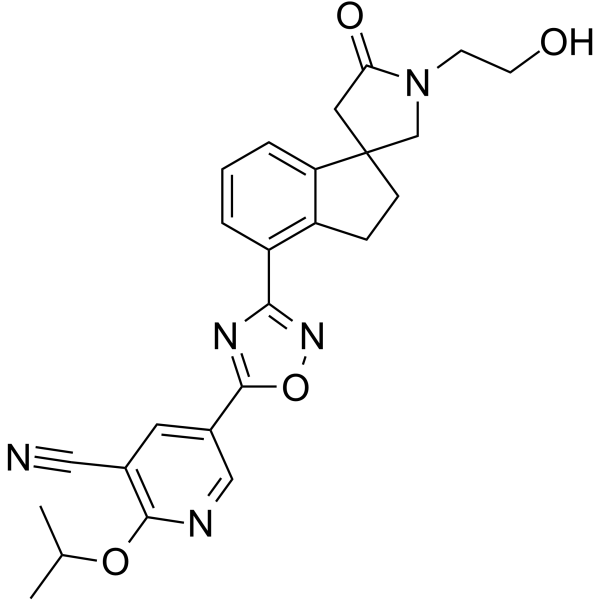
S1PR1 agonist 2 is a potent agonist of S1PR1. Sphingosine-1-phosphate (S1P) is a cell membrane-derived lysophospholipid signalling molecule that exerts its physiological functions mainly by stimulating some members of the G protein-coupled receptor family. S1PR1 agonist 2 has the potential for the research of autoimmune diseases (extracted from patent WO2021175225A1, compound 1) .
loading...
    loading...
Cat. No.: HY-17417AS
CAS No.: 1261079-38-2
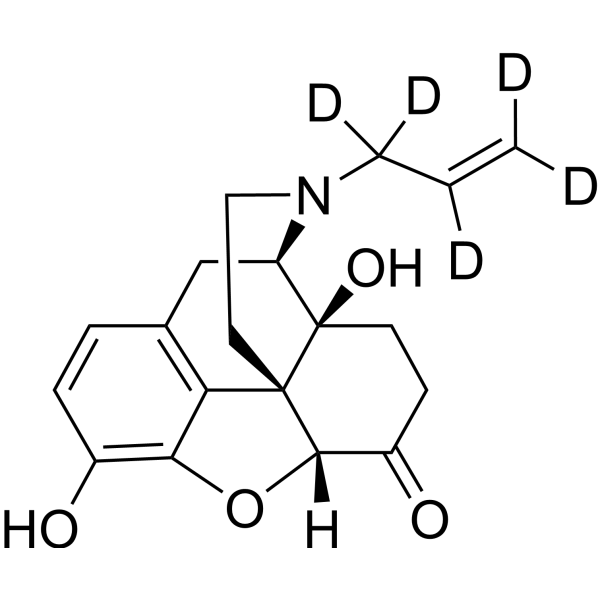
Naloxone-d5 is the deuterated-labeled Naloxone (HY-17417A). Naloxone is an orally active opioid receptor antagonist. Naloxone attenuates spinal cord stimulation‑associated anti‑hyperalgesic effects, antagonizes physiologic effects of endogenous opioid peptides linked to central nervous system injury sequelae, functions as a pressor agent to induce modest elevations in mean arterial blood pressure, exerts neuroprotective effects to improve post‑traumatic neurologic motor function, blocks opioid receptor‑mediated amnesic pathways, enhances memory consolidation, reverses Adrenocorticotropic hormone (ACTH) (HY-106373)‑ and epinephrine‑induced amnesia, and potentiates the memory‑facilitatory effects of ACTH and epinephrine .
loading...
    loading...

