
679 Results for "

availability

" in MedChemExpress (MCE) Product Catalog:
Products (679)

679 Results for "availability" in MCE Product Catalog:

Cat. No.: HY-182014
CAS No.: 2408041-54-1
Target:  

LXR

TLC-2716 is an orally available, gut- and liver-restricted inhibitor against LXRα and LXRβ, with EC50 values of 7 nM and 15 nM, respectively. TLC-2716 represses LXRα/β transcriptional activity, downregulates genes involved in lipogenesis, lipid absorption and lipoprotein metabolism, and preserves peripheral reverse cholesterol transport. TLC-2716 reduces lipid accumulation, suppresses inflammation and fibrotic gene expression, enhances triglyceride-rich lipoprotein clearance, and improves glucose homeostasis and insulin sensitivity. TLC-2716 lowers serum and hepatic triglycerides, plasma cholesterol and other atherogenic lipid profiles in experimental models and humanized liver mice. TLC-2716 can be used for the research of dyslipidemia and related cardiometabolic disorders .
loading...
    loading...
Cat. No.: HY-P990947
CAS No.: 2868265-50-1
Synonyms: AZD9592 Antibody

Target:  

ADC Antibodies EGFR

Research Areas:  

Cancer

Tilatamig (AZD9592 Antibody) is a human antibody of the Ig (G1-κ_G1-λ2) subtype that targets EGFR/MET. Tilatamig conjugates with the Top1 inhibitor AZ14170133 (HY-145399) to form the antibody-drug conjugate (ADC) Tilatamig samrotecan (HY-171124) (AZD9592). Tilatamig accurately targets NSCLC models including EGFR-mutant, EGFR-wildtype, and EGFR tyrosine kinase inhibitor-treated ones, and its activity correlates with high expression of EGFR, c-MET and SLFN11. Tilatamig is available for in vivo anti-tumor studies in patient-derived xenograft models of non-small cell lung cancer (NSCLC) and head and neck squamous cell carcinoma (HNSCC) .
loading...
    loading...
Cat. No.: HY-L108
3,059 compounds

Depression is a serious global affective disorder and one of the most common neurological diseases whose clinical manifestations are low mood, loss of interest, anhedonia, loss of energy, and fatigue, people with major depressive disorder (MDD) can even have suicidal thoughts and behaviors.

Currently available antidepressants have significant limitations, including a long time lag for a therapeutic response (weeks to months) and low response rates. This is particularly problematic for a disease with a high suicide rate. Therefore, the development of new antidepressant drugs is particularly urgent.

MCE offers a unique collection of 3,059 compounds with antidepressant activities or targeting the unique targets of depression. MCE Antidepressant Compound Library is a useful tool for exploring the mechanism of depression and discovering new drugs for depression.

Cat. No.: HY-L061
5,513 compounds

Most of the drugs that are available in the marketplace are administered via the oral route, which is a convenient and cost effective route of administration. Thus, oral bioavailability is one of the key considerations in drug design and development. A high oral bioavailability reduces the amount of an administered drug necessary to achieve a desired pharmacological effect and therefore could reduce the risk of side-effects and toxicity. A poor oral bioavailability can result in low efficacy and higher inter-individual variability and therefore can lead to unpredictable response to a drug. Low oral bioavailability in clinical trials is a major reason for drug candidates failing to reach the market.

MCE offers a unique collection of 5,513 compounds with confirmed high oral bioavailability. MCE Orally Active Compound Library is a useful tool for discovering new drugs with oral bioavailability.

Cat. No.: HY-L084
939 compounds

Nature has been a source of medicinal products for millennia, with many useful active substances developed from plant sources. In the 20th century, the discovery of the penicillin was the starting point for drug discovery from microbial sources. Microorganisms, which have been considered to be a rich source of unique bioactive compounds, play an important role in the development of the chemistry of natural products and medical therapy. Microbial metabolites have proved to be affective antimicrobial agents, anti-tumor agents, enzyme inhibitors, anti-inflammatory agents, etc. Today, many microbial-originated antibiotics are available in the mark, and a large number of bioactive metabolites are used in medicine.

MCE provides a unique collection of 939 microbial metabolites, which is an important source of lead compounds and can be used for drug discovery.

Cat. No.: HY-184605
Metal nanoclusters, containing anywhere from a few to hundreds of atoms, bridge the gap between nanoparticles and molecular compounds, typically exhibiting molecular-like electrical and optical properties. Furthermore, metal nanoclusters possess advantages such as significant Stokes scattering and size- and ligand-dependent fluorescence characteristics, making them an emerging class of materials for constructing fluorescence platforms. Current research primarily focuses on the synthesis and application of noble metal nanoclusters like gold and silver. However, copper, belonging to the same group as gold and silver in the periodic table, is inexpensive, environmentally friendly, readily available, has a simple preparation process, and low toxicity, making it widely applicable in industry. In addition, copper nanoclusters exhibit better photostability than organic dyes and better environmental friendliness than semiconductor quantum dots, making them suitable for trace detection.
loading...
    loading...
Cat. No.: HY-104042R
CAS No.: 1644545-52-7
Synonyms: AG-881 (Standard)
Vorasidenib (Standard) is the analytical standard of Vorasidenib (HY-104042). This product is intended for research and analytical applications. Vorasidenib (AG-881) is an orally available, brain penetrant second-generation dual mutant isocitrate dehydrogenases 1 and 2 (mIDH1/2) inhibitor. Vorasidenib (AG-881) exhibits nanomolar inhibition of (D)-2-hydroxyglutarate (D-2-HG), and the IC50 ranges of 0.04~22 nM against IDH1 R132C, IDH1 R132G, IDH1 R132H and IDH1 R132S and 7~14 nM against IDH2 R140Q and 130 nM against IDH2 R172K. Vorasidenib can be used for the study of grade 2 astrocytoma or oligodendroglioma with a susceptible IDH1/2 mutation .
loading...
    loading...
Cat. No.: HY-109082R
CAS No.: 1703788-21-9
Synonyms: SKI-O-703 (Standard)
Target:  

Reference Standards Syk

Research Areas:  

Inflammation/Immunology

Cevidoplenib (Standard) is the analytical standard of Cevidoplenib (HY-109082). This product is intended for research and analytical applications. Cevidoplenib (SKi-O-703) is an orally available inhibitor of spleen tyrosine Kinase (Syk), with potential anti-inflammatory and immunomodulating activities. Cevidoplenib is also the mesylate form of SKi-O-592. Cevidoplenib and SKi-O-592 inhibits BCR-mediated survival, proliferation, and differentiation of B cells. And SKi-O-592 potently inhibits multiple Kinases with IC50s of 6.2 nM (Syk), 1.859 μM (Jak2), 5.807 μM (Jak3), 0.412 μM (RET), 0.687 μM (KOR), 1.783 μM (FLT3), 16.96 μM (FGFR1), 5.662 μM (FGFR3), and 0.709 μM (Pyk2), respectively .
loading...
    loading...
Cat. No.: HY-N2038R
CAS No.: 1178-24-1
3,​5,​6,​7,​8,​3',​4'-​Heptemthoxyflavone (Standard) is the analytical standard of 3,​5,​6,​7,​8,​3',​4'-​Heptemthoxyflavone (HY-N2038). This product is intended for research and analytical applications. 3,5,6,7,8,3',4'-Heptemthoxyflavone, a flavonoid from satsuma peel, is an orally available CREB activator with anti-tumor and anti-neuroinflammatory activity. 3,5,6,7,8,3',4'-Heptemthoxyflavone inhibits collagenase activity and increases the content of type I procollagen in human dermal fibroblast neoblast (HDFn) cells. 3,5,6,7,8,3',4'-Heptemthoxyflavone induces brain-derived neurotrophic factor (BDNF) expression through the cAMP/ERK/CREB signaling pathway and reduces phosphodiesterase activity in C6 glioma .
loading...
    loading...
Cat. No.: HY-N3963
CAS No.: 82425-45-4
Synonyms: (+)-Gomisin M2
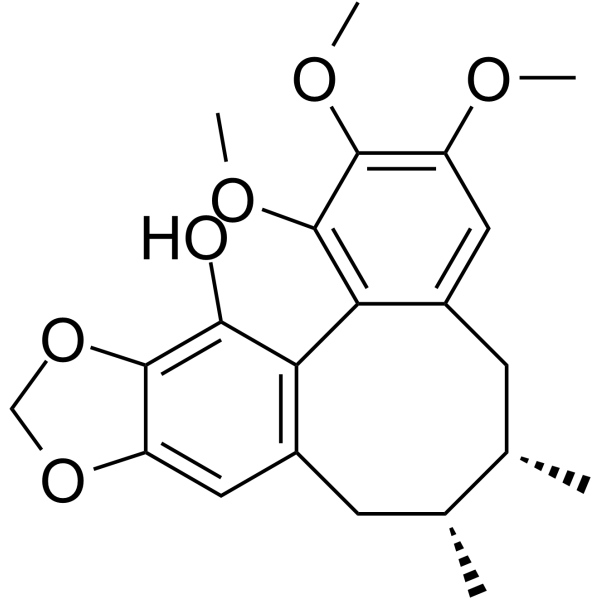
Gomisin M2 ((+)-Gomisin M2) is a lignan isolated from the fruits of Schisandra chinensis with oral availability. Gomisin M2 inhibits STAT1 phosphorylation as well as NF-κB p65 phosphorylation and nuclear translocation. Gomisin M2 reduces inflammatory cell infiltration, cytokine and chemokine expression, and serum IgE and IgG2a levels. Gomisin M2 inhibits MAPK phosphorylation, IκBα degradation, and NF-κB nuclear translocation in keratinocytes. Gomisin M2 induces apoptosis, mitochondrial membrane potential disruption, and cytochrome c release, and inhibits DNA synthesis and mammosphere formation through downregulation of Wnt/β-catenin. Gomisin M2 can be used for research on atopic dermatitis, psoriasis, breast cancer, liver injury, and multidrug-resistant mammary adenocarcinoma .
loading...
    loading...
Cat. No.: HY-D2747
CAS No.: 1638784-10-7
BP Fluor 405 acid is a water-soluble, blue-fluorescent dye that is often used in multi-color applications, including flow cytometry and super-resolution microscopy using STORM. Its excitation is ideally suited for the 407 nm spectral line of the krypton laser or the 408 nm violet laser diode. BP Fluor 405 conjugates are pH-insensitive from pH 4 to pH 10. The carboxylic acid of BP Fluor 405 is a reagent of choice for the preparation of custom activated esters that often are not commercially available. Examples of such activated esters include sulfo-NHS, TFP (2,3,5,6-Tetrafluorophenol), and STP (4-Sulfo-2,3,5,6-Tetrafluorophenol, Sodium Salt). Another common application for the non-activated carboxylic acid is peptide modification during solid phase synthesis, which usually requires in-situ activation with peptide coupling regents, e.g. HATU. BP Fluor 405 acid is also often used for control experiments, and for calibration.
loading...
    loading...
Cat. No.: HY-L031
831 compounds

Immuno-Oncology is a type of immunotherapy that has the specific purpose of treating cancer. It works by stimulating our immune system to fight back. Normally, our immune system is able to destroy cancer cells in our body, however sometimes cancer cells can adapt and mutate, effectively hiding from our immune system. This is when tumors can develop and become a threat to our health. Immuno-oncology involves mobilizing lymphocytes to recognize and eliminate cancer cells using the body’s immune system. There are several immuno-oncology treatments available, including Immune cell therapy (CAR-T), monoclonal antibodies (mABs) and checkpoint inhibitors, cytokines and cancer vaccines.

MCE Small Molecule Immuno-Oncology Compound Library offers 831 bioactive tumor immunology compounds that target some important checkpoints such as PD1/PD-L1, CXCR, Sting, IDO, TLR, etc. This library is a useful tool for Immuno-oncology research.

Cat. No.: HY-142104
CAS No.: 934816-82-7
Synonyms: 2-Chlorotrityl Chloride Resin (100-200 mesh,1% DVB,0.4-3.0mmol/g)
Target:  

Drug Intermediate

Research Areas:  

Cancer

2-CTC Resin (100-200 mesh,1% DVB,0.4-3.0mmol/g) is a solid-phase synthesis carrier that has been used to study metabolic disorders in prostate cancer cells. 2-CTC Resin (100-200 mesh,1% DVB,0.4-3.0mmol/g) can be used as a reaction solution of terminal residues and adenine nucleotides to form cyclic peptides. 2-CTC Resin (100-200 mesh,1% DVB,0.4-3.0mmol/g) can prevent racemization during the incorporation of the first protected amino acid and minimized diketopiperazine formation. 2-CTC Resin (100-200 mesh,1% DVB,0.4-3.0mmol/g) is one of the most commonly used and versatile resins available for large-scale production of peptides .
loading...
    loading...
Cat. No.: HY-P3335
CAS No.: 250612-06-7
Synonyms: DOTA-RGDfK dimer
SU015 (DOTA-RGDfK dimer) is a Integrin αvβ5 and αvβ3 antagonist. SU015 exhibits comparable affinity for αvβ5 and αvβ3, with relatively higher potency and specificity compared to other integrins. SU015 inhibits αvβ3-mediated cell adhesion to fibrinogen, αvβ3-mediated adhesion of activated platelets to osteopontin, and αvβ5-mediated cell adhesion to vitronectin. SU015 shows potent inhibitory effects on FGF2-induced angiogenesis in the CAM model. SU015 carries a linker arm available for radioisotope conjugation, and acts as a target-specific radioreagent when labeled with 90Y (i.e., RP697) or 177Lu (i.e., RP688). SU015 can be used in studies related to tumor metastasis and tumors .
loading...
    loading...
Cat. No.: HY-P5107
CAS No.: 121052-30-0
Synonyms: LMWP; TDSP5
Target:  

VEGFR

Research Areas:  

Cancer

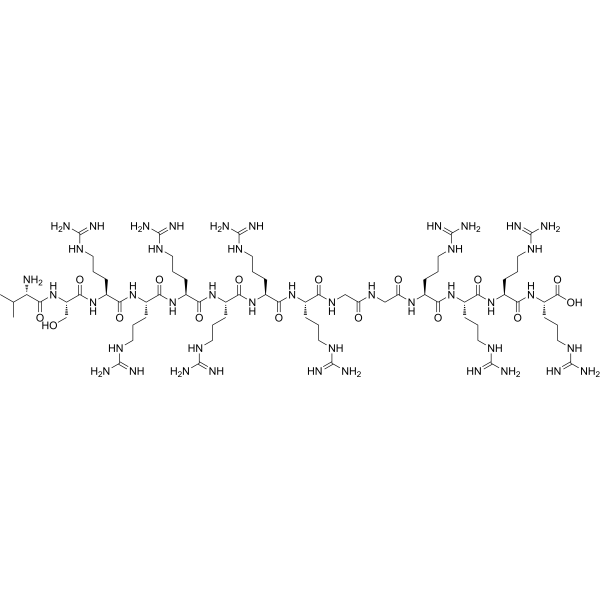
Low molecular weight protamine (LMWP;TDSP5) is a truncated arginine-rich protamine peptide, as well as a heparin/low-molecular-weight heparin antidote and a cell-penetrating delivery carrier. Low molecular weight protamine neutralizes heparin-induced anticoagulant activities, including aPTT, anti-Xa and anti-IIa activities, and also neutralizes anti-Xa activity of commercially available low-molecular-weight heparin preparations. Low molecular weight protamine translocates across mammalian cell membranes, delivers conjugated impermeable molecules across tumor tissues, enhances skin permeability of conjugated epidermal growth factor, and accelerates wound healing when conjugated with epidermal growth factor. Low molecular weight protamine retains the in vitro cell proliferation activity of conjugated EGF, and also enables site-specific conjugation with peptides or proteins via genetic recombination. Low molecular weight protamine can be used in studies related to colon adenocarcinoma, skin wounds and diabetic skin wounds .
loading...
    loading...
Cat. No.: HY-L924
1,488 compounds

Boronic acid and boronic ester represent a relatively novel and promising chemical structure in drug design. Boronic acid exists in an sp²-hybridized state, possessing an empty p-orbital that can act as a Lewis acid to accept lone pairs from heteroatoms (O, N, or S). This Lewis acidity enables it to form reversible covalent bonds with amino acid residues such as lysine, serine, threonine, and histidine. Currently, five FDA-approved drugs containing boronic acid or boronic ester predominantly involve such covalent binding mechanisms in their interactions with target proteins. Furthermore, boronic acid can serve as a bioisostere for carboxylic acids, phosphates, and phenolic groups, utilized to improve pharmacokinetic properties and enhance drug efficacy.

To date, five boron-containing drugs have been approved by the FDA. The unique properties of boronic acids and boronic esters confer significant potential in drug design, with applications spanning cancer therapy (e.g., multiple myeloma), anti-infectives (e.g., fungal infections, tuberculosis), anti-inflammatory treatments (e.g., atopic dermatitis), antibacterial agents (e.g., carbapenem-resistant bacterial infections), and Reactive Oxygen Species (ROS)-responsive prodrugs, among others. The MCE Boronic Acid/Boronic Ester Fragment Library, which contains 1,488 compounds, serves as a valuable tool for the development of boron-containing drugs.

Cat. No.: HY-L922
25000 compounds

A diverse compound library with favorable ADMET properties (Absorption, Distribution, Metabolism, Excretion, and Toxicity) is crucial in drug discovery. Early evaluation of ADMET properties allows for the exclusion of molecules with unfavorable profiles at the initial stages, thereby reducing the risk of late-stage development failures, lowering R&D costs, and accelerating optimization of lead compounds. Based on predictions from ADMET-related AI algorithms, the compounds in this library are predicted to exhibit favorable oral bioavailability (F > 30%), reasonable plasma protein binding (PPB < 98%), minimized CYP3A4 inhibition potential (inhibition probability < 50%, CYP3A4 is the most critical drug-metabolizing enzyme in the cytochrome P450 family) , low toxicity profiles, with 140 potentially toxic substructures pre-identified and excluded via substructure searching to eliminate compounds containing hazardous fragments. The diversity library enables broad applicability in high-throughput screening (HTS) and high-content screening (HCS).

Cat. No.: HY-L918
317 compounds

Targeted Protein Degradation (TPD) is a novel and promising approach to drug development. It shows great potential for targeting proteins traditionally considered "undruggable" due to the lack of enzymatic function and absence of binding sites by tagging them for degradation or recruiting natural degradation mechanisms.

Molecular glues are a type of small-molecule degraders that primarily induce novel interactions between E3 ubiquitin ligases and target proteins, forming ternary complexes that lead to protein ubiquitination and subsequent proteasomal degradation. Compared with PROTACs, molecular glues generally have lower molecular weights, higher cell permeability, and better drug-like properties. Additionally, the design of molecular glues is relatively simple, without the requirements for complex linkers and ligand optimization. As a result, molecular glues have gradually emerged as a promising therapeutic approach for various diseases.

Multiple types of molecular glues have been reported previously. Analysis of co-crystal complex structures reveals that CRBN-related molecular glues are more versatile. Therefore, MCE researchers select active molecules related to these targets as probes for artificial intelligence (AI) screening.Subsequently, molecular docking technology was used to verify whether the screened molecules retained the key pharmacophore features. Ultimately, we obtained 317 molecular glue analogs, and these compounds serve as powerful tools for the research of molecular glues.

Cat. No.: HY-181163
Caspase-3/7 activator 4 is a caspase-3 activator and caspase-7 activator. Caspase-3/7 activator 4 inhibits key enzymes in estrogen biosynthesis, including aromatase (IC50 = 38.3 nM) and steroid sulfatase (IC50 = 12.7 µM), and selectively suppresses COX-2 (IC50 = 5.38 µM). Caspase-3/7 activator 4 shows strong antioxidant activity (DPPH: IC50 = 16.26 µM). Caspase-3/7 activator 4 inhibits estrogen synthesis, suppresses estrogen availability, reduces prostaglandin production, increases caspase-3/7 expression, induces G0/G1 cell cycle arrest, induces apoptotic cell death, reduces circulating TNF-α and VEGFR-II levels, restores hepatorenal function markers and histoarchitecture, restores antioxidant defense enzyme activity, reduces lipid peroxidation, exerts antiproliferative activity against breast cancer cells, exerts antitumor activity in the Ehrlich ascites carcinoma models. Caspase-3/7 activator 4 can be used for the research of breast cancer, ehrlich ascites carcinoma .
loading...
    loading...
Cat. No.: HY-L009M
270 compounds

Kinases is a class of enzymes that adds chemicals called phosphates to other molecules, such as sugars or proteins. Protein phosphorylation serves as a critical regulatory mechanism for numerous cellular processes including cell division, metabolism, and signal transduction, with approximately 50% of cellular functions in humans being regulated by kinase activity. In drug discovery, kinases represent a major category of therapeutic targets, and kinase inhibitors constitute an important class of pharmaceuticals that block the activity of specific disease-associated enzymes, particularly in cancer and inflammatory disorders. Small molecule kinase inhibitors represent one of the fastest-growing drug categories, having received U.S. Food and Drug Administration (FDA) approval for both oncological and non-oncological indications. As of September 2023, over 70 FDA-approved small molecule kinase inhibitors are commercially available.

The MCE Kinase Inhibitor Library Mini contains 270 kinase inhibitors primarily targeting protein kinases (VEGFR, EGFR, BTK, CDK, Akt, etc.), lipid kinases (PI3K, PI4K, SK, etc.), and carbohydrate kinases. This collection includes 1-3 highly specific representative compounds per target, optimized for screening of kinase-related drug targets in pharmaceutical research.

