117 Results for "

inflammatory process

" in MedChemExpress (MCE) Product Catalog:
Products (117)

117 Results for "inflammatory process" in MCE Product Catalog:

Cat. No.: HY-Z8025
CAS No.: 20423-99-8
Target:  

Bacterial

Research Areas:  

Infection Inflammation/Immunology

Deprodone is an active compound. Deprodone inhibits key processes such as bacterial cell wall synthesis by interacting with the hydrolase and transferase proteins of methicillin-resistant Staphylococcus aureus (MRSA). Deprodone is used in research on anti-MRSA infection, inflammatory skin disorders, bowel disease, and fatty acid metabolism disorders .
loading...
    loading...
Cat. No.: HY-17480R
CAS No.: 20187-55-7
Bendazac (Standard) is the analytical standard of Bendazac. This product is intended for research and analytical applications. Bendazac is an oxyacetic acid with anti-inflammatory, antinecrotic, choleretic and antilipidaemic properties. Bendazac acts by preventing protein denaturation and delays the cataractogenic process. Bendazac exerts funciton in anti-radical effect and inhibits oxidative brust .
loading...
    loading...
Cat. No.: HY-N9630
CAS No.: 152615-15-1
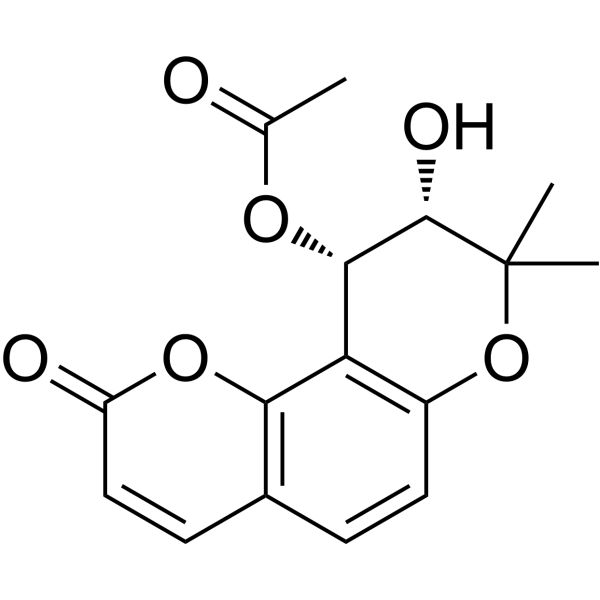
Qianhucoumarin C is a coumarin derivative, which can be isolated from the roots of Peucedanum praeruptorum. Qianhuoumarin C has been studied for potential medicinal properties, including anti-inflammatory, antioxidant and anticancer effects. Qianhucoumarin C is an important ingredient in a variety of industrial processes, especially in the production of pharmaceuticals and herbal medicines .
loading...
    loading...
Cat. No.: HY-158362A
CAS No.: 9040-75-9
Monoglyceride lipase, Bacillus sp., is a key enzyme involved in lipid metabolism. It catalyzes the hydrolysis of monoglycerides (particularly 2-AG, or 2-arachidonoylglycerol) into glycerol and free fatty acids. By regulating the levels of 2-AG, Monoglyceride lipase, Bacillus sp., can influence neural signaling, pain perception, inflammatory responses, and metabolic processes .
loading...
    loading...
Cat. No.: HY-172653
Synonyms: S1P (d18:1) alkyne
Sphingosine-1-phosphate (d18:1) alkyne is an w-alkyne form of sphingosine-1-phosphate. Sphingosine-1-phosphate is a critical regulator of various physiological and pathophysiological processes, such as cancer, atherosclerosis, diabetes and osteroporosis. Sphingosine-1-phosphate can be studied in research for inflammatory diseases, cancer and Alzheimer’s disease .
loading...
    loading...
Cat. No.: HY-128135
CAS No.: 6265-56-1
Target:  

PPAR

Research Areas:  

Inflammation/Immunology

MHY 553 is a PPARα agonist that is effective when taken orally. MHY 553 helps alleviate liver fat accumulation by increasing fatty acid oxidation and reducing inflammation during the aging process. MHY 553 inhibits the accumulation of triglycerides induced by liver X receptor agonists in HepG2 cells. MHY 553 significantly suppresses the expression of inflammatory mRNA in aging rats .
loading...
    loading...
Cat. No.: HY-172635
Synonyms: S1P (d18:1(14Z))
Sphingosine-1-phosphate (d18:1(14Z)) is an atypical sphingolipid that has a cis double bond at the 14-15 position. Sphingosine-1-phosphate is a critical regulator of various physiological and pathophysiological processes, such as cancer, atherosclerosis, diabetes and osteroporosis. Sphingosine-1-phosphate can be studied in research for inflammatory diseases, cancer and Alzheimer’s disease .
loading...
    loading...
Cat. No.: HY-176784
CAS No.: 163913-87-9
Target:  

Others

Human MOG-specifying DNA is located at chromosome 6 within the human leukocyte antigen (HLA) gene locus. Human MOG-specifying DNA is exclusively expressed in the central nervous system (CNS) on the surface of myelin sheaths and oligodendrocytes (ODCs) processes, with unique methylation patterns in ODCs. Human MOG-specifying DNA can be used for inflammatory demyelinating diseases such as multiple sclerosis (MS) research .
loading...
    loading...
Cat. No.: HY-113422S1
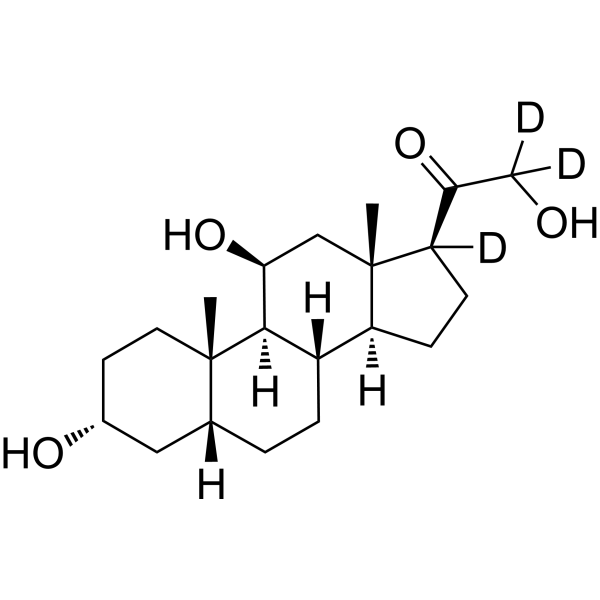
Tetrahydrocorticosterone-d3 is the d3-labeled Tetrahydrocorticosterone (HY-113422). Tetrahydrocorticosterone is a glucocorticoid. One of its active forms, 5α-Tetrahydrocorticosterone (HY-113364), exerts its effects by binding to the GC receptor and inhibiting inflammatory processes. Tetrahydrocorticosterone is naturally synthesized by the adrenal glands and plays a key role in regulating the metabolism of carbohydrates, proteins and fats .
loading...
    loading...
Cat. No.: HY-W015546R
CAS No.: 16012-55-8
Synonyms: BMAA hydrochloride (Standard)
Clenbuterol (Standard) is the analytical standard of Clenbuterol. This product is intended for research and analytical applications. Clenbuterol (NAB-365) is a β2-adrenergic receptor agonist with an EC50 of 31.9 nM . Clenbuterol is a very potent inhibitor of the lipopolysaccharide (LPS)-induced release of TNF-α and IL-1β. Clenbuterol can inhibit the inflammatory process. Clenbuterol is a bronchodilator .
loading...
    loading...
Cat. No.: HY-P10465
Target:  

TRP Channel

Research Areas:  

Inflammation/Immunology

TRPV1-Tat is an antagonistic peptide that fuses the TRPV1 (transient receptor potential vanilla subtype 1) of the cell-penetrating peptide Tat. TRPV1-Tat blocks this phosphorylation process by competitively binding to the AKAP79 binding site of TRPV1, thereby inhibiting the sensitization of TRPV1. TRPV1-Tat can be used in the study of inflammatory pain .
loading...
    loading...
Cat. No.: HY-B1221S1
CAS No.: 1325559-30-5
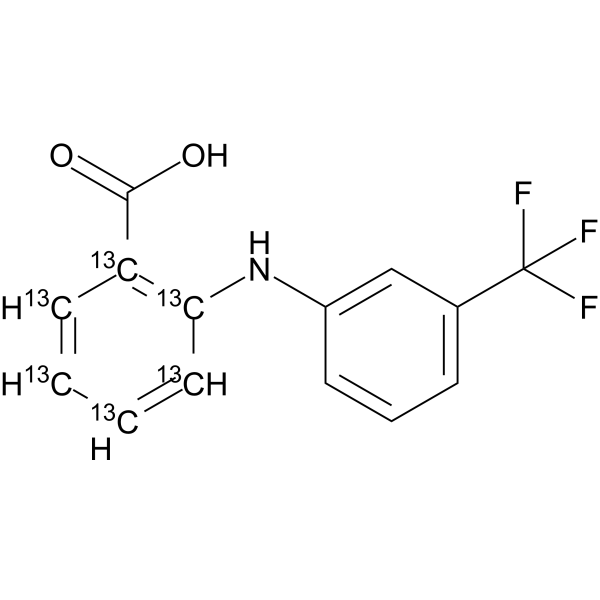
Flufenamic acid- 13C6 is the 13C6 labeled Flufenamic acid. Flufenamic acid is a non-steroidal anti-inflammatory agent, inhibits cyclooxygenase (COX), activates AMPK, and also modulates ion channels, blocking chloride channels and L-type Ca 2+ channels, modulating non-selective cation channels (NSC), activating K+ channels. Flufenamic acid binds to the central pocket of TEAD2 YBD and inhibits both TEAD function and TEAD-YAP-dependent processes, such as cell migration and proliferation.
loading...
    loading...
Cat. No.: HY-B1221R
CAS No.: 530-78-9
Flufenamic acid (Standard) is the analytical standard of Flufenamic acid. This product is intended for research and analytical applications. Flufenamic acid is a non-steroidal anti-inflammatory agent, inhibits cyclooxygenase (COX), activates AMPK, and also modulates ion channels, blocking chloride channels and L-type Ca 2+ channels, modulating non-selective cation channels (NSC), activating K + channels. Flufenamic acid binds to the central pocket of TEAD2 YBD and inhibits both TEAD function and TEAD-YAP-dependent processes, such as cell migration and proliferation.
loading...
    loading...
Cat. No.: HY-B1221S
CAS No.: 1185071-99-1
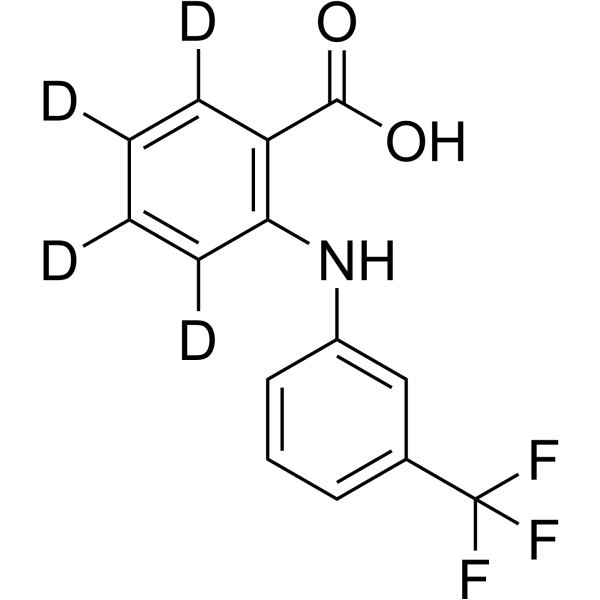
Flufenamic acid-d4 is deuterium labeled Flufenamic acid. Flufenamic acid is a non-steroidal anti-inflammatory agent, inhibits cyclooxygenase (COX), activates AMPK, and also modulates ion channels, blocking chloride channels and L-type Ca 2+ channels, modulating non-selective cation channels (NSC), activating K+ channels. Flufenamic acid binds to the central pocket of TEAD2 YBD and inhibits both TEAD function and TEAD-YAP-dependent processes, such as cell migration and proliferation.
loading...
    loading...
Cat. No.: HY-N7255R
CAS No.: 469-38-5
Cycloartenol (Standard) is the analytical standard of Cycloartenol. This product is intended for research and analytical applications. Cycloartenol, a phytosterol compound, is one of the key precusor substances for biosynthesis of numerous sterol compounds. Cycloartenol inhibits the migration of glioma cells and suppresses the phosphorylation of the p38 MAP kinase. Cycloartenol has a variety of pharmacological activities such as anti-inflammatory, anti-tumor, antioxidant, antibiosis and anti-alzheimer's disease. Cycloartenol also plays an important role in the process of plant growth and development .
loading...
    loading...
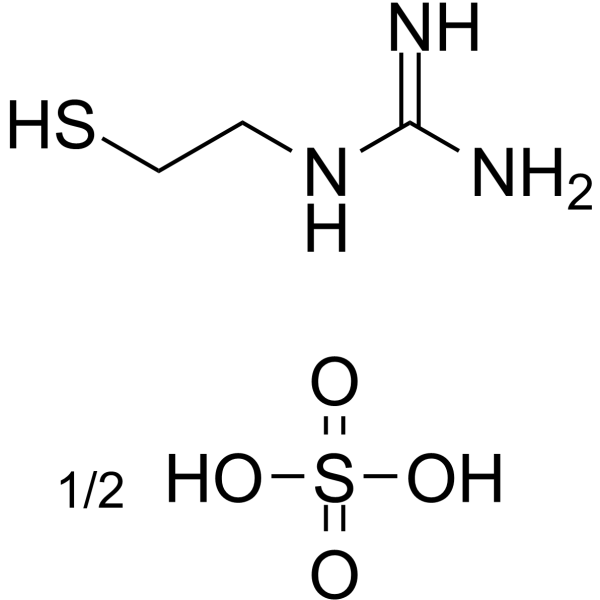
Cat. No.: HY-138454
CAS No.: 3979-00-8
Synonyms: Mercaptoethylguanidine hemisulfate
Target:  

NO Synthase

Research Areas:  

Inflammation/Immunology

MEG (Mercaptoethylguanidine) hemisulfate is a potent and selective inhibitor of the inducible NO synthase (iNOS), with EC50s of 11.5, 110, and 60 μM for iNOS, ecNOS, and bNOS respectively in tissue homogenates. MEG hemisulfate is also a potent scavenger of peroxynitrite and inhibits peroxynitrite-induced oxidative processes. MEG hemisulfate has a protective effect in many experimental models of inflammation, including ischemia/reperfusion injury, periodontitis, hemorrhagic shock, inflammatory bowel disease, and endotoxic and septic shock .
loading...
    loading...
Cat. No.: HY-N15744
CAS No.: 2901143-47-1
Anti-Heart Failure Agent 3 (Compound 2) is an anti-heart failure agent with anti-inflammatory activity found in processed Cornus officinalis. Anti-Heart Failure Agent 3 inhibits NO release in LPS-induced RAW264.7 cells. Anti-Heart Failure Agent 3 alleviates myocardial ischemia-reperfusion injury, reduces myocardial infarction size, and improves myocardial histopathological changes. Anti-Heart Failure Agent 3 is promising for research of heart failure .
loading...
    loading...
Cat. No.: HY-N6712R
CAS No.: 87-11-6
Synonyms: Acetopyrrothin (Standard)
Thromycin (Standard) is the analytical standard of thromycin (Acetopyrrothin) (HY-N6712). Thiolutin is a sulfur-containing antibiotic, which is a potent inhibitor of bacterial and yeast RNA polymerases. Thiolutin can be produced by Streptomyces. Thiolutin inhibits AMSH (IC50 = 4 μM) and Rpn11 (IC50 = 0.53 μM). Thiolutin is a dual inhibitor of BRCC36 and the NLRP3 inflammasome, exhibiting anti-inflammatory effects. Thiolutin effectively suppresses the interaction between BRCC36 and HMGCR, leading to the inhibition of HCC growth. Thiolutin attenuates pyroptosis and NLRP3 inflammasome activation. Thiolutin markedly alleviates renal injury and inflammatory process in IgAN. Thiolutin is an anti-angiogenic compound which can ease Doxorubicin (HY-15142A)-induced cardiotoxicity (DOXIC) [1][2][3][4][5].
loading...
    loading...
Cat. No.: HY-N0168AR
CAS No.: 69097-99-0
(Rac)-Hesperetin (Standard) is the analytical standard of (Rac)-Hesperetin. This product is intended for research and analytical applications. (Rac)-Hesperetin is the racemate of Hesperetin (HY-N0168), an orally active multi-target inhibitor. (Rac)-Hesperetin exhibits significant anti-tumor and anti-inflammatory activities by blocking the TGF-β1-mediated Fyn/RhoA signaling axis and the TLR4-MyD88-NF-κB inflammatory pathway. (Rac)-Hesperetin inhibits the formation of actin stress fibers and the migration and invasion of cancer cells, and is suitable for triple-negative breast cancer research. In inflammation models, (Rac)-Hesperetin effectively alleviates lung injury by reducing the release of pro-inflammatory mediators and regulating the activity of oxidative stress enzymes, and is suitable for acute lung injury research. (Rac)-Hesperetin also interferes with the entry and early replication processes of channel catfish virus, inhibits viral gene expression and progeny virus production, thereby protecting cells from virus-induced cytopathic effects .
loading...
    loading...
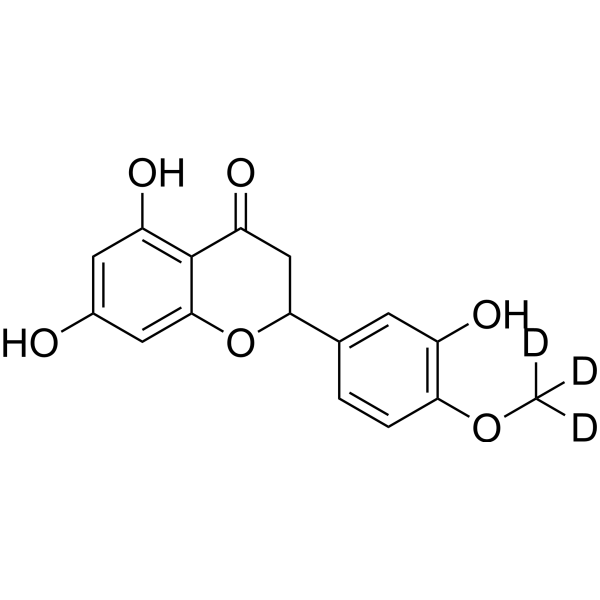
Cat. No.: HY-N0168AS
CAS No.: 1346605-26-2
(Rac)-Hesperetin-d3 is the deuterium labeled (Rac)-Hesperetin. (Rac)-Hesperetin is the racemate of Hesperetin (HY-N0168), an orally active multi-target inhibitor. (Rac)-Hesperetin exhibits significant anti-tumor and anti-inflammatory activities by blocking the TGF-β1-mediated Fyn/RhoA signaling axis and the TLR4-MyD88-NF-κB inflammatory pathway. (Rac)-Hesperetin inhibits the formation of actin stress fibers and the migration and invasion of cancer cells, and is suitable for triple-negative breast cancer research. In inflammation models, (Rac)-Hesperetin effectively alleviates lung injury by reducing the release of pro-inflammatory mediators and regulating the activity of oxidative stress enzymes, and is suitable for acute lung injury research. (Rac)-Hesperetin also interferes with the entry and early replication processes of channel catfish virus, inhibits viral gene expression and progeny virus production, thereby protecting cells from virus-induced cytopathic effects .
loading...
    loading...

