152 Results for "

cognitive function

" in MedChemExpress (MCE) Product Catalog:
Products (152)

152 Results for "cognitive function" in MCE Product Catalog:

Cat. No.: HY-14824A
CAS No.: 876170-44-4
Synonyms: ABT 894 benzenesulfonate
Target:  

nAChR

Research Areas:  

Neurological Disease

Sofinicline benzenesulfonate (ABT 894 benzenesulfonate) is a novel nicotinic acetylcholine receptor agonist, specifically acting on the α4β2 subtype of nAChR (IC50=0.1 nM). Sofinicline benzenesulfonate has the potential to improve cognitive function, including attention, memory and working memory. Sofinicline benzenesulfonate can be used in studies of attention deficit, hyperactivity disorder (ADHD) .
loading...
    loading...
Cat. No.: HY-D0195R
CAS No.: 55589-62-3
Acesulfame potassium (Standard) is the analytical standard of Acesulfame potassium (HY-D0195). This product is intended for research and analytical applications. Acesulfame potassium is a synthetic sweetener. Long-term use of Acesulfame potassium can affect cognitive function, possibly by altering the neurometabolic functions in mice. Acesulfame potassium can suppress autophagic degradation of PD-L1 in RIL-175 and SK-Hep1 cells through the ERK1/2-mTORC1-ULK1 pathway, which may be related to immune evasion in cancer cells. Acesulfame potassium can be used in research on neurological diseases, metabolic disorders, cancer, and immune evasion .
loading...
    loading...
Cat. No.: HY-D0195S
CAS No.: 1623054-53-4
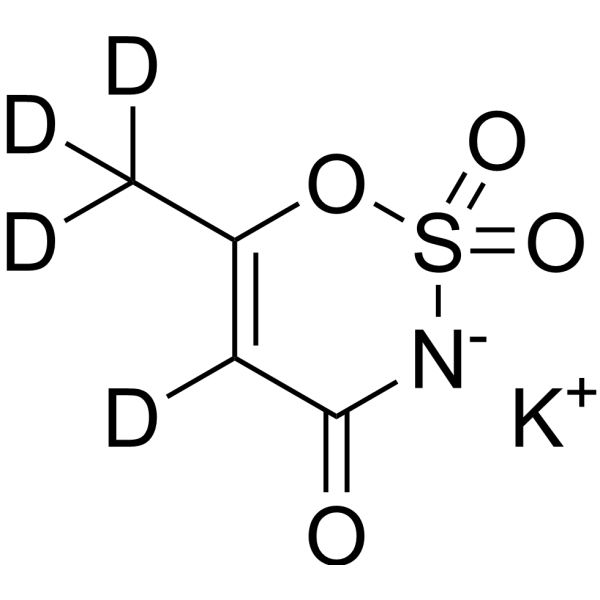
Acesulfame-d4 potassium is the deuterium labeled Acesulfame (potassium) (HY-D0195) . Acesulfame potassium is an artificial sweetener. Acesulfame potassium (long-term) affects cognitive functions, potentially via altering neuro-metabolic functions in mice .
loading...
    loading...
Cat. No.: HY-121650
CAS No.: 53463-78-8
Target:  

Dopamine Receptor

Research Areas:  

Neurological Disease

ADTN is a dopamine receptor agonist that has the activity of promoting dopamine neurotransmission. ADTN can be used to increase the release of neurotransmitters, thereby improving dopamine-related physiological functions. ADTN's potential applications include inhibiting mental illness and improving cognitive function .
loading...
    loading...
Cat. No.: HY-108157
CAS No.: 150358-76-2
Target:  

mAChR

Research Areas:  

Neurological Disease

A-72055 is a partial agonist of muscarinic receptors. A-72055 has binding activity to both M1 and M2 receptors, with Ki values of 32 nM and 30 nM, respectively. A-72055 can enhance cognitive function and improve learning and memory deficits. A-72055 has better security. A-72055 can be used for research on neurological disorders such as cognitive impairment .
loading...
    loading...
Cat. No.: HY-107111A
CAS No.: 932373-86-9
Research Areas:  

Neurological Disease

GSK1034702 hydrochloride is an orally active and allosteric agonist of M1 mAChR (pEC50=8.1) that can cross the blood-brain barrier. GSK1034702 hydrochloride activates the Gq/11 protein-mediated signaling pathway, enhancing neuronal firing and long-term potentiation (LTP) in the CA1 region of the hippocampus. GSK1034702 hydrochloride can modulate hippocampal function, improve memory encoding in the nicotine withdrawal cognitive dysfunction model, and show pro-cognitive effects in rodents. GSK1034702 hydrochloride can be used for the study of the mechanisms of cognitive impairment diseases such as Alzheimer's disease, and has certain peripheral M receptor activation-related side effects (such as gastrointestinal reactions) .
loading...
    loading...
Cat. No.: HY-125095
CAS No.: 804519-64-0
Purity:  99.43%
Synonyms: Tunodafil hydrochloride
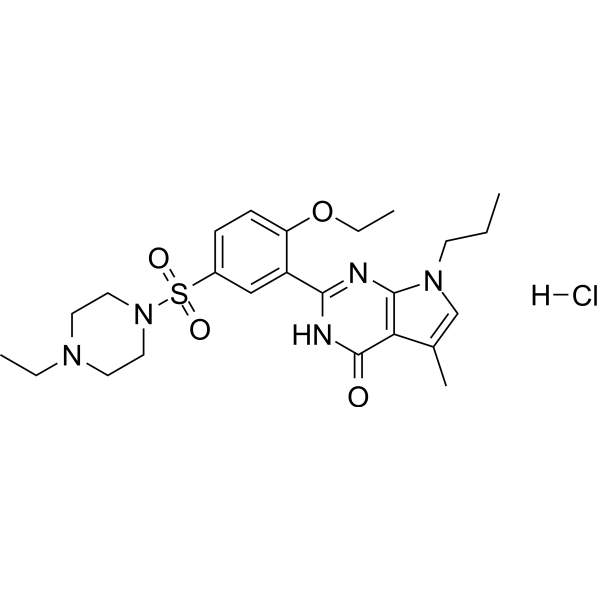
Yonkenafil (Tunodafil) hydrochloride, a novel phosphodiesterase 5 (PDE5) inhibitor, is effective in reducing cerebral infarction, neurological deficits, edema, and neuronal damage in the infarcted area. Yonkenafil (Tunodafil) hydrochloride may improve cognitive function by modulating neurogenesis and has a potential therapeutic effect on Alzheimer's disease .
loading...
    loading...
Cat. No.: HY-18039
CAS No.: 1040718-40-8
Synonyms: SEN15924
Target:  

Cholinesterase (ChE)

Research Areas:  

Neurological Disease

WAY-361789 (SEN15924) is an orally active agonist for α7 nicotinic acetylcholine receptor (α7 nAChR) with an EC50 of 0.18 μM. WAY-361789 improves the cognitive function, exhibits potential in ameliorating Alzheimer’s Disease and schizophrenia .
loading...
    loading...
Cat. No.: HY-101586A
CAS No.: 219581-36-9
Synonyms: Lu 25-109 maleate
Target:  

mAChR

Research Areas:  

Neurological Disease

Alvameline (Lu 25-109) maleate is a partial agonist of M1 and an antagonist of M2/M3. Alvameline maleate competitively antagonizes contractions induced by ammonium chloride (HY-Y1269) and electrical field stimulation in human detrusor muscle, indicating its potential application in regulating bladder function. Additionally, alvameline maleate can improve cognitive function following traumatic brain injury in rats .
loading...
    loading...
Cat. No.: HY-103212B
CAS No.: 36067-73-9
Synonyms: B-HT 933
Target:  

Adrenergic Receptor

Research Areas:  

Neurological Disease

Azepexole (B-HT 933) is a selective α2 adrenergic inducer with over 300-fold selectivity for α2 adrenergic receptors over α1 adrenergic receptors. Azepexole can be used to study the biological functions of α2 adrenergic receptors and inhibition of related diseases. Azepexole may also play a role in regulating mood and improving cognitive function .
loading...
    loading...
Cat. No.: HY-101282
CAS No.: 2092921-50-9
Target:  

Amyloid-β

Research Areas:  

Neurological Disease

Glutaminyl Cyclase Inhibitor 3 (compound 212 ), a designed anti-Alzheimer’s compound, is a potent human Glutaminyl Cyclase (GC) inhibitor, with an IC50 of 4.5 nM. Glutaminyl Cyclase-IN-1 (compound 212) significantly reduced the brain concentrations of pyroform Aβ and total Aβ and restored cognitive functions .
loading...
    loading...
Cat. No.: HY-168031
CAS No.: 2756368-79-1
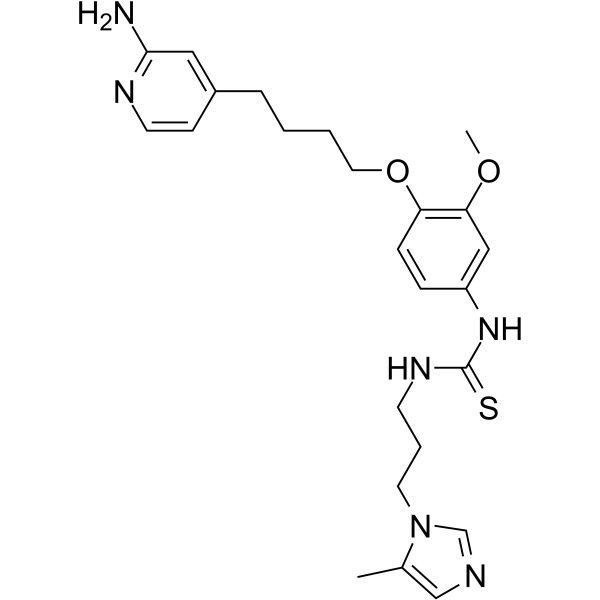
AChE/BChE-IN-21 is a histamine H3 receptor antagonist, calcium channel blocker, and acetylcholinesterase inhibitor. AChE/BChE-IN-21 exhibits neuroprotective activity against H2O2 and Aβ1-40, and can restore cognitive function in AD mice .
loading...
    loading...
Cat. No.: HY-U00033
CAS No.: 127985-21-1
Target:  

Endogenous Metabolite

Research Areas:  

Neurological Disease

Iomazenil is a benzodiazepine receptor antagonist with partial inverse agonist activity. Iomazenil can assess the binding potential of central benzodiazepine receptors in the cerebral cortex and may reflect neuronal function in viable tissue. Iomazenil use is associated with improved cognitive function in adult patients with ischemic cerebral pathology after indirect revascularization surgery. Iomazenil demonstrated restoration of benzodiazepine receptor binding potential in the affected hemisphere after surgery on brain SPECT imaging .
loading...
    loading...
Cat. No.: HY-114555
CAS No.: 1007109-16-1
Target:  

GlyT

Research Areas:  

Neurological Disease

TASP0315003 is a glycine transporter 1 (GlyT1) inhibitor. TASP0315003 potentiates NMDA receptor function by increasing synaptic glycine levels. TASP0315003 can improve cognitive dysfunction and the negative symptoms of schizophrenia without having undesirable central nervous system side effects. TASP0315003 can be used for the research of neurological disease .
loading...
    loading...
Cat. No.: HY-B0702R
CAS No.: 27848-84-6
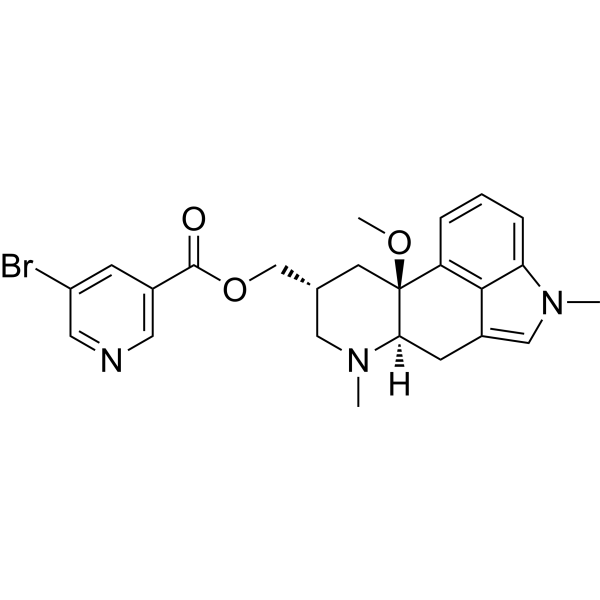
Nicergoline (Standard) is the analytical standard of Nicergoline. This product is intended for research and analytical applications. Nicergoline, an ergoline derivative ester of bromonicotinic acid, is a potent, selective and orally active antagonist of α1A-adrenoceptor. Nicergoline has vasodilator effects. Nicergoline also has ameliorative effects on cognitive function in mouse models of Alzheimer's disease .
loading...
    loading...
Cat. No.: HY-168028
CAS No.: 1639898-35-3
Target:  

mGluR

Research Areas:  

Neurological Disease

mGluR2 modulator 5 (Compound 11) is an orally active, selective mGluR2 negative allosteric modulator with an IC50 of 8.9 nM. Pharmacokinetic studies in rats show that mGluR2 modulator 5 can effectively cross the blood-brain barrier. It can modulate cognitive and neurological functions in mood disorders and is suitable for research in the field of neurodegenerative diseases .
loading...
    loading...
Cat. No.: HY-B0702S
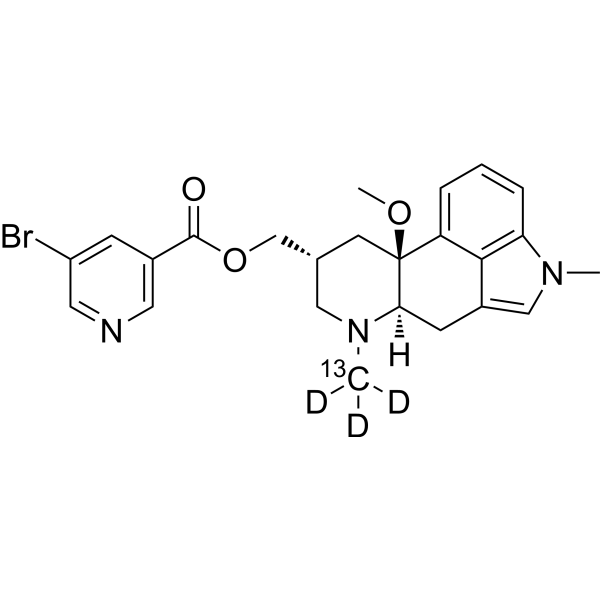
Nicergoline- 13C,d3 is the 13C- and deuterium labeled Nicergoline. Nicergoline, an ergoline derivative ester of bromonicotinic acid, is a potent, selective and orally active antagonist of α1A-adrenoceptor. Nicergoline has vasodilator effects. Nicergoline also has ameliorative effects on cognitive function in mouse models of Alzheimer's disease .
loading...
    loading...
Cat. No.: HY-W743952
Nicergoline-d3 is the deuterium labeled Nicergoline (HY-B0702). Nicergoline, an ergoline derivative ester of bromonicotinic acid, is a potent, selective and orally active antagonist of α1A-adrenoceptor. Nicergoline has vasodilator effects. Nicergoline also has ameliorative effects on cognitive function in mouse models of Alzheimer's disease .
loading...
    loading...
Cat. No.: HY-150159S
Cotinine-d3 N-β-D-Glucuronide is the deuterium labeled Cotinine N-β-D-Glucuronide (HY-W588194). Cotinine N-β-D-Glucuronide is a glucuronide conjugate of the tobacco metabolite Cotinine (HY-B1178). Cotinine N-β-D-Glucuronide is promising for research of tobacco carcinogen metabolism and cognitive function .
loading...
    loading...
Cat. No.: HY-167824
CAS No.: 298198-52-4
Target:  

Endogenous Metabolite

Research Areas:  

Neurological Disease

SSR180711 is a potent and subtype-selective α7 agonist with activity in Alzheimer's disease and schizophrenia research. SSR180711 can be used to study subtypes of intracerebral hemorrhage associated with cerebral small vessel disease. SSR180711 shows potential in electrophysiological and behavioral studies to evaluate its effects on cognitive function. SSR180711 also has potential for studying cerebrovascular lesions and their effects .
loading...
    loading...

