113 Results for "

typical

" in MedChemExpress (MCE) Product Catalog:
Products (113)

113 Results for "typical" in MCE Product Catalog:

Cat. No.: HY-154017
CAS No.: 565450-78-4
Research Areas:  

Cancer

2′-C-Methyl-6-O-methylinosine is a hypoxanthine analog. Hypoxanthine is a kind of purine base mainly present in muscle tissue. And it is a metabolite produced by purine oxidase acting on xanthine. Hypoxanthine has typical anti-inflammatory effects and is a potential endogenous poly(ADP-ribose) polymerase (PARP) inhibitor. It is cytoprotective by inhibiting PAPR activity, inhibiting peroxynitrite-induced mitochondrial depolarization and secondary superoxide production. Hypoxanthine can also be used as an indicator of hypoxia .
loading...
    loading...
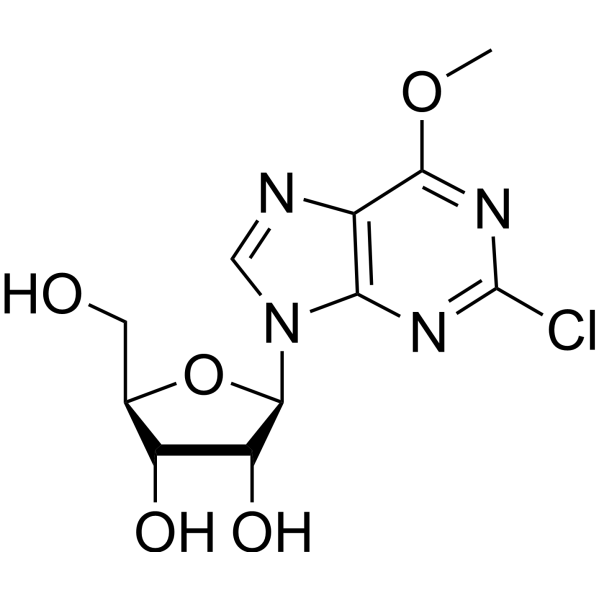
Cat. No.: HY-W039271
CAS No.: 15465-92-6
Synonyms: 2-Chloro-6-O-methyl-inosine
Research Areas:  

Cancer

2-Chloro-6-methoxypurine riboside is a hypoxanthine analog. Hypoxanthine is a kind of purine base mainly present in muscle tissue. And it is a metabolite produced by purine oxidase acting on xanthine. Hypoxanthine has typical anti-inflammatory effects and is a potential endogenous poly(ADP-ribose) polymerase (PARP) inhibitor. It is cytoprotective by inhibiting PAPR activity, inhibiting peroxynitrite-induced mitochondrial depolarization and secondary superoxide production. Hypoxanthine can also be used as an indicator of hypoxia .
loading...
    loading...
Cat. No.: HY-125629
CAS No.: 339337-07-4
Target:  

Others

Research Areas:  

Others

Primordazine B is a small molecule compound identified by chemical screening in zebrafish embryos with the activity of selectively destroying Primordial Germ Cells (PGCs). Primordazine B inhibits a process called Poly(A)-tail Independent Non-canonical Translation (PAINT) without inhibition of polyadenylate tail dependent typical translation (PAT). Primordazine B can be used to study translational control of cells in specific physiological or pathological states, such as gene expression regulation during cell dormancy, viral infection, or stress conditions .
loading...
    loading...
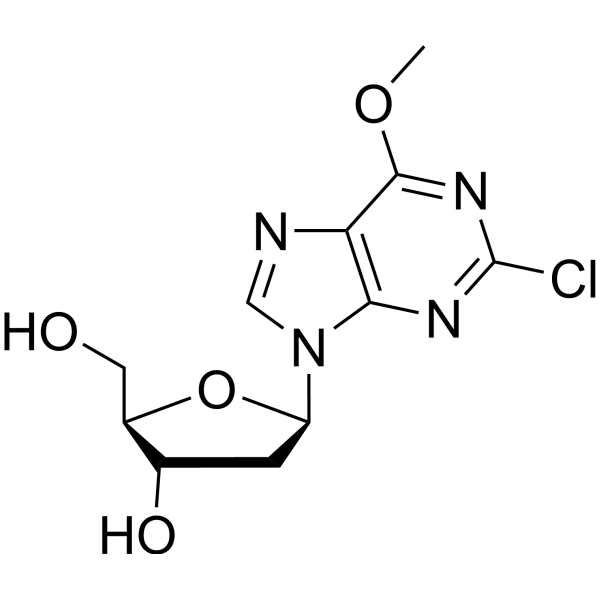
Cat. No.: HY-154393
CAS No.: 146196-07-8
Research Areas:  

Cancer

2-Chloro-2'-deoxy-6-O-methylinosine is a hypoxanthine analog. Hypoxanthine is a kind of purine base mainly present in muscle tissue. And it is a metabolite produced by purine oxidase acting on xanthine. Hypoxanthine has typical anti-inflammatory effects and is a potential endogenous poly(ADP-ribose) polymerase (PARP) inhibitor. It is cytoprotective by inhibiting PAPR activity, inhibiting peroxynitrite-induced mitochondrial depolarization and secondary superoxide production. Hypoxanthine can also be used as an indicator of hypoxia .
loading...
    loading...
Cat. No.: HY-P10469
Target:  

NF-κB

Research Areas:  

Inflammation/Immunology Cancer

NBD-2 is an inhibitor of the NEMO-IKKα/β interaction in the NF-κB signaling pathway. NBD-2 specifically inhibits the typical NF-κB signaling pathway in vitro and in vivo, reducing the inflammatory response in lipopolysaccharide (LPS) induced acute lung injury (ALI). NBD-2 exhibits significant anti-inflammatory activity. NBD-2 can be used to study diseases related to NF-κB signaling pathway, including autoimmune diseases, cancer, etc .
loading...
    loading...
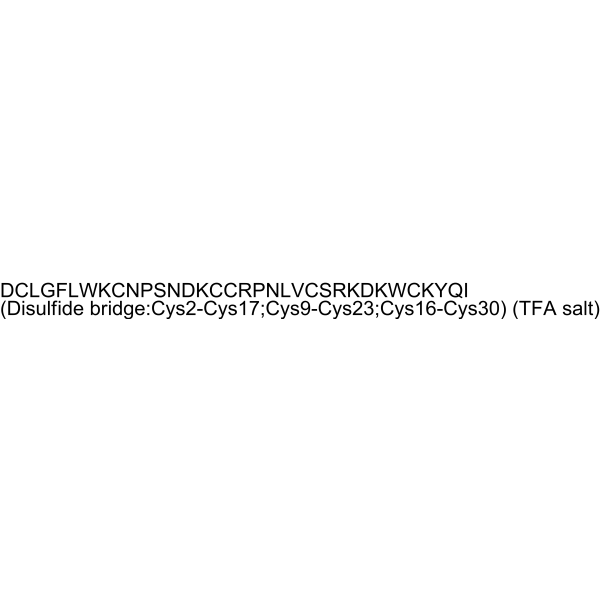
Cat. No.: HY-P1218A
Target:  

Sodium Channel

Research Areas:  

Neurological Disease

Phrixotoxin 3 TFA is a potent blocker of voltage-gated sodium channels, with IC50s of 0.6, 42, 72, 288, 610 nM for NaV1.2, NaV1.3, NaV1.4, NaV1.1 and NaV1.5, respectively. Phrixotoxin 3 TFA modulates voltage-gated sodium channels with properties similar to those of typical gating-modifier toxins, both by causing a depolarizing shift in gating kinetics and by blocking the inward component of the sodium current .
loading...
    loading...
Cat. No.: HY-114622
CAS No.: 1047981-31-6
Synonyms: API-1252 tosylate; Debio 1452 tosylate
Target:  

Bacterial Antibiotic

Research Areas:  

Infection

AFN-1252 (API-1252) tosylate is an orally active and selective inhibitor of FabI, an essential enzyme in fatty acid biosynthesis in Staphylococcus spp. AFN-1252 tosylate exhibits exquisite and highly selective activity against Staphylococcus spp. AFN-1252 tosylate exhibits typical MIC90 values of 0.015 μg/ml against diverse clinical isolates of S. aureus. AFN-1252 tosylate is efficacious in a mouse model of septicemia providing 100% protection from an otherwise lethal peritoneal infection of S. aureus Smith .
loading...
    loading...
Cat. No.: HY-120883
CAS No.: 150346-23-9
Rhizopodin is a new cytostatic compound isolated from the culture fluid of the slime mold Myxococcus stipitatus. Rhizopodin inhibits the growth of various animal cell cultures without killing the cells, with an ID50 value of 12 to 30 ng/ml, depending on the cell line. In particular, fibroblast-like cells show typical morphological changes, with cells becoming larger and forming long branched reticular extensions within hours, and these morphological changes are irreversible. Rhizopodin inhibits bleb formation in K-562 cells, possibly through interaction with protein phosphorylation.
loading...
    loading...
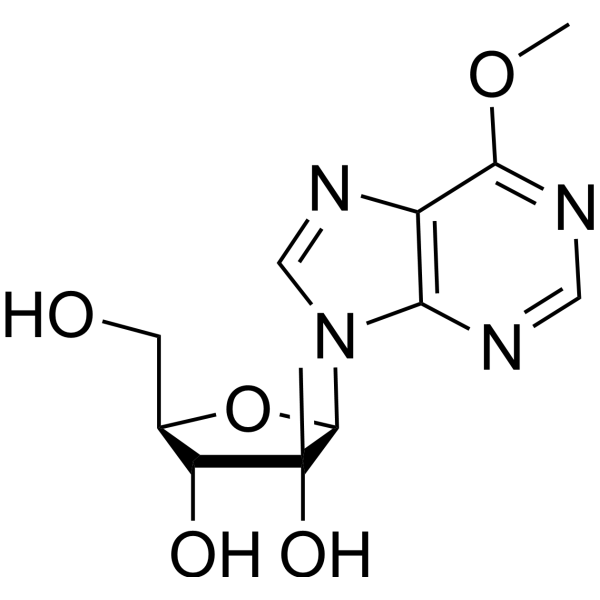
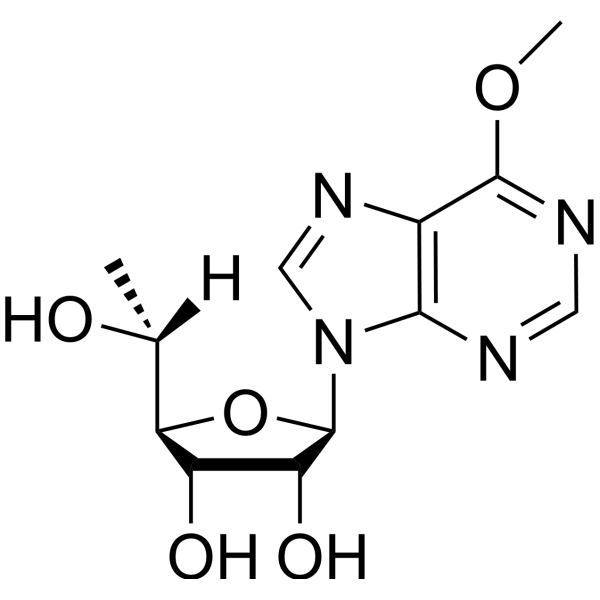
Cat. No.: HY-152678
Research Areas:  

Cancer

6-Methoxypurine-9-β-D-5’(R)-C-methylriboside is a hypoxanthine analog. Hypoxanthine is a kind of purine base mainly present in muscle tissue. And it is a metabolite produced by purine oxidase acting on xanthine. Hypoxanthine has typical anti-inflammatory effects and is a potential endogenous poly(ADP-ribose) polymerase (PARP) inhibitor. It is cytoprotective by inhibiting PAPR activity, inhibiting peroxynitrite-induced mitochondrial depolarization and secondary superoxide production. Hypoxanthine can also be used as an indicator of hypoxia .
loading...
    loading...
Cat. No.: HY-W040194R
CAS No.: 81777-89-1
Research Areas:  

Metabolic Disease

Clomazone (Standard) is the analytical standard of Clomazone (HY-W040194). This product is intended for research and analytical applications. Clomazone is a broad spectrum herbicide, mainly used to control annual broadleaf weeds and grass weeds in various crops such as rice, soybeans, and peanuts. Clomazone inhibits carotenoid biosynthesis, and treated plants show typical "albinism" symptoms due to the destruction of chloroplast membrane structure leading to chlorophyll degradation. Clomazone exhibits multiple toxic effects on non-target organisms, including aquatic lethality, developmental malformations, liver damage, mitochondrial dysfunction, and hematotoxicity.
loading...
    loading...
Cat. No.: HY-12882AR
CAS No.: 23210-58-4
Synonyms: NP-120 tartrate (Standard); RC-61-91 tartrate (Standard)
Ifenprodil (tartrate) (Standard) is the analytical standard of Ifenprodil (tartrate). This product is intended for research and analytical applications. Ifenprodil tartrate is a typical noncompetitive NMDA receptor antagonist. Ifenprodil tartrate exerts high affinity at NR1A/NR2B receptors (IC50=0.34 μM) over 400-fold than at NR1A/NR2A receptors (IC50=146 μM) . Ifenprodil tartrate inhibits GIRK (Kir3), reduces inward currents through the basal GIRK activity. Ifenprodil tartrate has the potential to be a cerebral vasodilator .
loading...
    loading...
Cat. No.: HY-129934
CAS No.: 607351-44-0
Synonyms: Lat-NEt
Research Areas:  

Endocrinology

Latanoprost ethyl amide (Lat-NEt) is a latanoprost analog in which the C-1 carboxyl group has been modified to an N-ethyl amide. Prostaglandin esters have been shown to have ocular hypotensive activity.1 Prostaglandin N-ethyl amides were recently introduced as alternative prostaglandin ocular hypotensive prodrugs. Although it has been claimed that prostaglandin ethyl amides are not converted to the free acids in vivo, studies in our laboratories have shown that bovine and human corneal tissue converts the N-ethyl amides of various prostaglandins to the free acids with a conversion rate of about 2.5 μg/g corneal tissue/hr. Lat-NEt would be expected to show the typical intraocular effects of Latanoprost free acid, but with the much slower hydrolysis pharmacokinetics of the prostaglandin N-amides.
loading...
    loading...
Cat. No.: HY-D1056I
Synonyms: LPS, from Akkermansia muciniphila
Lipopolysaccharides, from Akkermansia muciniphila (LPS, from Akkermansia muciniphila) are lipopolysaccharide endotoxins derived from Akkermansia muciniphila and are TLR-4 activators. Unlike typical LPS, Lipopolysaccharides, from Akkermansia muciniphila are R-type LPS or lipooligosaccharides (LOS), lacking the O-antigen domain and consisting only of a core oligosaccharide and a lipid A. Lipopolysaccharides, from Akkermansia muciniphila can activate TLR4 and TLR2, and may inhibit the TLR4/NF-κB pathway, thereby alleviating LPS-induced acute kidney injury .
It is recommended to prepare a solution with concentration ≥2 mg/mL. Vortex thoroughly for more than 10 minutes. Due to the adsorption characteristics of LPS, silanized container or low adsorption centrifuge tubes should be used for aliquoting and storage, and mix thoroughly before use.
loading...
    loading...
Cat. No.: HY-129934S
Synonyms: Lat-NEt-d4
Latanoprost ethyl amide-d4 (Lat-NEt-d4) is deuterium labeled Latanoprost ethyl amide. Latanoprost ethyl amide (Lat-NEt) is a latanoprost analog in which the C-1 carboxyl group has been modified to an N-ethyl amide. Prostaglandin esters have been shown to have ocular hypotensive activity.1 Prostaglandin N-ethyl amides were recently introduced as alternative prostaglandin ocular hypotensive prodrugs. Although it has been claimed that prostaglandin ethyl amides are not converted to the free acids in vivo, studies in our laboratories have shown that bovine and human corneal tissue converts the N-ethyl amides of various prostaglandins to the free acids with a conversion rate of about 2.5 μg/g corneal tissue/hr. Lat-NEt would be expected to show the typical intraocular effects of Latanoprost free acid, but with the much slower hydrolysis pharmacokinetics of the prostaglandin N-amides .
loading...
    loading...
Cat. No.: HY-D1056B1
Synonyms: LPS, from bacterial (Proteus vulgaris)
Lipopolysaccharides, from Proteus vulgaris are lipopolysaccharide endotoxins and TLR-4 activators derived from Proteus vulgaris, classified as S-type LPS, which can activate pathogen-associated molecular patterns (PAMP) of the immune system and induce cellular secretion of migrasomes. Lipopolysaccharides, from Proteus vulgaris exhibit a typical three-part structure: O-antigen, core oligosaccharide, and lipid A. Lipopolysaccharides, from Proteus vulgaris possess a unique molecular structure and chitosan affinity (Kb=2.72 μM), surpassing that of Yersinia pseudotuberculosis (Kb=6.06 μM) and Escherichia coli (Kb=79.50 μM) .
It is recommended to prepare a solution with concentration ≥2 mg/mL. Vortex thoroughly for more than 10 minutes. Due to the adsorption characteristics of LPS, silanized container or low adsorption centrifuge tubes should be used for aliquoting and storage, and mix thoroughly before use.
loading...
    loading...
Cat. No.: HY-105025B
CAS No.: 85503-03-3
Synonyms: Thymopoietin II (32-35) acetate; TP 4 acetate
Target:  

Apoptosis

Research Areas:  

Inflammation/Immunology

Thymocartin (TP 4) acetate is the 32-35 fragment of thymic factor (thymopoietin). Thymocartin acetate inhibits apoptosis of peripheral blood lymphocytes in HIV infected individuals. Thymocartin acetate is potential for immunodeficiency diseases research .
loading...
    loading...
Cat. No.: HY-N13071
CAS No.: 412942-35-9
3α-Acetyl-20(29)-lupene-24-oic acid (compound 1) is a typical lupenene-based boswellic acid that can be isolated from the gum resin of Boswellia serrata .
loading...
    loading...
Cat. No.: HY-30647
CAS No.: 3576-73-6
Target:  

mAChR

Research Areas:  

Neurological Disease

RS-86 is a potent, central acting, and selective muscarinic acetylcholine receptor agonist. RS-86 exhibits typical cholinergic excitatory effects, such as inducing smooth muscle contraction, ganglion depolarization, central hypothermia, etc. RS-86 can be used for research on Alzheimer's disease .
loading...
    loading...
Cat. No.: HY-W754293
CAS No.: 23513-72-6
Synonyms: V0191; DMAE pidolate; DMAE PCA
Target:  

mAChR

Research Areas:  

Neurological Disease

Deanol pidolate (V0191; DMAE pidolate) is an orally active pro-cholinergic agent that improves cognitive symptoms by increasing the release of acetylcholine (Ach) and avoids the typical side effects of cholinesterase inhibitors. Deanol pidolate can alleviate the harmful effects of scopolamine on long-term memory and restore to baseline levels more quickly. Deanol pidolate can be used in research on Alzheimer's disease .
loading...
    loading...
Cat. No.: HY-K6304

MCE Human iPSC/ESC Hepatocyte Induction Differentiation Kit enables the efficient generation of hepatocyte-like cells with a high degree of maturation within 21 d. The resulting cells stably express multiple key hepatic functional markers, including albumin (ALB), cytochrome P450 (CYP) family enzymes, and other liver-specific functional molecules, and exhibit typical hepatocellular phenotypes and functions.

loading...
    loading...

