268 Results for "

mitochondrial dysfunction

" in MedChemExpress (MCE) Product Catalog:
Products (268)

268 Results for "mitochondrial dysfunction" in MCE Product Catalog:

Cat. No.: HY-137782B
CAS No.: 324518-22-1
Research Areas:  

Others

Palmitoleoyl-CoA lithium is the lithium salt form of Palmitoleoyl-CoA (HY-137782). Palmitoleoyl-CoA lithium can be activated and transported into the mitochondria for metabolism, specifically for β-oxidation. Palmitoleoyl-CoA lithium induces the cardiac mitochondrial membrane permeability transition, which causes mitochondrial dysfunction. Palmitoleoyl-CoA lithium regulates metabolism via allosteric control of AMPK β1-isoforms .
loading...
    loading...
Cat. No.: HY-B1093R
CAS No.: 299-84-3
Fenchlorphos (Standard) is the analytical standard of Fenchlorphos. This product is intended for research and analytical applications. Fenchlorphos, an organophosphate, is an insecticide. Fenchlorphos is an inhibitor of the enzyme acetylcholinesterase (AChE). Fenchlorphos is able to cause mitochondrial dysfunction .
loading...
    loading...
Cat. No.: HY-B1914R
CAS No.: 119168-77-3
Tebufenpyrad (Standard) is the analytical standard of Tebufenpyrad. This product is intended for research and analytical applications. Tebufenpyrad can induce mitochondrial dysfunction and oxidative damage. Tebufenpyrad induces dose-dependent cell death on N27 cells, with an EC50 value of 3.98 μM .
loading...
    loading...
Cat. No.: HY-168260
Target:  

Apoptosis Ferroptosis MMP

Research Areas:  

Cancer

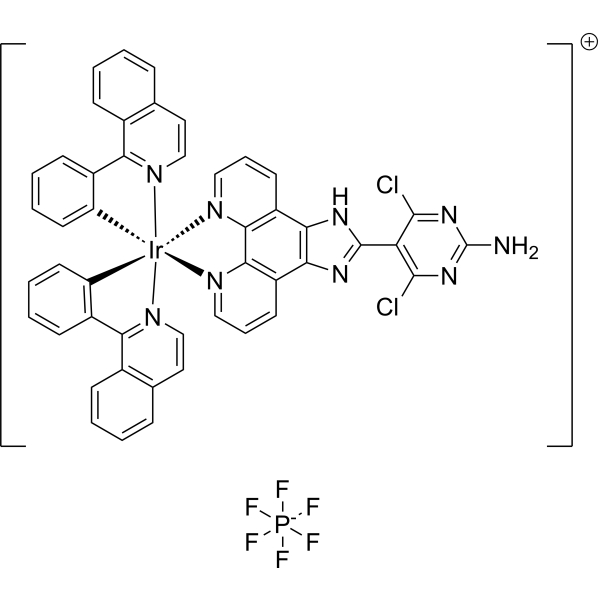
CQ-Mito is a Coumarin-Quinazolinone (CQ)-based derivative that targets mitochondria and exhibits profound phototherapeutic performances with an Phototoxic Index (PI) value of 167. CQ-Mito causes cell death by both apoptosis and ferroptosis. CQ-Mito mediates mitochondrial dysfunction, including mitochondrial morphology changed and the loss of MMP. CQ-Mito can efficiently inhibit the tumor growth in organoid tumor models .
loading...
    loading...
Cat. No.: HY-174148
Research Areas:  

Cancer

Anion transporter-4 (Compound 6) is a small-molecule anion transporter, which induces tubulin degradation and mitochondrial dysfunction. Anion transporter-4 can increase intracellular anion levels such as chloride ions by disrupting microtubule dynamics, promoting lipid peroxidation, and impairing mitochondrial function. Anion transporter-4 triggers ferroptosis to exert anticancer activity. Anion transporter-4 is promising for research of cancers .
loading...
    loading...
Cat. No.: HY-N6906R
CAS No.: 116383-31-4
Oleuroside (Standard) is the analytical standard of Oleuroside. This product is intended for research and analytical applications. Oleuroside is a phenolic secoiridoid in olive. Oleuroside can protect against mitochondrial dysfunction in models of early Alzheimer's disease and brain ageing .
loading...
    loading...
Cat. No.: HY-161332
Antitumor agent-143 (compound 2c) is an antitumor agent that blocks cell proliferation of A549 cells during the S phase and induces an early apoptosis. Antitumor agent-143 induces cell death via ferroptosis, apoptosis by a ROS-mediated mitochondrial dysfunction pathway and GSDMD-mediated pyroptosis .
loading...
    loading...
Cat. No.: HY-145243
CAS No.: 2351900-45-1
Target:  

Apoptosis

Research Areas:  

Others

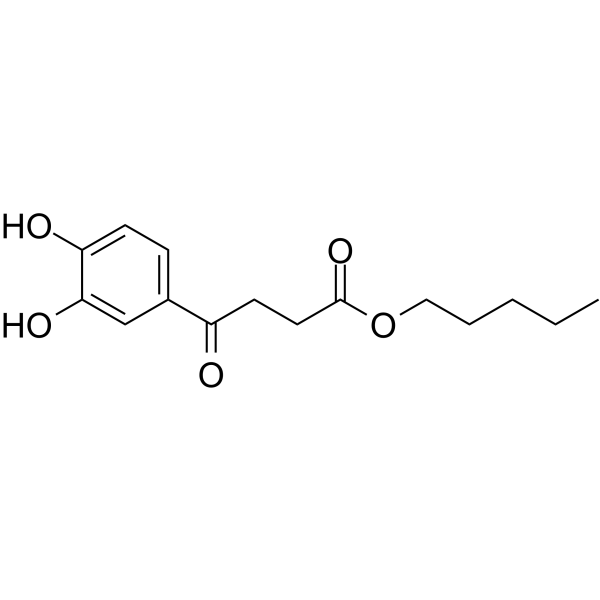
PDPOB is a phenyl carboxylic acid derivative. PDPOB displays protective roles against OGD/R-evoked multiaspect neuronal deterioration in SH-SY5Y cells, as evidenced by alleviated mitochondrial dysfunction, oxidative stress, and apoptosis. PDPOB has the potential for the research of cerebral ischemia .
loading...
    loading...
Cat. No.: HY-B1334AR
CAS No.: 6724-53-4
Perhexiline (maleate) (Standard) is the analytical standard of Perhexiline (maleate). This product is intended for research and analytical applications. Perhexiline maleate is an orally active CPT1 and CPT2 inhibitor that reduces fatty acid metabolism. Perhexiline maleate induces mitochondrial dysfunction and apoptosis in hepatic cells. Perhexiline maleate can cross the blood brain barrier (BBB) and shows anti-tumor activity. Perhexiline maleate can be used in the research of cancers, and cardiovascular disease like angina .
loading...
    loading...
Cat. No.: HY-B0432R
CAS No.: 54063-53-5
Synonyms: SA-79 (Standard)
Propafenone (Standard) is the analytical standard of Propafenone. This product is intended for research and analytical applications. Propafenone (SA-79), a sodium-channel blocker, acts an antiarrhythmic agent. Propafenone also has high affinity for the β receptor (IC50=32 nM) . Propafenone blocks the transient outward current (Ito) and the sustained delayed rectifier K current (Isus) with IC50 values of 4.9 μm and 8.6 μm, respectively . Propafenone suppresses esophageal cancer proliferation through inducing mitochondrial dysfunction and induce apoptosis .
loading...
    loading...
Cat. No.: HY-N2858
CAS No.: 86989-18-6
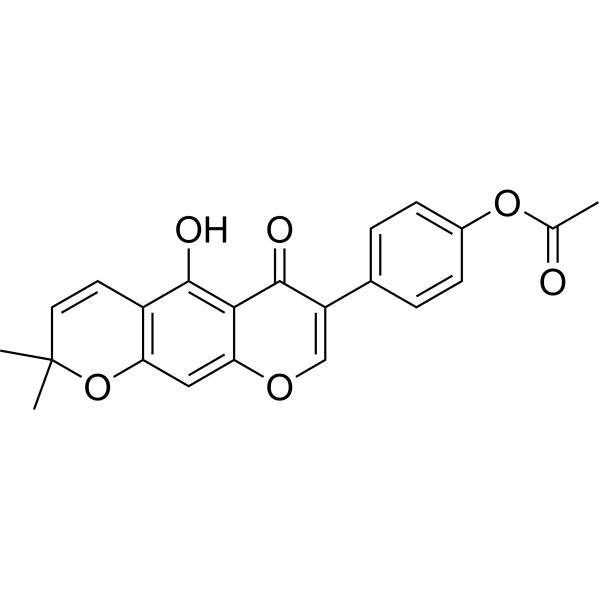
Alpinumisoflavone acetate is a anticancer agent. Alpinumisoflavone acetate shows antiproliferative activity. Alpinumisoflavone acetate decreases the expression of phosphorylation of ERK1/2. Alpinumisoflavone acetate induces mitochondrial dysfunction and mitochondria-mediated Apoptosis. Alpinumisoflavone acetate has the potential for the research of HCC .
loading...
    loading...
Cat. No.: HY-159881
Target:  

Mitophagy

Research Areas:  

Metabolic Disease

SHS206 (compound 6n) is an orally active mitochondrial uncoupler that reduces hepatic triglyceride levels. SHS206 exhibits in vivo efficacy in the GAN mouse model and shows inhibitory effects on metabolic dysfunction-associated steatohepatitis (MASH) .
loading...
    loading...
Cat. No.: HY-N7063S
CAS No.: 32637-85-7
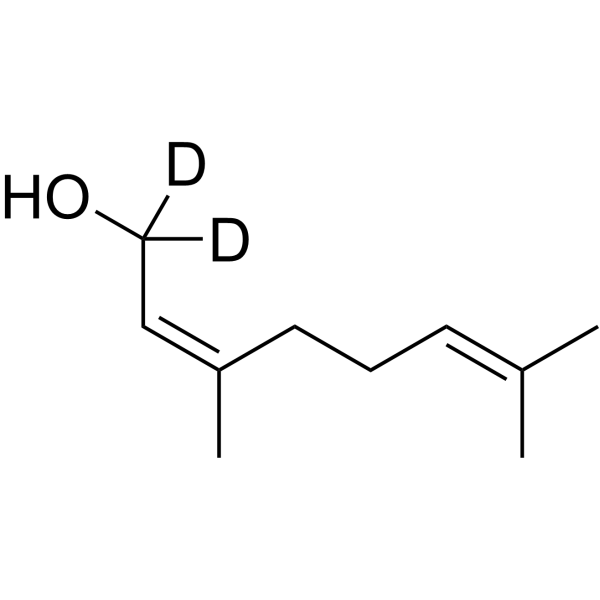
Nerol-d2 is deuterated labeled Nerol (HY-N7063). Nerol is a constituent of neroli oil. Nerol Nerol triggers mitochondrial dysfunction and induces apoptosis via elevation of Ca2+ and ROS. Antifungal activity .
loading...
    loading...
Cat. No.: HY-N7063S1
CAS No.: 66063-45-4
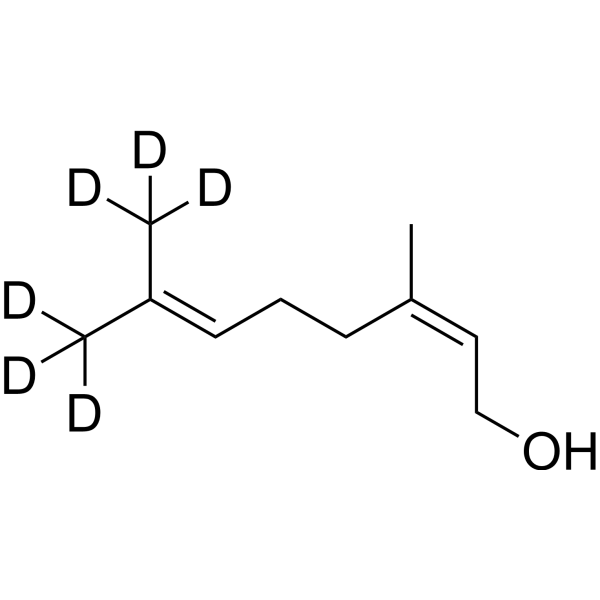
Nerol-d6 is deuterated labeled Nerol (HY-N7063). Nerol is a constituent of neroli oil. Nerol Nerol triggers mitochondrial dysfunction and induces apoptosis via elevation of Ca2+ and ROS. Antifungal activity .
loading...
    loading...
Cat. No.: HY-B1914S
Tebufenpyrad-d3 is the deuterium labeled Tebufenpyrad (HY-B1914). Tebufenpyrad can induce mitochondrial dysfunction and oxidative damage. Tebufenpyrad induces dose-dependent cell death on N27 cells, with an EC50 value of 3.98 μM .
loading...
    loading...
Cat. No.: HY-121214R
CAS No.: 348635-87-0
Amisulbrom (Standard) is the analytical standard of Amisulbrom (HY-121214). Amisulbrom is a fungicide. Amisulbrom can inhibit the cytochrome-bc1 complex of the mitochondrial electron and induce mitochondrial dysfunction. Amisulbrom can induce cell apoptosis, ROS production and cause G2/M phase arrest. Amisulbrom shows cardiovascular toxicity to zebrafish. Amisulbrom can be used for the researches of infection and cardiovascular disease .
loading...
    loading...
Cat. No.: HY-137782A
CAS No.: 1246304-41-5
Research Areas:  

Others

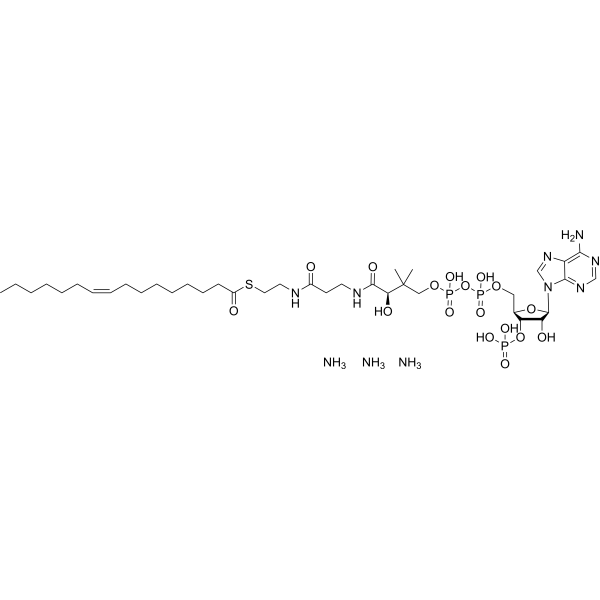
Palmitoleoyl-CoA triammonium is the triammonium salt form of Palmitoleoyl-CoA (HY-137782). Palmitoleoyl-CoA triammonium can be activated and transported into the mitochondria for metabolism, specifically for β-oxidation. Palmitoleoyl-CoA triammonium induces the cardiac mitochondrial membrane permeability transition, which causes mitochondrial dysfunction. Palmitoleoyl-CoA triammonium regulates metabolism via allosteric control of AMPK β1-isoforms .
loading...
    loading...
Cat. No.: HY-N7364S
CAS No.: 1092965-77-9
Synonyms: trans-β-Farnesene-d6
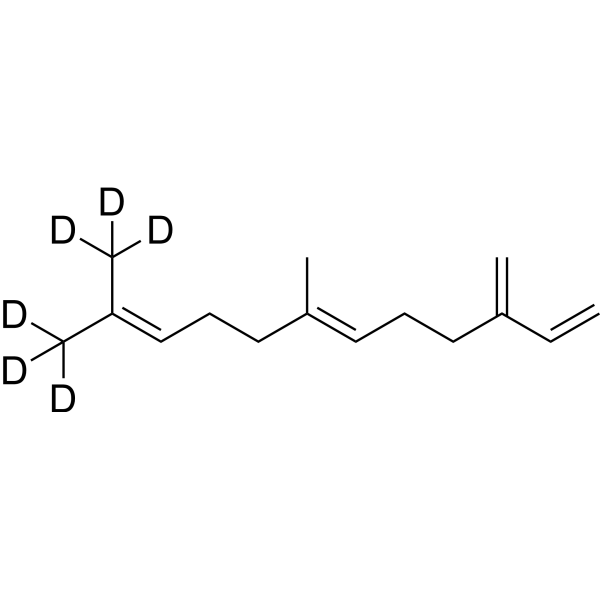
(E)-β-Farnesene-d6 is deuterated labeled (E)-β-Farnesene (HY-N7364). (E)-β-Farnesene (trans-β-Farnesene) is an aphid alarm pheromone, which can be found in Phlomis aurea Decne essential oil. (E)-β-Farnesene shows good binding score with a value of -30.64 kcal/mol to the CDK2 receptor. (E)-β-Farnesene also exhibits good affinity to odorant-binding protein 3 (OBP3). (E)-β-Farnesene can be used as a feeding stimulant for the sand fly Lutzomyia longipalpis .
loading...
    loading...
Cat. No.: HY-N7436S
CAS No.: 1335436-28-6
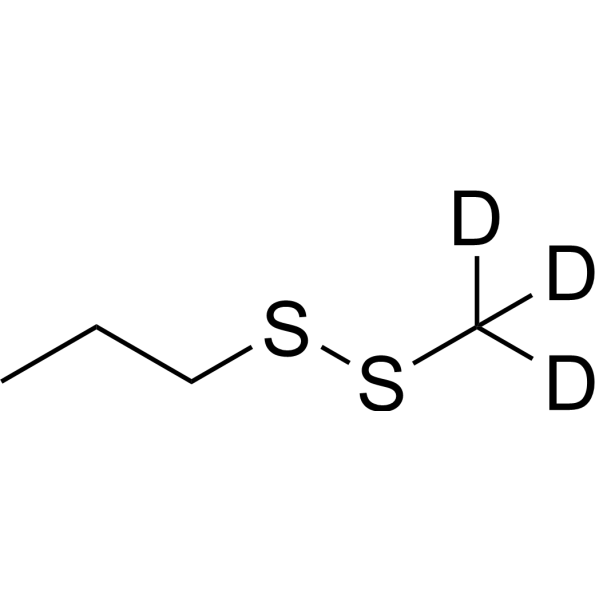
Methyl propyl disulfide-d3 is deuterated labeled Methyl propyl disulfide (HY-N7436). Methyl propyl disulfide is an volatile sulfur-containing compound produced in garlic and onions with anticaner effect .
loading...
    loading...
Cat. No.: HY-B0356S2
Synonyms: Bay-09867-d4
Ciprofloxacin-d4 (Bay-09867-d4) is deuterium labeled Ciprofloxacin. Ciprofloxacin (Bay-09867) is a potent, orally active topoisomerase IV inhibitor. Ciprofloxacin induces mitochondrial DNA and nuclear DNA damage and lead to mitochondrial dysfunction, ROS production. Ciprofloxacin has anti-proliferative activity and induces apoptosis. Ciprofloxacin is a fluoroquinolone antibiotic, exhibiting potent antibacterial activity .
loading...
    loading...

