265 Results for "

mitochondrial dysfunction

" in MedChemExpress (MCE) Product Catalog:
Products (265)

265 Results for "mitochondrial dysfunction" in MCE Product Catalog:

Cat. No.: HY-162802
Target:  

Apoptosis PI3K Akt PARP CDK

Research Areas:  

Cancer

PI3K/AKT-IN-4 (compound 3) is a diterpenoid that can be isolated from the roots and rhizomes of Salvia castanea Dielsf. PI3K/AKT-IN-4 has antitumor activity, inhibiting cell viability and proliferation (IC50=4.72 μM) and promoting apoptosis by blocking the G0/G1 phase of the Hep3B cell cycle, inducing mitochondrial dysfunction and oxidative stress. In addition, PI3K/AKT-IN-4 inhibits hepatocellular carcinoma by inhibiting the PI3K-Akt signaling pathway and binding to PARP1 and CDK2 targets .
loading...
    loading...
Cat. No.: HY-174374
CAS No.: 3076446-44-8
Target:  

Topoisomerase

Research Areas:  

Cardiovascular Disease

Topobexin is a TOP2B-selective inhibitor with IC50 values of 0.19 μM and 4.8 μM for TOP2B and TOP2A (DNA decatenation assay). Topobexin binds to non-homologous residues in the obex pocket and targets the ATPase domain of TOP2B. Topobexin prevents anthracycline-induced DNA double-strand break formation, apoptotic signaling mediated by caspase 3/7, 8 and 9, cardiomyocyte morphological changes, mitochondrial depolarization/loss, left ventricular systolic dysfunction, extracellular matrix remodeling, fibrotic alterations, and increases in plasma cardiac troponin T and BNP. Topobexin does not impair the antiproliferative effects of anthracyclines in cancer cells, exhibits no intrinsic cytotoxicity in cardiomyocytes, and is well tolerated in rabbits. Topobexin can be used in studies related to anthracycline-induced cardiotoxicity .
loading...
    loading...
Cat. No.: HY-182046
CAS No.: 2930131-74-9
HD202A is an orally active, selective dual inhibitor of MNK1/MNK2 (with IC50 values of 6.09 nM and 8.06 nM, and Kd values of 1.913 μM and 5.244 μM, respectively) that inhibits the MNK-eIF4E signaling pathway. By downregulating perilipin 2 and SCD1, while upregulating adipose triglyceride lipase and PPARγ coactivator 1α, HD202A enhances mitochondrial fatty acid oxidation and redox homeostasis. HD202A effectively suppresses body weight gain, hepatic lipid accumulation and elevation of serum lipids, significantly improves glucose tolerance and insulin sensitivity of the organism, and ameliorates inflammatory features. With these comprehensive pharmacological activities, HD202A exhibits great application potential in studies of metabolic dysfunction-associated steatotic liver disease .
loading...
    loading...
Cat. No.: HY-183456
CAS No.: 71308-35-5
Tyrphostin AG17 is an orally active CDK2 inhibitor and EGFR tyrosine kinase antagonist. Tyrphostin AG17 reduces the levels of p21 and p16. Tyrphostin AG17 induces G1 phase cell cycle arrest, Apoptosis, mitochondrial dysfunction, decreased ATP levels, and inhibits DNA, RNA and protein synthesis, adipogenesis, and lipid synthesis. Tyrphostin AG17 inhibits fat accumulation, white adipose tissue hypertrophy, and alterations of glycogen and lipid inclusions in hepatocytes in obese mice without changing their serum biochemical parameters. Tyrphostin AG17 exhibits anticancer effects. Tyrphostin AG17 can be used in research related to immunoblastic lymphoma, leukemia, ovarian cancer, glioblastoma, colon cancer, breast cancer, melanoma, obesity and hepatic steatosis .
loading...
    loading...
Cat. No.: HY-W010201R
CAS No.: 106-22-9
Synonyms: (±)-Citronellol (Standard); (±)-β-Citronellol (Standard)
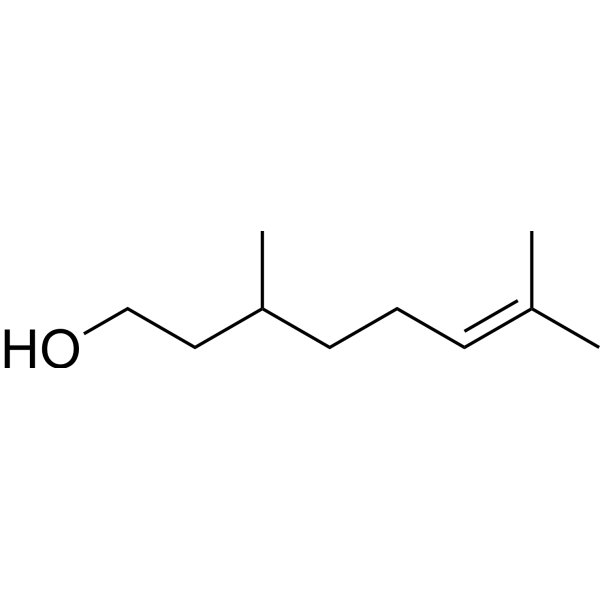
Citronellol (Standard) is the analytical standard of Citronellol. Citronellol (Standard) is an orally active inducer of apoptosis. Citronellol (Standard) can prevent oxidative stress, mitochondrial dysfunction, and apoptosis in the SH-SY5Y cell Parkinson's disease model induced by 6-OHDA by regulating the ROS-NO, MAPK/ERK, and PI3K/Akt signaling pathways. Citronellol (Standard) can induce necroptosis in human lung cancer cells through the TNF-α pathway and accumulation of ROS. Citronellol (Standard) can reduce the levels of LC-3 and p62 to regulate the autophagy pathway, inhibit oxidative stress and neuroinflammation, and thus have neuroprotective effects on Parkinson's rats. Citronellol (Standard) exhibits anti-fungal activity against Trichophyton rubrum by inhibiting ergosterol synthesis .
loading...
    loading...
Cat. No.: HY-W040255
CAS No.: 89947-79-5
Synonyms: PGPC
1-Palmitoyl-2-glutaryl-sn-glycero-3-phosphocholine is an oxidized phospholipid. 1-Palmitoyl-2-glutaryl-sn-glycero-3-phosphocholine reduces the viability of HUVECs, increases the levels of ferrous ions and lipid peroxidation, promotes the production of superoxide anions, and decreases the levels of glutathione and GPX4 in cells. 1-Palmitoyl-2-glutaryl-sn-glycero-3-phosphocholine upregulates the mRNA and protein levels of FABP3 in HUVECs, impairs mitochondrial membrane potential, and induces ferroptosis-related changes as well as mitochondrial dysfunction and damage. 1-Palmitoyl-2-glutaryl-sn-glycero-3-phosphocholine activates caspase-11 and promotes the continuous release of IL-1β from macrophages and dendritic cells. 1-Palmitoyl-2-glutaryl-sn-glycero-3-phosphocholine inhibits the proliferation of aortic smooth muscle cells and induces apoptosis in these cells. 1-Palmitoyl-2-glutaryl-sn-glycero-3-phosphocholine is applicable to relevant research on atherosclerosis .
loading...
    loading...
Cat. No.: HY-182360
Cytisine-Platinum(IV) Prodrug-1 is a Pt(IV) prodrug incorporating the natural compound Cytisine (HY-N0175) with antiproliferative activity against tumor cells. Cytisine-Platinum(IV) Prodrug-1 promotes calcium transfer across the IP3R1-GRP75-VDAC1 axis to drive mitochondrial calcium overload. Cytisine-Platinum(IV) Prodrug-1 initiates unfolded protein response via PERK, eIF2α, ATF4, and CHOP to modulate Bcl-2 and Bax, triggering apoptosis. Cytisine-Platinum(IV) Prodrug-1 induces mitochondrial dysfunction, ROS production, reduced ATP synthesis, DNA damage, and S-phase cell cycle arrest. Cytisine-Platinum(IV) Prodrug-1 activates the cGAS-STING pathway, reduces PD-L1 expression, drives immunogenic cell death. Cytisine-Platinum(IV) Prodrug-1 exhibits high physiological stability, efficient cellular accumulation, and enhanced platinum-DNA binding, and inhibits tumor growth in mouse models with reduced systemic toxicity. Cytisine-Platinum(IV) Prodrug-1 can be used for the research of lung cancer .
loading...
    loading...
Cat. No.: HY-121362
CAS No.: 537-09-7
Purity:  99.71%
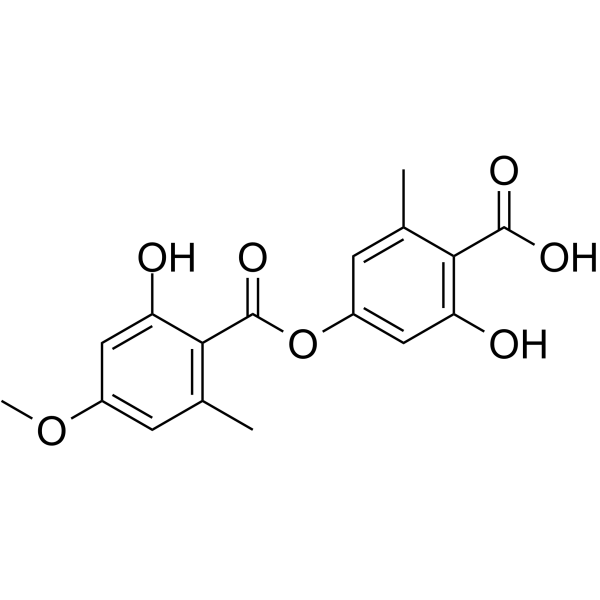
Evernic Acid is an orally active thioredoxin reductase 1 (TrxR1) inhibitor and antiproliferative agent. Evernic Acid inhibits the proliferation and migration of human breast cancer cells. Evernic Acid blocks the NF-κB pathway by inhibiting p65 nuclear translocation and IκBα phosphorylation, thereby suppressing downstream inflammatory mediators. Evernic Acid acts as an antioxidant, anti-inflammatory agent and neuroprotective agent, protects neurons from cell death, mitochondrial dysfunction and oxidative stress damage, reduces astrocyte activation, and ameliorates dopaminergic neuron loss and neuroinflammation. Evernic Acid inhibits enoyl reductases FabI and FabZ of Plasmodium falciparum. Evernic Acid downregulates the expression of lasB and rhlA genes in Pseudomonas aeruginosa, inhibits quorum sensing and biofilm formation, and exerts antibacterial activity against Gram-positive bacteria, Gram-negative bacteria and fungi. Evernic Acid is applicable to research related to breast cancer, Parkinson's disease, bacterial infections and fungal infections .
loading...
    loading...
Cat. No.: HY-155718
Target:  

Apoptosis

Research Areas:  

Cancer

fac-[Re(CO)3(L6)(H2O)][NO3] (compound 6), the rhenium(I) tricarbonyl aqua complex, is an anticancer agent associated with mitochondrial dysfunction. fac-[Re(CO)3(L6)(H2O)][NO3] is cytotoxic to prostate cancer cells, IC50=50 nM (PC-3 cells). fac-[Re(CO)3(L6)(H2O)][NO3] mainly accumulates in the nucleus, down-regulates ATP production in PC3 cells, and promotes apoptosis. However, fac-[Re(CO)3(L6)(H2O)][NO3] did not induce necrosis, pyrodeath and autophagy .
loading...
    loading...
Cat. No.: HY-164548
CAS No.: 958888-32-9
Target:  

HSP Apoptosis PI3K Akt NF-κB

Research Areas:  

Inflammation/Immunology Cancer

WK88-1 is an apoptosis inducer and Hsp90 client protein inhibitor with antiproliferative and immunomodulatory activities. WK88-1 inhibits signaling pathways such as PI3K/Akt and NF-κB, and induces mitochondrial dysfunction and cell cycle arrest. WK88-1 effectively suppresses cancer cell migration and invasion, and reverses various EGFR mutations and resistance to Gefitinib (HY-50895). WK88-1 also regulates the differentiation of monocytes and dendritic cells, blocks the expression of multiple chemokines, inhibits immune cell migration and M1 marker transcription, and restores impaired endocytic activity. WK88-1 has been used in studies of breast cancer, non-small cell lung cancer with various EGFR mutations or Met amplification, and atherosclerosis and other related diseases .
loading...
    loading...
Cat. No.: HY-W010201S
CAS No.: 220687-53-6
Synonyms: (±)-Citronellol-d6; (±)-β-Citronellol-d6
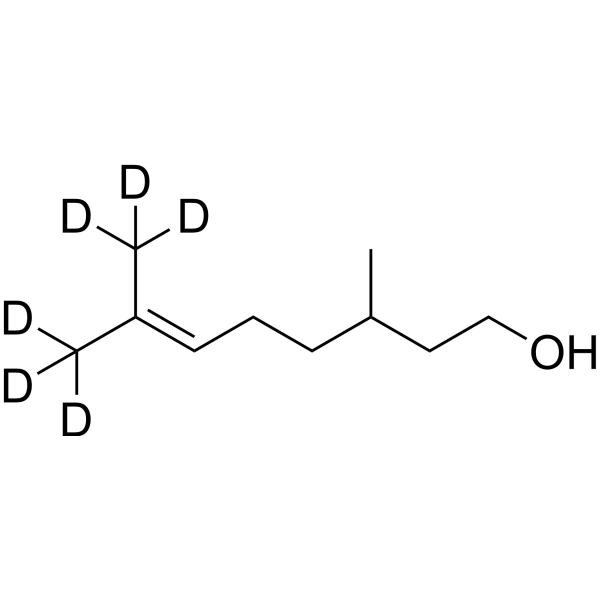
Citronellol-d6 is deuterated labeled Citronellol (HY-W010201). Citronellol ((±)-Citronellol) is an orally active inducer of apoptosis. Citronellol can prevent oxidative stress, mitochondrial dysfunction, and apoptosis in the SH-SY5Y cell Parkinson's disease model induced by 6-OHDA by regulating the ROS-NO, MAPK/ERK, and PI3K/Akt signaling pathways. Citronellol can induce necroptosis in human lung cancer cells through the TNF-α pathway and accumulation of ROS. Citronellol can reduce the levels of LC-3 and p62 to regulate the autophagy pathway, inhibit oxidative stress and neuroinflammation, and thus have neuroprotective effects on Parkinson's rats. Citronellol exhibits anti-fungal activity against Trichophyton rubrum by inhibiting ergosterol synthesis .
loading...
    loading...
Cat. No.: HY-W010201S1
Synonyms: (±)-Citronelloll-d3; (±)-β-Citronelloll-d3
Citronellol-d3 ( (±)-Citronelloll-d3) is the deuterium labeled Citronellol (HY-W010201). Citronellol ((±)-Citronellol) is an orally active inducer of apoptosis. Citronellol can prevent oxidative stress, mitochondrial dysfunction, and apoptosis in the SH-SY5Y cell Parkinson's disease model induced by 6-OHDA by regulating the ROS-NO, MAPK/ERK, and PI3K/Akt signaling pathways. Citronellol can induce necroptosis in human lung cancer cells through the TNF-α pathway and accumulation of ROS. Citronellol can reduce the levels of LC-3 and p62 to regulate the autophagy pathway, inhibit oxidative stress and neuroinflammation, and thus have neuroprotective effects on Parkinson's rats. Citronellol exhibits anti-fungal activity against Trichophyton rubrum by inhibiting ergosterol synthesis .
loading...
    loading...
Cat. No.: HY-L263
89 compounds

Energy metabolism is the most fundamental biochemical process in living organisms, encompassing glycolysis, the TCA cycle, oxidative phosphorylation, the pentose phosphate pathway, and fatty acid oxidation. These core pathways directly regulate cell survival, proliferation, differentiation, and apoptosis. Dysregulation of energy metabolism is closely linked to major diseases including cancer, diabetes, obesity, cardiovascular diseases, neurodegenerative disorders, and ischemia‑reperfusion injury. Targeting these metabolic pathways has become a frontier in drug discovery and mechanistic research.

The MCE Energy Metabolite Compound Library features 89 structurally defined small‑molecule compounds. It covers energy substrates, pathway intermediates, coenzymes and redox carriers, nucleotide derivatives, and microenvironmental modulators. This library is applicable to research areas including tumor metabolism, insulin resistance, mitochondrial dysfunction, oxidative stress, neuroprotection, and cardiometabolic diseases, providing a high‑quality tool for mechanistic studies, biomarker discovery, and high‑throughput drug screening.

Cat. No.: HY-N17612
CAS No.: 366477-44-3
Haplophytin-A is a quinoline alkaloid. Haplophytin-A is a potent apoptosis inducer that exerts robust anti-leukemic activity by activating the caspase-8-dependent apoptotic pathway. Haplophytin-A can be used for the research of promyelocytic leukemia .
loading...
    loading...
Cat. No.: HY-184587
Antibacterial agent 356 is an orally active antibacterial agent. Antibacterial agent 356 binds to the Mrr1 transcription factor, inhibits the expression of the MDR1 efflux pump gene, reduces the efflux of Rhodamine 123, and increases the accumulation of intracellular substrates in drug-resistant Candida albicans cells. Antibacterial agent 356 induces mitochondrial membrane potential reduction and ROS accumulation in Candida albicans, inhibits the yeast-hypha transition process, and suppresses its biofilm formation. Antibacterial agent 356 reverses efflux pump-mediated drug resistance in azole-resistant Candida albicans with overexpressed Mdr1. Antibacterial agent 356 improves the survival rate of Galleria mellonella larvae infected with azole-resistant Candida albicans*CA632, and reduces the renal fungal load and renal tissue damage in infected BALB/c mice. Antibacterial agent 356 can be used for the research of Candida albicans infection .
loading...
    loading...
Cat. No.: HY-184749
Target:  

Topoisomerase Apoptosis

Research Areas:  

Cancer

Topoisomerase I-IN-24 (compound 5l) is a topoisomerase I (topoisomerase I) inhibitor. Topoisomerase I-IN-24 inhibits topoisomerase I activity in a concentration-dependent manner, suppresses cancer cell migration, induces apoptosis (apoptosis), and arrests the cell cycle at the G1 phase. Topoisomerase I-IN-24 can be used in the research of lung cancer, hepatocellular carcinoma and cervical adenocarcinoma .
loading...
    loading...
Cat. No.: HY-187518
CAS No.: 3134912-65-2
Research Areas:  

Infection

NMT-IN-9 is an arylpyrrolidone-based NMT inhibitor with an IC50 of 93.20 nM and a KD of 5.57 × 10 -9 M against NMT. NMT-IN-9 exhibits broad-spectrum antifungal activity against Candida albicans, Candida glabrata, Candida tropicalis, Cryptococcus neoformans and Aspergillus fumigatus, with an MIC of 2-16 μg/mL, and retains activity against fluconazole-resistant Candida isolates, with an MIC of 8-16 μg/mL. NMT-IN-9 induces intracellular ROS accumulation, mitochondrial membrane depolarization, DNA damage, apoptosis and necrotic cell death in fungal cells, and disrupts fungal cell integrity. NMT-IN-9 can be used for studies on NMT-targeted antifungal mechanisms and fluconazole-resistant Candida infections .
loading...
    loading...
Cat. No.: HY-155719
Target:  

Paraptosis

Research Areas:  

Cancer

fac-[Re(CO)3(L3)(H2O)][NO3] (compound 3), the rhenium(I) tricarbonyl aqua complex, is an anticancer agent associated with mitochondrial dysfunction. fac-[Re(CO)3(L3)(H2O)][NO3] is cytotoxic to prostate cancer cells with IC50=0.32 μM (PC-3 cells). fac-[Re(CO)3(L3)(H2O)][NO3] mainly accumulates in mitochondria, down-regulates ATP production in PC3 cells, and promotes paraptosis. However, fac-[Re(CO)3(L3)(H2O)][NO3] did not induce necrosis, apoptosis and autophagy .
loading...
    loading...
Cat. No.: HY-176149
Research Areas:  

Cancer

Fluoxetine-Conjugated Platinum(IV) prodrug-1 (Compound 8) is an eEF2K inhibitor. Fluoxetine-Conjugated Platinum(IV) prodrug-1 inhibits cancer cell proliferation, induces DNA damage, cell cycle arrest at S phase and apoptosis. Fluoxetine-Conjugated Platinum(IV) prodrug-1 induces ROS accumulation and mitochondrial dysfunction. Fluoxetine-Conjugated Platinum(IV) prodrug-1 inhibits TNBC cell migration and invasion by inhibiting MMP-2 activity. Fluoxetine-Conjugated Platinum(IV) prodrug-1 induces autophagy in TNBC cells by activating AMPK. Fluoxetine-Conjugated Platinum(IV) prodrug-1 has antitumor activity and activates immunosuppression in the 4T1-Luc mouse model. Fluoxetine-Conjugated Platinum(IV) prodrug-1 can be used in triple-negative breast cancer (TNBC) research .
loading...
    loading...
Cat. No.: HY-N2160
CAS No.: 77690-92-7
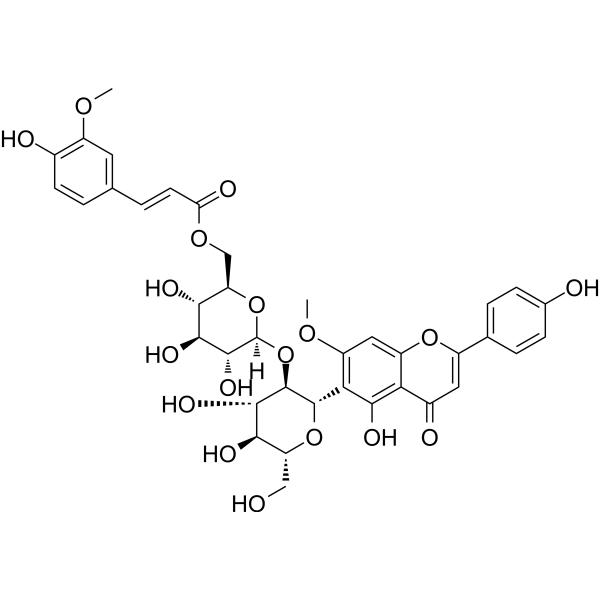
6'''-Feruloylspinosin is an orally active RORα activator that crosses the blood-brain barrier, with a Kd of 0.308 μM, and is found in natural sources. 6'''-Feruloylspinosin modulates AMPK and mTOR phosphorylation. 6'''-Feruloylspinosin promotes autophagy through the AMPK/mTOR signaling pathway, inhibits GSK3β phosphorylation at Tyr216, and activates the PGC-1α/Nrf2/HO-1 pathway. 6'''-Feruloylspinosin regulates neurotransmitter levels, enhances mRNA expression of GABAA α1, α5, and GABAB R1 receptor subunits, increases brain 5-HT and GABA, restores melatonin levels, and ameliorates anxiety-like behaviors. 6'''-Feruloylspinosin regulates oxidative stress homeostasis, inhibits mitochondrial dysfunction, decreases MDA while increasing GSH. 6'''-Feruloylspinosin can be used for research on Alzheimer's disease, acute myocardial infarction, heart failure with insomnia, and insomnia .
loading...
    loading...