



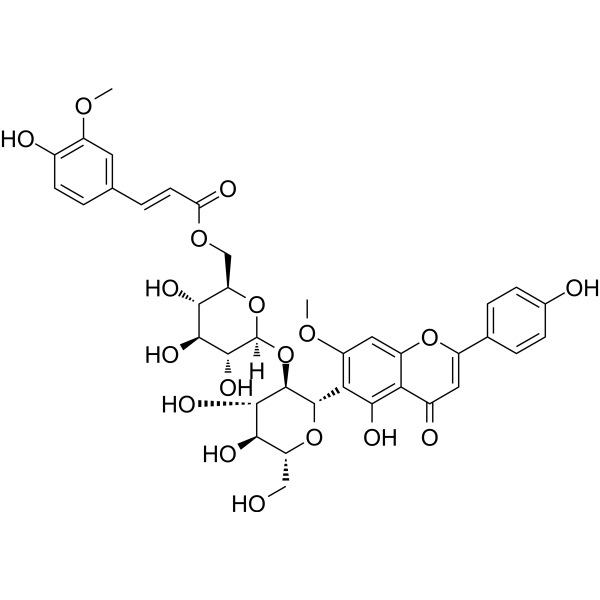
6'''-Feruloylspinosin

Based on 1 Customer Validation
6'''-Feruloylspinosin is an orally active RORα activator that crosses the blood-brain barrier, with a Kd of 0.308 μM, and is found in natural sources. 6'''-Feruloylspinosin modulates AMPK and mTOR phosphorylation. 6'''-Feruloylspinosin promotes autophagy through the AMPK/mTOR signaling pathway, inhibits GSK3β phosphorylation at Tyr216, and activates the PGC-1α/Nrf2/HO-1 pathway. 6'''-Feruloylspinosin regulates neurotransmitter levels, enhances mRNA expression of GABAA α1, α5, and GABAB R1 receptor subunits, increases brain 5-HT and GABA, restores melatonin levels, and ameliorates anxiety-like behaviors. 6'''-Feruloylspinosin regulates oxidative stress homeostasis, inhibits mitochondrial dysfunction, decreases MDA while increasing GSH. 6'''-Feruloylspinosin can be used for research on Alzheimer's disease, acute myocardial infarction, heart failure with insomnia, and insomnia.
For research use only. We do not sell to patients.
- Purity : 99.65%
- CAS No.: 77690-92-7
- Formula: C38H40O18
- Molecular Weight:784.71
-
Storage:
-20°C, sealed storage, away from moisture and light
* In solvent : -80°C, 6 months; -20°C, 1 month (sealed storage, away from moisture and light)

To place orders, for customer services and technical support, please contact: MedChemExpress USA
Tel: 609-228-6898 E-mail: [email protected] [email protected]


-
 Biological Activity
-
Chemical Information
-
Solvent & Solubility
- Protocols
- Purity & Documentation
- References
-
 Help & FAQs




Biological Activity
Description
|
RORα 0.308 μM (Kd) |
AMPK |
mTOR |
GSK3β |
PGC-1α |
Nrf2 |
HO-1 |
GABA |
5-HT |
MDA |
GSH |
In Vitro
6'''-Feruloylspinosin (1-40 μM) dose-dependently protects SH-SY5Y cells against Aβ1-42-induced cytotoxicity[1].
6'''-Feruloylspinosin (10 μM) enhances autophagy in SH-SY5Y cells, thereby exerting a protective effect against Aβ1-42-induced damage[1].
6'''-Feruloylspinosin (5-20 μM) attenuates Aβ1-42-induced mitochondrial dysfunction in SH-SY5Y cells, including improving MMP, reducing ROS, restoring ATP levels, and normalizing the expression of mitochondrial marker proteins[1].
6'''-Feruloylspinosin (10 μM) activates the AMPK pathway and inhibits the mTOR pathway in SH-SY5Y cells to regulate autophagy and protect against Aβ1-42-induced damage[1].
6'''-Feruloylspinosin directly binds to recombinant RORα with a Kd of 3.08 × 10⁻⁷ M[3].
6'''-Feruloylspinosin (10 μM; 6 h) stabilizes RORα in cardiomyocytes[3].
6'''-Feruloylspinosin (5-20 μM; 48 h) attenuates Ang II-induced hypertrophy and restores RORα expression in neonatal rat cardiomyocytes[3].
6'''-Feruloylspinosin (32-128 µM; 24 h) enhances the mRNA expression of GABAA α1, GABAA α5, and GABAB R1 in cultured rat hippocampal neurons in a dose-dependent manner[4].
MedChemExpress (MCE) has not independently confirmed the accuracy of these methods. They are for reference only. Further protocols information, click here.
-
Cell Line:Cultured rat hippocampal neurons
-
Concentration:32 µM; 64 µM; 128 µM
-
Incubation Time:24 h
-
Result:Enhanced the mRNA expression of GABAA α1, GABAA α5, and GABAB R1 in cultured rat hippocampal neurons in a dose-dependent manner.
Parmacokinetics
| Species | Dose | Route | Cmax | T1/2 | AUC0-t | AUC0-∞ | MRT0-∞ |
|---|---|---|---|---|---|---|---|
| Rat[4] | 5 mg/kg | i.v. | 4060.58 ng/mL | 2.25 h | 2669.5 ng·h/mL | 2803.31 ng·h/mL | 0.98 h |
In Vivo
6'''-Feruloylspinosin (8 mg/kg/day; i.g.; daily; 28 days) activates RORα to mitigate pressure overload-induced heart failure with comorbid insomnia by improving cardiac function, reducing hypertrophy, and normalising sleep behaviours and neurochemical imbalances[3].
MedChemExpress (MCE) has not independently confirmed the accuracy of these methods. They are for reference only.
-
Animal Model:Wistar albino rats (male, 8-10 weeks, 250-300 g, AMI induced by LAD occlusion for 30 min followed by 1 h reperfusion)[2]
-
Dosage:5 mg/kg
-
Administration:i.p.; single dose; 30 min before surgery
-
Result:Reduced serum cTnI levels from 662.0 to 429.2 pg/mL.
Reduced serum LDH activity from 61286 to 48270 U/mL.
Reduced apoptotic myocardial cells from 55.3% to 38.1%.
Increased LC3B-II levels and decreased p62 levels.
Decreased GSK3β phosphorylation at Tyr216 and enhanced PGC-1α, Nrf2, and HO-1 expressions.
-
Animal Model:C57BL/6 mice (male, 6-8 weeks old, 22-24 g, TAC surgery plus CUMS and PCPA administration)[3]
-
Dosage:2 mg/kg/day; 4 mg/kg/day; 8 mg/kg/day
-
Administration:i.g.; daily; 28 days
-
Result:Improved left ventricular ejection fraction, left ventricular fractional shortening, and stroke volume.
Attenuated increased interventricular septal thickness diastole, left ventricular mass, left ventricular volume diastole, and relative wall thickness.
Ameliorated disrupted myofilament organisation, cytoplasmic vacuolisation, inflammatory cell infiltration, and reduced collagen fibre accumulation.
Decreased elevated serum levels of NT-proBNP and cardiac troponin-T.
Reduced the cross-sectional area of cardiomyocytes and decreased both HW/TL and HW/BW ratios.
Suppressed the mRNA expression of hypertrophy markers ANP, BNP, and MYH7.
Restored normal locomotor activity and significantly increased centre distance and duration time.
Normalised the prolonged sleep latency and enhanced sleep duration.
Significantly reduced immobility time.
Elevated cerebral levels of 5-HT and GABA.
Attenuated neuronal degeneration, reduced CD68+ macrophage infiltration, decreased the levels of inflammatory cytokines IL-1β and TNF-α, and restored tight junction integrity by enhancing ZO-1 and occludin expression.
Significantly up-regulated RORα expression in heart and brain tissues and restored melatonin levels in brain tissue.


Chemical Information
-
CAS No. 77690-92-7
-
Appearance Solid
-
Molecular Weight 784.71
-
Formula C38H40O18
-
Color Off-white to yellow
-
SMILES
O[C@@H]1[C@H]([C@H](C(C(O)=C(C2=O)C(OC(C3=CC=C(O)C=C3)=C2)=C4)=C4OC)O[C@H](CO)[C@H]1O)O[C@]([C@@H]([C@@H](O)[C@@H]5O)O)([H])O[C@@H]5COC(/C=C/C6=CC(OC)=C(O)C=C6)=O
-
Structure Classification
-
Initial Source
-
Shipping
Room temperature in continental US; may vary elsewhere.
-
Storage
-20°C, sealed storage, away from moisture and light
* In solvent : -80°C, 6 months; -20°C, 1 month (sealed storage, away from moisture and light)


Solvent & Solubility
In Vitro:
DMSO : 100 mg/mL (127.44 mM; Need ultrasonic; Hygroscopic DMSO has a significant impact on the solubility of product, please use newly opened DMSO)
Please refer to the solubility information to select the appropriate solvent. Once prepared, please aliquot and store the solution to prevent product inactivation from repeated freeze-thaw cycles.
Storage method and period of stock solution: -80°C, 6 months; -20°C, 1 month (sealed storage, away from moisture and light). When stored at -80°C, please use it within 6 months. When stored at -20°C, please use it within 1 month.
Please refer to the solubility information to select the appropriate solvent. Once prepared, please aliquot and store the solution to prevent product inactivation from repeated freeze-thaw cycles.
Storage method and period of stock solution: -80°C, 6 months; -20°C, 1 month (sealed storage, away from moisture and light). When stored at -80°C, please use it within 6 months. When stored at -20°C, please use it within 1 month.
Concentration (start) × Volume (start) = Concentration (final) × Volume (final)
In Vivo:
Select the appropriate dissolution method based on your experimental animal and administration route.
- For the following dissolution methods, please ensure to first prepare a clear stock solution using an In Vitro approach and then sequentially add co-solvents:
- To ensure reliable experimental results, the clarified stock solution can be appropriately stored based on storage conditions. As for the working solution for In Vivo experiments, it is recommended to prepare freshly and use it on the same day.
- The percentages shown for the solvents indicate their volumetric ratio in the final prepared solution. If precipitation or phase separation occurs during preparation, heat and/or sonication can be used to aid dissolution.
Add each solvent one by one: 10% DMSO 40% PEG300 5% Tween-80 45% Saline
Solubility: ≥ 2.5 mg/mL (3.19 mM); Clear solution
This protocol yields a clear solution of ≥ 2.5 mg/mL (saturation unknown).
Taking 1 mL working solution as an example, add 100 μL DMSO stock solution (25.0 mg/mL) to 400 μL PEG300, and mix evenly; then add 50 μL Tween-80 and mix evenly; then add 450 μL Saline to adjust the volume to 1 mL.
Preparation of Saline: Dissolve 0.9 g sodium chloride in ddH₂O and dilute to 100 mL to obtain a clear Saline solution.
Add each solvent one by one: 10% DMSO 90% (20% SBE-β-CD in Saline)
Solubility: ≥ 2.5 mg/mL (3.19 mM); Clear solution
This protocol yields a clear solution of ≥ 2.5 mg/mL (saturation unknown).
Taking 1 mL working solution as an example, add 100 μL DMSO stock solution (25.0 mg/mL) to 900 μL 20% SBE-β-CD in Saline, and mix evenly.
Preparation of 20% SBE-β-CD in Saline (4°C, storage for one week): 2 g SBE-β-CD powder is dissolved in 10 mL Saline, completely dissolve until clear.
In Vivo Dissolution Calculator
Please enter the basic information of animal experiments:
-
-
-
-
Recommended: Prepare an additional quantity of animals to account for potential losses during experiments.
Please enter your animal formula composition:
-
%DMSO +
Recommended: Keep the proportion of DMSO in working solution below 2% if your animal is weak.
-
%+
-
+%Tween-80 + +
-
%Saline +
The co-solvents required include: DMSO, . All of co-solvents are available by MedChemExpress (MCE). , Tween 80. All of co-solvents are available by MedChemExpress (MCE).
Working solution concentration: 0.22 mg/mL
Method for preparing stock solution: mg drug dissolved in μL DMSO. Stock solution concentration: mg/mL. * In solvent : -80°C, 6 months; -20°C, 1 month (sealed storage, away from moisture and light)
1. Take μL DMSO stock solution;
2. Add μL .
μL , mix evenly;
3. Then add μL Tween 80, mix evenly;
4. Then add μL
Please ensure that the stock solution in the first step is dissolved to a clear state, and add co-solvents in sequence. You can use ultrasonic heating (ultrasonic cleaner, recommended frequency 20-40 kHz), vortexing, etc. to assist dissolution.

Protocols
-
RT-PCR
Reverse transcription technology uses RNA as a template to synthesize DNA. RT-PCR is simple, specific and sensitive, and can be used to detect gene expression levels and expression differences in cells; detect RNA virus content; clone cDNA sequences of specific genes.
-
Western Blot
Western blotting (WB) is a commonly used experimental method in molecular biology, biochemistry, and immunogenetics for identifying and quantifying target proteins. It combines gel electrophoresis with immunoassay, enabling researchers to analyze protein expression, post-translational modifications, and molecular weight.
-
RNA extraction experimental
By lysing cells, releasing RNA, and removing impurities such as proteins and DNA, high-purity RNA products are finally obtained. The commonly used traditional method is the guanidine isothiocyanate/phenol/chloroform method (Trizol), which is suitable for a variety of animal materials including animal tissues, microorganisms, cultured cells, etc., and most plant materials.
-
ROS/oxidative-stress fluorescent staining
ROS/oxidative-stress fluorescent staining uses cell-permeant fluorogenic probes that become fluorescent after oxidation inside cells or tissues; commonly used examples include DCFH-DA/DCFDA for broad cellular oxidant detection, DHE for superoxide-related signal detection, MitoSOX for mitochondrial superoxide-related signal detection, and CellROX probes for oxidative-stress-associated fluorescence readouts. The assay detects probe oxidation rather than a single ROS species unless the probe and analysis method have been chemically validated for that species. DCFH-DA enters cells, is deacetylated by intracellular esterases to DCFH, and produces fluorescent DCF after oxidation, so the readout is used as an operational measure of total cellular oxidative stress rather than a species-specific ROS measurement. DHE and MitoSOX can report superoxide-related oxidation, but red fluorescence alone can include non-specific ethidium-like oxidation products; HPLC or optimized spectral approaches are
-
Research Protocol for Cardiovascular Diseases
Cardiovascular disease can be modeled as maladaptive cardiac remodeling, where ischemic injury or pressure overload activates inflammatory signaling, fibroblast activation, extracellular-matrix deposition, cardiomyocyte hypertrophy, vascular remodeling, and progressive ventricular dysfunction. The TGF-β/SMAD axis is a central profibrotic pathway after myocardial injury and pressure overload, while innate immune and cytokine pathways regulate leukocyte recruitment, scar formation, and adverse remodeling. Key unresolved questions include which inflammatory signals are reparative versus harmful, when fibrosis is protective versus maladaptive, and whether pathway inhibition improves function without weakening necessary infarct healing or compensatory remodeling.
-
Real Time qPCR (Q-PCR)
Real-time quantitative PCR (qPCR) quantifies an amplifiable nucleic-acid target by monitoring fluorescence during PCR cycling rather than measuring product only after amplification. The increase in fluorescence tracks accumulation of PCR product, and the quantification cycle (Cq; historically also Ct/CP) is related to the initial amount of target: samples containing more starting target generally reach the defined fluorescence threshold in fewer cycles.
-
Alzheimer’s Disease Modeling
Alzheimer’s Disease (AD) is a neurodegenerative disorder characterized by a progressive decline in cognitive functions and loss of specific types of neurons and synapses. Alzheimer's symptoms can be simulated in mice by injecting drugs (such as Aβ) or genetically modified.
-
Kinase activity and phosphorylation assays
Kinase activity assays measure the ability of kinases to transfer phosphate groups from ATP to specific substrates, while phosphorylation assays detect the presence and levels of phosphorylated proteins. Common methods include radiolabeled ATP incorporation (e. g. ,), ADP release detection via bioluminescence (e. g. ,[3]), enzyme-linked immunosorbent assays (ELISA) for phospho-specific epitopes (e. g. ,[6]), and microtiter-based formats for high-throughput screening (e. g. ,[8]). The ADP-Glo assay quantifies kinase activity by measuring ADP produced during phosphorylation using a luciferase-based system. Radiometric assays involve autoradiography or scintillation counting after incorporation of 32P-labeled ATP into substrate proteins. ELISA-based approaches rely on phospho-specific antibodies to detect activated kinases in cell lysates or purified samples.
-
Autophagy
Autophagy is a process in which eukaryotic cells use lysosomes to degrade their own cytoplasmic proteins and damaged organelles under the regulation of autophagy related gene (Atg). Microtubule-associated proteins light chain 3 (LC3) is recognized as autophagy marker, which transfers from cytoplasmic LC3 (LC3-I) to membrane type (LC3-II). LC3-II/I ratio could be detected by Western Blot and fluorescence microscopy.
-
Mitochondrial membrane-potential and mitochondrial mass staining
Mitochondrial membrane potential staining measures the electrochemical polarization across the mitochondrial inner membrane in live cells using lipophilic cationic fluorescent probes; early rhodamine-based work showed that selective mitochondrial dye accumulation is lost when the mitochondrial transmembrane potential is dissipated. JC-1 reports mitochondrial polarization by shifting from green monomer fluorescence to red J-aggregate fluorescence as dye concentration increases within energized mitochondria; therefore, the red/green fluorescence ratio is used as a relative readout of mitochondrial membrane potential. TMRE or TMRM staining provides a single-channel relative readout because these cationic rhodamine esters accumulate in polarized mitochondria, and lower fluorescence indicates reduced mitochondrial polarization when acquisition and dye-loading conditions are controlled. Mitochondrial mass staining is commonly performed with MitoTracker Green FM or related MitoTracker dyes as
-
Protocol for Kinase activity and phosphorylation assays
Kinase activity assays measure transfer of phosphate from ATP to a protein or peptide substrate, generating phosphorylated substrate, ADP, or incorporated radiolabeled phosphate as the readout; phosphorylation assays measure site-specific phosphorylation in cells or tissues as a proxy for kinase-pathway activation, inhibition, or substrate regulation. Phosphorylation can be detected by phospho-specific Western blot, immunoprecipitation kinase assay, phospho-immunofluorescence, phospho-flow cytometry, luminescent ADP detection, radiolabeled ATP incorporation, or reporter-based pathway assays, and these readouts can be applied to cancer cells, primary neurons, mouse tumors, organoids, inflammatory macrophages, ferroptosis studies, and mitophagy studies when the kinase target is biologically relevant.
-
Lysosome and acidic-vesicle live-cell staining
Lysosome and acidic-vesicle live-cell staining detects acidic intracellular compartments by using membrane-permeant acidotropic probes that accumulate in low-pH vesicles, including lysosomes, late endosomes, autolysosomes, and acidic phagosomes. LysoTracker staining is commonly used as an intensity-based readout of acidic lysosomal compartment abundance or enlargement, while acridine orange produces green fluorescence in less concentrated compartments and red fluorescence after concentration-dependent accumulation in acidic vesicular organelles. Loss or reduction of acridine-orange red signal can be used as a readout of lysosomal membrane permeabilization or reduced acidic-vesicle integrity. This protocol is designed for live cultured cells and can be adapted for fluorescence microscopy, high-content imaging, plate-reader readout, or flow cytometry when the selected literature supports the readout. Because these dyes report acidotropic accumulation rather than lysosome identity alone,
-
Macroautophagy Solutions
Macroautophagy is a conserved lysosome-dependent degradation pathway in which cytoplasmic material is sequestered into double-membrane autophagosomes and delivered to lysosomes for degradation and recycling. The pathway supports cellular homeostasis during nutrient limitation, organelle stress, protein-aggregate accumulation, infection, differentiation, and tissue remodeling by coupling cargo sequestration, autophagosome maturation, lysosomal fusion, and degradation of cargo-derived macromolecules. The core molecular sequence includes initiation by nutrient- and stress-regulated autophagy machinery, autophagosome nucleation, LC3/ATG8-family conjugation to autophagosomal membranes, cargo selection through receptors such as SQSTM1/p62, autophagosome-lysosome fusion, and lysosomal degradation. LC3 was identified as a mammalian homolog of yeast Atg8 that localizes to autophagosomal membranes after processing, and p62/SQSTM1 was shown to connect ubiquitinated cargo with autophagic degradati


Purity & Documentation
-
Data Sheet (299 KB)
-
SDS (252 KB)
- English - EN (252 KB)
- Français - FR (252 KB)
- Deutsch - DE (252 KB)
- Norwegian - NO (252 KB)
- Español - ES (252 KB)
- Swedish - SV (252 KB)
- Italian - IT (252 KB)
- Korean - KR (252 KB)
- Portuguese - PT (252 KB)
-
Handling Instructions (2659 KB)
References
[1]. Liu J, et al. 6‴-Feruloylspinosin alleviates Aβ-induced toxicity by modulating relevant neurotransmitter and the AMPK/mTOR signaling pathway. Free radical biology & medicine. 2025 Feb 01;227:434-445. [Content Brief]
[2]. Gu M, et al. Spinosin and 6'''‑Feruloylspinosin protect the heart against acute myocardial ischemia and reperfusion in rats. Molecular medicine reports. 2019 Nov;20(5):4253-4261. [Content Brief]
[4]. Qiao L, et al. A HPLC-MS/MS method for determination of 6'''-feruloylspinosin in rat plasma and tissues: Pharmacokinetics and tissue distribution study. Journal of pharmaceutical and biomedical analysis. 2016 Mar 20;121:77-83. [Content Brief]


Complete Stock Solution Preparation Table
Please refer to the solubility information to select the appropriate solvent. Once prepared, please aliquot and store the solution to prevent product inactivation from repeated freeze-thaw cycles.
Storage method and period of stock solution: -80°C, 6 months; -20°C, 1 month (sealed storage, away from moisture and light). When stored at -80°C, please use it within 6 months. When stored at -20°C, please use it within 1 month.
| Optional Solvent | Concentration Solvent Mass | 1 mg | 5 mg | 10 mg | 25 mg |
|---|---|---|---|---|---|
| DMSO | 1 mM | 1.2744 mL | 6.3718 mL | 12.7436 mL | 31.8589 mL |
| 5 mM | 0.2549 mL | 1.2744 mL | 2.5487 mL | 6.3718 mL | |
| 10 mM | 0.1274 mL | 0.6372 mL | 1.2744 mL | 3.1859 mL | |
| 15 mM | 0.0850 mL | 0.4248 mL | 0.8496 mL | 2.1239 mL | |
| 20 mM | 0.0637 mL | 0.3186 mL | 0.6372 mL | 1.5929 mL | |
| 25 mM | 0.0510 mL | 0.2549 mL | 0.5097 mL | 1.2744 mL | |
| 30 mM | 0.0425 mL | 0.2124 mL | 0.4248 mL | 1.0620 mL | |
| 40 mM | 0.0319 mL | 0.1593 mL | 0.3186 mL | 0.7965 mL | |
| 50 mM | 0.0255 mL | 0.1274 mL | 0.2549 mL | 0.6372 mL | |
| 60 mM | 0.0212 mL | 0.1062 mL | 0.2124 mL | 0.5310 mL | |
| 80 mM | 0.0159 mL | 0.0796 mL | 0.1593 mL | 0.3982 mL | |
| 100 mM | 0.0127 mL | 0.0637 mL | 0.1274 mL | 0.3186 mL |


6'''-Feruloylspinosin Related Classifications
HY-N2160 Related Classifications
 Powered by Bioz