124 Results for "

catecholamine

" in MedChemExpress (MCE) Product Catalog:
Products (124)

124 Results for "catecholamine" in MCE Product Catalog:

Cat. No.: HY-106698
CAS No.: 57475-17-9
Brovincamine is an orally active slow Ca 2+ channel blocker and vasodilator. Brovincamine reduces Ca 2+ influx across the plasma membrane by blocking Ca 2+ channels. Brovincamine inhibits catecholamine secretion, cholinergic function, autonomic parasympathetic nervous system activity, cerebrovascular resistance, and nerve stimulation-induced convulsive responses. Brovincamine induces cerebrovascular, coronary, and intracranial vasodilation, improves cerebral cortical microcirculation, enhances cerebral metabolic activity, and increases capillary clearance efficiency. Brovincamine can be used in research related to cerebral ischemic diseases, cardiac ischemic diseases, and normal-tension glaucoma .
loading...
    loading...
Cat. No.: HY-E70970
Target:  

Endogenous Metabolite

Research Areas:  

Neurological Disease

Catechol-O-methyl Transferase, Porcine (EC 2.1.1.6) is one of several enzymes that degrade catecholamines such as dopamine, epinephrine, and norepinephrine.
loading...
    loading...
Cat. No.: HY-17018
CAS No.: 148152-63-0
Synonyms: ABT 200 free acid; A-75200
Target:  

Adrenergic Receptor

Research Areas:  

Neurological Disease

Napitane (A 75200) is a groundbreaking catecholamine uptake inhibitor that exhibits inhibitory effects on α-adrenergic receptors and shows promise for antidepressant activity in depression research.
loading...
    loading...
Cat. No.: HY-105527
CAS No.: 79619-31-1
Target:  

Adrenergic Receptor

Research Areas:  

Cardiovascular Disease

Flavodilol is an orally active antihypertensive agent. Flavodilol extensively depletes catecholamines and serotonin in heart tissue of normotensive and spontaneously hypertensive rats (SHR). Flavodilol can be used for hypertension research .
loading...
    loading...
Cat. No.: HY-W438378
CAS No.: 67423-45-4
Synonyms: HMPG piperazine
4-Hydroxy-3-methoxyphenylglycol piperazine (HMPG piperazine) is a salt of HMPG combined with piperazine. HMPG is a metabolite of adrenaline and norepinephrine and is an important marker of catecholamine hormone metabolism in the body. 4-Hydroxy-3-methoxyphenylglycol piperazine is used as a standard in clinical laboratories to accurately measure the HMPG content in urine .
loading...
    loading...
Cat. No.: HY-W683409
CAS No.: 119-48-2
Synonyms: 1064 Th
Dimorpholamine (1064 Th) is a central nervous system stimulant. Dimorpholamine can increase the excitatory and inhibitory junction potentials at the neuromuscular junctions of crayfish. Dimorpholamine can also exert epinephrine-like pressor effects by promoting the release of catecholamines (mainly epinephrine) from the adrenal medulla. Dimorpholamine can be used in the research of respiratory failure as well as neurological and cardiovascular system diseases .
loading...
    loading...
Cat. No.: HY-P1544A
Cerebellin TFA is a neuromodulatory hexadecapeptide that serves as a marker for Purkinje cell maturation. Cerebellin TFA stimulates norepinephrine release via the adenylate cyclase/PKA-dependent signaling pathway. Cerebellin TFA reduces insulin secretion from pancreatic islets under high-glucose conditions. Cerebellin TFA also regulates synaptic structure formation and controls catecholamine secretion in peripheral tissues. Cerebellin TFA can be used in neurological research .
loading...
    loading...
Cat. No.: HY-P702943
Purity:  ≥ 85%, as determined by reducing SDS-PAGE.
Synonyms: HSPA9; MOT; Prev. HSPA9B; Heat Shock 70kDa Protein 9B (Mortalin-2); 75 KDa Glucose-Regulated Protein; catecholamine-Regulated Protein 40; Stress-70 Protein, Mitochondrial; Heat Shock 70kD Protein 9B; GRP75; Mortalin, Perinuclear; PBP74; P66-Mortalin; Mths
Species:  
Human
Source:  
Sf9 insect cells
loading...
    loading...
Cat. No.: HY-N2332
CAS No.: 21019-30-7
Synonyms: MLA
Methyllycaconitine (MLA) is a blood-brain barrier-permeable antagonist of α7 nicotinic acetylcholine receptor (α7nAChR) with an IC50 of 2 nM. Methyllycaconitine inhibits Aβ25-35-induced autophagy by restoring the mTOR pathway, and prevents reactive oxygen species (ROS) production, microglial activation, reduced dopamine uptake, loss of dopaminergic terminals and catecholamine secretion. Methyllycaconitine induces hippocampal glutamate efflux, enhances long-term potentiation, and improves memory acquisition. Methyllycaconitine can be used in research related to Alzheimer's disease, cerebral palsy, Parkinson's disease and schizophrenia .
loading...
    loading...
Cat. No.: HY-100634
CAS No.: 14133-90-5
Synonyms: (±)-4-hydroxy Propranolol hydrochloride
Target:  

Adrenergic Receptor

Research Areas:  

Cardiovascular Disease

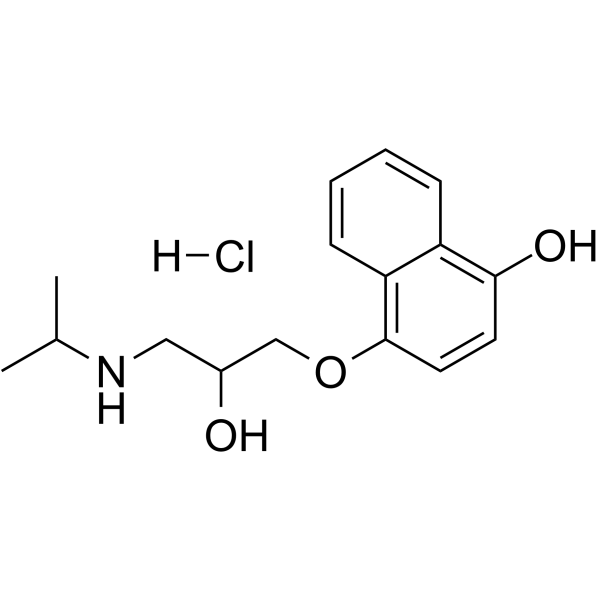
4-Hydroxypropranolol hydrochloride is a non-cardiac selective β-adrenergic receptor antagonist and a metabolite produced after oral administration of Propranolol (HY-B0573B). 4-Hydroxypropranolol hydrochloride also acts as a membrane stabilizer and possesses intrinsic sympathomimetic inhibitory activity. 4-Hydroxypropranolol hydrochloride blocks β-adrenergic receptors to antagonize the effects of catecholamines, acts as a partial β-adrenergic receptor agonist, and induces membrane stabilization. 4-Hydroxypropranolol hydrochloride alters heart rate, left ventricular contractility, and atrioventricular conduction time. 4-Hydroxypropranolol hydrochloride can be used in research related to cardiovascular and cerebrovascular diseases .
loading...
    loading...
Cat. No.: HY-14280S
CAS No.: 1185241-19-3
Purity:  ≥98.0%
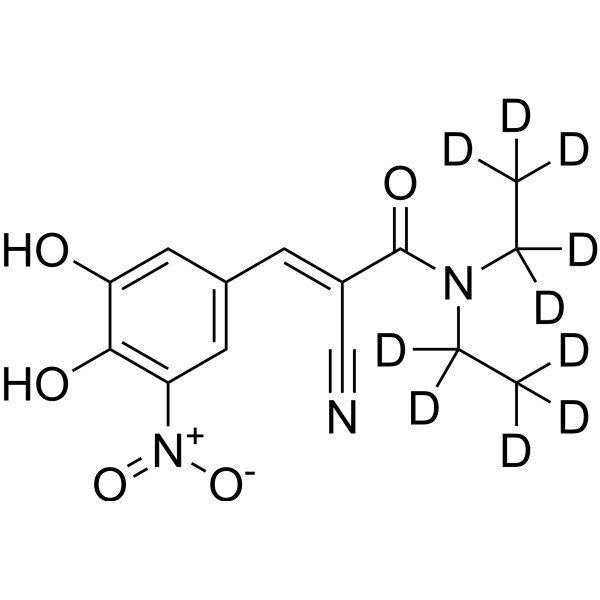
Entacapone-d10 is the deuterium labeled Entacapone. Entacapone is a potent, reversible, peripherally acting and orally active catechol-O-methyltransferase (COMT) inhibitor. Entacapone inhibits COMT from rat brain, erythrocytes and liver with IC50 values of 10 nM, 20 nM, and 160 nM, respectively. Entacapone is selective for COMT over other catecholamine metabolizing enzymes, including MAO-A, MAO-B, phenolsulphotransferase M (PST-M) and PST-P (IC50s>50 μM). Entacapone can be used for the research of Parkinson's disease . Entacapone serves as a inhibitor of FTO demethylation with an IC50 of 3.5 μM, can be used for the research of metabolic disorders .
loading...
    loading...
Cat. No.: HY-15746B
CAS No.: 101626-66-8
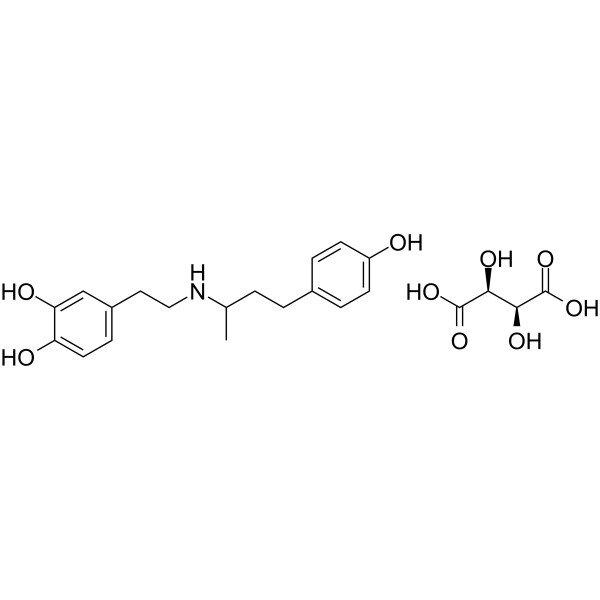
Dobutamine tartrate is a synthetic catecholamine that acts on α1-AR, β1-AR, β2-AR (α-1, β-1 andβ-2 adrenoceptors). Dobutamine tartrate is a selective β1-AR agonist, relatively weak activity at α1-AR and β2-AR. Dobutamine tartrate can increase cardiac output and correct hypoperfusion .
loading...
    loading...
Cat. No.: HY-14280R
CAS No.: 130929-57-6
Research Areas:  

Neurological Disease Cancer

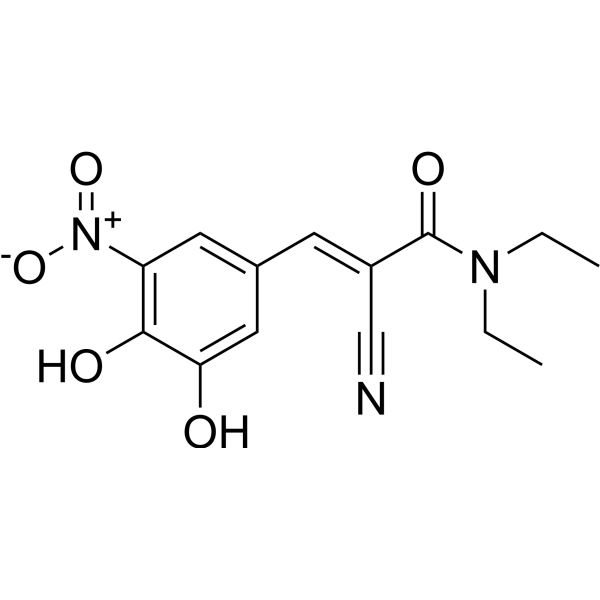
Entacapone (Standard) is the analytical standard of Entacapone. This product is intended for research and analytical applications. Entacapone is a potent, reversible, peripherally acting and orally active catechol-O-methyltransferase (COMT) inhibitor. Entacapone inhibits COMT from rat brain, erythrocytes and liver with IC50 values of 10 nM, 20 nM, and 160 nM, respectively. Entacapone is selective for COMT over other catecholamine metabolizing enzymes, including MAO-A, MAO-B, phenolsulphotransferase M (PST-M) and PST-P (IC50s>50 µM). Entacapone can be used for the research of Parkinson's disease . Entacapone serves as a inhibitor of FTO demethylation with an IC50 of 3.5 μM, can be used for the research of metabolic disorders .
loading...
    loading...
Cat. No.: HY-15746S
CAS No.: 1246815-74-6
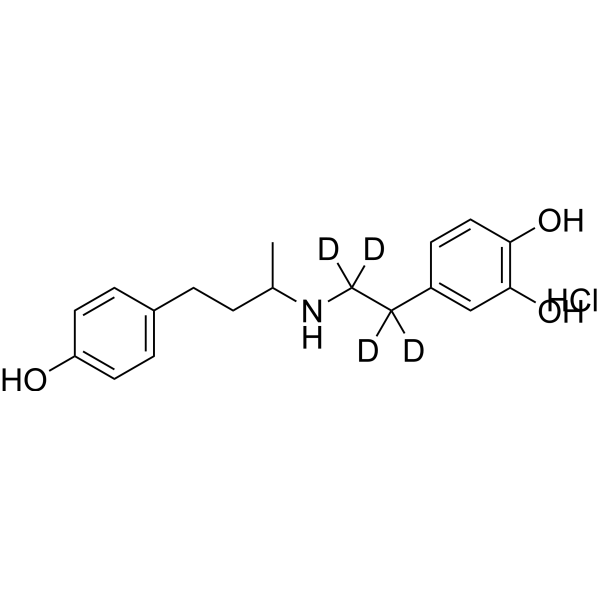
(rac)-Dobutamine-d4 (hydrochloride) is a labelled racemic Dobutamine hydrochloride. Dobutamine hydrochloride is a synthetic catecholamine that acts on α1-AR, β1-AR, β2-AR (α-1, β-1 andβ-2 adrenoceptors). Dobutamine hydrochloride is a selective β1-AR agonist, relatively weak activity at α1-AR and β2-AR. Dobutamine hydrochloride can increase cardiac output and correct hypoperfusion .
loading...
    loading...
Cat. No.: HY-15746S1
CAS No.: 1246818-96-1
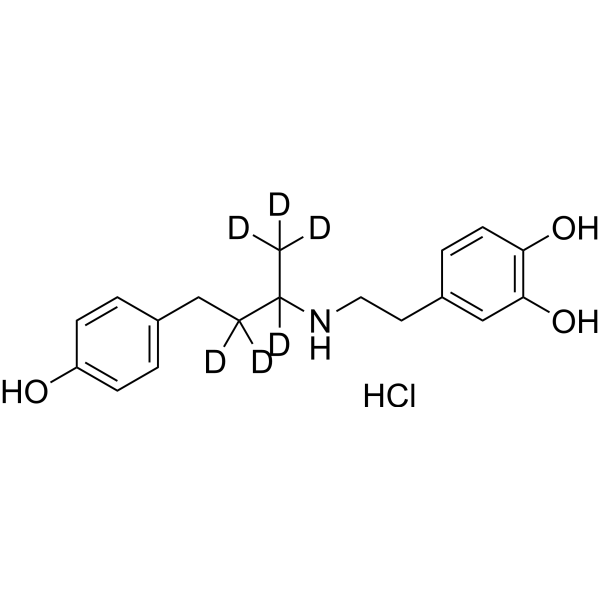
(rac)-Dobutamine-d6 (hydrochloride) is a labelled racemic Dobutamine hydrochloride. Dobutamine hydrochloride is a synthetic catecholamine that acts on α1-AR, β1-AR, β2-AR (α-1, β-1 andβ-2 adrenoceptors). Dobutamine hydrochloride is a selective β1-AR agonist, relatively weak activity at α1-AR and β2-AR. Dobutamine hydrochloride can increase cardiac output and correct hypoperfusion .
loading...
    loading...
Cat. No.: HY-15746R
CAS No.: 49745-95-1
Dobutamine (hydrochloride) (Standard) is the analytical standard of Dobutamine (hydrochloride). This product is intended for research and analytical applications. Dobutamine hydrochloride is a synthetic catecholamine that acts on α1-AR, β1-AR, β2-AR (α-1, β-1 andβ-2 adrenoceptors). Dobutamine hydrochloride is a selective β1-AR agonist, relatively weak activity at α1-AR and β2-AR. Dobutamine hydrochloride can increase cardiac output and correct hypoperfusion .
loading...
    loading...
Cat. No.: HY-N2332AR
CAS No.: 351344-10-0
Synonyms: MLA citrate (Standard)
Methyllycaconitine citrate (Standard) is the analytical standard of Methyllycaconitine citrate (HY-N2332A). This product is intended for research and analytical applications. Methyllycaconitine (MLA) citrate is a blood-brain barrier-permeable antagonist of α7 nicotinic acetylcholine receptor (α7nAChR) with an IC50 of 2 nM. Methyllycaconitine citrate inhibits Aβ25-35-induced autophagy by restoring the mTOR pathway, and prevents reactive oxygen species (ROS) production, microglial activation, reduced dopamine uptake, loss of dopaminergic terminals and catecholamine secretion. Methyllycaconitine citrate induces hippocampal glutamate efflux, enhances long-term potentiation, and improves memory acquisition. Methyllycaconitine citrate can be used in research related to Alzheimer's disease, cerebral palsy, ParKinson's disease and schizophrenia .
loading...
    loading...
Cat. No.: HY-P702206
Purity:  ≥ 90%, as determined by reducing SDS-PAGE.
Synonyms: ADRB2; ARB2; Prev. ADRB2R; Adrenergic, Beta-2-, Receptor, Surface; B2AR; Adrenoceptor Beta 2, Surface; Beta-2 Adrenergic Receptor; Adrenoceptor Beta 2 Surface; Beta-2 Adrenoreceptor; catecholamine Receptor; Beta-2 Adrenoceptor; ADRB2 Protein; ADRBR; BETA2AR; Adrenoceptor Beta 2; BAR
Species:  
Human
Source:  
E. coli Cell-free
loading...
    loading...
Cat. No.: HY-16094
CAS No.: 114-85-2
Synonyms: BW 467C60
Bethanidine sulfate (BW 467C60) is an orally active antihypertensive agent and adrenergic neuron blocker. Bethanidine sulfate exerts its antihypertensive effect by inhibiting the release of norepinephrine from sympathetic nerve terminals. Bethanidine sulfate exhibits anti-ventricular arrhythmic activity. Bethanidine sulfate can be used in research related to hypertension, ventricular tachycardia, and ventricular fibrillation .
loading...
    loading...
Cat. No.: HY-113416AS
Purity:  98.00%
Synonyms: DHEA sulfate-d6 sodium dihydrate; Prasterone sulfate-d6 sodium dihydrate
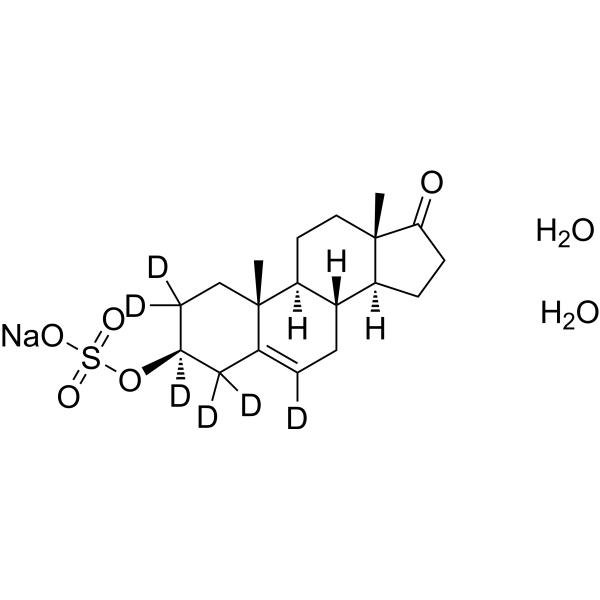
Dehydroepiandrosterone sulfate sodium dihydrate-d6 sodium dihydrate is the deuterium labeled Dehydroepiandrosterone sulfate sodium dihydrate. Dehydroepiandrosterone sulfate (DHEA sulfate; Prasterone sulfate) sodium dihydrate is a neurosteroid and the main secretion product of the adrenal gland. Dehydroepiandrosterone sulfate sodium dihydrate has both non-competitive antagonist activity of GABAA receptor and agonist activity of σ1 receptor. Dehydroepiandrosterone sulfate sodium dihydrate can partially penetrate the blood-brain barrier, inhibit GABAA receptor-mediated chloride influx, enhance NMDA receptor activity through σ1 receptors, exert anti-inflammatory, anti-glucocorticoid and antidepressant effects, and increase convulsive sensitivity. Dehydroepiandrosterone sulfate sodium dihydrate participates in neuroprotection, neurite growth regulation and catecholamine secretion regulation, and can be used in the study of depression, post-traumatic stress disorder (PTSD), Alzheimer's disease, etc. Dehydroepiandrosterone sulfate sodium dihydrate may also be a biomarker for cardiovascular disease mortality, and its concentration is independently and negatively correlated with mortality .
loading...
    loading...

