113 Results for "

propionic

" in MedChemExpress (MCE) Product Catalog:
Products (113)

113 Results for "propionic" in MCE Product Catalog:

Referencia número: HY-178260
No. CAS: 3035271-58-7
Áreas de investigación:  

Cancer

LM-D01 is a Drug-Linker Conjugates for ADC. LM-D01 consists of the ADC Cytotoxin Exatecan-3-amine (HY-178265) and a linker MC-GGFG-NH-CH2-O-propionic acid (HY-178266). LM-D01 can be used for synthesis of ADCs .
loading...
    loading...
Referencia número: HY-Y1088S2
No. CAS: 93131-15-8
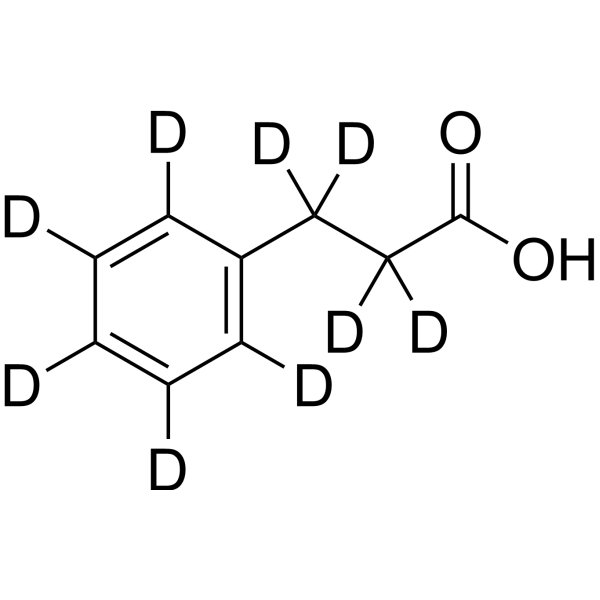
Synonyms: 3-Phenylpropionic acid-d9; 3-Phenylpropanoic acid-d9; 3-Phenyl-n-propionic acid-d9
Hydrocinnamic acid-d9 is the deuterium labeled Hydrocinnamic acid . Hydrocinnamic acid is the major rhizospheric compound with known growth regulatory activitie s.
loading...
    loading...
Referencia número: HY-Y1088S3
No. CAS: 35845-62-6
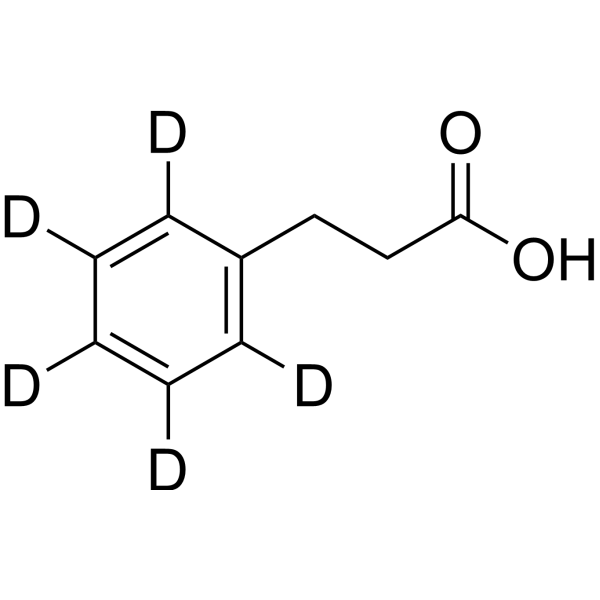
Synonyms: 3-Phenylpropionic acid-d5; 3-Phenylpropanoic acid-d5; 3-Phenyl-n-propionic acid-d5
Hydrocinnamic acid-d5 is the deuterium labeled Hydrocinnamic acid . Hydrocinnamic acid is the major rhizospheric compound with known growth regulatory activities .
loading...
    loading...
Referencia número: HY-159509
No. CAS: 2361124-03-8
Synonyms: Claziprotamide; BBP-671
Target:  

PANK

Áreas de investigación:  

Neurological Disease Metabolic Disease

Claziprotamidum (Claziprotamide; BBP-671) is a panthothenate kinase (PANK) activator with oral activity and blood-brain barrier permeability. Claziprotamidum binds to and activates all PANK isoforms, with the highest affinity for PANK3 (KD = 97 pM; IC50 = 1.39 nM). Claziprotamidum increases the intracellular biosynthesis of Coenzyme A (HY-128851) and restores mitochondrial function. Claziprotamidum can be used in the research of pantothenate kinase-associated neurodegeneration and propionic acidemia .
loading...
    loading...
Referencia número: HY-113158R
No. CAS: 2482-25-9
4-Hydroxyhippuric acid (Standard) is the analytical standard of 4-Hydroxyhippuric acid (HY-113158). This product is intended for research and analytical applications. 4-Hydroxyhippuric acid is a metabolite of polyphenols. 4-Hydroxyhippuric acid is generated via medium-chain acyl-CoA dehydrogenase (MCAD)-dependent β-oxidation of microbially-produced 3-(4-hydroxyphenyl)propionic acid, followed by host glycine conjugation. 4-Hydroxyhippuric acid can be simultaneously detected in urine as a biomarker of dietary polyphenol intake .
loading...
    loading...
Referencia número: HY-185104
No. CAS: 2861254-89-7
Target:  

LXR

Áreas de investigación:  

Cardiovascular Disease

Ginsenoside C-K hexapropionate ester (Structure 2) is a selective agonist of LXRα, with no significant activation effect on LXRβ. Ginsenoside C-K hexapropionate ester upregulates the expression of downstream genes such as ABCA1 by activating LXRα, promoting reverse cholesterol transport, and reducing lipid deposition in macrophage-derived foam cells. It can be used in the research of atherosclerosis. Ginsenoside C-K hexapropionate ester is a derivative synthesized from ginsenoside Compound K, an active metabolite of Panax notoginseng saponins, by modification with propionic anhydride .
loading...
    loading...
Referencia número: HY-Y0837
No. CAS: 2749-11-3
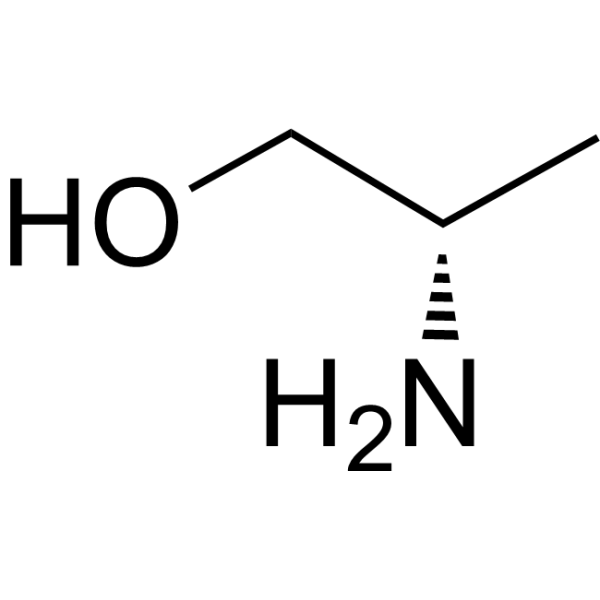
Synonyms: (S)-2-Amino-1-propanol; (S)-2-Aminopropanol; (S)-Alaninol
L-Alaninol ((S)-2-Amino-1-propanol; (S)-2-Aminopropanol; (S)-Alaninol) is a chiral amino alcohol that serves as a precursor for Levofloxacin (HY-B0330) and Metolachlor (HY-B1871). L-Alaninol acts as the sole carbon source for Pseudomonas sp. strain KIE171, and it is a metabolite produced by the hydrolysis of γ-glutamyl-L-alaninol. L-Alaninol functions as a substrate for oxidative/deaminative degradation and undergoes enzymatic glutamylation via IpuC. It is used as a synthetic building block in the fields of agriculture, pharmaceuticals, and peptide chemistry, and also serves as a chiral auxiliary .
loading...
    loading...
Referencia número: HY-Y0837S
No. CAS: 352438-84-7
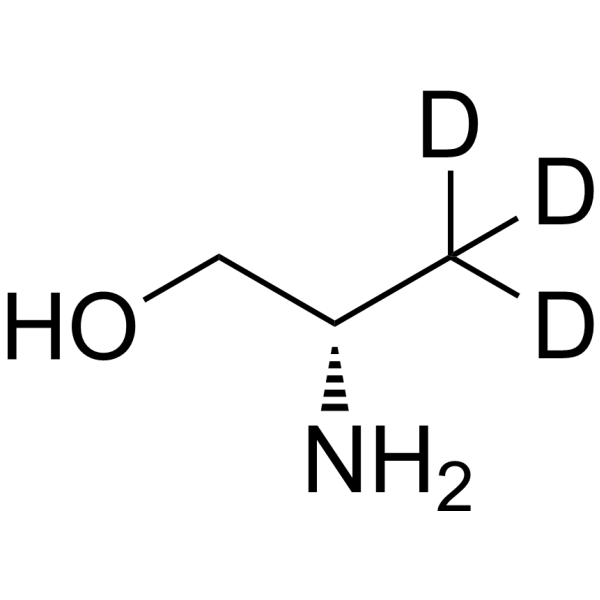
Synonyms: (S)-2-Amino-1-propanol-d3; (S)-2-Aminopropanol-d3; (S)-Alaninol-d3
L-Alaninol-d3 ((S)-2-Amino-1-propanol-d3; (S)-2-Aminopropanol-d3; (S)-Alaninol-d3) is the deuterated-labeled L-Alaninol (HY-Y0837). L-Alaninol ((S)-2-Amino-1-propanol; (S)-2-Aminopropanol; (S)-Alaninol) is a chiral amino alcohol that serves as a precursor for Levofloxacin (HY-B0330) and Metolachlor (HY-B1871). L-Alaninol acts as the sole carbon source for Pseudomonas sp. strain KIE171, and it is a metabolite produced by the hydrolysis of γ-glutamyl-L-alaninol. L-Alaninol functions as a substrate for oxidative/deaminative degradation and undergoes enzymatic glutamylation via IpuC. It is used as a synthetic building block in the fields of agriculture, pharmaceuticals, and peptide chemistry, and also serves as a chiral auxiliary .
loading...
    loading...
Referencia número: HY-Y1088S
No. CAS: 286367-71-3
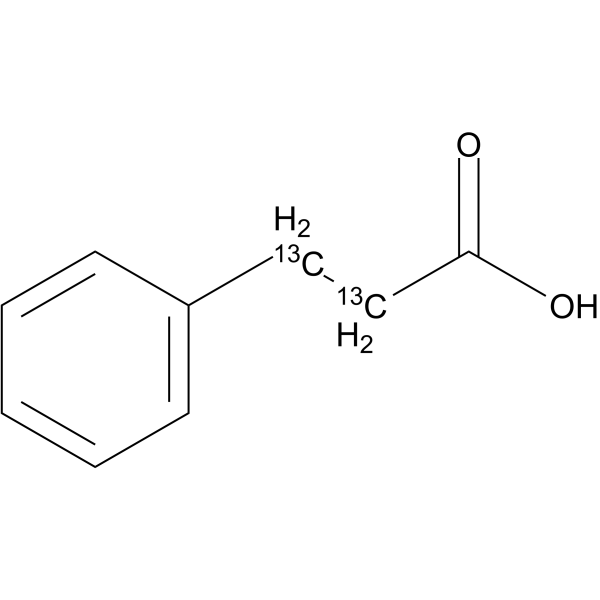
Synonyms: 3-Phenylpropionic acid-2,3-13C2; 3-Phenylpropanoic acid-2,3-13C2; 3-Phenyl-n-propionic acid-2,3-13C2
Hydrocinnamic acid-2,3- 13C2 is the 13C-labeled Hydrocinnamic acid. Hydrocinnamic acid is the major rhizospheric compound with known growth regulatory activities.
loading...
    loading...
Referencia número: HY-177839
Liposomal Coenzyme Q10 is an orally effective delivery system that encapsulates fat-soluble Coenzyme Q10 (CoQ10) (HY-N0111) via liposomal nanocarriers. Liposomal Coenzyme Q10 alleviates hepatic oxidative stress, attenuates hepatic inflammatory responses, reduces hepatocyte apoptosis, and ameliorates liver fibrosis. Liposomal Coenzyme Q10 activates the ferroptosis suppressor protein 1 (FSP1)/Coenzyme Q10 system, reduces the accumulation of malondialdehyde and ROS, and inhibits neuronal ferroptosis. Liposomal Coenzyme Q10 can be used in studies related to Propanoic acid (HY-W020017)-induced liver injury and subarachnoid hemorrhage .
loading...
    loading...
Referencia número: HY-B1580A
No. CAS: 4075-81-4
Synonyms: Bioban-C, meets analytical specification of E282
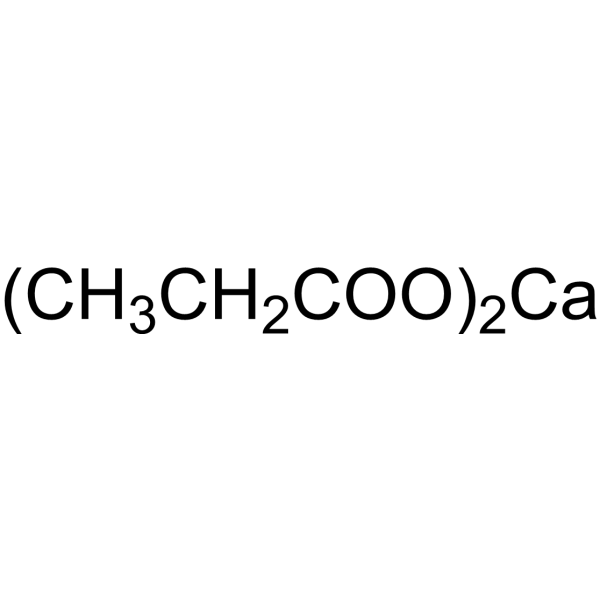
Calcium propionate, meets analytical specification of E282 (Bioban-C, meets analytical specification of E282) is a calcium salt of Propionic acid with oral activity, which can be hydrolyzed into propionate and calcium ions. Calcium propionate, meets analytical specification of E282 elevates intracellular ROS levels in tumor cells, depletes GSH, reduces mitochondrial membrane potential, and thereby induces tumor cell apoptosis. In mouse colitis models, Calcium propionate, meets analytical specification of E282 modulates inflammatory factors such as IFN-γ, calprotectin, and Pglyrp3, ameliorating intestinal inflammation and metabolic disorders. In ruminants, Calcium propionate, meets analytical specification of E282 serves as a gluconeogenic precursor, regulating rumen fermentation and microbial diversity; in high-fat diet rats, it alters gut microbiota composition and affects blood biochemical parameters. Calcium propionate, meets analytical specification of E282 is commonly used as a food and feed additive, and is also used in research related to hypocalcemia, dyslipidemia, colitis, and lung cancer .
loading...
    loading...
Referencia número: HY-B1580B
No. CAS: 4075-81-4
Synonyms: Bioban-C (Pharmaceutical primary standard, USP)
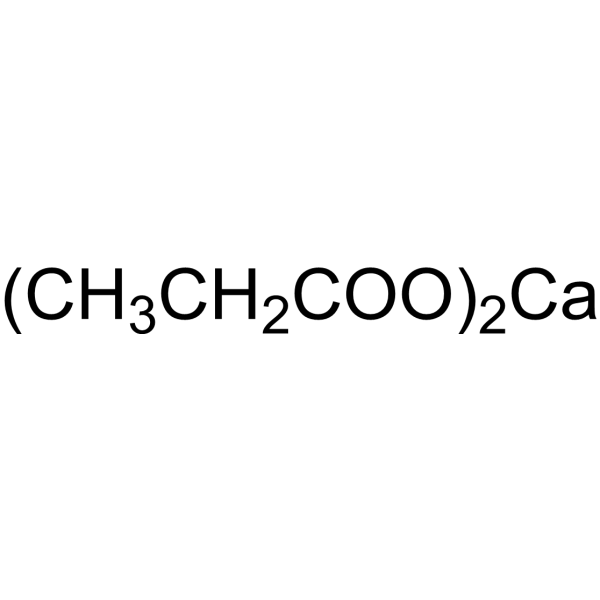
Calcium propionate, United States Pharmacopeia (USP) Reference Standard (Bioban-C (Pharmaceutical primary standard, USP)) is a calcium salt of Propionic acid with oral activity, which can be hydrolyzed into propionate and calcium ions. Calcium propionate, United States Pharmacopeia (USP) Reference Standard elevates intracellular ROS levels in tumor cells, depletes GSH, reduces mitochondrial membrane potential, and thereby induces tumor cell apoptosis. In mouse colitis models, Calcium propionate, United States Pharmacopeia (USP) Reference Standard modulates inflammatory factors such as IFN-γ, calprotectin, and Pglyrp3, ameliorating intestinal inflammation and metabolic disorders. In ruminants, Calcium propionate, United States Pharmacopeia (USP) Reference Standard serves as a gluconeogenic precursor, regulating rumen fermentation and microbial diversity; in high-fat diet rats, it alters gut microbiota composition and affects blood biochemical parameters. Calcium propionate, United States Pharmacopeia (USP) Reference Standard is commonly used as a food and feed additive, and is also used in research related to hypocalcemia, dyslipidemia, colitis, and lung cancer .
loading...
    loading...
Referencia número: HY-B1580AR
No. CAS: 4075-81-4
Synonyms: Bioban-C, meets analytical specification of E282 (Standard)
Calcium propionate, meets analytical specification of E282 (Standard) (Bioban-C, meets analytical specification of E282 (Standard)) is the analytical standard of Calcium propionate, meets analytical specification of E282 (HY-B1580A). This product is intended for research and analytical applications. Calcium propionate, meets analytical specification of E282 is a calcium salt of Propionic acid with oral activity, which can be hydrolyzed into propionate and calcium ions. Calcium propionate, meets analytical specification of E282 elevates intracellular ROS levels in tumor cells, depletes GSH, reduces mitochondrial membrane potential, and thereby induces tumor cell apoptosis. In mouse colitis models, Calcium propionate, meets analytical specification of E282 modulates inflammatory factors such as IFN-γ, calprotectin, and Pglyrp3, ameliorating intestinal inflammation and metabolic disorders. In ruminants, Calcium propionate, meets analytical specification of E282 serves as a gluconeogenic precursor, regulating rumen fermentation and microbial diversity; in high-fat diet rats, it alters gut microbiota composition and affects blood biochemical parameters. Calcium propionate, meets analytical specification of E282 is commonly used as a food and feed additive, and is also used in research related to hypocalcemia, dyslipidemia, colitis, and lung cancer .
loading...
    loading...

