
152 Results for "

DNA function

" in MedChemExpress (MCE) Product Catalog:
Products (152)

152 Results for "DNA function" in MCE Product Catalog:

Cat. No.: HY-N6739S
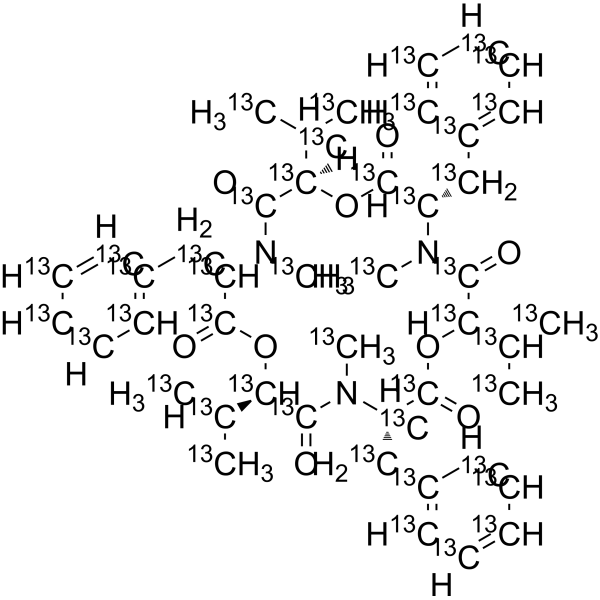
Beauvericin- 13C45 is 13C labeled Beauvericin (HY-N6739). Beauvericin is a cyclohexapeptide Fusarium toxin with insecticidal, antibacterial, anticancer, antiviral and cytotoxic activities. Beauvericin causes cellular genotoxicity by producing DNA breaks, chromosomal aberrations and micronuclei, and inhibits the PI3K/AKT pathway to induce apoptosis, thereby inhibiting the growth of HCC. In addition, Beauvericin affects immune function by inhibiting lymphocyte proliferation and interfering with the differentiation process of human monocytes into macrophages .
loading...
    loading...
Cat. No.: HY-N0570R
CAS No.: 10597-60-1
Synonyms: DOPET (Standard); 3,4-Dihydroxyphenethyl alcohol (Standard); 3-Hydroxytyrosol (Standard)
Hydroxytyrosol (Standard) (DOPET (Standard)) is the analytical standard of Hydroxytyrosol (HY-N0570). This product is intended for research and analytical applications. Hydroxytyrosol is an orally active, blood-brain barrier-permeable multi-active compound with multiple effects including antibacterial, antioxidant, anti-platelet aggregation, and neuroprotective activities. Hydroxytyrosol not only inhibits the growth of Vibrio by increasing bacterial membrane permeability, but also interacts with DNA and mediates supercoiled DNA relaxation. Meanwhile, Hydroxytyrosol effectively reduces thrombosis and inhibits lipid oxidation by inhibiting COX activity and promoting vascular nitric oxide production. In terms of neuroprotection, Hydroxytyrosol significantly alleviates neuronal apoptosis and inflammatory responses by up-regulating the expression level of ERβ, thereby improving cognitive function in Alzheimer's disease models. Hydroxytyrosol has been widely used in scientific research related to Vibrio infection, arterial thrombosis, Alzheimer's disease and other related fields .
loading...
    loading...
Cat. No.: HY-N1461R
CAS No.: 17238-05-0
Synonyms: (±)-Dihydrodaidzein (Standard)
Dihydrodaidzein (Standard) ((±)-Dihydrodaidzein (Standard)) is the analytical standard of Dihydrodaidzein (HY-N1461). This product is intended for research and analytical applications. Dihydrodaidzein is a dietary phytoestrogen. Dihydrodaidzein possesses functions including antioxidation, inhibition of DNA oxidative damage, regulation of lipid metabolism and maintenance of intestinal flora stability. Dihydrodaidzein induces apoptosis, regulates immune responses, modulates tumor-related factors, activates the Bmp-2 signaling pathway, inhibits NF-κB and MAPK, and exhibits anti-inflammatory activity. Dihydrodaidzein can be used in research related to cancer, cardiovascular diseases, osteoporosis and inflammatory diseases .
loading...
    loading...
Cat. No.: HY-125209A
CAS No.: 2253744-57-7
Research Areas:  

Cancer

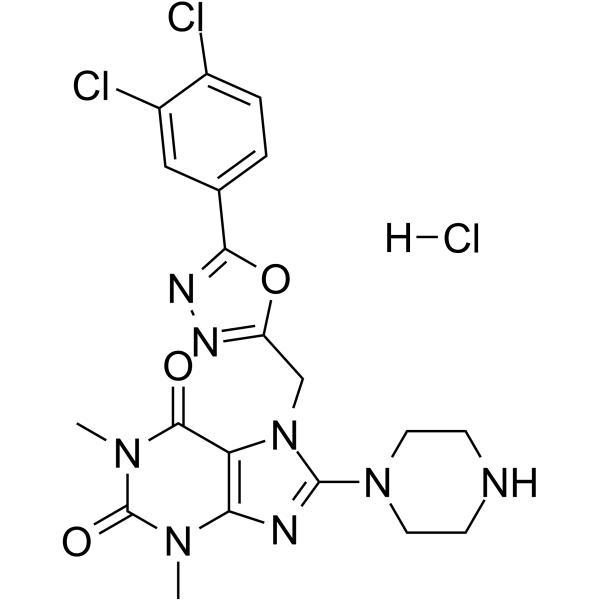
TH5427 hydrochloride is a NUDT5 inhibitor with a human target IC50 of 29 nM, ~690-fold selectivity over MTH1 in vitro, and selective functional inhibition over other NUDIX hydrolases including NUDT9 .TH5427 hydrochloride binds to the active site of NUDT5, blocking enzymatic activity related to ADP-ribose metabolism and PAR-derived ATP synthesis .TH5427 hydrochloride blocks progestin-dependent nuclear ATP synthesis, impairs progestin-induced chromatin remodeling, inhibits histone H1 displacement, disrupts progestin-dependent gene regulation, and abrogates progestin-dependent proliferation in breast cancer cells .TH5427 hydrochloride functions as a versatile probe to study nuclear ATP dynamics and ADP-ribose-related metabolism in cells .TH5427 hydrochloride engages NUDT5 at physiological temperatures, as demonstrated by Drug Affinity Responsive Target Stability (DARTS) assay .TH5427 hydrochloride stabilizes NUDT5 against thermal denaturation in cell lysates and intact cells, as shown by cellular thermal shift assay (CETSA) .TH5427 hydrochloride functionally inhibits NUDT5 activity, leading to downstream effects on oxidative DNA damage and DNA replication in triple-negative breast cancer (TNBC) cells .TH5427 hydrochloride suppresses proliferation of TNBC cells without inducing cell death or apoptosis, slows DNA replication in TNBC cells, promotes accumulation of oxidative DNA lesions, and triggers DNA damage response in TNBC cells .TH5427 hydrochloride suppresses growth of TNBC cells in vitro, inhibits growth of TNBC xenograft tumors in nude mice in vivo, and shows greater potency against TNBC cell lines compared to ER-positive and normal-like breast cell lines .TH5427 hydrochloride can be used for the research of breast cancer and triple-negative breast cancer .
loading...
    loading...
Cat. No.: HY-165381
CAS No.: 71555-14-1
Research Areas:  

Cancer

ZMC2 is a thiosemicarbazone-class metal ion chelator and zinc ionophore with a human mutant p53 R175H binding Ka of 27.4 nM.ZMC2 binds Fe, Cu, Mn, Zn, and other transition metals.ZMC2 facilitates zinc transport across membranes.ZMC2 restores zinc binding to zinc-deficient p53 mutants, restoring wild-type structure and function, including site-specific DNA binding.ZMC2 generates reactive oxygen species (ROS).ZMC2 can be used for the research of cancer .
loading...
    loading...
Cat. No.: HY-182744
Target:  

MDM-2/p53

Research Areas:  

Cancer

LLQ-45 is a covalent p53 Y220C mutant protein agonist with an EC50 of 24.97 μM. LLQ-45 activates the anti-tumor function of p53 Y220C through covalent modification, restores its DNA-binding ability and enhances its thermal stability. LLQ-45 selectively inhibits the proliferation of p53 Y220C mutant tumor cells, suppresses cell growth and upregulates the expression of CDKN1A. LLQ-45 can be used in studies related to p53 Y220C mutant cancers .
loading...
    loading...
Cat. No.: HY-D0914A
CAS No.: 25738-40-3
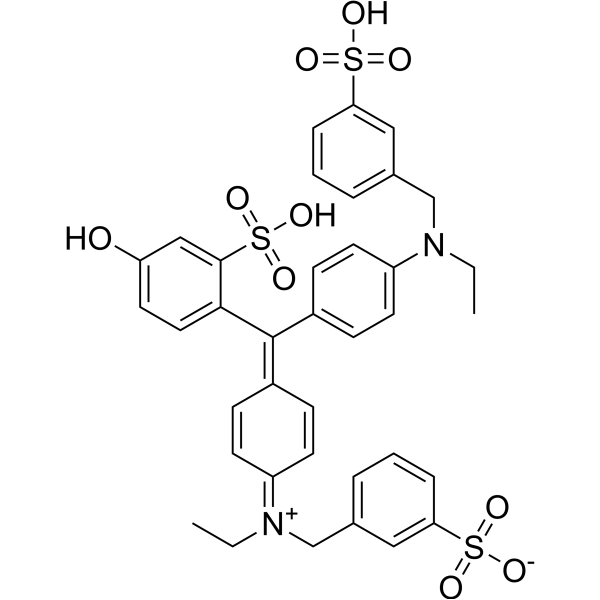
Fast green FCF free acid is a dye that is acid-resistant. Fast Green FCF free acid inhibits α-synuclein aggregation, as well as , P2X4 receptor and TLR4/Myd88/NF-κB. Fast Green FCF free acid is widely used as a staining agent like quantitative stain for histones at alkaline pH after acid extraction of DNA, and as a protein stain in electrophoresis. Fast Green FCF free acid improves cognitive impairment, depression, relieves pain allergies, and promotes reproductive function .
loading...
    loading...
Cat. No.: HY-L244
761 compounds

In this era of rapid advancement in gene-editing technology, the CRISPR-Cas system, with its powerful programmability, is leading a transformation in life sciences research. It enables efficient and precise targeted modification of an organism's genome, providing a robust tool for studying gene function, treating genetic diseases, and improving crop varieties. However, bottlenecks such as insufficient editing efficiency, low homologous directed repair efficiency, and potential off-target risks remain major challenges in achieving precise genetic modifications and developing gene therapies.

To overcome these limitations, the MCE High-Efficiency Gene Editing Compound Library systematically includes 761 small molecules that are known or have the potential to enhance gene-editing efficiency. These compounds work by targeting and modulating the DNA damage repair network, mechanistically inhibiting non-homologous end joining, promoting homologous directed repair, or regulating chromatin states and cellular responses, thereby significantly optimizing editing outcomes. This library is suitable for developing "CRISPR-small molecule" combination therapy strategies, improving gene-editing efficiency, and providing a powerful tool for in-depth research into the mechanisms of DNA damage repair in gene editing.

Cat. No.: HY-153755
CAS No.: 2923356-52-7
Synonyms: Polθ-IN-7
Target:  

DNA/RNA Synthesis

Research Areas:  

Cancer

ART6043 (Polθ-IN-7) is an orally active, selective allosteric DNA polymerase θ (Polθ) inhibitor with an IC50 of 1.3 nM. ART6043 blocks microhomology-mediated end joining (MMEJ) by inhibiting the polymerase function of Polθ. ART6043 suppresses the survival of homologous recombination-deficient (HRD) cells and enhances the antitumor effects of PARP inhibitors. ART6043 can be used in studies of HRD tumors, including BRCA1-mutant triple-negative breast cancer, BRCA2-deficient colorectal cancer, RAD51C-deficient gastric cancer, and others .
loading...
    loading...
Cat. No.: HY-181627
CAS No.: 3094990-88-9
ETC-501 is a blood-brain barrier-permeable, orally active, and selective MNK1/MNK2 inhibitor, with an IC50 of 0.033 μM against MNK1 and 0.111 μM against MNK2. ETC-501 inhibits glioblastoma cell proliferation, impairs DNA damage repair function, delays cell cycle progression, and suppresses ribosome biogenesis. ETC-501 enhances Temozolomide (HY-17364)-induced cellular senescence, attenuates the senescence-associated secretory phenotype, and increases cellular sensitivity to Navitoclax (HY-10087). ETC-501 is applicable to research related to glioblastoma .
loading...
    loading...
Cat. No.: HY-B1180R
CAS No.: 4880-88-0
Synonyms: (-)-Eburnamonine (Standard); (-)-Vincamone (Standard)
Vinburnine ((-)-Eburnamonine; (-)-Vincamone) (Standard) is the analytical standard of Vinburnine (HY-B1180). This product is intended for research and analytical applications. Vinburnine ((-)-Eburnamonine; (-)-Vincamone) phosphate is an orally active, blood-brain barrier permeable immunomodulator and apoptosis inducer. Vinburnine drives the secretion of IL-24 by activating the P38/MAPK/ATF3 signaling axis. Vinburnine induces reactive oxygen species production and DNA damage in cancer cells, thereby inhibiting cancer cell proliferation, activating the apoptotic cascade, and enhancing CD8+ T cell function to remodel the tumor immune microenvironment. Vinburnine can be used in the research of diseases such as melanoma .
loading...
    loading...
Cat. No.: HY-N7690
CAS No.: 1247-97-8
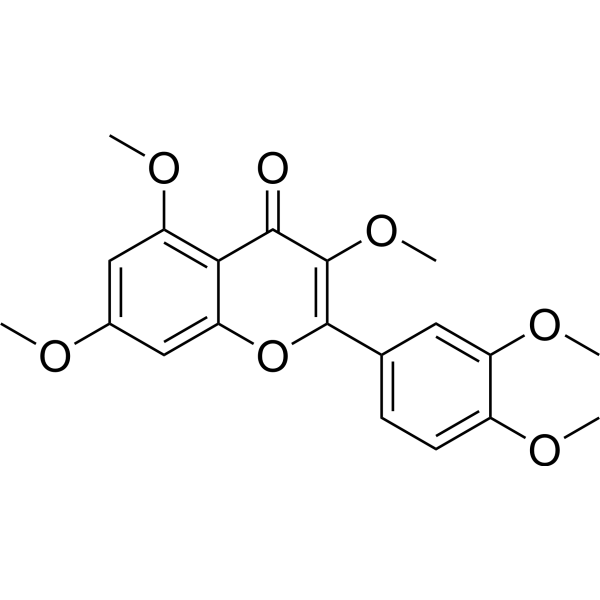
3,5,7,3’,4’-Pentamethoxyflavone is a Ca 2+ channel inhibitor. 3,5,7,3’,4’-Pentamethoxyflavone can protect DNA from oxidative damage. 3,5,7,3’,4’-Pentamethoxyflavone can induce relaxation of the human corpus cavernosum through calcium mobilization-related mechanisms. 3,5,7,3’,4’-Pentamethoxyflavone can promote the expression of eNOS and cystathionine gamma lyase CSE proteins in middle-aged male rats and regulate vascular function. 3,5,7,3’,4’-Pentamethoxyflavone can be used in research related to diabetes and cardiovascular diseases .
loading...
    loading...
Cat. No.: HY-N7690R
CAS No.: 1247-97-8
3,5,7,3’,4’-Pentamethoxyflavone is a Ca2+ channel inhibitor. 3,5,7,3’,4’-Pentamethoxyflavone can protect DNA from oxidative damage. 3,5,7,3’,4’-Pentamethoxyflavone can induce relaxation of the human corpus cavernosum through calcium mobilization-related mechanisms. 3,5,7,3’,4’-Pentamethoxyflavone can promote the expression of eNOS and cystathionine gamma lyase CSE proteins in middle-aged male rats and regulate vascular function. 3,5,7,3’,4’-Pentamethoxyflavone can be used in research related to diabetes and cardiovascular diseases .
loading...
    loading...
Cat. No.: HY-183363
Target:  

Deubiquitinase

Research Areas:  

Cancer

USP1-IN-17 is an orally active USP1/UAF1 complex inhibitor. USP1-IN-17 exhibits potent anti-proliferative activity against BRCA1-mutant human breast cancer MDA-MB-436 cells, with an IC50 value of 8.1 nM. USP1-IN-17 binds to USP1 to stabilize the enzyme conformation, impairs deubiquitination function, elevates the monoubiquitination level of PCNA, inhibits cancer cell proliferation, and induces DNA damage accumulation. USP1-IN-17 can be used for the research of BRCA1-mutated cancers .
loading...
    loading...
Cat. No.: HY-183643
Target:  

DNA/RNA Synthesis

Research Areas:  

Cancer

RUVBL1/2-IN-1 is an orally active RUVBL1/2 complex inhibitor with an EC50 of 0.012 μM against human targets. RUVBL1/2-IN-1 impairs ATPase-related functions, thereby reducing nuclear MYC protein levels, impairing DNA damage response and inhibiting cancer cell proliferation. In a MYC-dependent Burkitt's lymphoma xenograft model, RUVBL1/2-IN-1 effectively inhibits tumor growth and suppresses the activity of RUVBL1 R117H mutant cells. RUVBL1/2-IN-1 has been applied in research related to MYC-dependent Burkitt's lymphoma .
loading...
    loading...
Cat. No.: HY-19896A
CAS No.: 1204956-74-0
COTI-2 hydrochloride is an orally active thiosemicarbazone anticancer agent and p53 mutant activator. COTI-2 hydrochloride induces Apoptosis. COTI-2 hydrochloride triggers the activation of AMPK and the inhibition of the mTOR pathway. COTI-2 hydrochloride induces DNA damage and replication stress responses. COTI-2 hydrochloride binds to misfolded mutant p53 proteins, thereby inducing conformational changes that restore p53 to its normal state and reactivate its function. COTI-2 hydrochloride acts on a variety of cancer cell lines and xenografts. COTI-2 hydrochloride can be used in research related to colorectal cancer, small cell lung cancer, glioblastoma, breast cancer, and ovarian cancer .
loading...
    loading...
Cat. No.: HY-P2310
CAS No.: 148093-65-6
Defensin HNP-1 human is a type of human neutrophil peptide (HNPs). Defensin HNP-1 human possesses immunomodulatory functions and can delay the apoptosis of neutrophils. Defensin HNP-1 human inhibits DNA/RNA/protein synthesis and interferes with metabolic pathways, thus exhibiting broad antibacterial activity. Defensin HNP-1 human has direct inactivation effects on HIV, HSV-1, HSV-2, CMV, influenza virus, etc. Defensin HNP-1 human has antileishmanial activity. Defensin HNP-1 human is involved in endothelial cell dysfunction during the early development of atherosclerosis .
loading...
    loading...
Cat. No.: HY-Z16784
CAS No.: 685847-78-3
PX-478 free base is a multifunctional HIF-1α inhibitor with properties including radiosensitization, autophagy activation, and lipid accumulation inhibition. PX-478 free base also blocks hypoxia-induced VEGF production and regulates β-cell phenotypes under hypoxic conditions. PX-478 free base induces cell cycle arrest and DNA damage, restores autophagic function, reduces foam cell formation, and maintains glucose homeostasis. PX-478 free base is widely used in research on related diseases such as human tumors (e.g., prostate cancer), type 2 diabetes, and atherosclerosis .
loading...
    loading...
Cat. No.: HY-10231R
CAS No.: 685898-44-6
PX-478 (Standard) is the analytical standard of PX-478 (HY-10231). This product is intended for research and analytical applications. PX-478 is a multifunctional HIF-1α inhibitor with properties including radiosensitization, autophagy activation, and lipid accumulation inhibition. PX-478 also blocks hypoxia-induced VEGF production and regulates β-cell phenotypes under hypoxic conditions. PX-478 induces cell cycle arrest and DNA damage, restores autophagic function, reduces foam cell formation, and maintains glucose homeostasis. PX-478 is widely used in research on related diseases such as human tumors (e.g., prostate cancer), type 2 diabetes, and atherosclerosis .
loading...
    loading...
Cat. No.: HY-112356
CAS No.: 152075-98-4
Purity:  99.53%
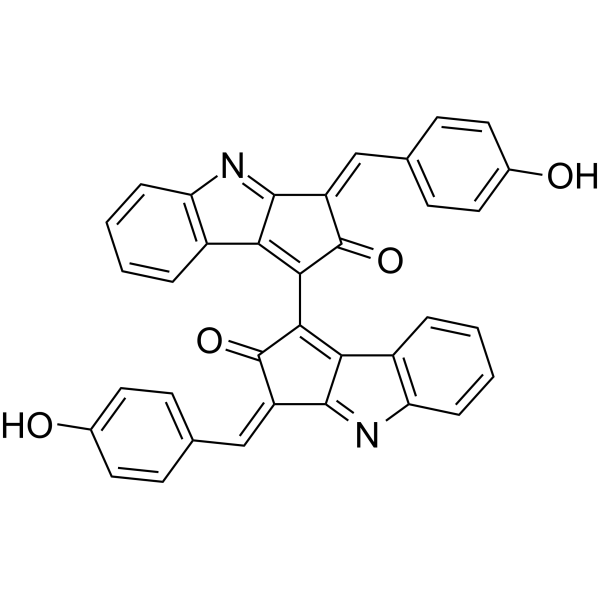
Scytonemin is a hydrophobic alkaloid pigment that can be isolated from the outer sheath of cyanobacteria. Scytonemin has protective function against short-wave solar ultraviolet (UV) radiation, which can reduce the generation of reactive oxygen species (ROS) and the formation of DNA damage. Scytonemin also has anti-inflammatory and anti-proliferative activities, produces concentration-dependent inhibition (IC50=2.0 μM) of polo-like kinase 1 (PLK1)-mediated cdc25C phosphorylation, and plays an important role in regulating the G2/M transition in the cell cycle. It can be used in the research of cancer, acute inflammation and sunscreen cosmetics .
loading...
    loading...

