



Dihydrodaidzein (Standard)
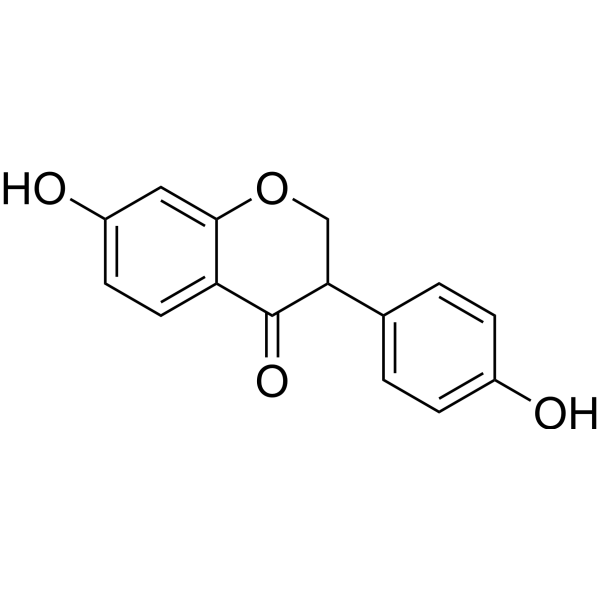
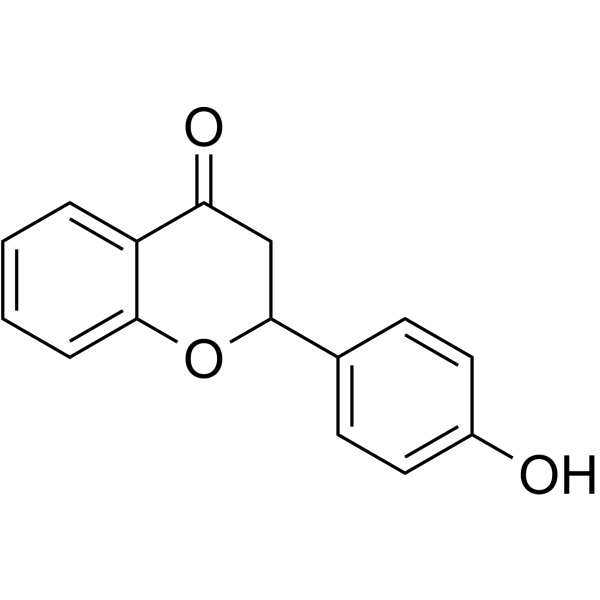
Dihydrodaidzein (Standard) ((±)-Dihydrodaidzein (Standard)) is the analytical standard of Dihydrodaidzein (HY-N1461). This product is intended for research and analytical applications. Dihydrodaidzein is a dietary phytoestrogen. Dihydrodaidzein possesses functions including antioxidation, inhibition of DNA oxidative damage, regulation of lipid metabolism and maintenance of intestinal flora stability. Dihydrodaidzein induces apoptosis, regulates immune responses, modulates tumor-related factors, activates the Bmp-2 signaling pathway, inhibits NF-κB and MAPK, and exhibits anti-inflammatory activity. Dihydrodaidzein can be used in research related to cancer, cardiovascular diseases, osteoporosis and inflammatory diseases.
For research use only. We do not sell to patients.
- CAS No.: 17238-05-0
- Formula: C15H12O4
- Molecular Weight:256.26
-
Storage:
Please store the product under the recommended conditions in the Certificate of Analysis.


To place orders, for customer services and technical support, please contact: MedChemExpress USA
Tel: 609-228-6898 E-mail: [email protected] [email protected]


-
 Product Information
-
Chemical Information
- Purity & Documentation
-
 Help & FAQs


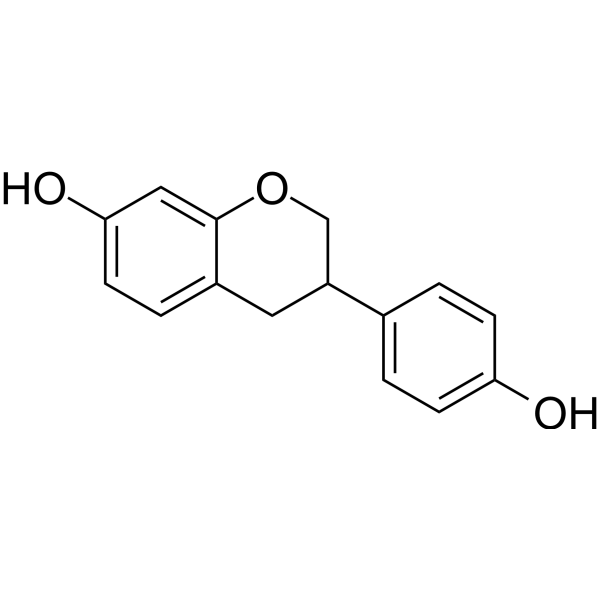
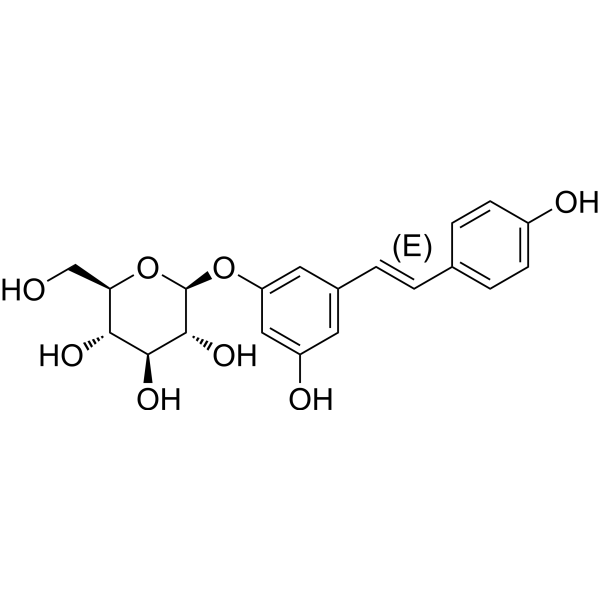
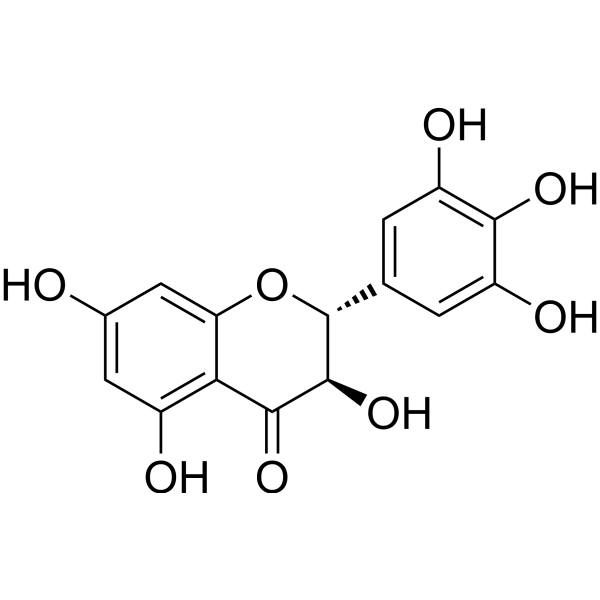


Product Information
Information
Application
The compound is the grade of analytical standard, which is the reference standard supplied assay. It is commonly used in qualitative, quantitative and methodological research experiments in HPLC, GC and MS.


Chemical Information
-
CAS No. 17238-05-0
-
Molecular Weight 256.26
-
Formula C15H12O4
-
SMILES
O=C1C(C2=CC=C(O)C=C2)COC3=CC(O)=CC=C13
-
Synonyms
(±)-Dihydrodaidzein (Standard)
-
Structure Classification
-
Shipping
Room temperature in continental US; may vary elsewhere.
-
Storage
Please store the product under the recommended conditions in the Certificate of Analysis.


Purity & Documentation
References
[1]. Schröder C, et al. Identification and expression of genes involved in the conversion of daidzein and genistein by the equol-forming bacterium Slackia isoflavoniconvertens. Applied and environmental microbiology. 2013 Jun;79(11):3494-502. [Content Brief]
[2]. Franke AA, et al. Liquid chromatographic-photodiode array mass spectrometric analysis of dietary phytoestrogens from human urine and blood. Journal of chromatography. B, Analytical technologies in the biomedical and life sciences. 2002 Sep 25;777(1-2):45-59. [Content Brief]
[3]. Ubaid M, et al. Daidzein from Dietary Supplement to a Drug Candidate: An Evaluation of Potential. ACS omega. 2023 Sep 12;8(36):32271-32293. [Content Brief]
[4]. Shimada Y, et al. Cloning and expression of a novel NADP(H)-dependent daidzein reductase, an enzyme involved in the metabolism of daidzein, from equol-producing Lactococcus strain 20-92. Applied and environmental microbiology. 2010 Sep;76(17):5892-901. [Content Brief]

Calculators
Concentration (start) × Volume (start) = Concentration (final) × Volume (final)


Dihydrodaidzein (Standard) Related Classifications
HY-N1461R Related Classifications
 Powered by Bioz
Keywords
- Dihydrodaidzein (Standard)
- 17238-05-0
- (±)-Dihydrodaidzein (Standard)
- Reference Standards
- Endogenous Metabolite
- Apoptosis
- NF-κB
- p38 MAPK
- Bmp-2 signaling
- Lactococcus strain
- E. coli
- MC3T3-E1 cells
- Slackia isoflavoniconvertens
- tetrahydrodaidzein reductase
- dihydrodaidzein reductase
- Caco-2 cell monolayer
- RAW 264.7 cells
- Inhibitor
- inhibitor
- inhibit