157 Results for "

fraction

" in MedChemExpress (MCE) Product Catalog:
Products (157)

157 Results for "fraction" in MCE Product Catalog:

Cat. No.: HY-145581S
Synonyms: AZD4831-d3
Mitiperstat-d3 (AZD4831-d3) is the deuterated -labeled Mitiperstat (HY-145581).Mitiperstat (AZD4831) is an effective oral inhibitor of myeloperoxidase (MPO). Mitiperstat inhibits MPO and thyroid peroxidase (TPO) with IC50s of 1.5 nM and 0.69 μM. Mitiperstat exhibits a weak inhibitory activity against CYP3A4 with an IC50 of 6 μM. Mitiperstat can reduce inflammation and improve microvascular function, and it can be used in studies related to heart failure, preserved or mildly reduced ejection fraction, non-alcoholic fatty liver disease, and chronic obstructive pulmonary disease .
loading...
    loading...
Cat. No.: HY-W708825
CAS No.: 2412-80-8
Synonyms: Methyl isohexanoate
Target:  

Others

Methyl 4-methylpentanoate (Methyl isohexanoate) is a natural product. Methyl 4-methylpentanoate can be isolated from the essential oil of Bourbon geranium (Pelargonium sp.) from Reunion .
loading...
    loading...
Cat. No.: HY-172424
CAS No.: 2417411-02-8
Target:  

Myosin

Research Areas:  

Cardiovascular Disease

Delocamten is an orally active, selective Cardiac Myosin inhibitor with an IC50 of approximately 1.11 μM. Delocamten directly modulates myosin complexes, inhibits excessive myocardial contraction, and improves diastolic function. Delocamten can be used in studies of hypertrophic cardiomyopathy (HCM), left ventricular hypertrophy, and diastolic dysfunction .
loading...
    loading...
Cat. No.: HY-109136R
CAS No.: 1402936-61-1
Synonyms: BAY 1101042 (Standard)
Runcaciguat (Standard) is the analytical standard of Runcaciguat (HY-109136). This product is intended for research and analytical applications. Runcaciguat (BAY 1101042) is a selective, orally active, allosteric activator of soluble guanylate cyclase (sGC) that specifically targets its oxidized and heme-free form. Runcaciguat binds to sGC in a histidine-dependent manner and restores cyclic guanosine monophosphate (cGMP) production under oxidative stress, independent of nitric oxide (NO) or heme. Runcaciguat exhibits renoprotective and cardioprotective activities, such as reduced proteinuria and improved renal function. Runcaciguat is primarily being studied in chronic Kidney disease (CKd) associated with hypertension, diabetes, and metabolic disorders, as well as potential cardiovascular indications such as heart failure with preserved ejection fraction (HFpEF) .
loading...
    loading...
Cat. No.: HY-182481
CAS No.: 147807-20-3
Target:  

Monoamine Oxidase

Research Areas:  

Neurological Disease

MD-230254 is a reversible, competitive and selective inhibitor inhibitor of MAO-B with an IC50 value of 1.8 nM. MD-230254 can be used for the study of MAO-B-related neurodegenerative diseases including Parkinson’s disease and Alzheimer’s disease .
loading...
    loading...
Cat. No.: HY-N18016
CAS No.: 1203675-19-7
Synonyms: Hesperitin-5,7-dimethyl-ether
4'-Hydroxy-5,7,3'-trimethoxyflavanone (Hesperitin-5,7-dimethyl-ether) (Compound 13) is an O-methylated flavanone and a derivative of Hesperetin (HY-N0168) .
loading...
    loading...
Cat. No.: HY-108693
CAS No.: 490-23-3
Purity:  98.89%
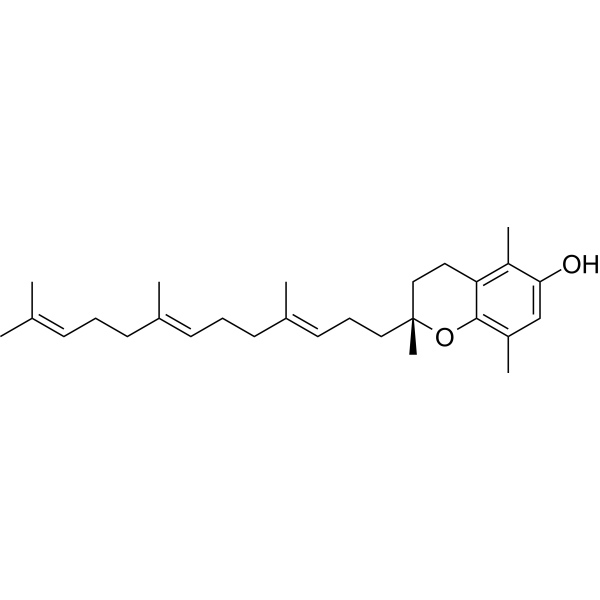
β-Tocotrienol is an isomer of vitamin E. β-Tocotrienol is a less potent antioxidant than α-tocotrienol. β-Tocotrienol can be found in the tocotrienol-rich fraction (TRF) of palm oil, which possesses anti-carcinogenic effects in vitro on human colon carcinoma and prostate cancer cells. β-Tocotrienol inhibits the growth of A549 (GI50 = 1.38 μM) and U87MG (GI50 = 2.53 μM) cells. β-Tocotrienol also induces apoptosis in cancer cells. β-Tocotrienol can inhibit PD-L1 expression and mitigates PD-L1-mediated immune suppression in vitro and in vivo .
loading...
    loading...
Cat. No.: HY-153763
CAS No.: 329935-45-7
Purity:  ≥98.0%
Research Areas:  

Neurological Disease

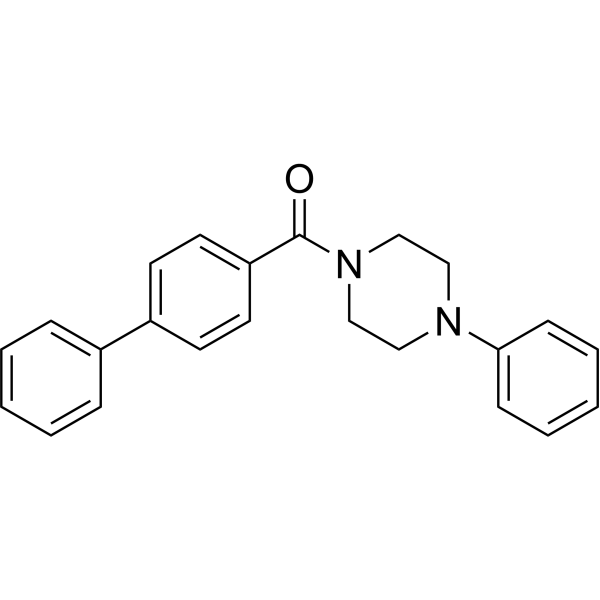
PROT-IN-1 is a PROT inhibitor (IC50: 1.48 μM). PROT-IN-1 is applicable to research related to cognitive impairment .
loading...
    loading...
Cat. No.: HY-124187
CAS No.: 493015-74-0
Purity:  ≥98.0%
Synonyms: Ethyl pinolenate
Research Areas:  

Others

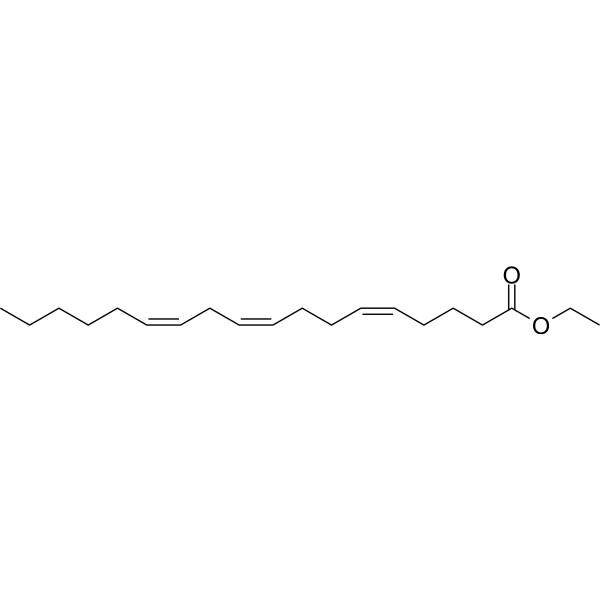
Pinolenic acid is a polyunsaturated fatty acid found in the seed oils of red pine (Pinus orientalis) and maritime pine (Pinus pinaster). Both oils were found to have lipid-lowering properties. A diet containing marine pine nut oil (MPSO) reduces HDL and ApoA1 levels in transgenic mice expressing human ApoA1. MPSO was found to reduce cholesterol efflux in vitro. Korean pine nut oil supplements may help obesity by reducing appetite. People who take this oil experience an increase in the satiety hormones CCK and GLP-1 and a decrease in appetite. The activity of the oil is attributed to pinolenic acid. Pinolenic acid is not metabolized to arachidonic acid and can reduce the level of arachidonic acid in the phosphatidylinositol fraction of HepG2 cells from 15.9% to 7.0%. Pinolenic acid ethyl ester is a neutral, more lipophilic form of the free acid.
loading...
    loading...
Cat. No.: HY-N12973
CAS No.: 27214-74-0
Peonidin 3-arabinoside is an anthocyanin found in vaccinium mytrillus. Peonidin 3-arabinoside binds to the ALK5 and has anticancer activity. Peonidin 3-arabinoside also has antioxidant, anti-inflammatory, and anti-urinary tract infection properties .
loading...
    loading...
Cat. No.: HY-N17374
CAS No.: 122588-00-5
Laevigatin A (Compound 8) is a hydrolyzable tannin found in Rosa laevigata .
loading...
    loading...
Cat. No.: HY-182517
CAS No.: 2225980-49-2
Target:  

TRP Channel

Research Areas:  

Inflammation/Immunology

AG1529 is a TRPV1 inhibitor and capsaicinoid-based soft agent with a human TRPV1 IC50 of 0.9-0.93 μM. AG1529 reversibly blocks capsaicin-evoked TRPV1 activation, binds to the TRPV1 capsaicin binding site, moderately affects pH-induced TRPV1 gating, and does not alter voltage- or heat-mediated TRPV1 responses. AG1529 suppresses TRPV1-mediated neuronal excitability, reduces capsaicin- and pH-evoked neuronal firing, abolishes histaminergic and inflammation-mediated TRPV1 sensitization. AG1529 exhibits anti-nociceptive and antipruritic effects, attenuates in vivo hyperalgesia and pruritus, dose-dependently reduces acute histaminergic itch in rodents, and mildly blocks hTRPA1 and hTRPM8 channel activity. AG1529 undergoes hydrolysis and dermal deactivation, minimizes TRPV1-associated side reactions, does not evoke capsaicin-like burning sensation, and does not disrupt physiological thermal regulation. AG1529 can be used for the research of inflammatory cutaneous nociception and acute histaminergic pruritus .
loading...
    loading...
Cat. No.: HY-N21620
CAS No.: 38642-54-5
Apigenin-6-C-arabinoside is a flavonoid C-glycoside found in the leaves of Adhatoda vasica. Apigenin-6-C-arabinoside is used in the study of natural product flavonoids and flavonoid glycosides .
loading...
    loading...
Cat. No.: HY-NP0196H
Research Areas:  

Inflammation/Immunology

Mouse IgG Fab fragment-AF488 is an AF488-labeled mouse IgG Fab fragment .
loading...
    loading...
Cat. No.: HY-108693R
CAS No.: 490-23-3
β-Tocotrienol (Standard) is the analytical standard of β-Tocotrienol. This product is intended for research and analytical applications. β-Tocotrienol is an isomer of vitamin E. β-Tocotrienol is a less potent antioxidant than α-tocotrienol. β-Tocotrienol can be found in the tocotrienol-rich fraction (TRF) of palm oil, which possesses anti-carcinogenic effects in vitro on human colon carcinoma and prostate cancer cells. β-Tocotrienol inhibits the growth of A549 (GI50 = 1.38 μM) and U87MG (GI50 = 2.53 μM) cells. β-Tocotrienol also induces apoptosis in cancer cells. β-Tocotrienol can inhibit PD-L1 expression and mitigates PD-L1-mediated immune suppression in vitro and in vivo .
loading...
    loading...
Cat. No.: HY-180406
CAS No.: 1262495-12-4
Research Areas:  

Neurological Disease

NPY Y2 antagonist 2 is a modulator targeting the neuropeptide Y (NPY) receptor Y2, with pKi values of 6.8 nM and 7.2 nM in human and rat brains, respectively, and demonstrating blood-brain barrier penetration. NPY Y2 antagonist 2 shows selectivity for the Y1 and Y5 receptors. NPY Y2 antagonist 2 blocks the negative feedback regulation mediated by the NPY Y2 receptor, thereby increasing endogenous NPY release and enhancing Y1 receptor activation, resulting in the modulation of central neurotransmitter release. NPY Y2 antagonist 2 exhibits moderate in vivo clearance, high free fraction in rat brain, and a favorable brain/plasma ratio and brain exposure. NPY Y2 antagonist 2 is applicable for research in conditions such as mood disorders, anxiety induced by alcohol withdrawal, and social anxiety associated with nicotine withdrawal .
loading...
    loading...
Cat. No.: HY-N18387
trans-Psoralenoside is the trans isomer of Psoralenoside (HY-N7503). trans-Psoralenoside is present in the aerial parts of Ficus palmata. trans-Psoralenoside can be used in studies of liver diseases, kidney diseases and peptic ulcers .
loading...
    loading...
Cat. No.: HY-N21754
CAS No.: 1922084-92-1
Dendrocandin T is a bibenzyl derivative. Dendrocandin T is isolated from the pseudobulbs of Dendrobium officinale, Dendrobium huoshanense, and Dendrobium catenatum. Dendrocandin T acts as a weak inducer of neurite outgrowth. Dendrocandin T promotes neurite development. Dendrocandin T is used in the research of neurite outgrowth .
loading...
    loading...
Cat. No.: HY-175747
CAS No.: 3036759-47-1
Target:  

AMPK

Research Areas:  

Cardiovascular Disease

PF-07293893 is an AMPKγ3 activator. PF-07293893 increases glycogen content, improves lipid oxidation, enhances mitochondrial biogenesis and promotes vascular repair. PF-07293893 is applicable to research related to heart failure .
loading...
    loading...
Cat. No.: HY-181613
CAS No.: 3082429-35-1
Target:  

5-HT Receptor

Research Areas:  

Neurological Disease

5-HT2A&5-HT2C agonist-3 is an orally active and blood-brain barrier penetrant 5-HT2A and 5-HT2C agonist, with pEC50 values of 7.79 and 7.10, respectively. 5-HT2A&5-HT2C agonist-3 elevates intracellular calcium levels in cells overexpressing 5-HT2A or 5-HT2C receptors, and shows no activity against 5-HT2B receptors. 5-HT2A&5-HT2C agonist-3 can be used in the research of neuropsychiatric disorders .
loading...
    loading...

