8 Results for "

AKT inhibitor IV

" in MedChemExpress (MCE) Product Catalog:
Products (8)

8 Results for "AKT inhibitor IV" in MCE Product Catalog:

2
2 Cited Publications
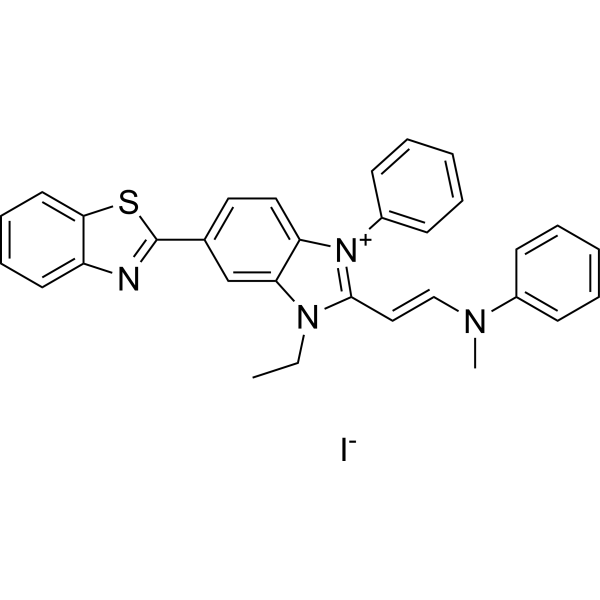
Cat. No.: HY-14971A
CAS No.: 681281-88-9
Purity:  99.40%
Synonyms: AKTIV
Target:  

Akt

Research Areas:  

Cancer

Akt inhibitor-IV (AKTIV) acts as a PI3K-Akt inhibitor at the E isomer (HY-14971), with potent cytotoxicity .
loading...
    loading...
60
60 Publications Verification
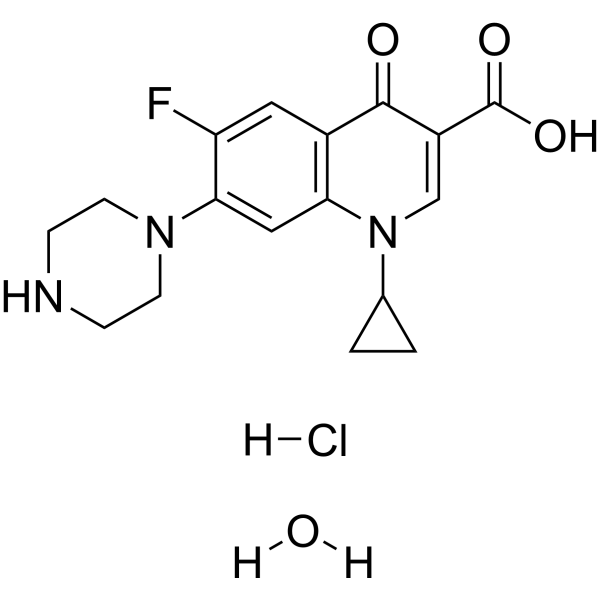
Cat. No.: HY-B0356B
CAS No.: 86393-32-0
Synonyms: Bay-09867 hydrochloride monohydrate
Ciprofloxacin (Bay-09867) hydrochloride monohydrate is an orally active, blood-brain barrier permeable fluoroquinolone antibacterial agent. Ciprofloxacin hydrochloride monohydrate exerts bactericidal effects primarily by inhibiting topoisomerase II and IV. Ciprofloxacin hydrochloride monohydrate inhibits the proliferation of human dental pulp stem cells and chondrocytes from young rats, and also activates the Akt signaling pathway and upregulates markers such as β-catenin and Nanog to maintain the morphological characteristics of stem cells. Ciprofloxacin hydrochloride monohydrate induces significant neurotoxicity and tissue damage, including reducing serotonin and glutathione levels in the brain, inducing oxidative stress and depression-like behaviors, and causing articular cartilage damage. Ciprofloxacin hydrochloride monohydrate can be applied to research related to infections of necrotic young permanent teeth and neurotoxicity .
loading...
    loading...
60
60 Publications Verification
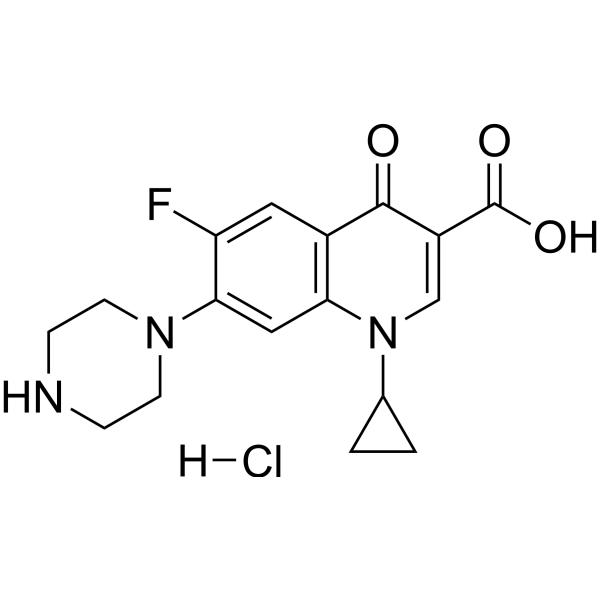
Cat. No.: HY-B0356A
CAS No.: 93107-08-5
Synonyms: Bay-09867 monohydrochloride
Ciprofloxacin (Bay-09867) monohydrochloride is an orally active, blood-brain barrier permeable fluoroquinolone antibacterial agent. Ciprofloxacin monohydrochloride exerts bactericidal effects primarily by inhibiting topoisomerase II and IV. Ciprofloxacin monohydrochloride inhibits the proliferation of human dental pulp stem cells and chondrocytes from young rats, and also activates the Akt signaling pathway and upregulates markers such as β-catenin and Nanog to maintain the morphological characteristics of stem cells. Ciprofloxacin monohydrochloride induces significant neurotoxicity and tissue damage, including reducing serotonin and glutathione levels in the brain, inducing oxidative stress and depression-like behaviors, and causing articular cartilage damage. Ciprofloxacin monohydrochloride can be applied to research related to infections of necrotic young permanent teeth and neurotoxicity .
loading...
    loading...
3
3 Cited Publications
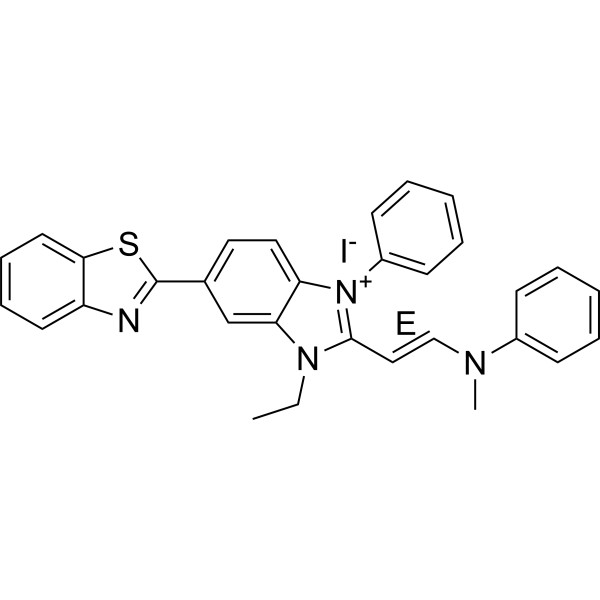
Cat. No.: HY-14971
CAS No.: 959841-49-7
Purity:  99.89%
Synonyms: (E)-AKTIV
Target:  

Akt

Research Areas:  

Cancer

(E)-Akt inhibitor-IV ((E)-AKTIV) is a PI3K-Akt inhibitor, with potent cytotoxic .
loading...
    loading...
Cat. No.: HY-B0356R
CAS No.: 85721-33-1
Synonyms: Bay-09867 (Standard)
Ciprofloxacin (Standard) is the analytical standard of Ciprofloxacin. This product is intended for research and analytical applications. Ciprofloxacin (Bay-09867) is an orally active, blood-brain barrier permeable fluoroquinolone antibacterial agent. Ciprofloxacin exerts bactericidal effects primarily by inhibiting topoisomerase II and IV. Ciprofloxacin inhibits the proliferation of human dental pulp stem cells and chondrocytes from young rats, and also activates the Akt signaling pathway and upregulates markers such as β-catenin and Nanog to maintain the morphological characteristics of stem cells. Ciprofloxacin induces significant neurotoxicity and tissue damage, including reducing serotonin and glutathione levels in the brain, inducing oxidative stress and depression-like behaviors, and causing articular cartilage damage. Ciprofloxacin can be applied to research related to infections of necrotic young permanent teeth and neurotoxicity .
loading...
    loading...
Cat. No.: HY-158156
Target:  

NF-κB Apoptosis

Research Areas:  

Cancer

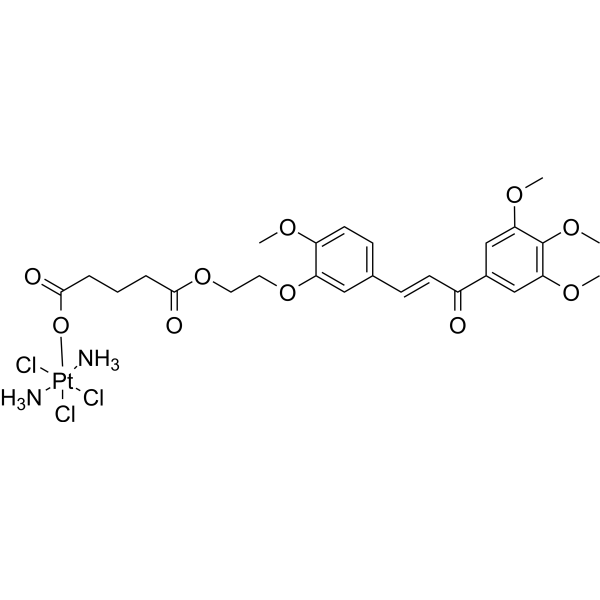
NF-κB-IN-16 (compound 9) is a complex (Pt(IV) complex) of NF-κB inhibitor and Cisplatin (HY-17394), which has high efficacy and low toxicity in anti-tumor activity. active. NF-κB-IN-16 can cause DNA damage, induce mitochondrial dysfunction, produce reactive oxygen species, and induce apoptosis through the mitochondrial pathway and endoplasmic reticulum stress. NF-κB-IN-16 potently inhibits the NF-κB/MAPK signaling pathway and disrupts PI3K/AKT signaling. NF-κB-IN-16 also exhibits excellent in vivo antitumor efficiency and low toxicity in A549 or A549/CDDP xenograft models .
loading...
    loading...
Cat. No.: HY-B0356AR
CAS No.: 93107-08-5
Synonyms: Bay-09867 monohydrochloride (Standard)
Ciprofloxacin monohydrochloride (Standard) is the analytical standard of Ciprofloxacin (monohydrochloride). This product is intended for research and analytical applications. Ciprofloxacin (Bay-09867) monohydrochloride is an orally active, blood-brain barrier permeable fluoroquinolone antibacterial agent. Ciprofloxacin monohydrochloride exerts bactericidal effects primarily by inhibiting topoisomerase II and IV. Ciprofloxacin monohydrochloride inhibits the proliferation of human dental pulp stem cells and chondrocytes from young rats, and also activates the Akt signaling pathway and upregulates markers such as β-catenin and Nanog to maintain the morphological characteristics of stem cells. Ciprofloxacin monohydrochloride induces significant neurotoxicity and tissue damage, including reducing serotonin and glutathione levels in the brain, inducing oxidative stress and depression-like behaviors, and causing articular cartilage damage. Ciprofloxacin monohydrochloride can be applied to research related to infections of necrotic young permanent teeth and neurotoxicity .
loading...
    loading...
Cat. No.: HY-B0356G
CAS No.: 85721-33-1
Synonyms: Bay-09867 (GMP)
Ciprofloxacin GMP is Ciprofloxacin (HY-B0356) produced by using GMP guidelines. GMP small molecules works appropriately as an auxiliary reagent for cell therapy manufacture. Ciprofloxacin (Bay-09867) is an orally active, blood-brain barrier permeable fluoroquinolone antibacterial agent. Ciprofloxacin exerts bactericidal effects primarily by inhibiting topoisomerase II and IV. Ciprofloxacin inhibits the proliferation of human dental pulp stem cells and chondrocytes from young rats, and also activates the Akt signaling pathway and upregulates markers such as β-catenin and Nanog to maintain the morphological characteristics of stem cells. Ciprofloxacin induces significant neurotoxicity and tissue damage, including reducing serotonin and glutathione levels in the brain, inducing oxidative stress and depression-like behaviors, and causing articular cartilage damage. Ciprofloxacin can be applied to research related to infections of necrotic young permanent teeth and neurotoxicity .
loading...
    loading...

