1. Search Result
Search Result
Results for "

Adenine

" in MedChemExpress (MCE) Product Catalog:

240

Inhibitors & Agonists

1

Fluorescent Dyes

18

Biochemical Assay Reagents

4

Peptides

54

Natural
Products

3

Recombinant Proteins

55

Isotope-Labeled Compounds

1

Click Chemistry

22

Oligonucleotides

1

GMP Molecules

Cat. No. Product Name Target Research Areas Chemical Structure
  • HY-B0228
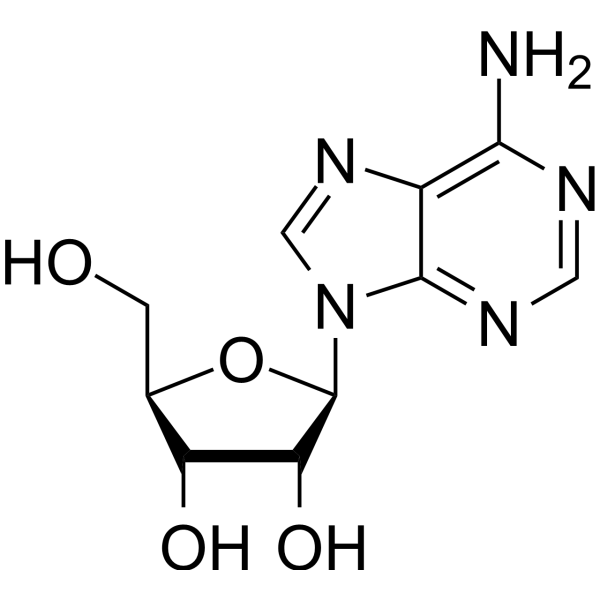
    Adenosine
    15+ Cited Publications

    Adenine riboside; D-Adenosine

    Environmental Pollutants Autophagy Nucleoside Antimetabolite/Analog Endogenous Metabolite Apoptosis Metabolic Disease Cancer
    Adenosine (Adenine riboside), a ubiquitous and BBB-permeable endogenous autacoid, acts through the enrollment of four G protein-coupled receptors: A1, A2A, A2B, and A3. Adenosine affects almost all aspects of cellular physiology, including neuronal activity, vascular function, platelet aggregation, and blood cell regulation .
    Adenosine
  • HY-B0152
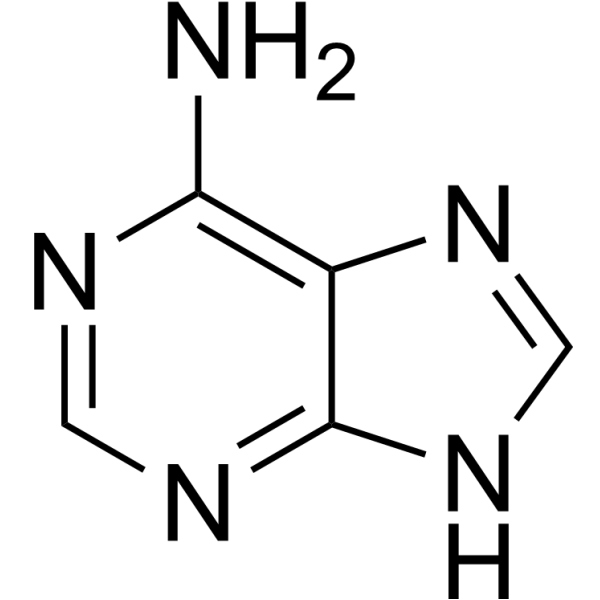
    Adenine
    20+ Cited Publications

    DNA/RNA Synthesis Endogenous Metabolite Infection Cancer
    Adenine (6-Aminopurine), a purine, is one of the four nucleobases in the nucleic acid of DNA. Adenine acts as a chemical component of DNA and RNA. Adenine also plays an important role in biochemistry involved in cellular respiration, the form of both ATP and the cofactors (NAD and FAD), and protein synthesis .
    Adenine
  • HY-B1654
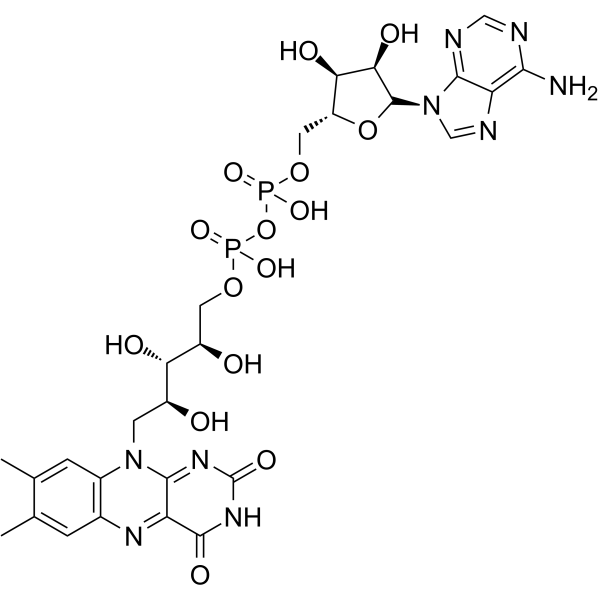
    Flavin adenine dinucleotide
    5+ Cited Publications

    FAD

    Endogenous Metabolite Cardiovascular Disease
    Flavin adenine dinucleotide (FAD) is a redox cofactor, more specifically a prosthetic group of a protein, involved in several important enzymatic reactions in metabolism.
    Flavin adenine dinucleotide
  • HY-B0445A
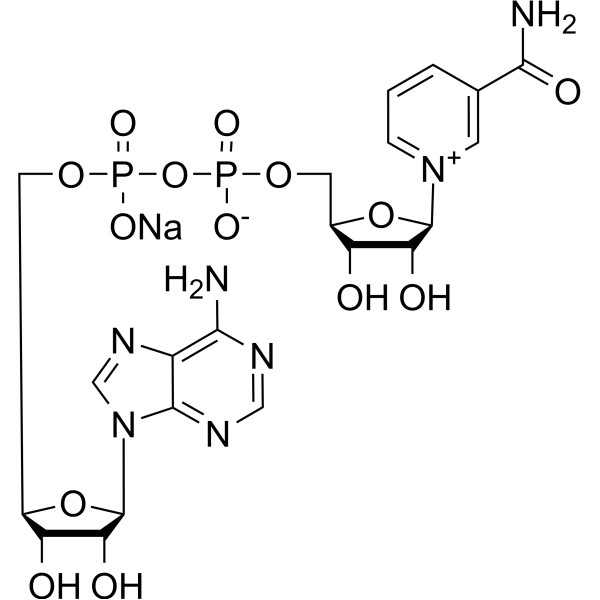
    NAD sodium
    Maximum Cited Publications
    45 Publications Verification

    β-DPN sodium; β-NAD sodium; β-Nicotinamide Adenine Dinucleotide sodium

    Endogenous Metabolite Metabolic Disease
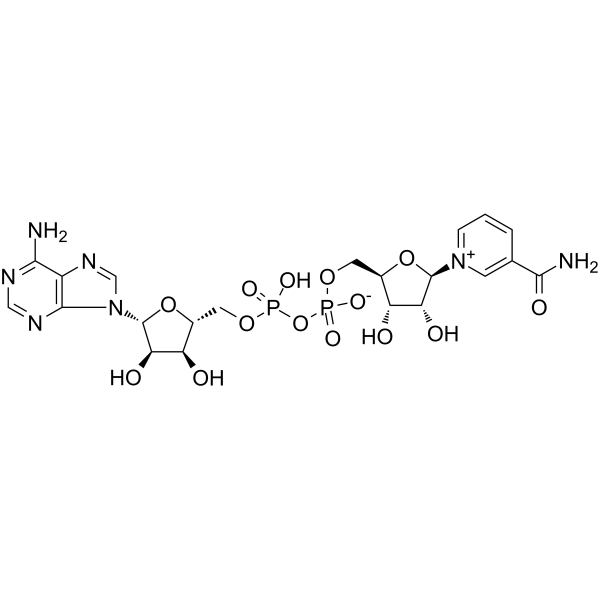
    NAD sodium is an orally effective cofactor and homeostatic regulator. NAD sodium can be reduced to β-nicotinamide adenine dinucleotide (NADH) during coupling with reactions that oxidize organic substrates. NAD sodium can be converted to β-nicotinamide adenine dinucleotide (NADH) and passes to the inside of mitochondria, which indirectly generates ATP. NAD sodium can be used for the research of non-alcoholic fatty liver disease, obesity, and glucose intolerance .
    NAD sodium
  • HY-B1654A

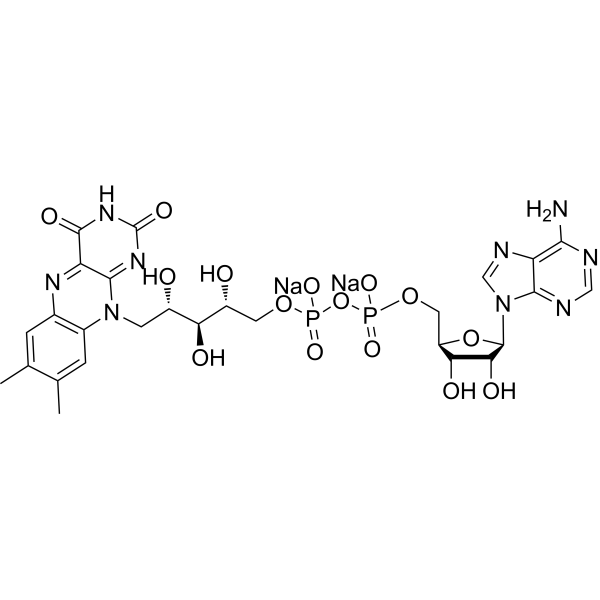
    FAD disodium salt; FAD-Na2

    Endogenous Metabolite Cardiovascular Disease
    Flavin adenine dinucleotide (FAD) disodium salt is a redox cofactor, more specifically a prosthetic group of a protein, involved in several important enzymatic reactions in metabolism.
    Flavin adenine dinucleotide disodium salt
  • HY-B1610
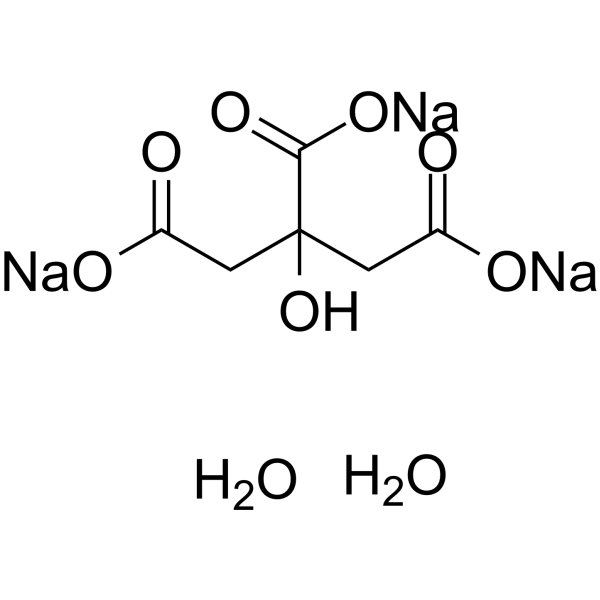
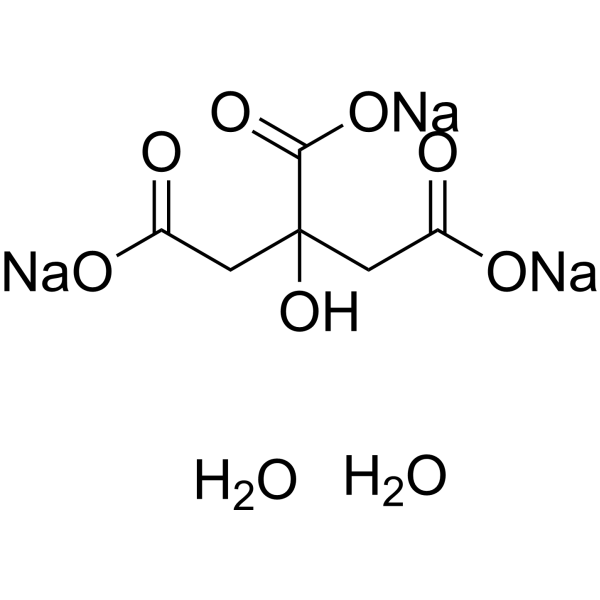
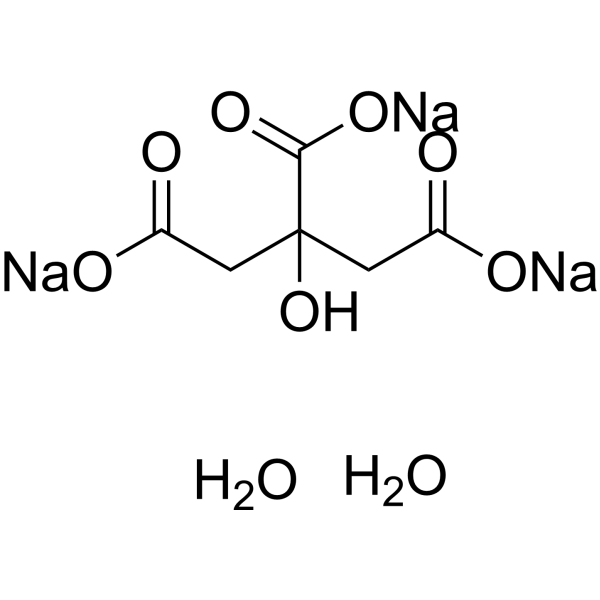
    Sodium citrate dihydrate
    10+ Cited Publications

    Trisodium citrate dihydrate; Citric acid trisodium salt dihydrate

    Environmental Pollutants Endogenous Metabolite Apoptosis Bacterial Infection Cardiovascular Disease Cancer
    Sodium citrate dehydrate (Trisodium citrate dihydrate) is a natural product with oral activity that can be found in citrus fruits. Sodium citrate dehydrate can inhibit the proliferation of tumor cells and induce apoptosis. Sodium citrate dehydrate has antibacterial, anti-tumor and antioxidant activities. Sodium citrate dehydrate can be prepared as a cosolvent or buffer .
    Sodium citrate dihydrate
  • HY-B0152S1
    Adenine-13C
    2 Publications Verification

    Adenine-8-C13; 9H-Purin-6-amine-8-13C

    DNA/RNA Synthesis Endogenous Metabolite Cancer
    Adenine- 13C is the 13C labeled Adenine . Adenine (6-Aminopurine), a purine, is one of the four nucleobases in the nucleic acid of DNA. Adenine acts as a chemical component of DNA and RNA. Adenine also plays an important role in biochemistry involved in cellular respiration, the form of both ATP and the cofactors (NAD and FAD), and protein synthesis .
    Adenine-13C
  • HY-B0152B
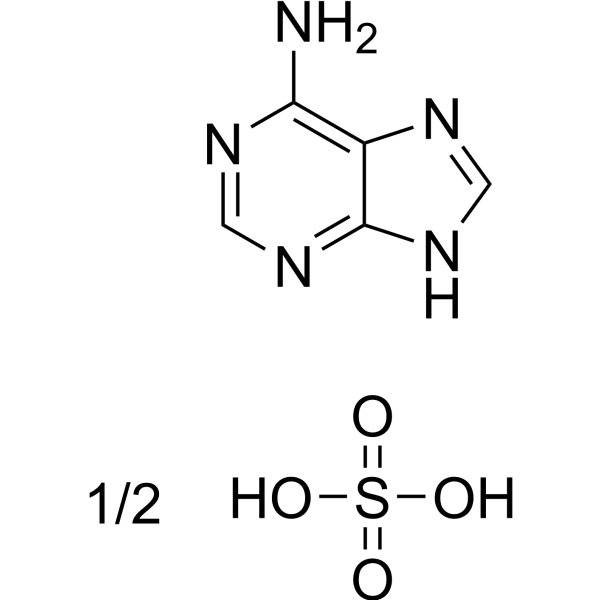
    Adenine hemisulfate
    20+ Cited Publications

    6-Aminopurine hemisulfate; Vitamin B4 hemisulfate

    DNA/RNA Synthesis Endogenous Metabolite Cancer
    Adenine hemisulfate (6-Aminopurine hemisulfate), a purine, is one of the four nucleobases in the nucleic acid of DNA. Adenine hemisulfate acts as a chemical component of DNA and RNA. Adenine hemisulfate also plays an important role in biochemistry involved in cellular respiration, the form of both ATP and the cofactors (NAD and FAD), and protein synthesis .
    Adenine hemisulfate
  • HY-B0277
    Vidarabine
    5+ Cited Publications

    Ara-A; Adenine Arabinoside; 9-β-D-ArabinofuranosylAdenine

    Apoptosis Fungal Reactive Oxygen Species (ROS) EBV HSV Antibiotic DNA/RNA Synthesis Drug Metabolite Infection Cancer
    Vidarabine (Ara-A) is a nucleoside antibiotic isolated from Streptomyces, and a metabolite of Vidarabine phosphate (HY-B0277A). Vidarabine selectively inhibits viral DNA polymerase and cellular ribonucleotide reductase, thereby blocking viral replication. Vidarabine phosphate also exhibits antifungal activity, induces late-stage cellular apoptosis, and causes cell cycle arrest. Vidarabine phosphate can be used in research related to severe chronic active Epstein-Barr virus (EBV) infection, herpes infection, and candidiasis .
    Vidarabine
  • HY-B0228S11

    Adenine riboside-15N5; D-Adenosine-15N5

    Isotope-Labeled Compounds Cancer
    Adenosine- 15N5 (Adenine riboside- 15N5; D-Adenosine- 15N5) is the 15N labled Adenosine (HY-B0228). Adenosine (Adenine riboside), a ubiquitous endogenous autacoid, acts through the enrollment of four G protein-coupled receptors: A1, A2A, A2B, and A3. Adenosine affects almost all aspects of cellular physiology, including neuronal activity, vascular function, platelet aggregation, and blood cell regulation .
    Adenosine-15N5
  • HY-113472

    Drug Metabolite Others
    N-Methyl-4-pyridone-3-carboxamide (compound 4PY) is a final product of nicotinamide adenine dinucleotide (NAD) degradation .
    N-Methyl-4-pyridone-3-carboxamide
  • HY-B0228S1

    Adenine riboside-13C5; D-Adenosine-13C5

    Apoptosis Nucleoside Antimetabolite/Analog Autophagy Endogenous Metabolite Cancer
    Adenosine- 13C5 is the 13C labeled Adenosine . Adenosine (Adenine riboside), a ubiquitous endogenous autacoid, acts through the enrollment of four G protein-coupled receptors: A1, A2A, A2B, and A3. Adenosine affects almost all aspects of cellular physiology, including neuronal activity, vascular function, platelet aggregation, and blood cell regulation .
    Adenosine-13C5
  • HY-N0165

    HIV Reverse Transcriptase Cardiovascular Disease Infection Inflammation/Immunology
    Methyl-Hesperidin is a glycoside compound. Methyl-Hesperidin has hypotensive, coronary dilating, smooth muscle relaxing, capillary stabilizing, choleretic, and anti-ulcer activities. Methyl-Hesperidin act as a competitive substrate to inhibit HIV-1 reverse transcriptase activity. Methyl-Hesperidin potentiates coronary dilating actions of adenine nucleotides and 3'-AMP, enhances depressant action on isolated atria, and prolongs adenosine- and ATP-induced heart block in guinea pigs .
    Methyl-Hesperidin
  • HY-B0152A
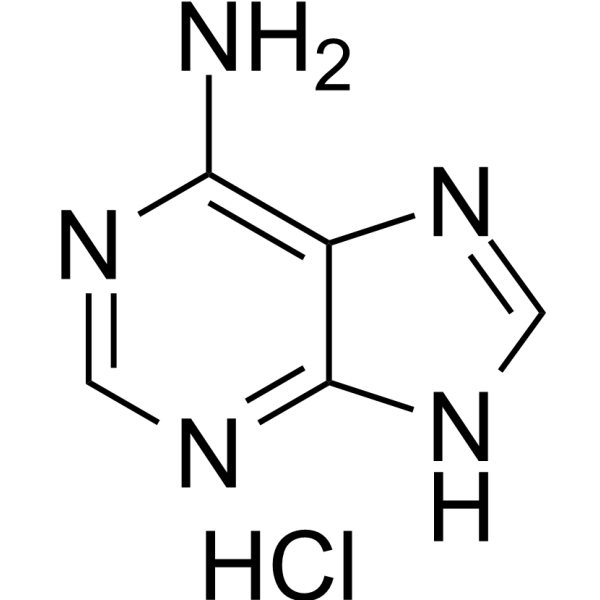
    Adenine hydrochloride
    20+ Cited Publications

    6-Aminopurine hydrochloride; Vitamin B4 hydrochloride

    DNA/RNA Synthesis Endogenous Metabolite Cancer
    Adenine hydrochloride (6-Aminopurine hydrochloride), a purine, is one of the four nucleobases in the nucleic acid of DNA. Adenine hydrochloride acts as a chemical component of DNA and RNA. Adenine hydrochloride also plays an important role in biochemistry involved in cellular respiration, the form of both ATP and the cofactors (NAD and FAD), and protein synthesis .
    Adenine hydrochloride
  • HY-131924

    Thio-NAD

    Biochemical Assay Reagents Others
    Thionicotinamide adenine dinucleotide (Thio-NAD) is a thione-modified analog of the coenzyme nicotinamide adenine dinucleotide (NAD +). Thionicotinamide adenine dinucleotide can replace NAD + in enzymatic reactions and shift the absorption peak to 405 nM, enabling sensitive, real-time kinetic detection of enzyme activity, which is particularly suitable for high-sensitivity diagnostic cyclic detection systems .
    Thionicotinamide adenine dinucleotide
  • HY-B0228R

    Adenine riboside (Standard); D-Adenosine (Standard)

    Reference Standards Nucleoside Antimetabolite/Analog Autophagy Apoptosis Endogenous Metabolite Metabolic Disease Cancer
    Adenosine (Standard) is the analytical standard of Adenosine. This product is intended for research and analytical applications. Adenosine (Adenine riboside), a ubiquitous endogenous autacoid, acts through the enrollment of four G protein-coupled receptors: A1, A2A, A2B, and A3. Adenosine affects almost all aspects of cellular physiology, including neuronal activity, vascular function, platelet aggregation, and blood cell regulation .
    Adenosine (Standard)
  • HY-B0228S13

    Adenine riboside-13C10; D-Adenosine-13C10

    Isotope-Labeled Compounds Nucleoside Antimetabolite/Analog Endogenous Metabolite Autophagy Apoptosis Metabolic Disease Cancer
    Adenosine- 13C10 (Adenine riboside- 13C10; D-Adenosine- 13C10) is 13C-labeled Adenosine (HY-B0228). Adenosine (Adenine riboside), a ubiquitous endogenous autacoid, acts through the enrollment of four G protein-coupled receptors: A1, A2A, A2B, and A3. Adenosine affects almost all aspects of cellular physiology, including neuronal activity, vascular function, platelet aggregation, and blood cell regulation.
    Adenosine-13C10
  • HY-113303
    FAPy-adenine
    2 Publications Verification

    Endogenous Metabolite Neurological Disease Cancer
    FAPy-adenine is an oxidized DNA base. Fapy-adenine shows an increased trend levels in the Alzheimer's disease brain. Oxidized nucleosides are biochemical markers for tumors, aging, and neurodegenerative diseases .
    FAPy-adenine
  • HY-B0228S6

    Adenine riboside-d2; D-Adenosine-d2

    Apoptosis Autophagy Endogenous Metabolite Nucleoside Antimetabolite/Analog Metabolic Disease Cancer
    Adenosine-d2 is the deuterium labeled Adenosine. Adenosine (Adenine riboside), a ubiquitous endogenous autacoid, acts through the enrollment of four G protein-coupled receptors: A1, A2A, A2B, and A3. Adenosine affects almost all aspects of cellular physio
    Adenosine-d2
  • HY-W008129

    Drug Intermediate Bacterial Infection
    H-D-cis-Hyp-OH is a proline derivative and also a substrate of cis-4-hydroxy-D-proline dehydrogenase from Sinorhizobium meliloti. H-D-cis-Hyp-OH serves as a starting material for the synthesis of conformationally constrained pyrrolidine PNA adenine monomers .
    H-D-cis-Hyp-OH
  • HY-131485

    3-APAD, 90%; 3-Acetylpyridine NAD, 90%

    Lactate Dehydrogenase Metabolic Disease
    3-Acetylpyridine adenine dinucleotide, 90% is an analog of nicotinamide adenine dinucleotide (NAD). 33-Acetylpyridine adenine dinucleotide, 90% collaboratively inhibits Lactate Dehydrogenase (LDH) with bisulfite .
    3-Acetylpyridine adenine dinucleotide, 90%
  • HY-B1654S

    FAD-13C5 ammonium

    Isotope-Labeled Compounds Endogenous Metabolite Cardiovascular Disease
    Flavin adenine dinucleotide- 13C5 (FAD- 13C5) ammonium is 13C labeled Flavin adenine dinucleotide (HY-B1654). Flavin adenine dinucleotide (FAD) is a redox cofactor, more specifically a prosthetic group of a protein, involved in several important enzymatic reactions in metabolism.
    Flavin adenine dinucleotide-13C5 ammonium
  • HY-B0445B

    α-Nicotinamide Adenine Dinucleotide

    Mitochondrial Metabolism Endogenous Metabolite Metabolic Disease
    α-NAD (α-Nicotinamide Adenine Dinucleotide) serves as a substrate for reninase, functions as an analog of β-NAD, affects the kinetics of NAD-dependent enzymes, and also plays a critical role as a cofactor in mitochondrial redox reactions .
    α-NAD
  • HY-154924

    S-NADP

    Calcium Channel Cardiovascular Disease
    Thio-NADP (S-NADP) is a nicotinic acid adenine dinucleotide phosphate (NAADP) inhibitor. Thio-NADP activates partial Ca 2+ release .
    Thio-NADP
  • HY-N6666
    Vidarabine monohydrate
    5+ Cited Publications

    HSV Antibiotic Infection
    Vidarabine monohydrate is an adenine arabinoside. Vidarabine monohydrate an antiviral agent which is active against herpes simplex viruses (HSV) and varicella zoster viruses .
    Vidarabine monohydrate
  • HY-N9941

    Endogenous Metabolite Metabolic Disease
    2,8-Dihydroxyadenine, an endogenous metabolite, can cause the formation of urinary crystals and kidney stones. 2,8-Dihydroxyadenine can be used to diagnose adenine phosphoribosyltransferase (APRT) deficiency .
    2,8-Dihydroxyadenine
  • HY-B0228S

    Adenine riboside-d1; D-Adenosine-d

    Isotope-Labeled Compounds Nucleoside Antimetabolite/Analog Autophagy Apoptosis Endogenous Metabolite Metabolic Disease Cancer
    Adenosine-d is the deuterium labeled Adenosine. Adenosine (Adenine riboside), a ubiquitous endogenous autacoid, acts through the enrollment of four G protein-coupled receptors: A1, A2A, A2B, and A3. Adenosine affects almost all aspects of cellular physiology, including neuronal activity, vascular function, platelet aggregation, and blood cell regulation .
    Adenosine-d1
  • HY-B0228S4

    Adenine riboside-1′-13C; D-Adenosine-1′-13C

    Isotope-Labeled Compounds Apoptosis Autophagy Endogenous Metabolite Nucleoside Antimetabolite/Analog Metabolic Disease Cancer
    Adenosine-1′- 13C is the 13C labeled Adenosine. Adenosine (Adenine riboside), a ubiquitous endogenous autacoid, acts through the enrollment of four G protein-coupled receptors: A1, A2A, A2B, and A3. Adenosine affects almost all aspects of cellular physiolo
    Adenosine-1′-13C
  • HY-16386

    Mitochondrial Metabolism Cancer
    PENAO is a potent tumour cell mitochondrial toxin. PENAO inactivates tumor cell mitochondria by targeting inner-membrane adenine nucleotide transferase .
    PENAO
  • HY-B0152R

    Reference Standards DNA/RNA Synthesis Endogenous Metabolite Cancer
    Adenine (Standard) is the analytical standard of Adenine. This product is intended for research and analytical applications. Adenine (6-Aminopurine), a purine, is one of the four nucleobases in the nucleic acid of DNA. Adenine acts as a chemical component of DNA and RNA. Adenine also plays an important role in biochemistry involved in cellular respiration, the form of both ATP and the cofactors (NAD and FAD), and protein synthesis .
    Adenine (Standard)
  • HY-B1654R

    FAD (Standard)

    Reference Standards Endogenous Metabolite Cardiovascular Disease
    Flavin adenine dinucleotide (Standard) is the analytical standard of Flavin adenine dinucleotide. This product is intended for research and analytical applications. Flavin adenine dinucleotide (FAD) is a redox cofactor, more specifically a prosthetic group of a protein, involved in several important enzymatic reactions in metabolism.
    Flavin adenine dinucleotide (Standard)
  • HY-147342

    Drug Metabolite IMPDH Cancer
    β-Benzamide adenine dinucleotide is a biologically active metabolite of benzamide riboside. β-Benzamide adenine dinucleotide is a competitive inhibitor of human NAD kinase with a Ki value of 90 μM, and inhibits human IMPDH with IC50 values of 0.787 μM and 0.884 μM for type I and type II, respectively. β-Benzamide adenine dinucleotide exhibits inhibitory activities against lactate dehydrogenase, glutamate dehydrogenase, and malate dehydrogenase. β-Benzamide adenine dinucleotide can be used for the study of chronic myelogenous leukemia .
    β-Benzamide adenine dinucleotide
  • HY-B0152S

    6-Aminopurine-d1; Vitamin B4-d1

    DNA/RNA Synthesis Endogenous Metabolite Cancer
    Adenine-d is the deuterium labeled Adenine. Adenine (6-Aminopurine), a purine, is one of the four nucleobases in the nucleic acid of DNA. Adenine acts as a chemical component of DNA and RNA. Adenine also plays an important role in biochemistry involved in cellular respiration, the form of both ATP and the cofactors (NAD and FAD), and protein synthesis .
    Adenine-d1
  • HY-B0152S4

    6-Aminopurine-15N5; Vitamin B4-15N5

    Isotope-Labeled Compounds DNA/RNA Synthesis Endogenous Metabolite Cancer
    Adenine- 15N5 (6-Aminopurine- 15N5; Vitamin B4- 15N5) is 15N labeled Adenine (HY-B0152). Adenine (6-Aminopurine), a purine, is one of the four nucleobases in the nucleic acid of DNA. Adenine acts as a chemical component of DNA and RNA. Adenine also plays an important role in biochemistry involved in cellular respiration, the form of both ATP and the cofactors (NAD and FAD), and protein synthesis.
    Adenine-15N5
  • HY-W436424

    DNA/RNA Synthesis Infection
    DMA-IN-1 is a DNA adenine methyltransferase (DAM) inhibitor, IC50: 48 μM. DMA-IN-1 inhibits Caulobacter growth with an MIC of 35 μM .
    DAM-IN-1
  • HY-134266
    8-Bromo-AMP
    1 Publications Verification

    8-Bromoadenosine 5'-monophosphate; 8-Bromoadenylic acid

    Endogenous Metabolite Cardiovascular Disease
    8-Bromo-AMP (8-Bromoadenosine 5'-monophosphate) is a membrane permeable cAMP analogue. 8-Bromo-AMP can improve the ability of the heart to recover from ischemia and reperfusion by increasing the levels of ATP, ADP, and total adenine nucleotides .
    8-Bromo-AMP
  • HY-B0228S5

    Adenine riboside-13C; D-Adenosine-13C

    Apoptosis Autophagy Endogenous Metabolite Nucleoside Antimetabolite/Analog Metabolic Disease Cancer
    Adenosine- 13C is the 13C labeled Adenosine. Adenosine (Adenine riboside), a ubiquitous endogenous autacoid, acts through the enrollment of four G protein-coupled receptors: A1, A2A, A2B, and A3. Adenosine affects almost all aspects of cellular physiology,
    Adenosine-13C
  • HY-W250163
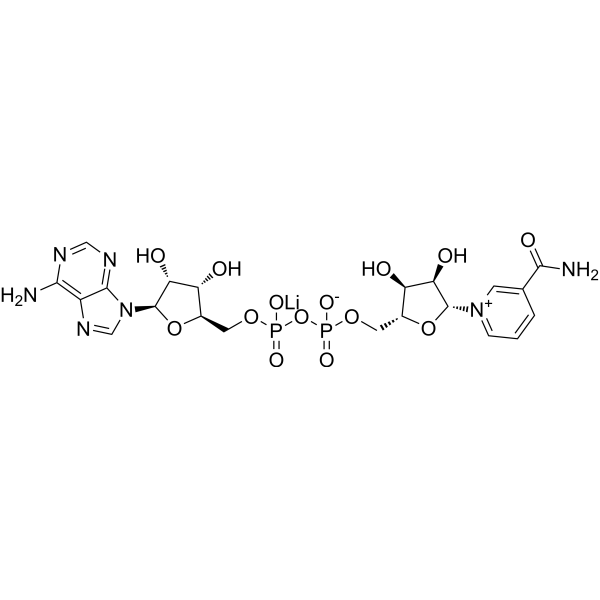
    NAD+ lithium
    40+ Cited Publications

    β-DPN lithium; β-NAD lithium; β-Nicotinamide Adenine Dinucleotide lithium

    Biochemical Assay Reagents Metabolic Disease
    NAD+ lithium (β-DPN lithium) is a lithium salt of nicotinamide adenine dinucleotide. NAD+ is a coenzyme in the REDOX reaction. NAD+ can directly or indirectly affect several key cellular functions, including metabolic pathways, DNA repair, chromatin remodeling, cell aging, and immune cell function .
    NAD+ lithium
  • HY-W015213

    Endogenous Metabolite DNA/RNA Synthesis Metabolic Disease
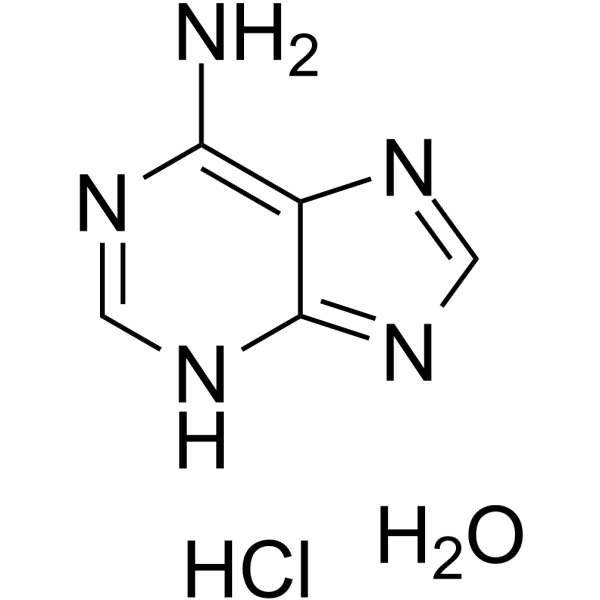
    Adenine monohydrochloride hemihydrate is a hydrochloride derivative of Adenine. Adenine (6-Aminopurine), a purine, is one of the four nucleobases in the nucleic acid of DNA. Adenine acts as a chemical component of DNA and RNA. Adenine also plays an important role in biochemistry involved in cellular respiration, the form of both ATP and the cofactors (NAD and FAD), and protein synthesis .
    Adenine monohydrochloride hemihydrate
  • HY-137672A

    2',3'-cNADP+; β-Nicotinamide Adenine dinucleotide-2',3'-cyclic phosphate

    Phosphodiesterase (PDE) Calcium Channel Neurological Disease
    2',3'-Cyclic NADP disodium (2',3'-cNADP+; β-Nicotinamide adenine dinucleotide-2',3'-cyclic phosphate) is a substrate for 2',3'-cyclic nucleotide 3'-phosphodiesterase (CNP), an enzyme abundant in myelin. It has been used in a coupled enzyme assay to quantify CNP activity. 2',3'-Cyclic NADP disodium (5 μM) increases calcium overload-induced calcium release and prevents calcium-induced swelling in rat brain mitochondria.
    2',3'-Cyclic NADP disodium
  • HY-12455

    ADC Payload Antibiotic DNA Alkylator/Crosslinker Apoptosis Caspase Cancer
    Duocarmycin A is an antitumor antibiotic and DNA alkylating agent with broad-spectrum antibacterial activity, which can serve as a payload for synthesizing antibody-drug conjugates (ADCs). Duocarmycin A selectively binds to the AT-rich minor groove of DNA, forms covalent adducts by alkylating the adenine N3 residue, thereby disrupting DNA structure and inhibiting its replication and transcription. Duocarmycin A induces apoptosis, sub-G1 phase accumulation and chromatin condensation, reduces the levels of pro-caspase-3/9, and induces p53-independent p21 expression. Duocarmycin A is widely used in the research of various malignancies, including leukemia, sarcoma, glioblastoma, as well as multiple solid tumor models such as lung cancer, breast cancer, and colorectal cancer .
    Duocarmycin A
  • HY-W009632

    6-Aminopurine phosphate

    Biochemical Assay Reagents Others
    Adenine phosphate (6-Aminopurine phosphate) can stimulate leukocyte proliferation. Adenine phosphate is a kind of biological materials or organic compounds that are widely used in life science research .
    Adenine phosphate
  • HY-W250156

    Biochemical Assay Reagents Others
    3-Acetylpyridine adenine dinucleotide (disodium) is a biochemical reagent that can be used as a biological material or organic compound for life science related research.
    3-Acetylpyridine adenine dinucleotide disodium
  • HY-B0152S3

    6-Aminopurine-13C5; Vitamin B4-13C5

    Isotope-Labeled Compounds DNA/RNA Synthesis Endogenous Metabolite Cancer
    Adenine- 13C5 (6-Aminopurine- 13C5; Vitamin B4- 13C5) is 13C-labeled Adenine (HY-B0152). Adenine (6-Aminopurine), a purine, is one of the four nucleobases in the nucleic acid of DNA. Adenine acts as a chemical component of DNA and RNA. Adenine also plays an important role in biochemistry involved in cellular respiration, the form of both ATP and the cofactors (NAD and FAD), and protein synthesis.
    Adenine-13C5
  • HY-B0228S12

    Adenine riboside-d13; D-Adenosine-d13

    Isotope-Labeled Compounds Nucleoside Antimetabolite/Analog Endogenous Metabolite Autophagy Apoptosis Metabolic Disease Cancer
    Adenosine-d13 (Adenine riboside-d13; D-Adenosine-d13) is deuterium labeled Adenosine (HY-B0228). Adenosine (Adenine riboside), a ubiquitous endogenous autacoid, acts through the enrollment of four G protein-coupled receptors: A1, A2A, A2B, and A3. Adenosine affects almost all aspects of cellular physiology, including neuronal activity, vascular function, platelet aggregation, and blood cell regulation.
    Adenosine-d13
  • HY-E70410

    NAD+ Synthetase; Nicotinamide Adenine dinucleotide synthetase

    Endogenous Metabolite Neurological Disease Metabolic Disease Cancer
    NAD synthetase is responsible for the final step in the synthesis of nicotinamide adenine dinucleotide (NAD). The Km values for NAD, ATP, and ammonia of NAD synthetase from Escherichia coli are 200 μM, 11 μM, and 0.65 μM, respectively, while the Km values for NAD, ATP, and ammonia of NAD synthetase from yeast are 170 μM, 190 μM, and 64 μM, respectively. NAD synthetase can be used for enzymatic assays to determine ATP, ammonia, urea, or creatinine, and is also suitable for enzymatic cycling methods. Additionally, NAD synthetase holds potential for research into metabolic diseases, cancer, aging, and neurodegenerative diseases .
    NAD Synthetase
  • HY-E70406

    CHDH-5

    Endogenous Metabolite Others
    Cholesterol Dehydrogenase, Nocardia sp. is an enzyme that uses nicotinamide adenine dinucleotide/nicotinamide adenine dinucleotide phosphate (NAD(P)) as its cofactor in oxidizing cholesterol to form cholest-4-en-3-one. This enzyme oxidizes the hydroxyl group at the 3 position of the sterol ring to form a ketone.
    Cholesterol Dehydrogenase, Nocardia sp.
  • HY-B0445AR

    β-DPN sodium (Standard); β-NAD sodium (Standard); β-Nicotinamide Adenine Dinucleotide sodium (Standard)

    Endogenous Metabolite Reference Standards Metabolic Disease
    NAD sodium (Standard) is the analytical standard of NAD sodium. This product is intended for research and analytical applications. NAD (β-Nicotinamide Adenine Dinucleotide) sodium is an analogue of NAD. NAD sodium can be reduced to β-nicotinamide adenine dinucleotide (NADH) during coupling with reactions which oxidize organic substrates. NAD sodium can be converted to β-nicotinamide adenine dinucleotide (NADH) and passes to the inside of mitochondria that indirectly generates ATP .
    NAD sodium (Standard)
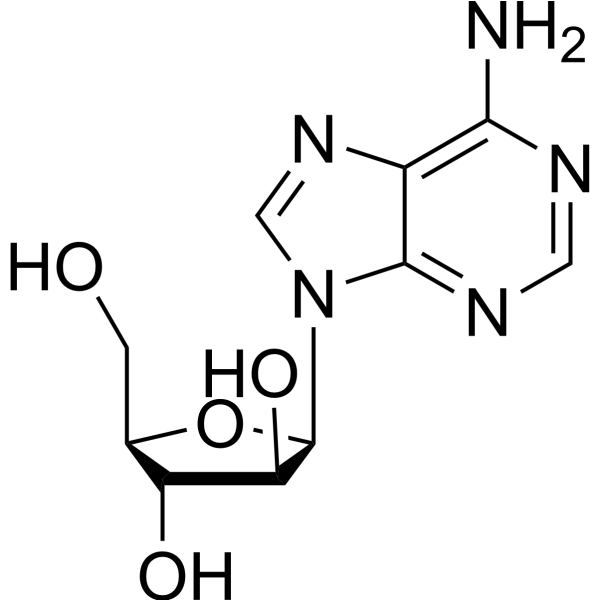
  • HY-152672

    Nucleoside Antimetabolite/Analog HSV Infection Cancer
    9-(β-D-Xylofuranosyl)adenine is an adenosine analogue. 9-(β-D-Xylofuranosyl)adenine shows antitumor and antiviral activity .
    9-(β-D-Xylofuranosyl)adenine
  • HY-W250154

    Endogenous Metabolite Metabolic Disease
    β-Nicotinamide adenine dinucleotide reduced dipotassium is an orally active reduced coenzyme. β-Nicotinamide adenine dinucleotide reduced dipotassium is a donor of ADP-ribose units in ADP-ribosylaton reactions and a precursor of cyclic ADP-ribose. β-Nicotinamide adenine dinucleotide reduced dipotassium plays a role as a regenerative electron donor in cellular energy metabolism, including glycolysis, β-oxidation and the tricarboxylic acid (TCA) cycle .
    β-Nicotinamide adenine dinucleotide reduced dipotassium

Inquiry Online

Your information is safe with us. * Required Fields.

Salutation


Country or Region *

Applicant Name *


Organization Name *

Department *


Email Address *


Product Name *

Cat. No.


Requested quantity *

Phone Number *


Remarks

Inquiry Online

Inquiry Information

Product Name:
Cat. No.:
Quantity:
MCE Japan Authorized Agent:

